

Quick answer: RoHS restricts ten substances and judges each homogeneous material against its own limit, 1000 ppm for lead, mercury, hexavalent chromium and four phthalates, 100 ppm for cadmium. REACH instead demands information on more than 240 SVHCs above 0.1% w/w.
Table of contents
- Ten Substances, Judged Per Homogeneous Material
- REACH Runs on Different Logic: SVHC and Thresholds
- Testing Route: XRF Screens, ICP and GC-MS Confirm
- The Document Pack: DoC, Reports, BOM, Traceability
- Where Failures Cluster
- When a Report Must Be Re-run
- FAQ
1. Ten Substances, Judged Per Homogeneous Material
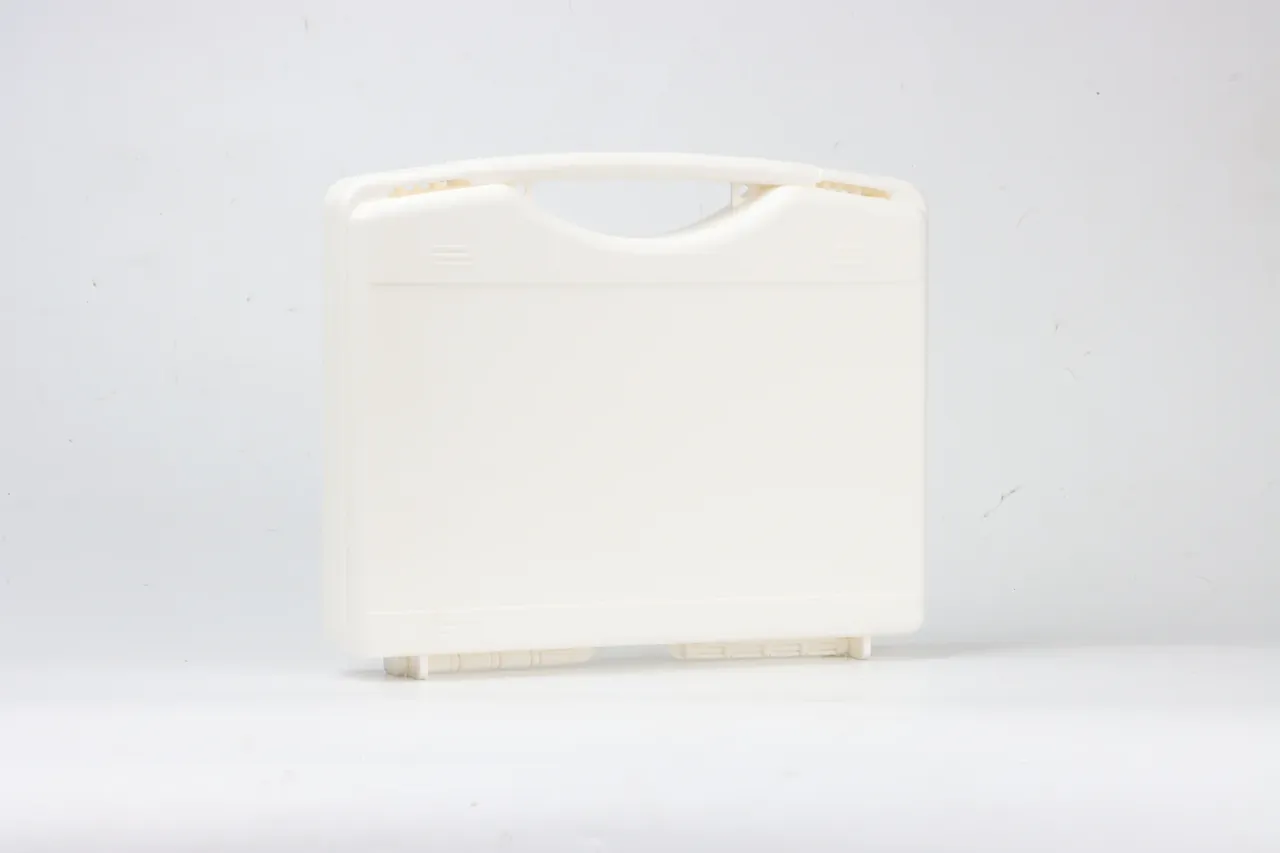
RoHS, Directive 2011/65/EU, lists ten restricted substances and judges them per homogeneous material, not per case. One injection-moulded case breaks down into 12 homogeneous materials: PP body, masterbatch, ABS latches, hinges, plated screws, gasket, PU foam, print ink, label adhesive, webbing, rivets and a buckle. Weighing the whole case and testing it once proves nothing.
Keep the arithmetic straight: 0.1% is 1000 ppm, 0.01% is 100 ppm, and only cadmium sits at 100 ppm. A reading of 0.008% means 80 ppm, 20 ppm of headroom, a figure common in regrind.
| Substance | Limit | Typical source on a case |
|---|---|---|
| Lead, mercury | 1000 ppm | Masterbatch, regrind, plating, salvaged parts |
| Cadmium | 100 ppm | Red and yellow pigments, plating |
| Hexavalent chromium | 1000 ppm | Zinc passivation, webbing tanning |
| PBB, PBDE | 1000 ppm | Flame-retardant parts in regrind |
| Four phthalates | 1000 ppm each | Soft compounds, inks, label adhesive |
The last row covers DEHP, BBP, DBP and DIBP, added in 2015 and extended to all equipment categories in 2019. A case carries no current, so it falls inside the directive only as housing or an instrument box. The verdict follows the worst material: eleven of 12 pass and one plating reads 1200 ppm, the case fails.
2. REACH Runs on Different Logic: SVHC and Thresholds
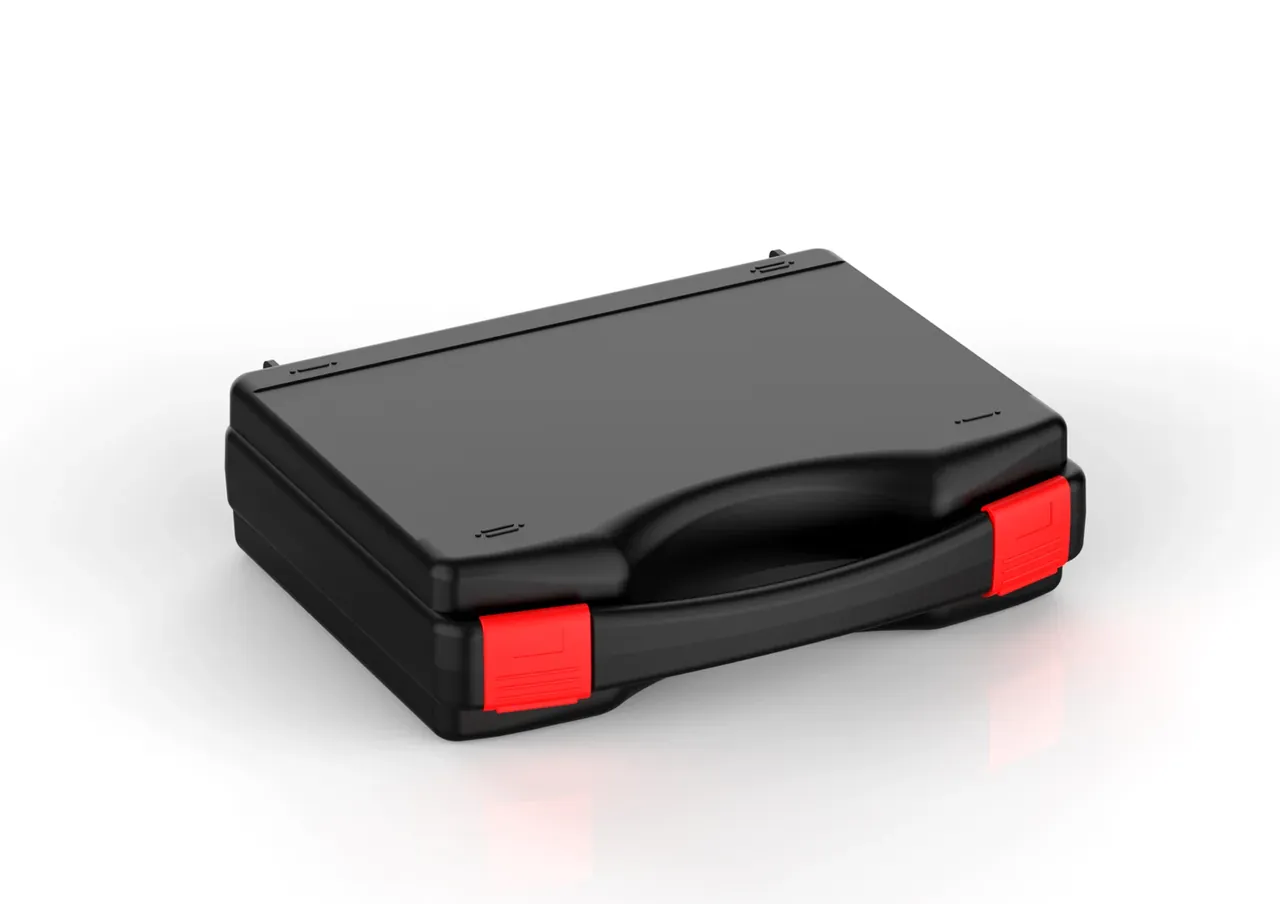
REACH, Regulation (EC) 1907/2006, sets no fixed limit table; it governs information. The SVHC candidate list has passed 240 entries and the trigger is 0.1% w/w of the finished article, not of a homogeneous material. The same case splits 12 ways under RoHS, whole under REACH.
Crossing it brings three duties: Article 33 safe-use information downstream, answered within 45 days; a SCIP notification per article, one record per model; and a notice under Article 7(2) above 1 tonne a year.
Take 0.1% on the worst case. A 3.2 kg case with a 180 g gasket carrying 0.5% of an SVHC reads 0.028%, under the trigger; the same gasket in a 1.1 kg case reads 0.082%, and one size smaller crosses the line.
That is why REACH paperwork is heavier: RoHS is one ten-item report, REACH a bill of materials checked against 240-plus entries.
3. Testing Route: XRF Screens, ICP and GC-MS Confirm
Export lots run two tiers: XRF on site at 30 seconds per point, cadmium detection near 20 ppm, clearing 12 materials inside an hour; then ICP-OES for lead, cadmium and chromium, GC-MS for flame retardants and phthalates.
| Item | Method | Detection limit | Where it sits |
|---|---|---|---|
| Pb, Cd, total Cr | XRF screening | 15–20 ppm | Incoming screening |
| Pb, Cd, Cr | ICP-OES | 2 ppm | Confirming an exceedance |
| Hexavalent chromium | Spectrophotometry | 1 ppm | Passivation disputes |
| PBB, PBDE | GC-MS | 50 ppm | Flame-retardant parts |
| Four phthalates | GC-MS | 50 ppm | Soft compounds and inks |
Screening needs a safety band: below 30% of the limit passes, 30%–70% is re-screened, above 70% goes to ICP. XRF suffers matrix effects, and thickness shifts a reading by 20%.
Mixed testing is the trap: one nibble from each of 12 materials in a single sample dilutes the reading twelvefold, so a 1200 ppm plating reads 100 ppm. Confirmation runs material by material.
4. The Document Pack: DoC, Reports, BOM, Traceability
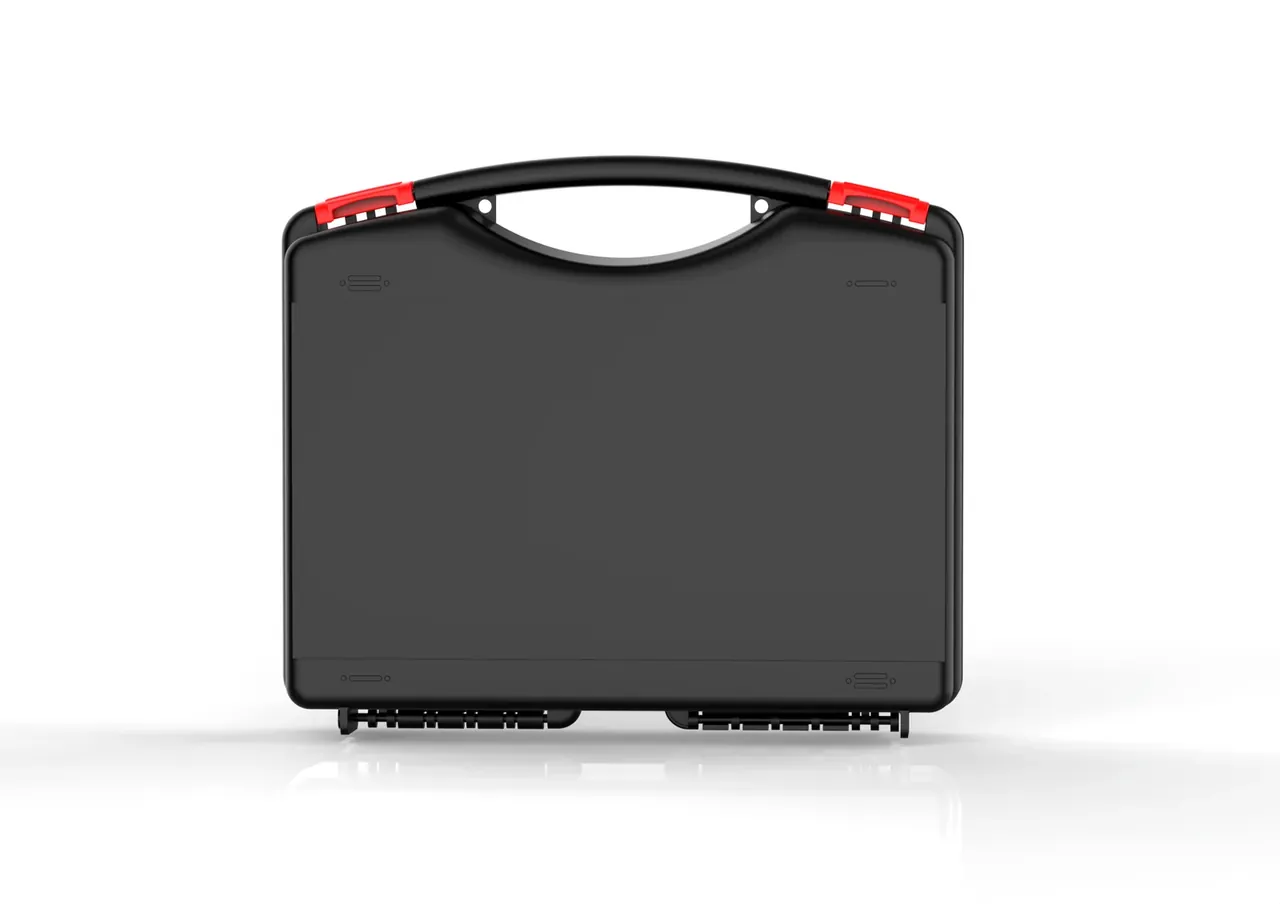
An EU customer wants a pack that lines up: declaration of conformity, third-party reports, a bill of materials with supplier declarations, and batch traceability, all pointing at one model.
| Document | Issued by | Covers | Refresh |
|---|---|---|---|
| Declaration of conformity | Manufacturer | Model, directive clauses | On model change |
| Test report | Third-party lab | One homogeneous material | Annual |
| Bill of materials | Manufacturer | Every material and supplier | On material change |
| Batch record | Manufacturer | Part number, lot, machine, date | Every lot |
The DoC names the directive, models, standards and a signatory; the manufacturer signs it, not the lab. A report proves the state of the sample on the day, showing material, method and limit.
The BOM bridges report and hardware: one part number, one supplier, one report number per material. Changing supplier without changing the part number breaks the link.
Traceability works backwards: when a customer complains, the masterbatch supplier, machine and shift surface within 2 hours, or the recall scope becomes the model.
5. Where Failures Cluster
Regrind leads: salvaged material drags in battery shells, solder and old cable, pushing lead to 3 times the limit; structural parts still need a report.
Masterbatch comes second: cadmium reds and yellows still circulate, and at 2% loading a batch carrying 5000 ppm cadmium pushes the moulding to 100 ppm.
Flame retardants come third: old flame-retardant parts in regrind bring PBDE, and decaBDE was restricted in 2008 while recycling loops keep recirculating it. A flame-retardant case needs a report for the masterbatch, never the base resin.
Plating comes fourth: zinc parts passivated with hexavalent chromium fail outright, trivalent passes, and the two look identical. Nylon webbing and EPDM gaskets bring azo dyes and polyaromatic hydrocarbons, which sit under Annex XVII of REACH.
6. When a Report Must Be Re-run
Reports carry no stated validity; a year is the habit. A re-run follows change: a new resin grade, masterbatch, plating process, or supplier at the same grade.
Cases that need no re-run: a new tool, a colour shift without a masterbatch change. The test is whether the material changed.
A RoHS audit fails on reports that miss the BOM more often than on an over-limit reading; keep part, report and lot numbers in one table.
Conclusion
Two tracks run for an EU-bound case. RoHS takes 12 materials against ten substances, cadmium under 100 ppm, the other nine under 1000 ppm. REACH weighs the whole case for SVHCs and, above 0.1% w/w, triggers a customer notice and a SCIP record. A DoC, reports, BOM and lot records must point at one model.
This article discusses only the container (case body) side of specifications and design intent, and does not cover any handling, loading or use of the contents.
Related Reading
- CE and RoHS certification steps for cases
- EU EPR registration and packaging responsibility
- Compliance documents for export packaging
- HS codes and export documents for cases
- Building batch traceability for case raw materials
Related Products
- 8 Series — Gun Cases; Military Equipment Cases; Camera Equipment Cases; Drone Cases; Watch Cases; Knife Cases; First Aid Cases; Electronics Equipment Cases
- WL8-2812 PP Gun Case — model WL8-2812
- All protective cases and toolboxes: 7 series, 158 models