

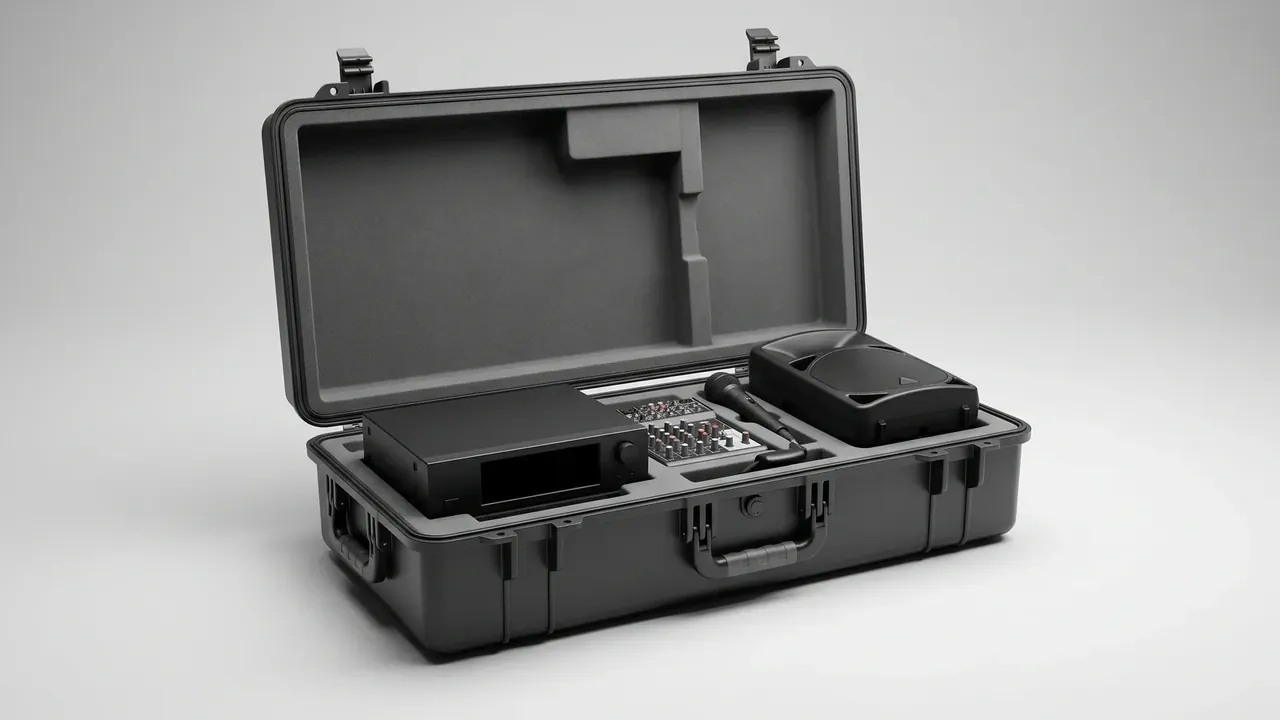
Quick answer: Rotational Molding Solutions for Industrial Cases hinge on the axis ratio: 3–8 rpm at 4:1, a 250–300 °C oven and a 3–6 mm wall set by shot weight.
Table of contents
- Two-Axis Ratio and Wall Distribution
- Powder Mesh and Shot Weight Conversion
- Oven Curve and Hold Time
- Shrinkage and Warp in Cooling
- Where Rotomolding, Injection and Blow Moulding Part
- FAQ
1. Two-Axis Ratio and Wall Distribution
Rotational Molding Solutions for Industrial Cases begin inside the oven, where a thin shell turns on two axes and powder fuses against its inner face. Nothing presses the material outward; the wall is laid down in layers. The major axis turns about the vertical, the minor about the horizontal, and both must keep running or the melt pools at the low side.
Rotational Molding Solutions for Industrial Cases settle the ratio before any other setting, commonly 4:1 and up to 8:1 on a long shell. Run it high and the long edges collect powder while the middle of the long face starves; run it low and corners take the load while flats thin out. A shell reused for a new shape needs a fresh ratio, not a copy of the last speed sheet.
Rotational Molding Solutions for Industrial Cases hold wall to ±10%–20%, corners naturally heavy and broad flats naturally light. Load paths belong in the corners, thin zones on non-structural panels; a latch seat in the middle of a flat puts the concentrated pull on the thinnest wall.
| Stage | Controlled | Range | Drift |
|---|---|---|---|
| Charging | Powder weight | 35 mesh | End faces starve |
| Heating | Oven air | 250–300 °C | Shell yellows |
| Rotation | Axis ratio | 3–8 rpm at 4:1 | One side thin |
| Cooling | Air then mist | Air first | Stress and warp |
| Demoulding | Surface heat | 40–50 °C | Wall sags |
Rotomolding rule: when the wall spread across 3 cases from one cycle exceeds 1.2 mm, or a visible sag appears at mid-length on the long face, that cycle's settings go back for reset.
2. Powder Mesh and Shot Weight Conversion
Powder is ground to 35 mesh, near 500 µm. Coarse grains flow well but fuse slowly, and too many fines cake inside the shell and leave pinholes, so the spread of the distribution matters more than the mean.
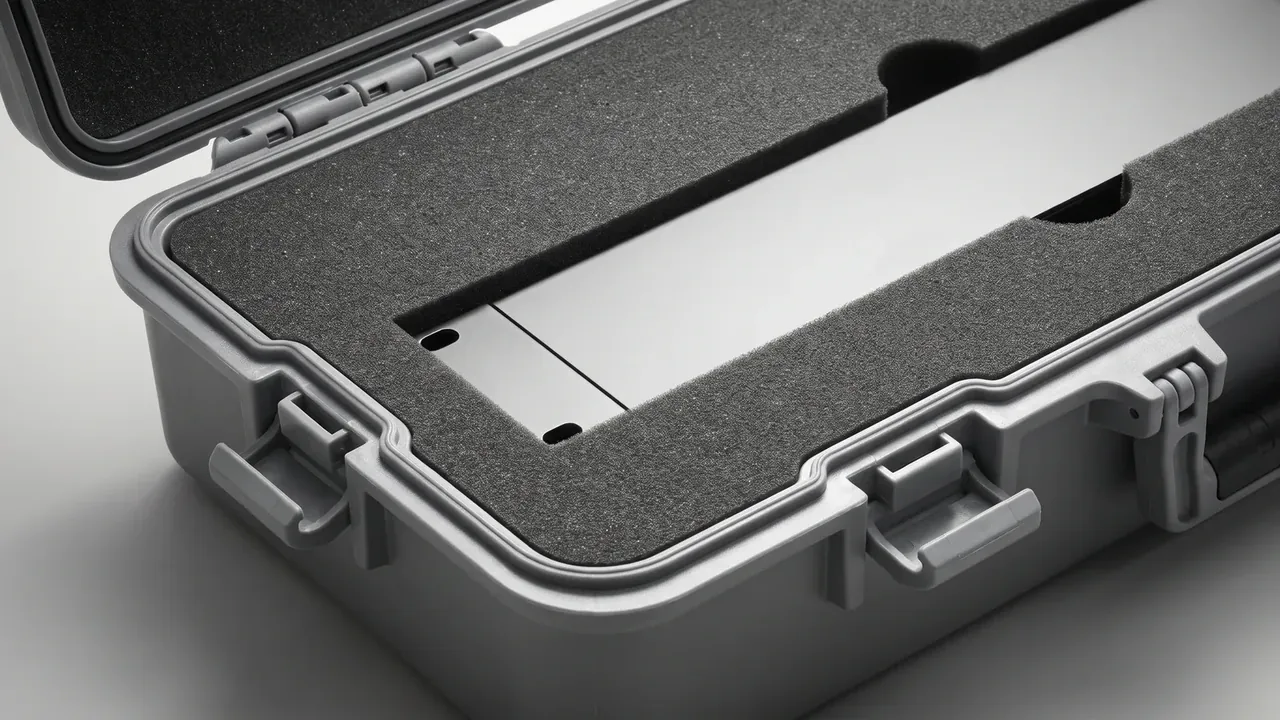
Rotational Molding Solutions for Industrial Cases use shot weight as the only dial that moves wall. Cavity area times target wall times density gives the charge: a 1.2 m² shell at 4 mm and 0.95 g/cm³ takes 4.6 kg, and the same shell at 6 mm takes 6.8 kg. The mould never changes, the scale does.
| Cavity area (m²) | Wall (mm) | Shot (kg) | Density |
|---|---|---|---|
| 0.8 | 3 | 2.3 | 0.95 |
| 1.2 | 4 | 4.6 | 0.95 |
| 1.2 | 6 | 6.8 | 0.95 |
| 1.6 | 5 | 7.6 | 0.95 |
Rotational Molding Solutions for Industrial Cases cannot thicken one zone, since extra powder runs to the hottest area. Stiffness comes from geometry: a shallow crown, a double wall, or a kiss-off where two faces fuse into an internal web.
Rotational Molding Solutions for Industrial Cases turn weighing error into wall error. Five percent extra charge gives five percent more wall and a matching rise in cost; five percent short starves the end faces first, and that unit is scrap.
3. Oven Curve and Hold Time
Oven air sits at 250–300 °C, and the shell is cast aluminium or thin sheet steel carrying no pressure, so heat arrives by circulating air. Hotter is not better: past degradation the case looks right at demoulding while impact strength has already dropped.
Rotational Molding Solutions for Industrial Cases scale hold time with wall: 10–15 minutes at 3 mm, 25–30 minutes at 6 mm, and a full cycle at 15–45 minutes with thick parts near the top. Adequacy is read from peak internal air temperature, not from the oven panel.
Rotational Molding Solutions for Industrial Cases also see the curve shift with oven load. Four shells in one charge shield each other from moving air, so a mould near the door heats faster than one at the back.
4. Shrinkage and Warp in Cooling
Rotational Molding Solutions for Industrial Cases run 5–15 minutes of cooling, air first and then a fine mist. The mould keeps turning the whole way: stop it for 1 minute and molten material runs downhill, shifting wall thickness on the spot.
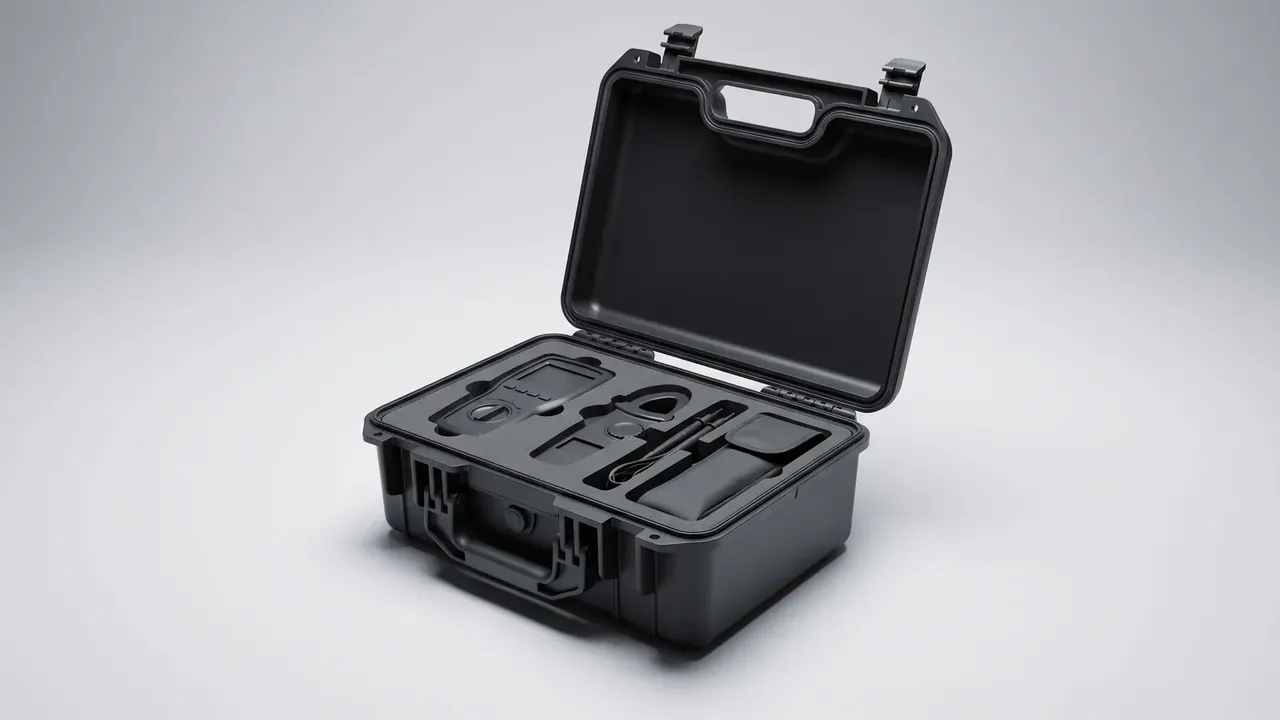
Rotational Molding Solutions for Industrial Cases allow 3.0%–3.5% shrinkage, well above PP and ABS, so the shell is cut oversize by that factor. The outer surface pulls away from the cavity but grips any feature standing inward, so bosses need 3°–5° of draft.
Rotational Molding Solutions for Industrial Cases trace most warp to uneven cooling. An unsupported flat bows in or out as one face cools faster than the other; a shallow crown, or a few ribs under the lid, is the cheapest cure.
Demoulding sits at 40–50 °C. Above that band the shell distorts under its own weight; below it, forcing the part out chips corners.
5. Where Rotomolding, Injection and Blow Moulding Part
Rotational Molding Solutions for Industrial Cases divide from the other two processes at pressure. A rotomould carries zero pressure, so the shell can be thin aluminium and cheap while the cycle stays long. Injection drives melt into a cavity under high pressure, so the tool must resist clamping force and the steel is usually P20 or 718.
The second divide is how wall is set: shot weight here, cavity gap in injection, parison thickness in blow moulding. A rotomould takes a new scale reading, an injection tool needs re-cutting.
Shrinkage points the same way. Injection grades run PP 1.0%–2.5%, ABS 0.4%–0.7% and HDPE 1.5%–3.0%, all under rotomoulding PE, which is why injection holds 2.0–3.5 mm evenly and rotomoulding is steadiest at 3–6 mm.
| Process | Pressure | Sets wall | Batch |
|---|---|---|---|
| Rotomoulding | None | Shot weight | Tens to thousands |
| Injection | Screw force | Cavity gap | Above ten thousand |
| Blow moulding | Air | Parison | Thousands to tens of thousands |
Batch size follows tooling cost. Under 100 a year, fabricated steel wins; 100 to 5,000 suits cast aluminium; past 10,000, injection finally amortises. Rotational Molding Solutions for Industrial Cases end on that point: wall comes from the weight of powder charged, not from pressure, so a change lands on the scale and the shell rather than on steel and a machine.
Related Reading
- How wall thickness is controlled in rotomoulding
- Rotomoulding against injection molding
- Usable cavity ratio and corner radius
- Reading rotomoulded case specifications
Related Products
- 8 Series — Gun Cases; Military Equipment Cases; Camera Equipment Cases; Drone Cases; Watch Cases; Knife Cases; First Aid Cases; Electronics Equipment Cases
- WL8-2812 PP Gun Case — model WL8-2812
- All protective cases and toolboxes: 7 series, 158 models