

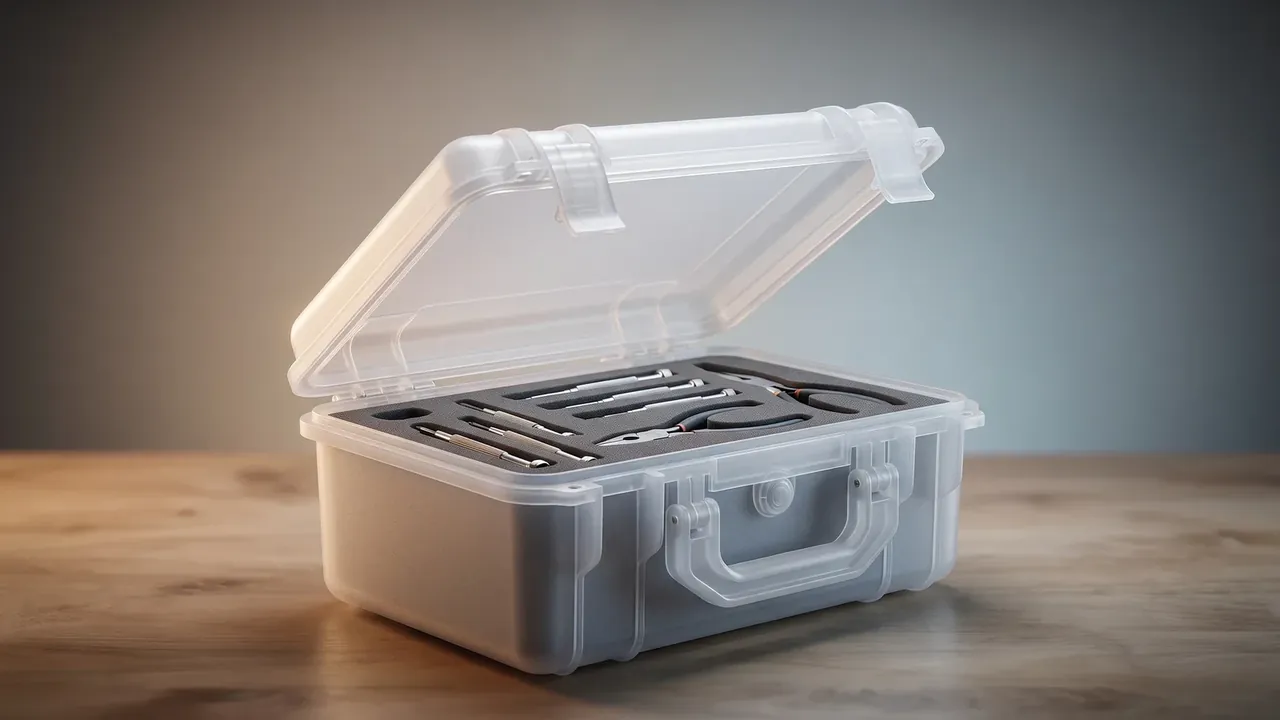
Quick answer: A rugged plastic equipment case is set by three variables: exposure time, handling action and reset frequency. Offshore decks need 480 hours of salt fog, cold stations need silicone gaskets and a warm-up step, ramps need resistance to low-amplitude vibration.
Table of contents
- Five Site Classes for a Rugged Plastic Equipment Case
- Offshore Platforms and Quay Yards: Salt Fog, Lifting, Lashing
- Cold Stations and Hot Shops: Thermal Cycling, Condensation, Gaskets
- Ramp and Track Maintenance: Vibration, Drops, Wheels
- Loading, Securing and Warehouse Moves
- FAQ
1. Five Site Classes for a Rugged Plastic Equipment Case
The same rugged plastic equipment case that keeps salt fog off a latch pin on a deck must also keep a ramp floor from grinding through its base ribs. Dimensions can match; the build cannot.
Sort by exposure time, handling action and reset frequency: exposure sets the ingress rating, handling sets lifting points and corners, reset frequency sets the latch.
| Site | Dominant exposure | Clause | Wall | Ingress | Securing |
|---|---|---|---|---|---|
| Offshore deck | 480 h salt fog | MIL-STD-810H 509.7 | 10 mm | IP67 | 316 stainless banding |
| Quay yard | 1.2 m drop | MIL-STD-810H 516.8 | 8 mm | IP66 | Pallet and stretch wrap |
| Cold station | 72 h at -40 C | MIL-STD-810H 502.7 | 8 mm | IP67 | Buried ground frame |
| Hot shop | 8 h daily at 55 C | IEC 60529 | 10 mm | IP65 | Wall bracket |
| Ramp bay | 3 h random vibration | MIL-STD-810H 514.8 | 6 mm | IP65 | Bed tie-down points |
Read it in that order to avoid the classic error: pick wall thickness first and the rugged plastic equipment case will not close squarely.
IP67 on a rugged plastic equipment case is not a licence to sit in water: 1 m depth, 30 minutes, still water.
2. Offshore Platforms and Quay Yards: Salt Fog, Lifting, Lashing
Offshore exposure is salt fog plus wind; acceptance is often 480 hours of neutral salt fog to ASTM B117. This class of rugged plastic equipment case takes 316 stainless pins, no exposed springs, and corner lifting eyes moulded into the body.
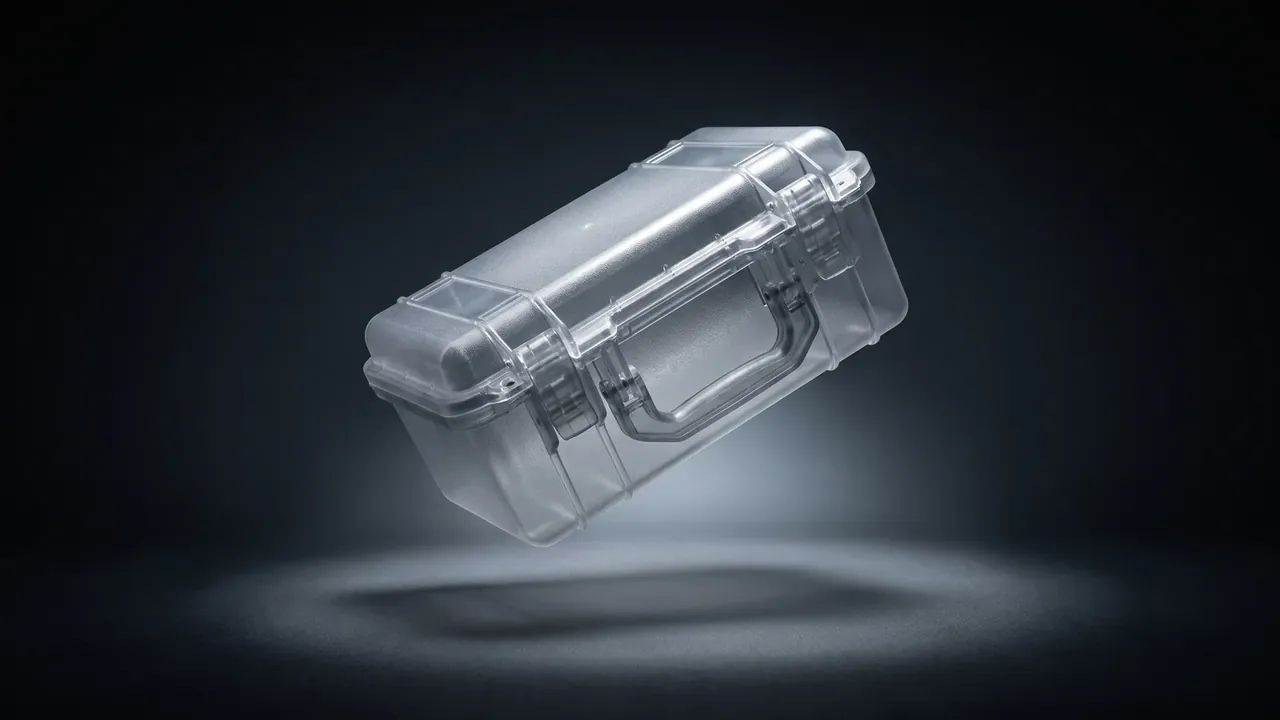
Lifting follows crane habits: four cases per hook, 25 mm slings, angle under 45 degrees; at 60 kg loaded the eye pad sees three times its own weight. Eyes sit where corner post meets base.
Lashing fails more often than lifting does.
The quay-yard mistake is resting a case on a container corner casting; the corner chalks white within two weeks. A 20 mm plywood pad costs less than a replacement.
3. Cold Stations and Hot Shops: Thermal Cycling, Condensation, Gaskets
The cold problem is the swing, not the cold. A case held at -40 C for 72 hours and carried into a 20 C room pulls its gasket into the groove.
| Duty | Temperature and time | Gasket | Opening force | Action |
|---|---|---|---|---|
| Cold outdoor | -40 C for 72 h | Silicone, 60 Shore A | Up to 180 N | Warm 4 h first |
| Hot shop | 55 C, 8 h daily | EPDM | Up to 120 N | Grease quarterly |
| Day-night cycle | -20 C to 45 C, 30 days | Silicone | Up to 165 N | Fit breather valve |
Heat growth is the second issue. Across 55 C and -20 C a 600 mm panel of 10 mm wall moves about 0.6 mm, against a seal groove only 4 mm wide, so once compression is used up water resistance degrades. That is why this class carries a breather valve at 0.02 MPa cracking pressure. The membrane is a wear part on a two-year interval and is changed with its seat. Oil mist near machine tools pulls that to one year. None of it appears on an acceptance sheet, and one question during a walk-through shows whether the supplier knows the floor.
Compression set, not compound, decides gasket life.
4. Ramp and Track Maintenance: Vibration, Drops, Wheels
Ramp loading is low amplitude over a long time: joints every 3 m, so a 1.5 km tow is five hundred impacts. On a rugged plastic equipment case, two longitudinal base skids take the wear instead of the wall.
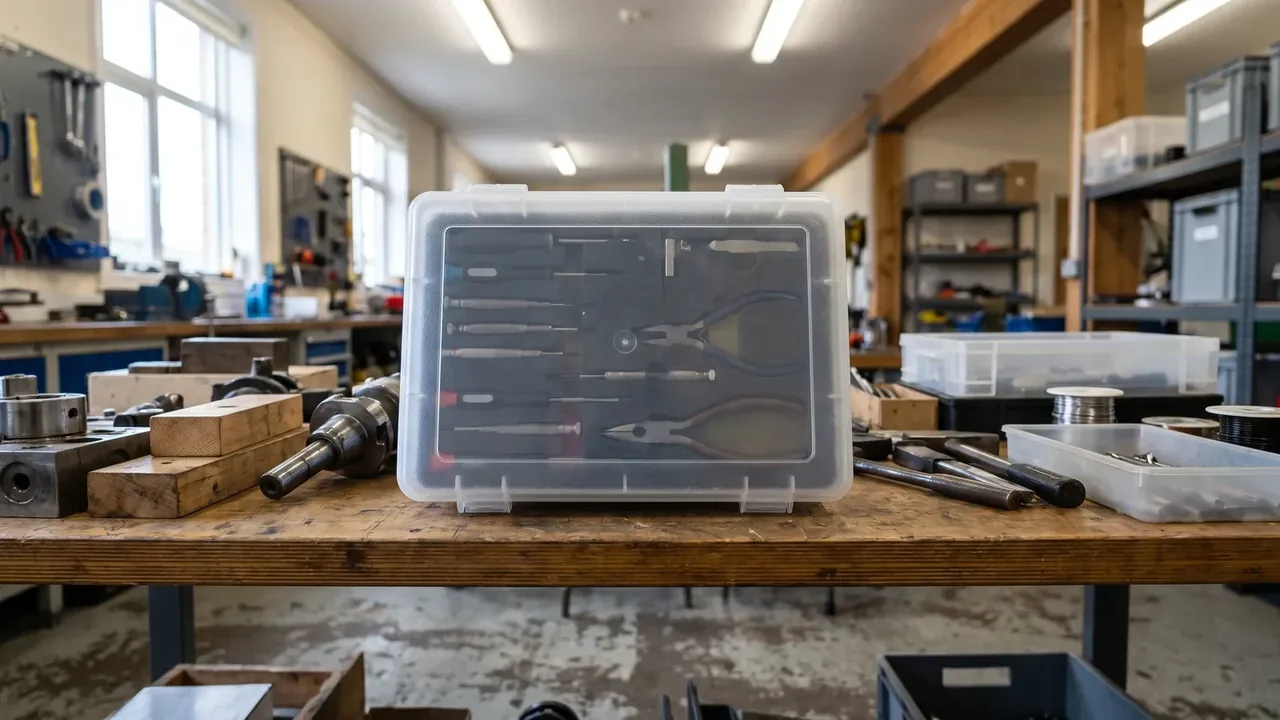
Drop testing means 1.2 m onto concrete at 45 kg, over four corners and eight edges. Moulded corner guards beat stick-on bumpers, which split by the third drop.
Wheels follow the floor. A 75 mm wheel jams on a 20 mm joint; 100 mm rolls through but raises the centre of gravity.
5. Loading, Securing and Warehouse Moves
Reset is the routine that gets skipped. Load heavy items on the base centreline, centre of gravity below one third of height, and the case lifts level.
- Loading: slots at two thirds of item height;
- Securing: four-point tie-down, each point rated at twice loaded weight;
- Inbound: labels out, four high at most;
- Outbound: warm a cold-soaked case for 4 h first;
- Empty return: latch half-closed, against gasket set;
- Review: pull 5 cases monthly, re-check gasket marks under 1 mm.
Empty returns get treated as housekeeping.
Conclusion
The five sites differ in ingress rating, wall thickness, securing method and reset routine, and that order cannot be reversed. Read in sequence, a rugged plastic equipment case drops its repair rate noticeably.
This article discusses only the container (case body) side of specifications and design intent, and does not cover any handling, loading or use of the contents.
Related Reading
- Equipment cases in industrial inspection rounds
- Field configurations for camera equipment cases
- Protective setups for electronics at remote sites
- How fire equipment cases are laid out for access
Related Products
- 8 Series — Gun Cases; Military Equipment Cases; Camera Equipment Cases; Drone Cases; Watch Cases; Knife Cases; First Aid Cases; Electronics Equipment Cases
- WL8-2812 PP Gun Case — model WL8-2812
- All protective cases and toolboxes: 7 series, 158 models