

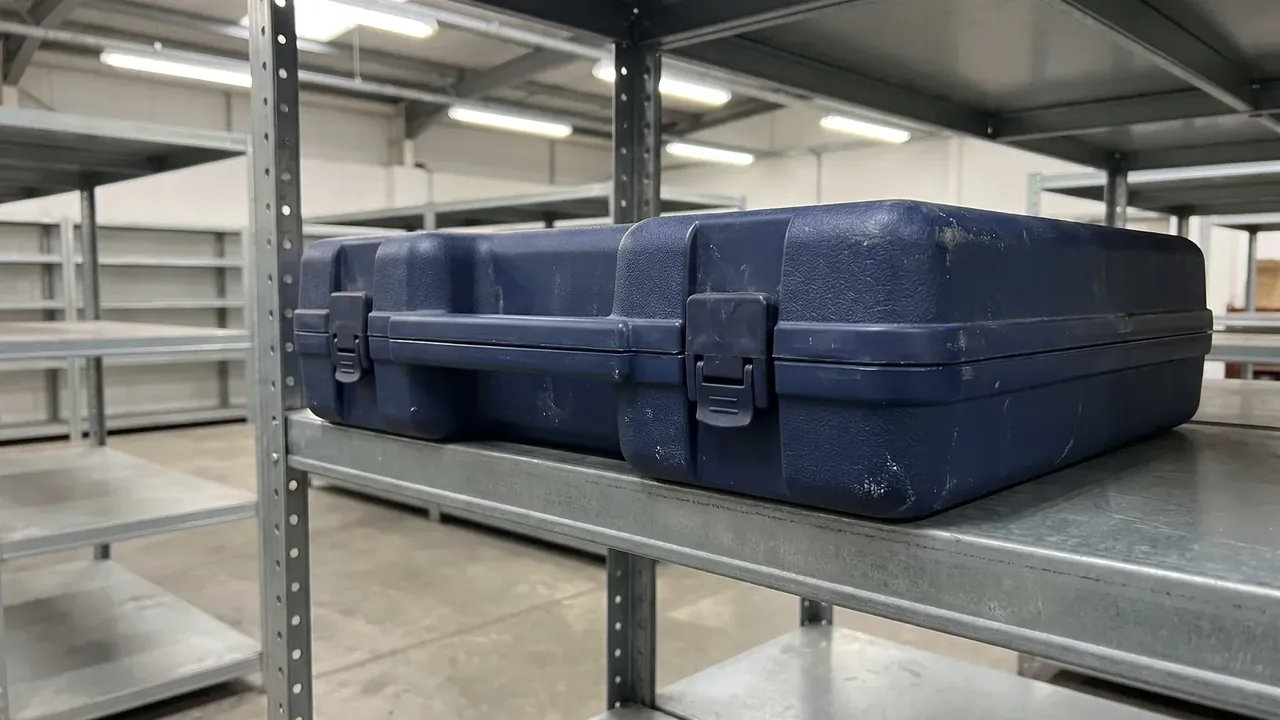
Quick answer: A case ECN that moves one 2 mm rib passes review in 3 days, yet if nobody tells packaging, 2,000 finished cases no longer fit the carton.
Table of contents
- Start with a 7-field form
- Three days of impact assessment
- Marking revision A to B
- 1,200 in stock, three outcomes
- Two signatures and who pays
- FAQ
1. Start with a 7-field form
A post-launch case ECN does not need a long document. Anything longer than 1 page goes unread on the floor, while seven fields fit in 10 min and still cover what a tool change touches.
| Field | What goes in | Who fills it |
|---|---|---|
| 1 Number | Year plus serial, unique within the year | Supplier PM |
| 2 Originator and date | Who, when, target date | Requester |
| 3 Change point | Part, dimension, reason | Requester |
| 4 Drawing and revision | Drawing number, A→B, before and after | Supplier engineering |
| 5 Affected areas | Tool, fixture, stock, certification, packaging | Supplier engineering |
| 6 Effective batch | The batch where the new version starts | Supplier planning |
| 7 Signatures | One from each side | Both |
Field 3 fails most often. A line reading "rib adjusted" gets returned, because the floor cannot tell which rib or by how much. Write that the third base rib goes from 3 mm to 5 mm after a drop test left a 1.2 mm whitening mark.
Field 5 decides the outcome. All five areas get ticked, and a "no impact" tick still needs a line of evidence. The 2,000-carton accident happened because only the tool was ticked.
Field 6 carries one batch number, never a date range. A batch ties to a single production order, while dates grow ambiguous across month boundaries.
Past one page, completion rates halve and the rest travels by word of mouth.
2. Three days of impact assessment
Three days split by shift: day 1 for tool and fixture, day 2 for stock and packaging, day 3 for certification and the reply to the customer.
| Area | What to check | Output |
|---|---|---|
| Tool | Ribs, holes, draft, machining hours | Change now or trial first |
| Fixture | Jigs, gauges, assembly nests | Whether 4 h of changeover holds |
| Stock | Finished and semi-finished quantity | Rework, concession or scrap |
| Certification | Seal face, wall, outline dimensions | Retest or waive |
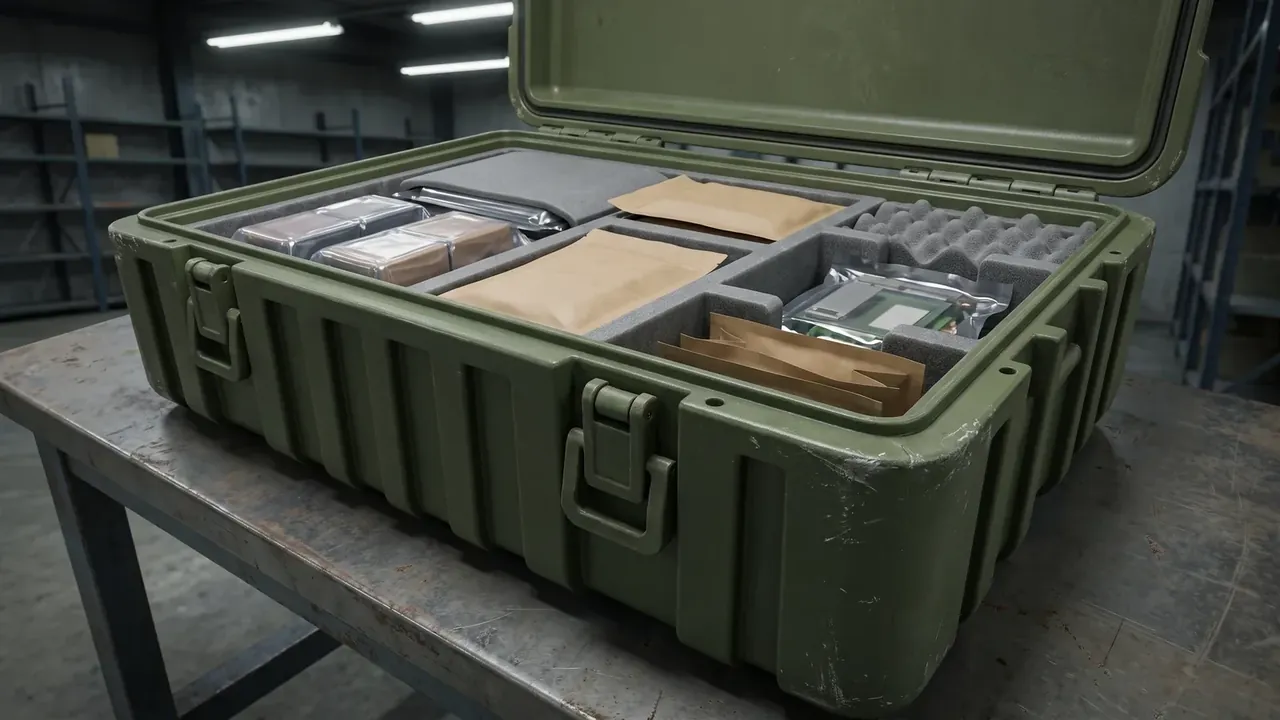
Tool work splits by where the cut lands. A rib change touches an insert and finishes in 4 h; a hole change moves the core and usually the water circuit, so budget 1 day.
Fixtures get forgotten. A gauge built for the old outline will not clamp a case that moved 3 mm, and rebuilding gauge and nest takes 5 days, longer than the tool work.
Stock needs warehouse numbers, not impressions. Of 1,200 finished cases on the books, roughly a third can be reworked, because rework depends on whether the change sits in a repairable zone.
Certification decides the route. Seal face, wall thickness or outline means a new IP and drop test; colour, print or nameplate can be waived. Every assessment ends in one of three verdicts: release now, release after trial, release after retest. A vague assessment is no assessment.
3. Marking revision A to B
Revision marking needs three layers. The tool carries A or B plus a two-digit year inside the base; a date stamp tracks the batch; the nameplate carries a trailing letter.
The tool engraving is the most reliable layer because it travels with the cavity and cannot be edited. The date stamp is the one most often skipped, so plants fall back to stickers, and one missed sticker mixes the batch.
A mark has to be visible without opening the packaging, readable in 3 s and matched to the effective batch. Base engraving needs the lid open, so the carton carries a label in the same position with the same letter.
Revision letters on the drawing alone are not a mark. The floor draws material against a schedule line that has no revision field, so the letter never reaches the station.
Keep a first-article sample from the switch day, labelled for 12 months. On the next complaint it can save stripping a whole batch.
4. 1,200 in stock, three outcomes
Stock does not share one fate. Whether the change is repairable and whether the customer accepts it split 1,200 cases into rework, concession and scrap, near 35%, 53% and 12%.
| Outcome | Units | Condition | Cost each |
|---|---|---|---|
| Rework | 420 | Change in a repairable zone, outline in tolerance | 6 yuan |
| Concession | 640 | No effect on assembly, seal or appearance | 0 |
| Scrap | 140 | Seal face, latch seat or load-bearing structure | Full |
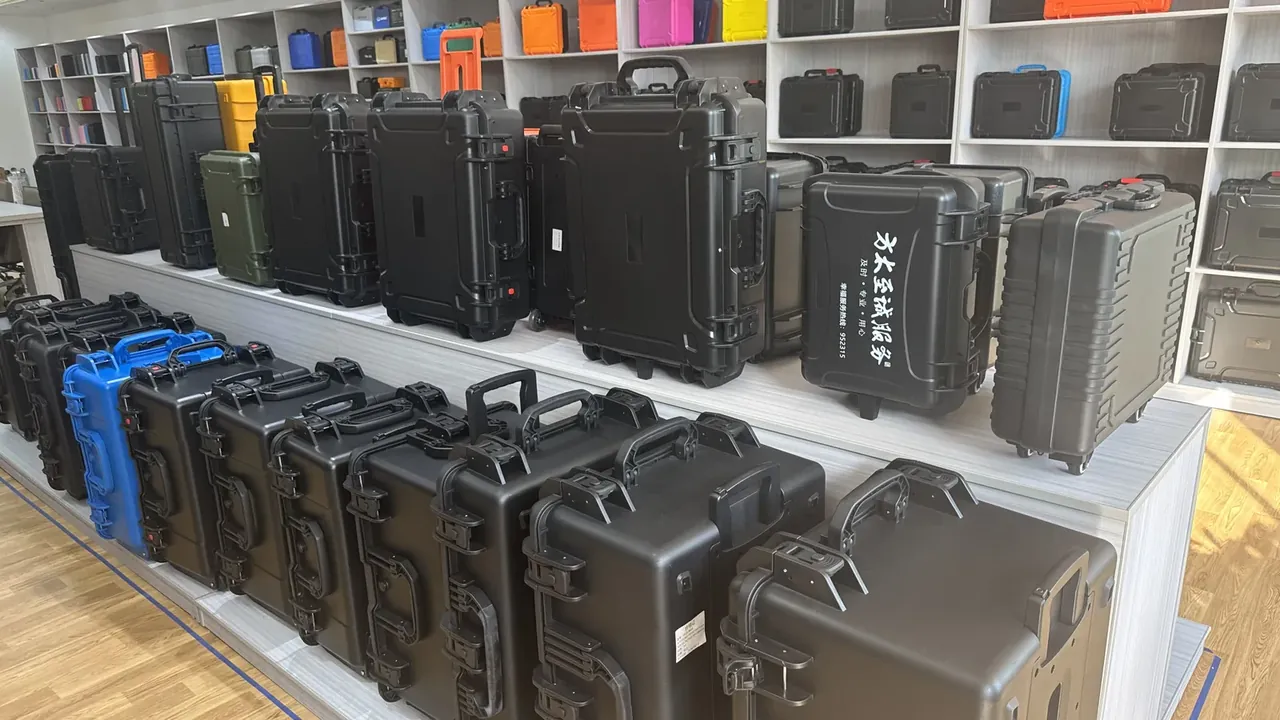
Order matters. Check the seal face and load path first, and scrap anything that touches them. Then ask whether the outline can be corrected inside tolerance. Only then ask the customer to accept a concession.
Rework pays for itself. Four hundred and twenty cases at 6 yuan is 2,520 yuan, against 28,560 yuan to scrap them at 68 yuan each, a gap of 26,040 yuan that covers a tool change.
The 4 h changeover breaks into 1.5 h stripping, 1.2 h fitting, 0.8 h heating and 0.5 h first article. Heating overruns most: a tool climbing from 25 ℃ to 60 ℃ at 40 ℃ an hour needs 0.9 h.
Leave 2 h of buffer on the switch shift. Adjusting a first article is cheaper than reworking a batch.
5. Two signatures and who pays
Two signatures carry the responsibility split. Supplier engineering owns fields 4, 5 and 6; the customer's project owner owns fields 2 and 3. Signing is not stamping: each side confirms its own fields are not fiction.
Cost follows cause. A customer-requested change that is not a defect puts tooling and stock disposal on the customer. A change forced by supplier capability sits with the supplier. A change driven by a standard splits by remaining order quantity.
Five changes always trigger retesting: seal geometry, wall thickness, outline dimensions, latch seat position and material grade, at roughly 3 weeks. Colour, print, nameplate and foam layout stay out of scope.
The middle ground is where plants misjudge. Turning a round handle hole into a slot keeps diameter and position, yet moves the stress concentration, so the crack point shifts during a drop. Run three drop samples instead of a full retest.
Conclusion
Most of the cost of a case ECN sits in the missed field, not in the tool. One page of seven fields turns misses into ticks: field 3 states part, dimension and reason, field 5 ticks tool, fixture, stock, certification and packaging with evidence, field 6 holds one batch number, field 7 carries two signatures. Split three days by shift and force a verdict on the third, because a vague assessment invites the change to arrive through the back door. The decision line is plain. No signature without evidence on every affected area, and no schedule promise on any change touching seal geometry, wall, outline, latch seat or material grade before 3 weeks of retest are booked. Run it that way and a 2 mm rib never becomes 2,000 cartons of rework.
Seven-field checklist:
- Number unique within the year and quoted on the schedule
- Originator, date and target date filled
- Change point names part, dimension and reason
- Revision marked A→B with before and after values
- All five affected areas ticked with evidence
- One effective batch that maps to a production order
- Two signatures, each beside the owned fields
- Stock counted, disposal costed
- Verdict reduced to retest or waive
This article discusses container-side specifications and design implications only, and does not cover any handling, loading or use of the contents.
Related Reading
- Reading technical parameters on a case drawing
- Setting safety stock for cases
- Trial runs after a tool change
- Custom case specification checklist
Related Products
- 8 Series — Gun Cases; Military Equipment Cases; Camera Equipment Cases; Drone Cases; Watch Cases; Knife Cases; First Aid Cases; Electronics Equipment Cases
- WL8-2812 PP Gun Case — model WL8-2812
- All protective cases and toolboxes: 7 series, 158 models