

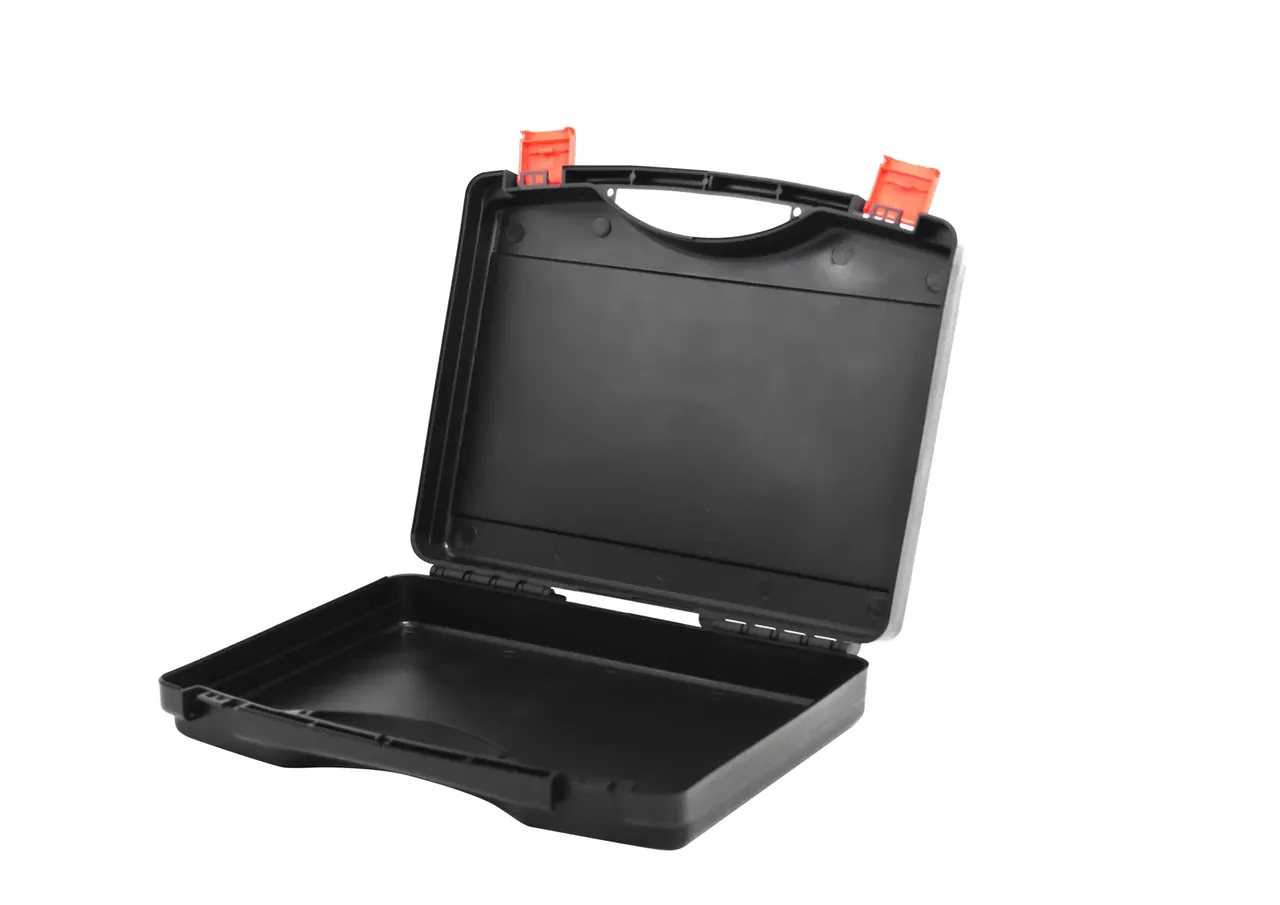
Quick answer: Safe vs protective case is a mismatch of rulers, not of quality. A safe is graded on net working time to break in — 5 minutes for UL 1037 RSC, 15 minutes for a GB 10409 Class A unit. A protective case holds no burglary grade; its 25-second latch delays opportunists, not planners.
Table of contents
- Security Grades: Two Rulers
- What a Grade Actually Buys
- Attack Paths: Prying, Drilling, Cutting
- Weight, Anchoring and Walking Away
- Inside the Box: Humidity, Dust, Fire
- Cost and Life: Once Against Every Time
- FAQ
1. Security Grades: Two Rulers
A safe is graded by net working time: how long a tester with a defined tool set needs to make an opening. A protective case is graded by IEC 60529 for dust and water and by IEC 62262 for impact, written as IP and IK codes. Neither scale converts into the other.
| Grading item | Burglary safe | Protective case |
|---|---|---|
| Standard | UL 1037, EN 1143-1, GB 10409 | IEC 60529, IEC 62262 |
| Typical levels | RSC, Grade 0–3, Class A/B/C | IP65, IP67, IP68; IK08, IK10 |
| What is measured | Net working time to enter, min | Ingress after dust and water; 5 J impact |
| Lid or door gap | Under 3 mm, with an anti-pry step | Gasket compression 25%–30% |
| Unit weight | 45–120 kg | 3.9–8.6 kg |
| Normal fixing | Two M10 expansion bolts | 6 mm padlock eye plus cable |
Lay a 45 kg safe beside a 4.2 kg case and only three rows line up: weight, fixing and shell material.
2. What a Grade Actually Buys
RSC means residential security container, and the test is blunt: one technician, hand tools, five minutes, no opening. The list covers a screwdriver, a hammer, a pry bar and a hand saw. EN 1143-1 scores in resistance units instead: Grade 0 is 30 RU, Grade 3 is 120 RU, so a higher number means the standard tool set needs longer to make a hand-sized opening. GB 10409 splits safes into Class A, B and C at 15, 30 and 60 minutes.
All three thresholds sit above five minutes, and that is where reading goes wrong. Five minutes does not mean the box cannot be opened; it means it cannot be opened inside five minutes. Put the same clock on a protective case: a 6 mm PP latch shears in about 25 seconds, the lid lifts 8 mm, and a second latch adds 45 seconds. Net working time counts only effective attack, so bending a door without an opening scores nothing; the 22 mm bolt throw behind a 3 mm door does the holding.
3. Attack Paths: Prying, Drilling, Cutting
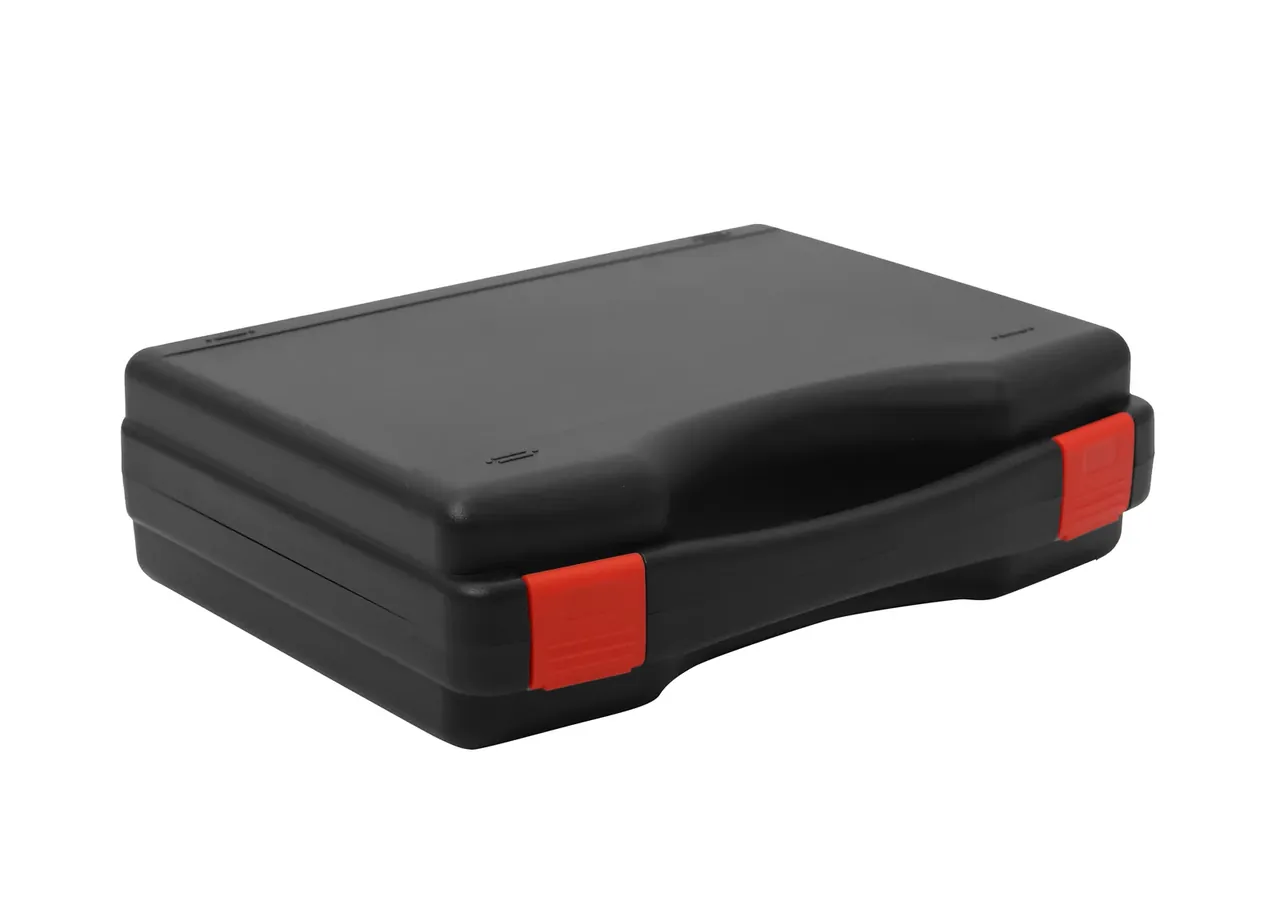
Three routes — pry, drill, cut — land on the same box minutes apart.
| Attack | 45 kg burglary safe | 4.2 kg protective case |
|---|---|---|
| Flat screwdriver in the lid gap | 3 mm gap, 17 min to lever | Latch shears in 25 s, open by 70 s |
| 6 mm drill into the lock | 90 s through the face, 8 min more to the bolt | 40 s through the wall into the cavity |
| Angle grinder on the wall | 300 mm opening in about 4 min | 300 mm opening in about 12 s |
| Carry the unit away | 45 kg, two people and a trolley | 4.2 kg, one hand |
The last row is the one buyers forget. A grade measures entry, not removal, yet whole-unit removal is a large share of losses. Two M10 bolts at 8 kN of pull-out close that route; a 1.5 m cable at 2.5 kN lasts about 8 seconds against a 60 cm bolt cutter.
What the case delivers is evidence: a forced latch stays deformed and the lid rim keeps a dent past 0.5 mm, so the next person knows.
4. Weight, Anchoring and Walking Away
The gap between 45 kg and 4.2 kg is time, not just effort.
- 45 kg safe: two-person lift, 260 CNY per local move, 30 CNY per floor without a lift.
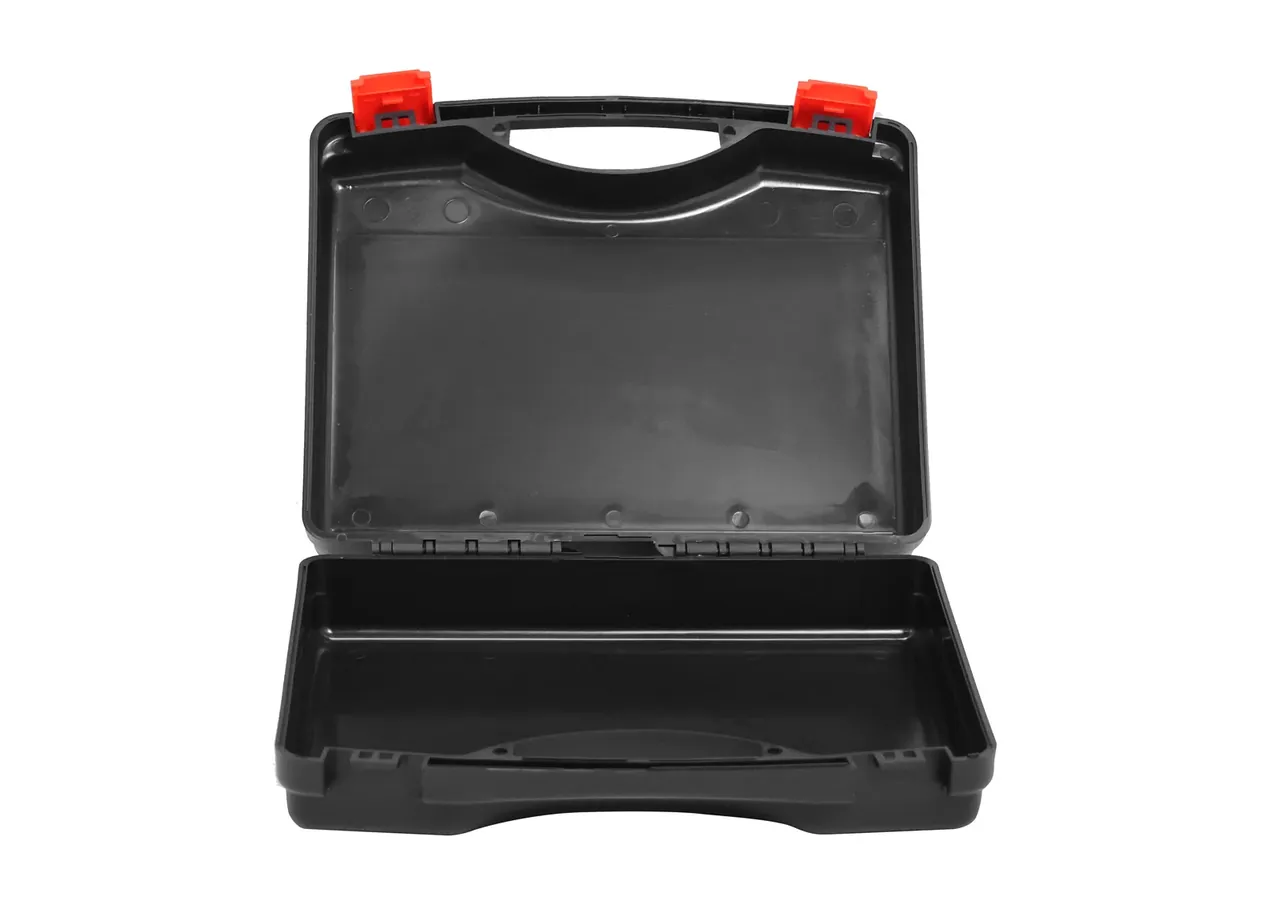
- 4.2 kg case: one-hand carry, 1.5 m cable through a 6 mm eye, 2.5 kN breaking load.
- Two M10 expansion bolts: C25 concrete, 12 mm hole 80 mm deep, 8 kN pull-out.
- Re-torque: every 12 months at 25 N·m; replace any bolt that has moved a quarter turn.
The expensive item is not the bolt, it is the 45 kg. Floors, lifts and thresholds add cost to the legitimate move, and the same obstacles face the person removing it: three minutes for one against twenty for two.
5. Inside the Box: Humidity, Dust, Fire
A safe door leaves a 1.5 mm gap and carries no gasket, so internal humidity follows the room. In a Jiangnan plum-rain season at 78% RH the interior reads 76%, and paper records ripple at the edges within three months. A case at IP67 holds out water at 1 m for 30 minutes, and 100 g of molecular sieve keeps the cavity near 35% RH for 30 days.
Fire is a third scale neither product includes by default. A UL 72 one-hour rating requires an internal reading below 177 °C while the outside reaches 927 °C. A plain case hits 180 °C inside in about 15 minutes at the same exposure, and the wall softens at 210 °C. Fire protection cannot be bought with extra wall thickness.
6. Cost and Life: Once Against Every Time
| Item | Burglary safe | Protective case |
|---|---|---|
| Purchase, CNY | 2,800 | 420 |
| Installation, CNY | 300 (anchoring) | 0 |
| Five-year upkeep, CNY | 120 (re-torque, battery) | 90 (gasket) |
| One local move, CNY | 260 | 0 |
| After a break-in | Replace the unit | Replace a latch, 18 CNY |
Five years comes to 3,220 CNY against 510 CNY, a factor of 6.3. Safe vs protective case is therefore not a question of which is safer but of who turns up and how long they stay: a site office or a dormitory needs a 420 CNY case plus a cable; someone prepared needs the 2,800 CNY entry ticket.
Conclusion
Safe vs protective case splits on the ruler, not the price tag: 5, 15 and 60 minutes of working time on one side, IP67, IK08 and a 1.2 m drop on the other. Buy minutes when the threat is a person, buy IP and IK when the threat is weather, and accept that one box cannot cover both.
This article discusses only the container (case body) side of specifications and design intent, and does not cover any handling, loading or use of the contents.
Related Reading
- Case lock options: padlock eyes, combination dials and seals
- Pressure decay testing: criteria and fixtures
- Case tare weight and freight: cost per kilogram
- TSA locks and airline travel cases: working with inspection
Related Products
- 8 Series — Gun Cases; Military Equipment Cases; Camera Equipment Cases; Drone Cases; Watch Cases; Knife Cases; First Aid Cases; Electronics Equipment Cases
- WL8-2812 PP Gun Case — model WL8-2812
- All protective cases and toolboxes: 7 series, 158 models