

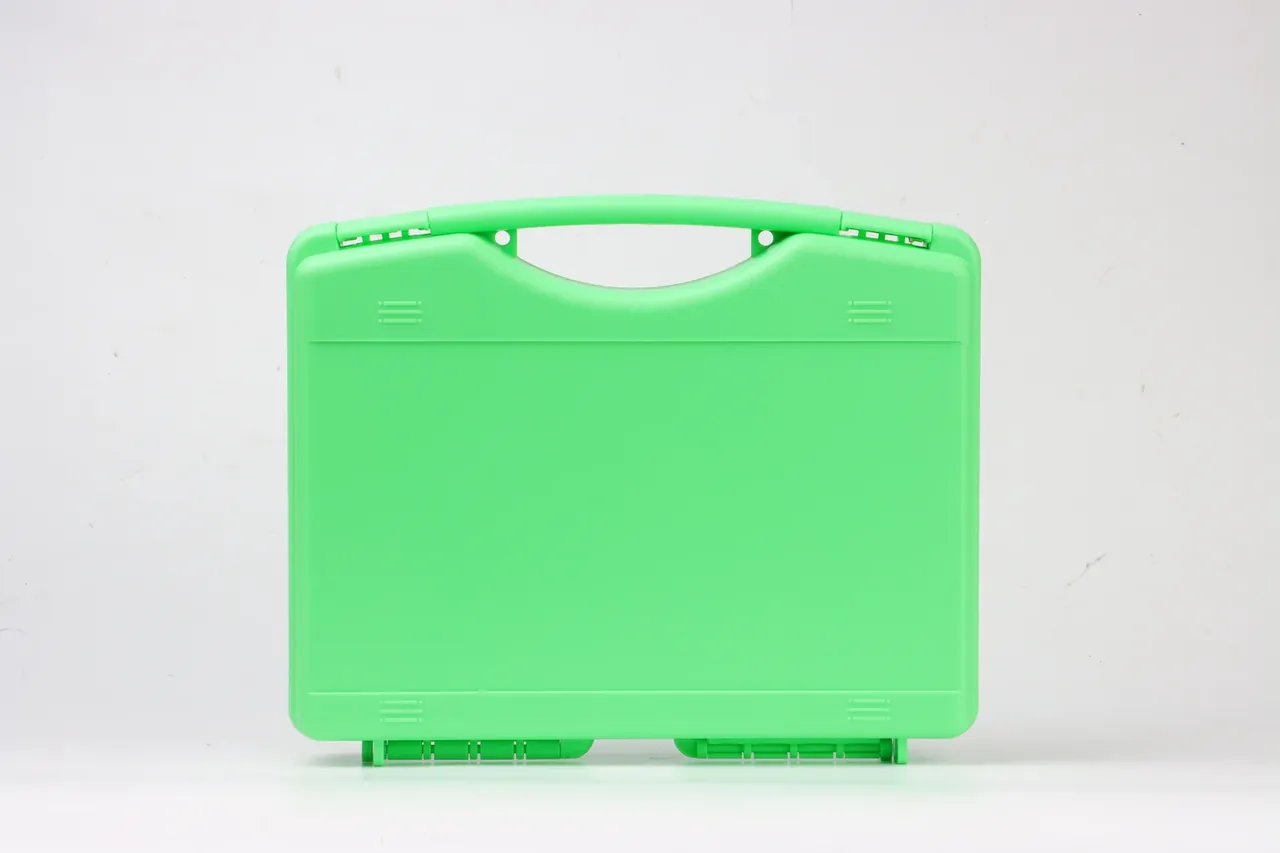
Quick answer: Forty-eight hours screens the plating on exposed hardware; ninety-six hours shows how far corrosion creeps out of a scribe and a seam. Both use the same neutral fog, so the difference is dose, not severity, and a report must say which one it means.
Table of contents
- What a salt spray test fixes, and what the two durations measure
- At 48 hours, read the latches, hinges and screws
- At 96 hours, read the whole case and the scribe
- Six fields the report has to pin down
- FAQ
1. What a salt spray test fixes, and what the two durations measure
Neutral salt spray is a fixed recipe: 5% sodium chloride, 35 °C ± 2 °C inside the chamber, brine pH 6.5–7.2, a fall-out rate of 1–2 mL per 80 cm² per hour, and specimens held at 20° from vertical. Shift any one of those and a 48-hour result can no longer sit beside a 96-hour result from another laboratory. A salt spray test records accumulated deposit, not one moment of resistance.
The durations differ by dose, not by severity. Under continuous fog to ASTM B117, 96 hours lays down twice the salt of 48, and attack travels from plating pores, punched edges and thread roots into the substrate. A case clean at 48 hours can pit at 96.
Pick by question. Forty-eight hours suits lot-to-lot comparison of incoming hardware; ninety-six suits a new mould or a new plating supplier, where the weak points sit in seams and scribes.
Placement moves the reading too: leave 30 mm between cases, and note whether an opening faced up, where brine pools, or down, where fog is blocked.
| Duration | Subject | Item read | Reference limit |
|---|---|---|---|
| 48 h | Latches, hinges, screws | White rust area | ≤5%, no red rust |
| 96 h | Case face and scribe | One-side creep | ≤2 mm, no red rust |
| 96 h | Springs, inserts | Pit size and count | ≤1 mm each, ≤3 total |
2. At 48 hours, read the latches, hinges and screws
At 48 hours the subject is the exposed metal, not the whole shell. Latch bodies are die-cast zinc alloy or 304 stainless, tongue springs are often 65Mn, hinge pins run 304 or 316, shell screws are nickel-plated carbon steel. The moulded shell does not rust; corrosion starts on those parts and on the threaded inserts, always in the same places, so the inspection route stays short.
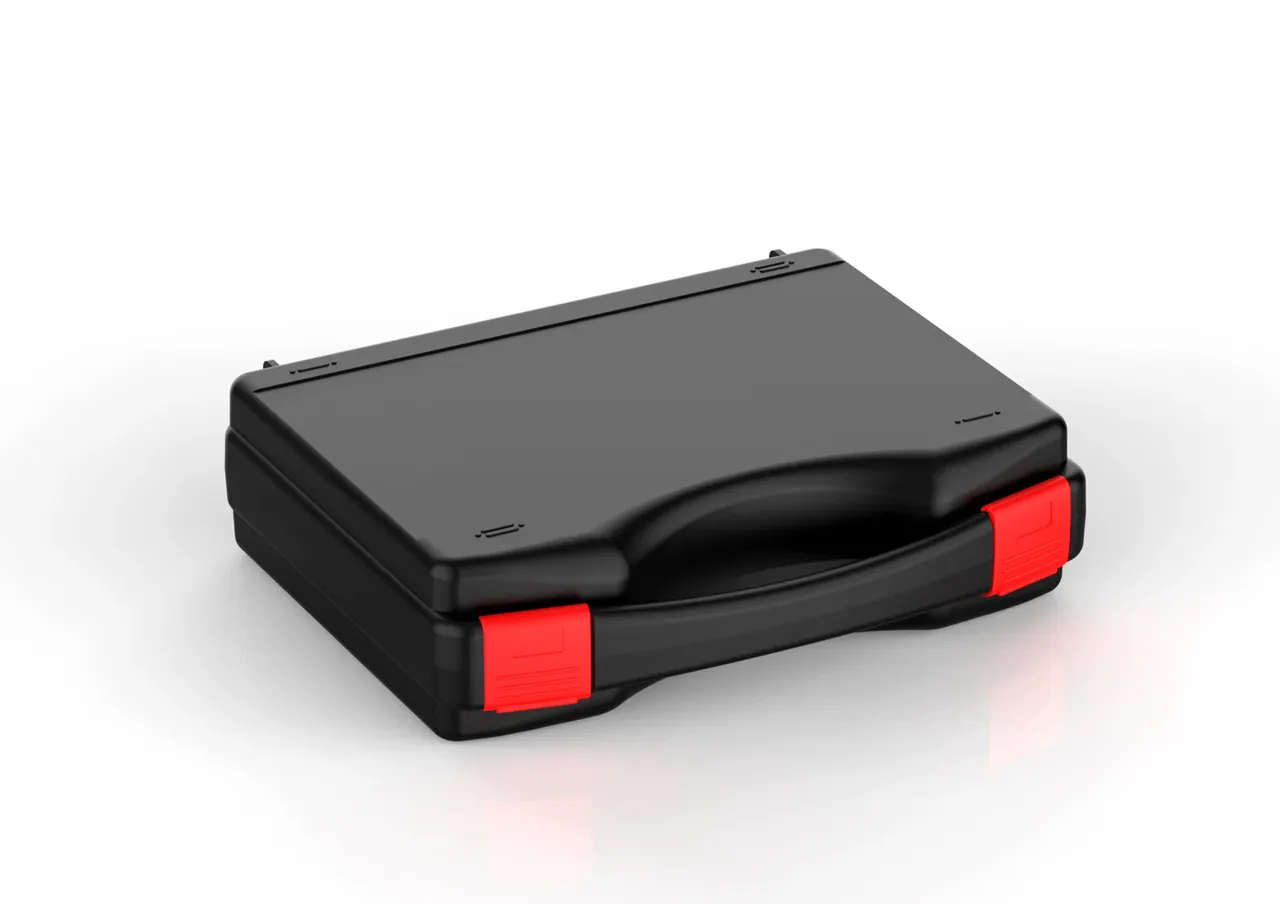
Finish separates parts long before 96 hours. Electroplated zinc shows white rust between 24 and 48 hours; zinc-nickel at 12%–15% nickel holds past 720; zinc flake passes 500; powder coat fails first at scribes and edges. Same latch, different finish, and the salt spray numbers differ by an order of magnitude.
| Finish | Thickness | White rust | Red rust |
|---|---|---|---|
| Electroplated zinc | 8–12 μm | 24–48 h | 72–120 h |
| Zinc-nickel | 10–15 μm | >500 h | >720 h |
| Zinc flake | 8–10 μm | >480 h | >720 h |
| Powder coat | 60–90 μm | not applicable | >500 h at a scribe |
Write the limit down, or "some rust" and "pass" become one sentence. A workable wording is white rust no more than 5% of area by grid count, zero red rust, three pieces drawn from a 50-piece lot. Read the screw recess as well as the head, because the cross slot carries the thinnest plating on the part.
Hinge pins get skipped. The pin and bore are a sliding fit, and brine that enters is hard to rinse out, so strip one hinge after 48 hours rather than judging the outside. Grease with poor salt resistance rusts the bore from within.
3. At 96 hours, read the whole case and the scribe
Ninety-six hours exists to make creep visible. Scribe one line 0.5 mm wide and 50 mm long across the case face and another beside a latch seat, cutting through to the substrate, then run the whole case. Measure the corroded width on each side and rate it by ASTM D1654; that separates coatings far better than a yes-or-no rust call.
Creep of 2 mm or less per side is the usual acceptance line. Beyond it, adhesion is short or the degrease step was incomplete; when one piece in a lot crosses the line, the cause is normally the pre-treatment bath, not the operator.
The pass also covers every upward-facing surface. The lid collects salt, so a continuous white bloom after 96 hours means thin plating or a spent passivation layer. The underside often looks clean only because fog settles downward, and the report should say so.
Moulded parts behave differently. PP and ABS do not corrode but take up moisture, and a dimension can move 0.1%–0.3% in 96 hours, which changes the gasket groove width. That is how a salt spray test reaches sealing indirectly, and why some cases show a larger pressure drop on retest.
Springs and inserts surface at 96 hours. Inserts are brass or steel, and once pressed into plastic the thread roots expose copper; green stain or brown bleed arrives by then, barely touching an appearance score and still seizing a bolt at assembly.
4. Six fields the report has to pin down
A report is worth what can be reproduced from it. Two laboratories can move the verdict a grade on wording alone.
- Standard and year: ASTM B117 or GB/T 10125, since fall-out requirements differ between editions.
- Brine batch and concentration: 5% ± 0.5%, pH 6.5–7.2, traceable to the mixing date.
- Fall-out rate and collector position: 1–2 mL per 80 cm² per hour, shelf and corner named.
- Sample state: gasket fitted or removed, latches closed or open, scribe position and depth.
- Duration and interruptions: continuous fog for 96 hours, plus chamber openings and their length.
- Rating method: Rp grade to GB/T 6461 or creep grade to ASTM D1654, shot at a fixed distance.
The rating method is the field most often dropped. The same white bloom scores 3 by area and may score 6 as an Rp number, and the two figures cannot be compared once they share a table. A salt spray report that says only "passed" leaves a buyer nothing to compare when the supplier changes. Photographs at a fixed distance, with a scale in frame, are what let anyone re-measure creep later.
Conclusion
The 48-hour and 96-hour runs of a salt spray test answer two questions: where plating on exposed hardware begins to fail, and how fast a whole case creeps at scribes and seams. Name the standard year, brine concentration, fall-out rate and rating method in the purchase document instead of a bare duration, and the two sets of numbers begin to mean something together.
This article discusses only the container (case body) side of specifications and design intent, and does not cover any handling, loading or use of the contents.
Related Reading
- Choosing gasket and O-ring materials
- Latch and hardware material reference
- Waterproof hard case standards and test conditions
Related Products
- 8 Series — Gun Cases; Military Equipment Cases; Camera Equipment Cases; Drone Cases; Watch Cases; Knife Cases; First Aid Cases; Electronics Equipment Cases
- WL8-2812 PP Gun Case — model WL8-2812
- All protective cases and toolboxes: 7 series, 158 models