

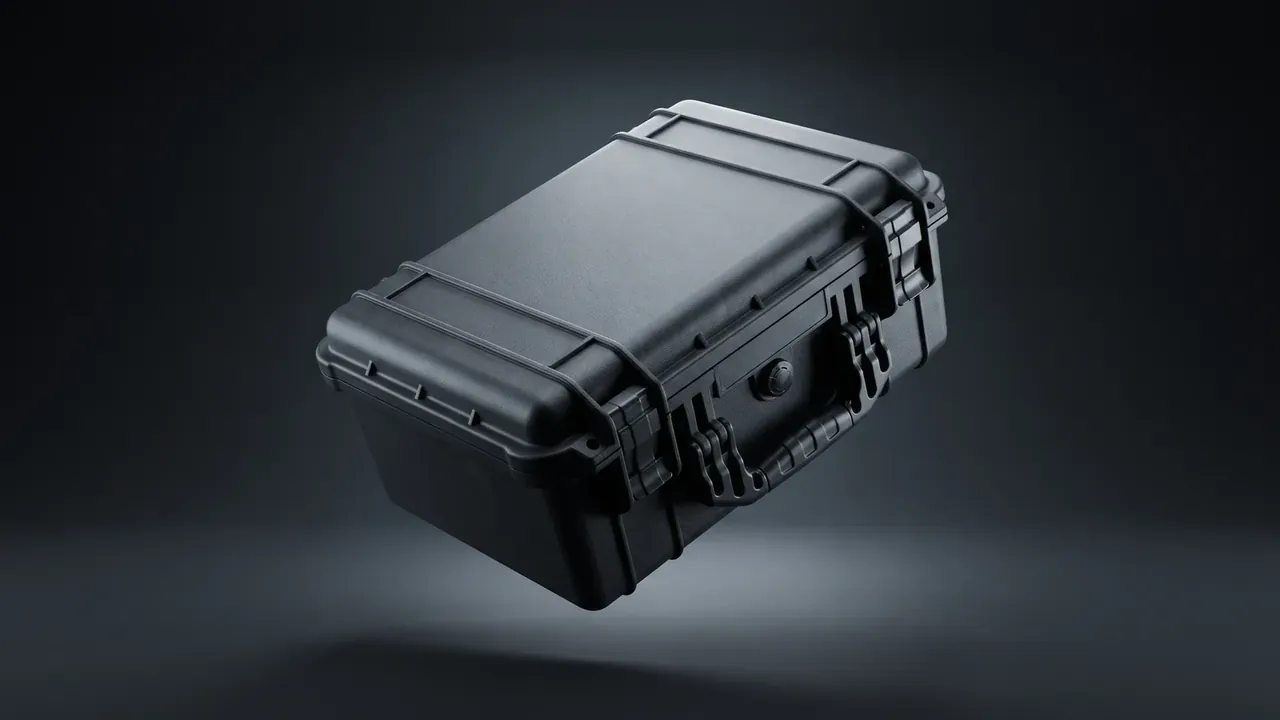
Quick answer: Three readings decide a sniper rifle case: vacuum hold after closing, mid-span sag under full load, and latch force at low temperature. Each takes one bench tool and about a minute, and each can go straight onto an acceptance sheet.
Table of contents
- Five Checks and Pass Lines for an Incoming Sniper Rifle Case
- Cold Soak: Judging the Lid Seal at Minus Thirty
- Drop and Vibration: Four Numbers Instead of Eyeballing
- Measuring on Site: Three Tools and Two Readings
- Disposition: Rework, Concession or Return
- FAQ
1. Five Checks and Pass Lines for an Incoming Sniper Rifle Case
Northern winter. Six hours in an unheated truck body at minus thirty, a long rifle with suppressor inside, eighteen kilograms gross, and the case goes from tailgate to dock with no warm stop.
Cold makes the shell brittle, the gasket stiff and the latches heavy. None of that appears on the certificate, so the checks have to be numbers.
| Check | Method | Pass line |
|---|---|---|
| Lid seal | 2 kPa vacuum at the purge valve | Holds 60 seconds |
| Sag under load | 18 kg fitted, mid-span measured | 3 mm maximum |
| Latch force | Pull gauge at minus thirty | 180 N maximum |
| Wall | Ultrasonic, five points | 4.5 mm minimum |
Salt spray sits outside the table: 48 hours at a lab, no base-metal rust.
2. Cold Soak: Judging the Lid Seal at Minus Thirty
The gasket fails before the shell does. Rubber at minus thirty loses rebound, stops conforming, and the lid closes down on a hairline gap nobody sees.
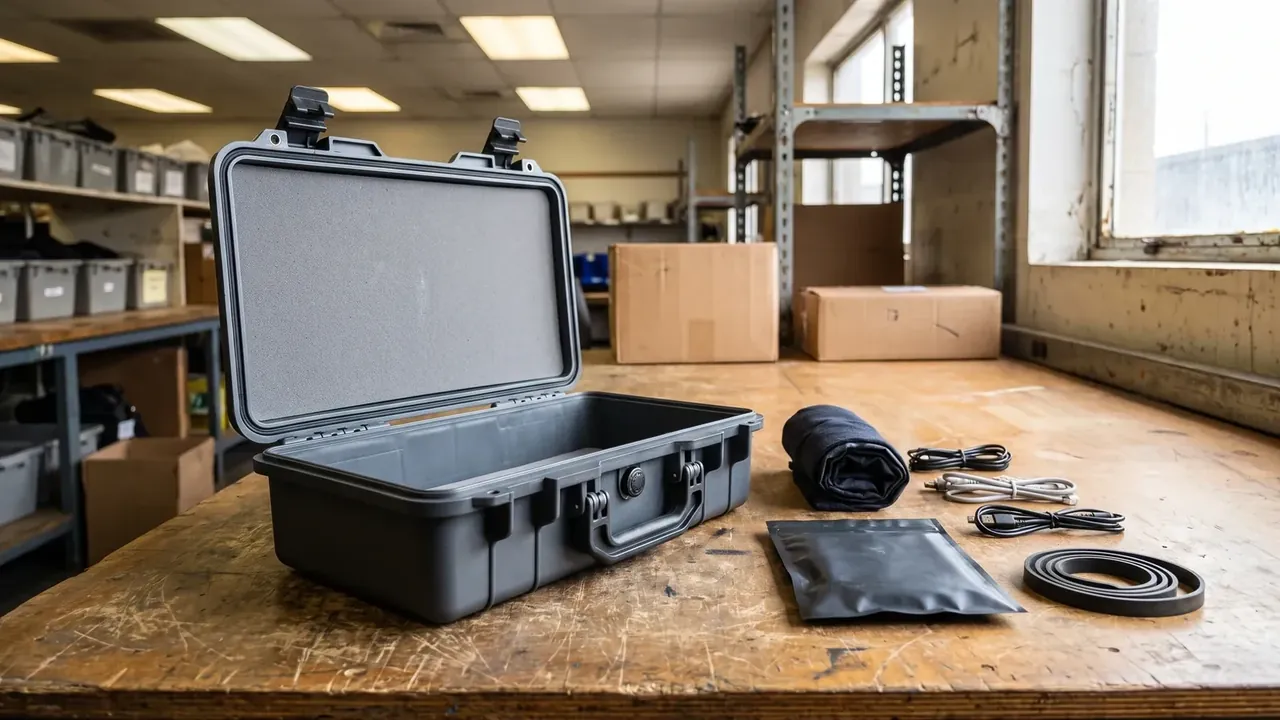
Close the lid, pull 2 kPa, time the hold. Warm, it should sit past 60 seconds. After a six-hour soak, anything under 20 seconds means the compound is too stiff, so change grade or widen the compression band. Shoving the lid harder changes nothing, and a thumb press is not a reading.
Headspace hides the same problem. Foam hardens too, and a 5 mm allowance above the scope tips the mount during the closing stroke.
3. Drop and Vibration: Four Numbers Instead of Eyeballing
A sniper rifle case that fails a drop test usually has sound corners and one shifted block. Read four numbers:
- Corner gaps: anything past 2 mm fails.
- Latch preload: play means a bent hinge seat.
- Block creep: rebond beyond 3 mm.
- Seal retention: seventy percent of the pre-drop time.
Height follows weight. Eighteen kilograms gets 1.2 m, the ordinary fumble of a two-person carry; airdrop figures reject sound units and screen nothing.
Vibration is a separate test: twenty kilometres of broken surface, then inspect the bond line under every block.
4. Measuring on Site: Three Tools and Two Readings
A 200 N pull gauge, a portable ultrasonic thickness gauge, a feeler set readable to 0.02 mm. Any store room can hold all three.
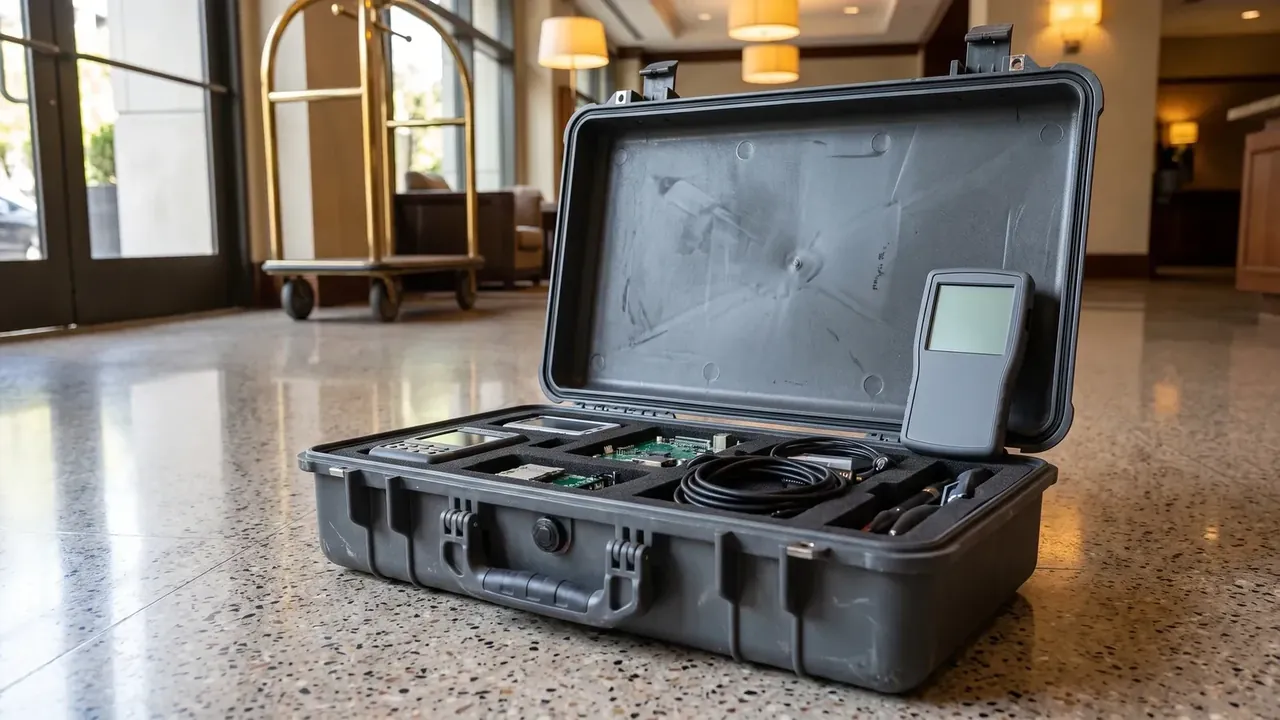
Single-latch force: pull on a steady arc, read the peak, repeat three times, take the middle figure. Corner gaps: run the feeler around the seal face and record the thickest leaf at each corner. File both sets and the next order compares directly. Two units sitting twenty percent apart in one batch means inconsistent latch seats, so sort the batch and retest rather than reject the pallet.
Gaps first, force second. Reversed, the gasket already carries a compression set and the gap reads small enough to pass.
One check needs no tool: close it empty, invert it, wait ten minutes, watch the lid.
5. Disposition: Rework, Concession or Return
Grade the defect by location and the decision follows without argument.
| Grade | Defect | Disposition |
|---|---|---|
| Seal or structure | Gap over 2 mm, seal-face scratch | Return |
| Handling | Latch over 180 N, block creep | Rework, then retest |
| Appearance | Scuff away from the seal face | Concession |
Rework means adjusting the latch seat or rebonding a block, both done at the supplier. A scratch on the seal face goes back regardless, because that band is the only face-pressure closure in the design.
Keep the five thickness readings, the hold time and the four gaps. Photographs settle nothing; numbers end the argument.
Conclusion
Five figures settle a sniper rifle case: 60 seconds of vacuum, 3 mm of sag, 180 N of latch force, 4.5 mm of wall, 48 hours of salt spray. All five are measurable at the dock and writable into a contract. What decides a batch is whether anyone recorded them, and an unrecorded sniper rifle case is an opinion rather than an inspection.
This article discusses only the container (case body) side of specifications and design intent, and does not cover any handling, loading or use of the contents.
Related Reading
- Sniper rifle case use in duty and transport
- Sniper rifle case specifications: cavity, supports and damping
- Airdrop case inspection items and pass lines
- Artillery shell box acceptance and sampling rates
Related Products
- 8 Series — Gun Cases; Military Equipment Cases; Camera Equipment Cases; Drone Cases; Watch Cases; Knife Cases; First Aid Cases; Electronics Equipment Cases
- WL8-2812 PP Gun Case — model WL8-2812
- All protective cases and toolboxes: 7 series, 158 models