

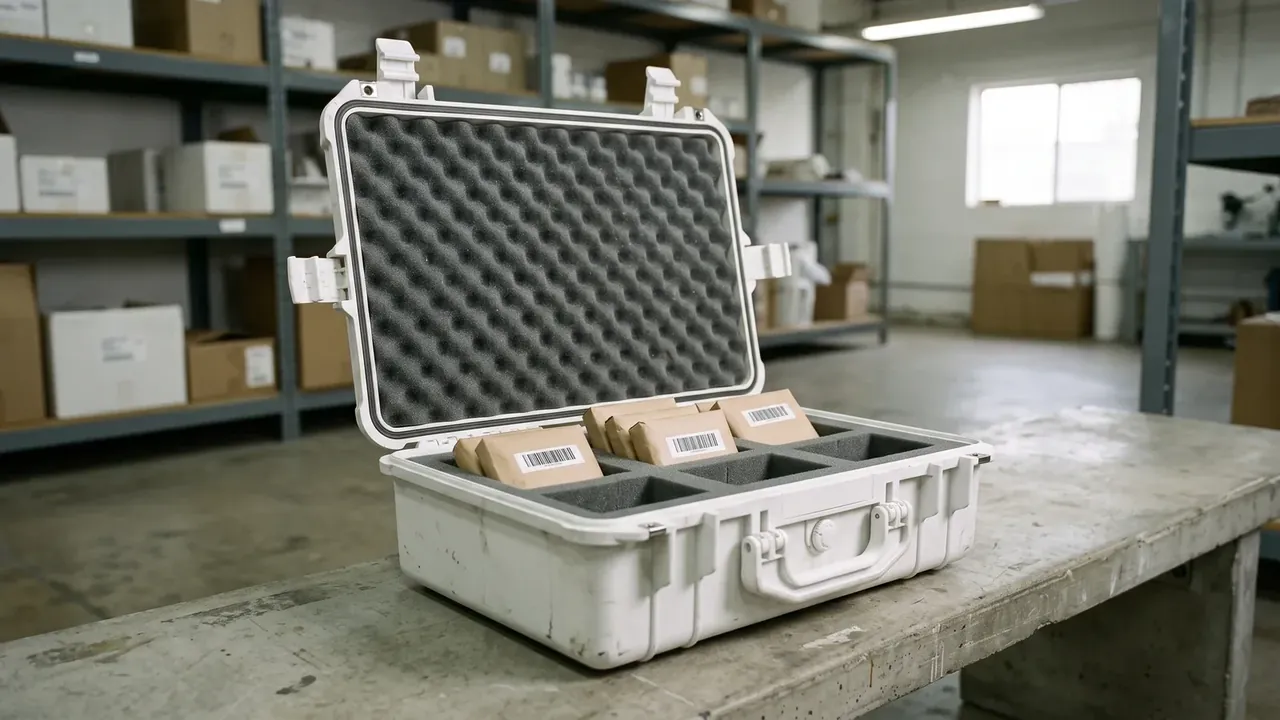
Quick answer: A Solar panel tester portable waterproof case holds Delta E below 2.5 after 500 h of QUV with 2.2% masterbatch and a 3.4 mm overmould.
Table of contents
- Masterbatch Ratio of the Solar Panel Tester Portable Waterproof Case
- Corner Overmould Thickness
- Colour Shift After 500 Hours of QUV Ageing
- Notched Impact on Recovered Samples
- Masterbatch Setting for Outdoor Batches
- FAQ
1. Masterbatch Ratio of the Solar Panel Tester Portable Waterproof Case
Five hundred hours under UV lamps settles two questions: whether the shell yellows and whether the corners still take a strike. The UV masterbatch is a dose blended into the PP resin before moulding, so the whole wall carries one weather-resistance level. Cut the dose and the wall yellows early; raise it too far and flow marks appear at the corners. A Solar panel tester portable waterproof case treats the dose as a fixed drawing item. At 520 x 365 x 190 mm outside, 455 x 305 x 135 mm inside and 4.1 mm wall thickness, each blend leaves a retained sample instead of being carried over by feel.
Masterbatch tiers run low, middle and high, each paired with one overmould thickness, and the bench reads colour shift and impact together.
| Masterbatch tier | Additive dose | Paired overmould | Bench verdict |
|---|---|---|---|
| Low | 1.6% | 2.8 mm | Delta E crosses 2.5 early |
| Middle | 2.2% | 3.4 mm | Shift and impact both hold |
| High | 2.8% | 4.0 mm | Surplus impact margin only |
What matters is the hour the low tier drops out of bounds. On a Solar panel tester portable waterproof case the blend log records one ratio per 25 kg batch with mixing time and melt temperature. A rising shift at 1.6% sends the batch back for re-blending, since uneven dispersion makes two faces read two different shifts.
2. Corner Overmould Thickness
The corner meets the ground first in a drop, and a thicker overmould spreads the load wider. The overmould is a second shot of modified PP, graded from 2.8 mm to 4.0 mm and matched tier by tier to the dose; too thin and notched impact reads low before ageing, too thick and the corner fouls the lid mouth.
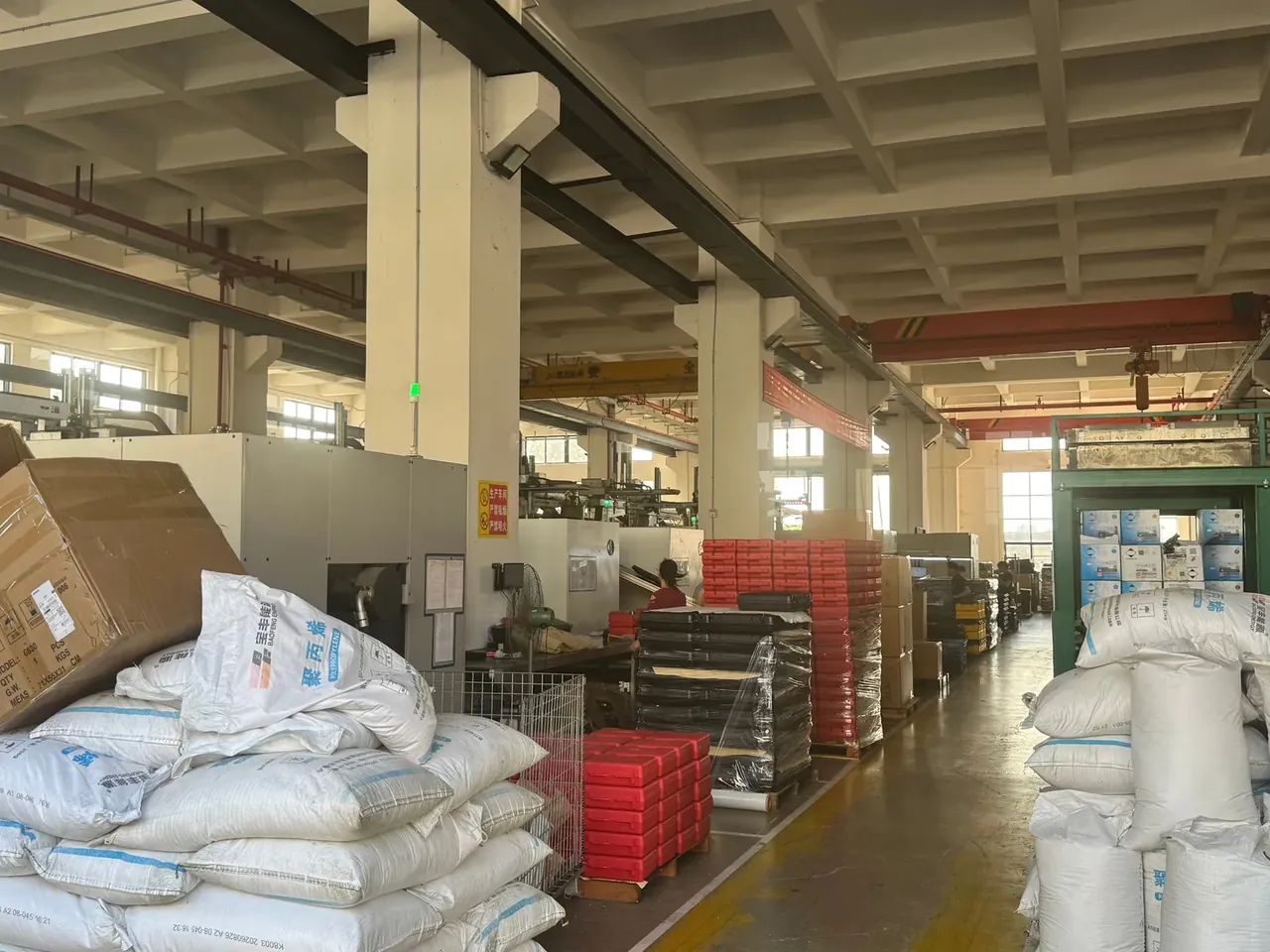
The knit line is ground flush before the bench, since a leftover groove starts a crack after five hundred hours of UV. The 3.4 mm overmould on a Solar panel tester portable waterproof case is fixed with the 2.2% dose, and only a change to both counts as a revision; lifting it to 4.0 mm alone buys impact margin while the yellowing wall goes unattended. Six cases ride each bench, one notched specimen per corner, and 24 specimens are read as one data set.
3. Colour Shift After 500 Hours of QUV Ageing
The QUV bench runs a fluorescent-UV condensation cycle, sampling every 100 h and logging Delta E with gloss retention. A Solar panel tester portable waterproof case treats Delta E at or below 2.5 as a ceiling for the whole run, not an end-point figure; a tier climbing mid-run is dropped even if the final reading falls back under 2.5.
| Ageing segment | Cumulative exposure | Shift ceiling | Logging action |
|---|---|---|---|
| 100 h | Segment 1 | Delta E 1.0 | Read lid and base faces |
| 300 h | Segment 3 | Delta E 1.8 | Add overmould corner |
| 500 h | Segment 5 | Delta E 2.5 | Move samples to impact rig |
The five-hundredth-hour figure means nothing until tied back to 100 h and 300 h. If a Solar panel tester portable waterproof case jumps from Delta E 1.8 to 2.4 between 300 h and 500 h, the batch returns to its blend log as unstable dispersion. One white tile calibrates the instrument, lid, base and corner are read at 3 points each, and the 9-point mean enters the table.
4. Notched Impact on Recovered Samples
Once colour shift is logged the cases stay on the bench and go to the impact rig as notched specimens. Notched impact is benchmarked against a notched-impact method, with 18 kJ/m2 or more as retained; an unaged blank runs on the same machine, and retention compares aged against blank rather than an absolute number.
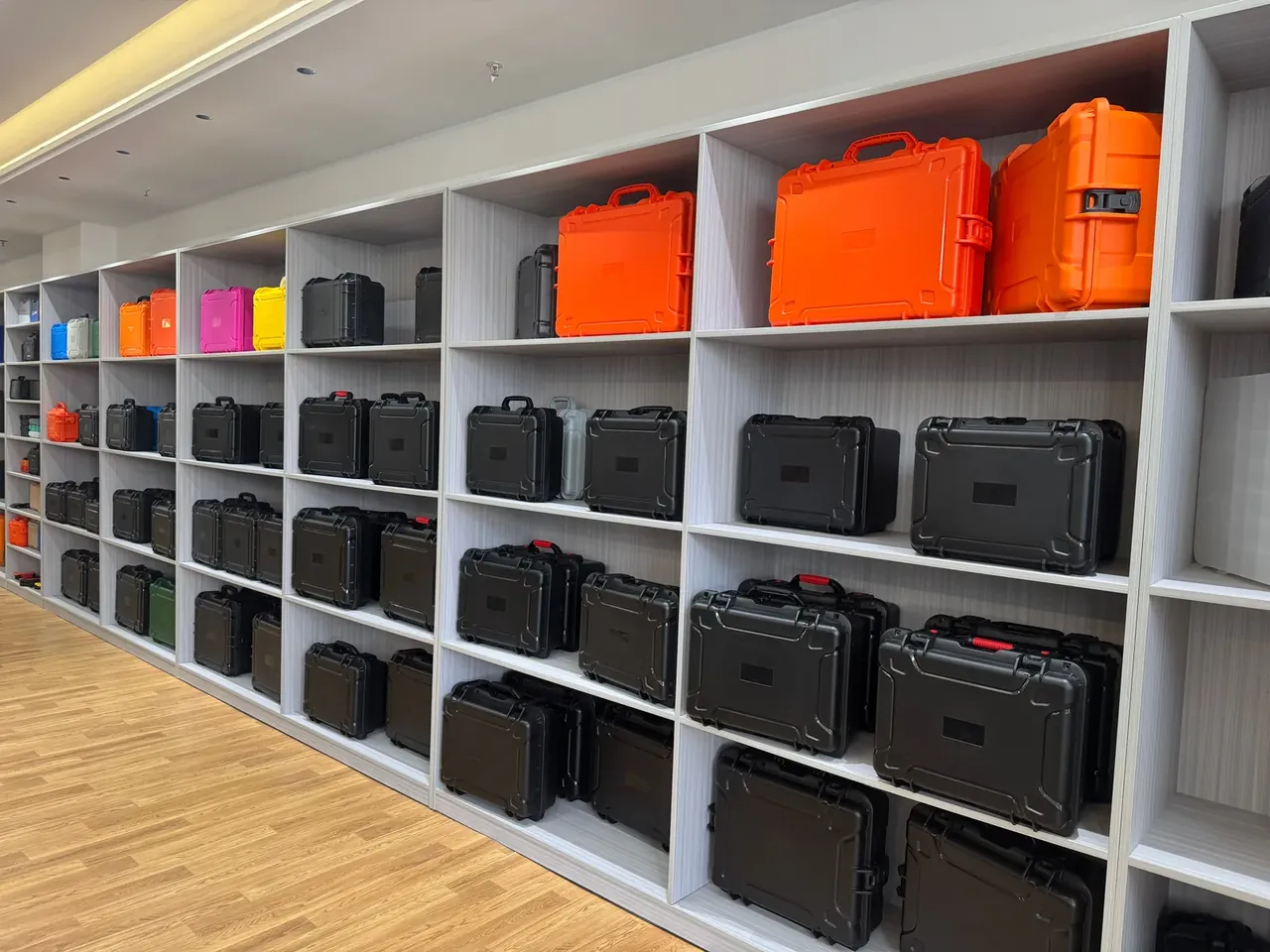
Retesting must be read with the temperature swing: after one pass from -10 °C to 55 °C the expansion mismatch amplifies at the notch, so a Solar panel tester portable waterproof case runs a second impact group and passes only when both clear 18 kJ/m2. The empty 4.6 kg shell loaded to 11 kg also goes through 4400 cycles, 2 latches at 360 N each, 2 gasket seats at 19% compression, benchmarked against IP67.
| Colour-shift reading | Paired dose | Notched impact | Disposition |
|---|---|---|---|
| Delta E 1.9 | 2.2% | 21 kJ/m2 | Keep for outdoor batches |
| Delta E 2.4 | 1.9% | 19 kJ/m2 | Recheck blend uniformity |
| Delta E 2.9 | 1.6% | 16 kJ/m2 | Route indoors as turnover |
5. Masterbatch Setting for Outdoor Batches
The fixed dose is the lowest tier whose five-hundredth-hour shift stays under 2.5; anything below it goes indoors as turnover stock. On the drawing that circles 2.2% as fixed, leaving 1.6% and 1.9% as sample records only, and the 3.4 mm overmould, temperature window and latch count are not relaxed one by one.
JUNZHIJIA validates colour shift and impact retention on outdoor batches of the Solar panel tester portable waterproof case against the QUV method alone and states no certification as granted. Each batch leaves with its blend ratio, irradiation segments and impact figures bound together, and the next resin charge is checked against the previous five-hundredth-hour reading. Gasket compression still at 19% after 4400 cycles is the side evidence for carrying the value forward.
Conclusion
The weather fixed value of a Solar panel tester portable waterproof case is one pairing, 2.2% masterbatch with a 3.4 mm overmould, and only that pairing holds colour shift and notched impact through QUV 500 h. Readings come from the whole ageing curve rather than one end point, which splits outdoor batches from indoor turnover stock. A Solar panel tester portable waterproof case writes masterbatch, overmould, latches and gasket onto one sheet, leaving nothing free to be relaxed alone.
Related Reading
- How to Install an Electrical Enclosure: Standard Practice for Outdoor Waterproof Junction Boxes
- How Outdoor Low-Voltage Boxes Achieve IP67: Four Core Elements of System-Level Protection
- Leak Testing Protective Cases: Pressure Decay, Bubble and Tracer Methods
- ABS Waterproof Equipment Box Acceptance Standards
Related Products
- 8 Series — Gun Cases; Military Equipment Cases; Camera Equipment Cases; Drone Cases; Watch Cases; Knife Cases; First Aid Cases; Electronics Equipment Cases
- WL8-2812 PP Gun Case — model WL8-2812
- All protective cases and toolboxes: 7 series, 158 models