


Quick answer: Spare parts planning starts from failure rate, installed base and lead time, not from a list of wear parts; those three set every reorder point.
Table of contents
- Three Inputs Before Any Parts List
- Failure Rates Split by Lead Time
- Turning Those Numbers into a Reorder Point
- Ranking by Spend, Not by Failure Rate
- First-Year Coverage and the Twice-Yearly Review
- FAQ
1. Three Inputs Before Any Parts List
The installed base is the count of cases still in service at customers, not the shipping volume. One account holds 2400 cases and takes 800 a year; using shipments as demand understocks it by a factor of three.
Failure rate is annual replacements divided by installed base, not by output. Replacements cluster after about 18 months in service, and in the second year the real figure often runs 40% above the first, which the review cycle absorbs rather than a guessed percentage.
Lead time runs from purchase order to goods receipt, including supplier scheduling and incoming inspection. Latches and handles moulded locally arrive in 21 days; castors, gaskets and air valves are bought in, where 45 days is normal.
Then the arithmetic is plain: annual demand is installed base times failure rate, daily demand is that divided by 365, and the reorder point is daily demand times lead time plus safety stock.
2. Failure Rates Split by Lead Time
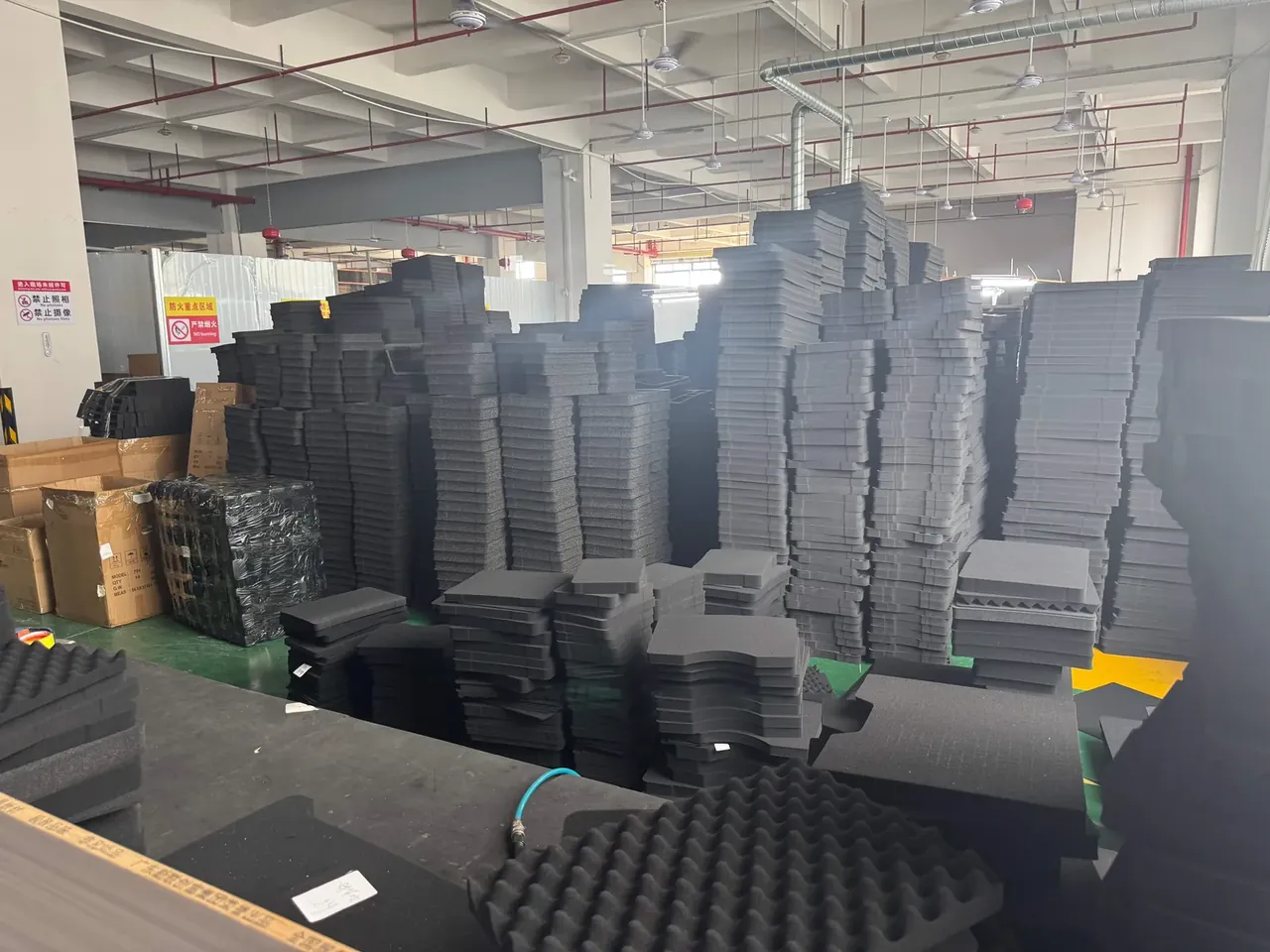
Long-lead items need their own group, because lead time inflates the reorder point and one stockout parks a whole batch of cases. Foam at 6.0%, castors at 4.5%, gaskets at 3.2% and air valves at 0.9% differ widely in failure rate, yet all take 45 days, so they share one table.
| Part (annual failure rate) | Replacements on 2400 cases | Daily demand | Demand over 45 days | Suggested first stock |
|---|---|---|---|---|
| Foam (6.0%) | 144 sets | 0.39 set | 18 sets | 24 sets |
| Castors (4.5%) | 108 units | 0.30 unit | 13 units | 20 units |
| Gaskets (3.2%) | 77 strips | 0.21 strip | 9 strips | 15 strips |
| Air valves (0.9%) | 22 units | 0.06 unit | 3 units | 6 units |
Foam fails most often without being the most critical item. A foam set costs a fifth of a castor, and a stockout can be bridged for 2 weeks by cutting sheet of the same density, whereas a missing castor leaves the case parked indoors.
Air valves look least urgent at 0.9%, only 22 replacements a year, yet they must not run out: high unit price, a 45-day lead, and a fresh air test after fitting.
Order the first batch at about 1.3 times lead-time demand. The extra 30% covers synchronised replacements arriving with the first deliveries, and it is not safety stock, so it never enters the formula.
3. Turning Those Numbers into a Reorder Point
Safety stock follows z × σ × √LT, with z at 1.65 for a 95% service level, σ the monthly deviation and LT in months. Castors need 108 a year, 9 a month, with σ at 3 and LT at 1.5: 1.65 × 3 × √1.5 comes to about 6 units.
The reorder point is daily demand times lead time plus safety stock. Castors run at 0.30 a day, 13 units over 45 days, plus 6 units of safety stock, giving 19; a minimum order quantity of 20 sets the purchase.
| Part (annual failure rate) | Replacements a year | Demand over 21 days | Safety stock (z = 1.65) | Reorder point |
|---|---|---|---|---|
| Latches (2.1%) | 50 units | 3 units | 4 units | 7 units |
| Catches (1.8%) | 43 units | 2 units | 3 units | 5 units |
| Hinges (1.4%) | 34 units | 2 units | 2 units | 4 units |
| Handles (1.1%) | 26 units | 1 unit | 2 units | 3 units |
The 21-day group produces smaller quantities on a denser rhythm, counted weekly rather than monthly.
Whether z sits at 1.65 or 2.33 depends on the cost of a stockout: cheap downtime justifies 1.65 and an occasional air freight, expensive downtime justifies 2.33 and 40% more stock.
σ cannot be guessed for long. Take six months of issue records, and where there are none, start at 30% of annual demand and correct once real data arrives.
4. Ranking by Spend, Not by Failure Rate
By value, foam and castors take 75% of annual spare-part spend on 25% of the part numbers; gaskets and latches add 18%; catches, hinges, handles and air valves account for 7%. Classification follows spend, not failure rate.
Class A is counted monthly and replenished at the reorder point, so a drop below 20 units triggers an order without waiting for a meeting. Class B is reviewed quarterly, class C twice a year, and C items are shared or not stocked at all.
The ranking moves with the product mix. Six months after a model is discontinued its dedicated foam insert falls from A to C, and a plan that keeps stocking it builds dead inventory, which is why the classification travels with the annual review.
5. First-Year Coverage and the Twice-Yearly Review
A new project shipping 1200 cases carries 36 spare units at 3%, allocated by value: 9 foam sets, 7 castors, 5 gasket strips, 4 latches, and 2 or 3 of the rest. That covers the first 90 days, not a full year.
Review twice a year, in April and October, recalculating rates from six months of issues. A category more than 30% off its assumed rate gets a new reorder point; anything closer is recorded, so one odd month cannot drag the formula.
Dead stock follows the same rule. A part with no movement for 12 months drops to class C, stops being replenished, and its balance is deducted from next year's budget.
Conclusion
Spare parts planning is not about remembering which parts break, but about making each reorder point calculable, reviewable and defensible. Failure rates are only the input: multiply by the installed base, divide by 365, then multiply by lead time before adding safety stock. ABC ranking sets the counting rhythm, the 3% first batch decides whether year one holds, and two reviews decide whether year two fits.
This article covers case-side specifications only and does not address any handling, loading or use of the contents.
Related Reading
- How repair work and spares fit together
- What a spare parts stock list should contain
- Replacement intervals for wear parts
- Setting a safety stock level
Related Products
- 8 Series — Gun Cases; Military Equipment Cases; Camera Equipment Cases; Drone Cases; Watch Cases; Knife Cases; First Aid Cases; Electronics Equipment Cases
- WL8-2812 PP Gun Case — model WL8-2812
- All protective cases and toolboxes: 7 series, 158 models