

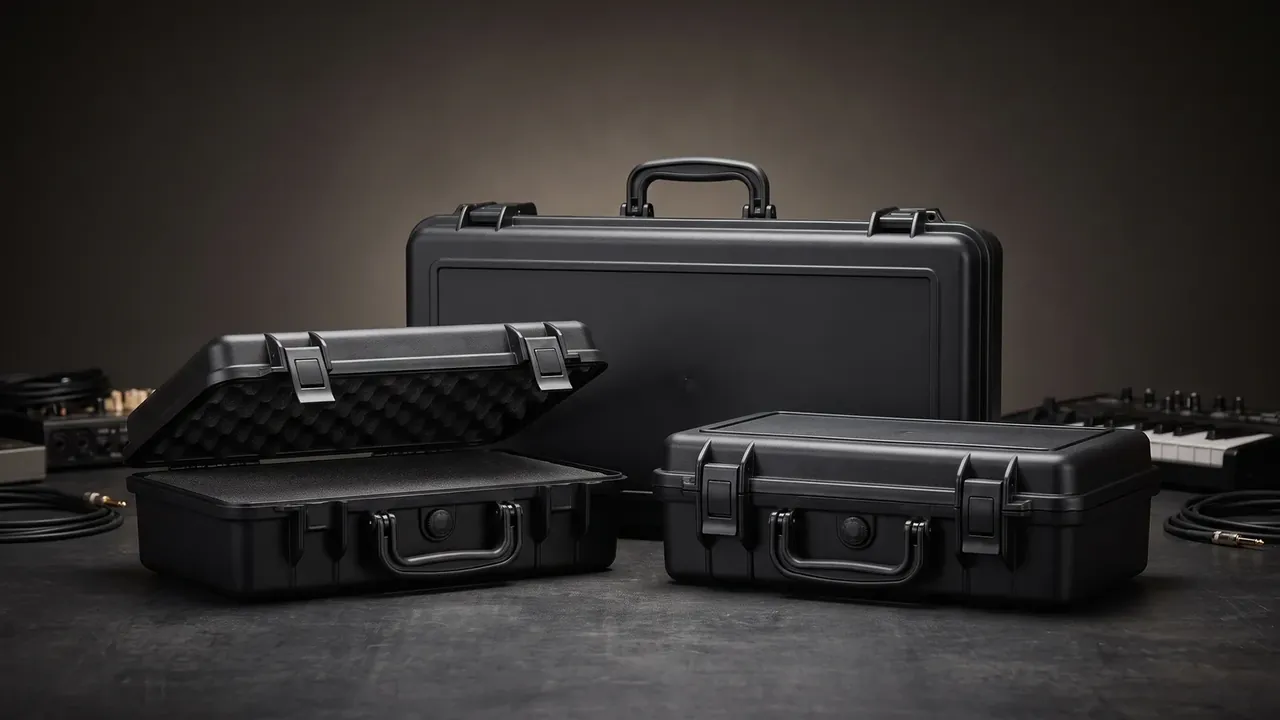
Quick answer: Split every Special Forces Case quote into four numbers before comparing: unit price, tooling, packing and testing, freight and tax. Then write tooling ownership, price breaks and lead time stages into the contract, and back it with payment terms and a factory visit. Below: the four-number split, four tooling clauses, three price breaks and five traps.
Table of contents
- Splitting the quote into four numbers
- Tooling ownership: who pays, whose name
- MOQ and price breaks
- Lead time written in three stages
- Payment terms, factory visits and five traps
- FAQ
1. Splitting the quote into four numbers
Two factories can quote the same Special Forces Case three tenths apart, and the gap is rarely in the moulding. Lay the offer out as four numbers: unit price, tooling, packing and testing, freight and tax.
| Line item | How it is priced | Contract states | Where it hides |
|---|---|---|---|
| Unit price | Per case, stepped by quantity | Breaks, validity | Foam included, two tenths apart |
| Tooling | One-off, amortised or not | Cavities, ownership, refund | Returns after amortisation |
| Packing and testing | Per lot | Carton spec, test items | 48-hour salt spray priced apart |
| Freight and tax | Per shipment | Delivery term, tax rate | Ex-works versus delivered |
Tooling and testing hide the money: a low unit price paired with inflated tooling moves profit to the one-off line, and the first invoice looks nothing like the quote.
Amortise tooling over three years first. Tooling at 42,000 across 6,000 cases adds 7 per case; a second supplier quotes 26,000 for tooling but 1.5 more per case and ends up dearer.
2. Tooling ownership: who pays, whose name
Who pays for the tool matters less than whose name it sits under. The rotomould tool and the latch tool are usually built by two shops, so write two ownership clauses. Bundled into one line, they cause trouble later.
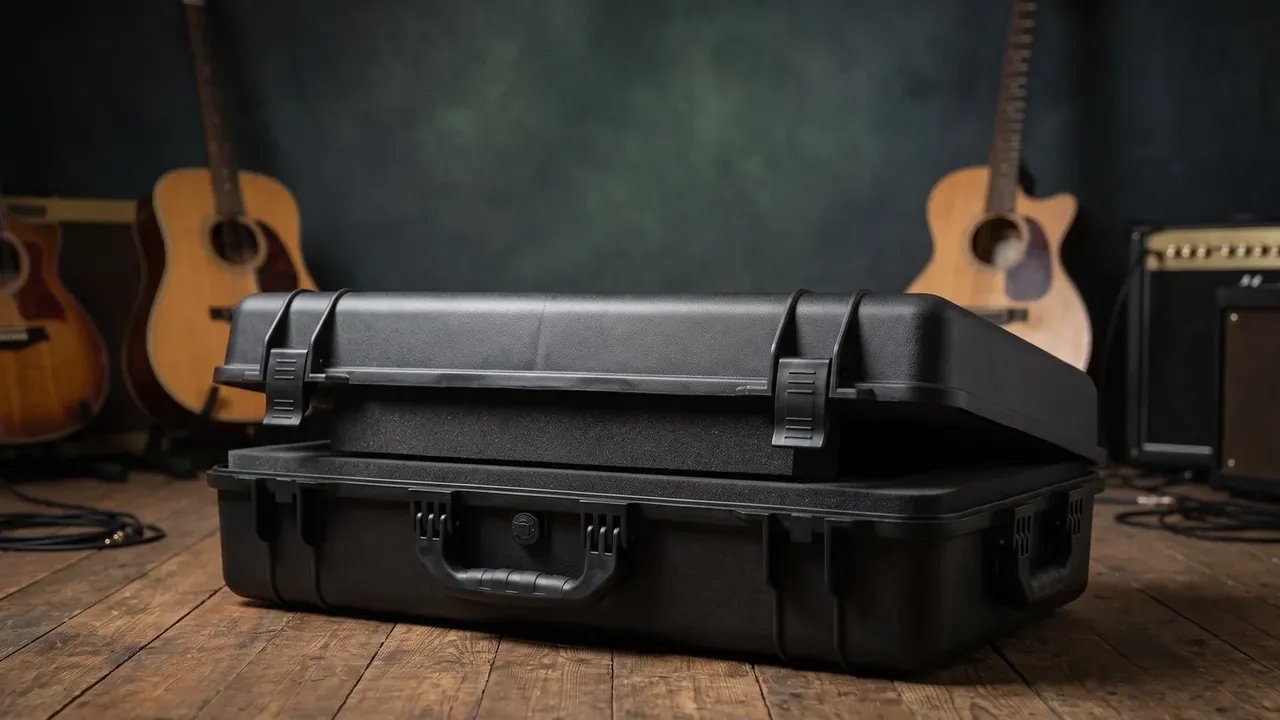
Four clauses cover tooling: cavity count, ownership, storage location, transfer. Cavity count drives capacity and amortisation, though a two-cavity tool does not always save money once machine hours are counted. Ownership should sit with the buyer, and the tool should transfer on final payment rather than at the end of the relationship. Storage location is the clause everyone forgets. A tool parked in the supplier's workshop turns every change of supplier into a negotiation, and a yearly check with photographs and cavity numbers is worth more than a promise. Transfer needs a percentage and a deadline: sealed at 80 percent paid, moved within 15 working days of full payment.
3. MOQ and price breaks
Minimum order quantity follows from stations and changeover hours. On a rotational line one tool occupies one station, and for a Special Forces Case the MOQ commonly lands at 300 units.
| Break | Unit price index | Tooling status | Lead time |
|---|---|---|---|
| 300 units | 100 | Not yet amortised | 35 days |
| 600 units | 92 | Half amortised | 40 days |
| 1,000 units | 85 | Essentially amortised | 45 days |
Write three breaks and two sentences: the price of each band, and how an order between bands is priced. The usual dispute is 580 units priced at the 300 band; if the contract says the band follows actual quantity, the argument never starts.
Wall thickness belongs in the technical annex. A 7 mm wall against a 5 mm wall moves unit weight by about 1.2 kg, which moves material cost, yet quotes often name a model with no wall figure.
4. Lead time written in three stages
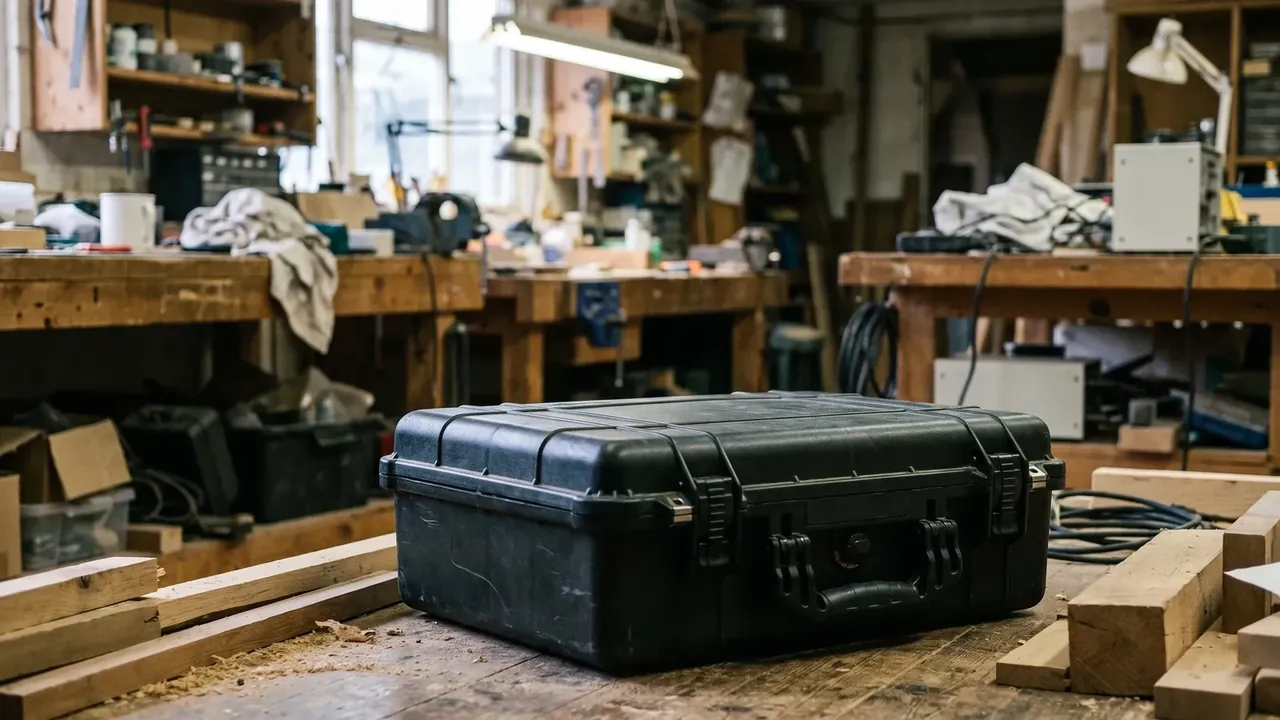
A lead time quoted as one number is the easiest thing to slip. Split the delivery into sampling, tooling and production, each with a deliverable and a payment node.
| Stage | Days | Deliverable | Payment node |
|---|---|---|---|
| Sampling | 7 | First article, dimension report | Sample fee, credited later |
| Tooling | 20 | 3 trial shots, 5 samples | Half of tooling cost |
| Production | 35 | Inspection record, sampling report | 90 percent before shipment |
Sampling 7 days, tooling 20 with 3 trial shots, production 35 with a 5-unit pre-shipment water check. Add 5 days of freight and the cycle is about 67 days. Keep and sign the sample; the only physical baseline for acceptance.
5. Payment terms, factory visits and five traps
Payment terms are a price item. Thirty percent deposit, sixty before shipment and ten after acceptance is common; 60-day terms usually cost two to three percent, and that premium belongs in total cost.
Five traps worth checking:
- A low unit price with inflated tooling, raising the first invoice;
- No resin grade, only virgin material, so later lots are blended;
- Salt spray at 48 hours and drop testing priced separately, raised before acceptance;
- A total lead time with no stages, so delay cannot be attributed;
- Tooling held until final payment, discovered when you try to move supplier.
A factory visit checks three places: the resin store, the tool rack, the test room. If all three are vague, a low quote deserves suspicion.
Conclusion
Buying a Special Forces Case is not a unit price comparison. It is four numbers laid out, tooling in your name, price breaks that say how a between-band order is priced, and a lead time split into three stages. Add payment terms and a factory visit, and the Special Forces Case you buy next quarter costs what the contract says.
This article discusses only the container (case body) side of specifications and design intent, and does not cover any handling, loading or use of the contents.
Related Reading
- A selection order for Special Forces cases
- How to score a case supplier
- What a gun case factory audit looks at
- Factory tour checklist: what to look at first
Related Products
- 8 Series — Gun Cases; Military Equipment Cases; Camera Equipment Cases; Drone Cases; Watch Cases; Knife Cases; First Aid Cases; Electronics Equipment Cases
- WL8-2812 PP Gun Case — model WL8-2812
- All protective cases and toolboxes: 7 series, 158 models