

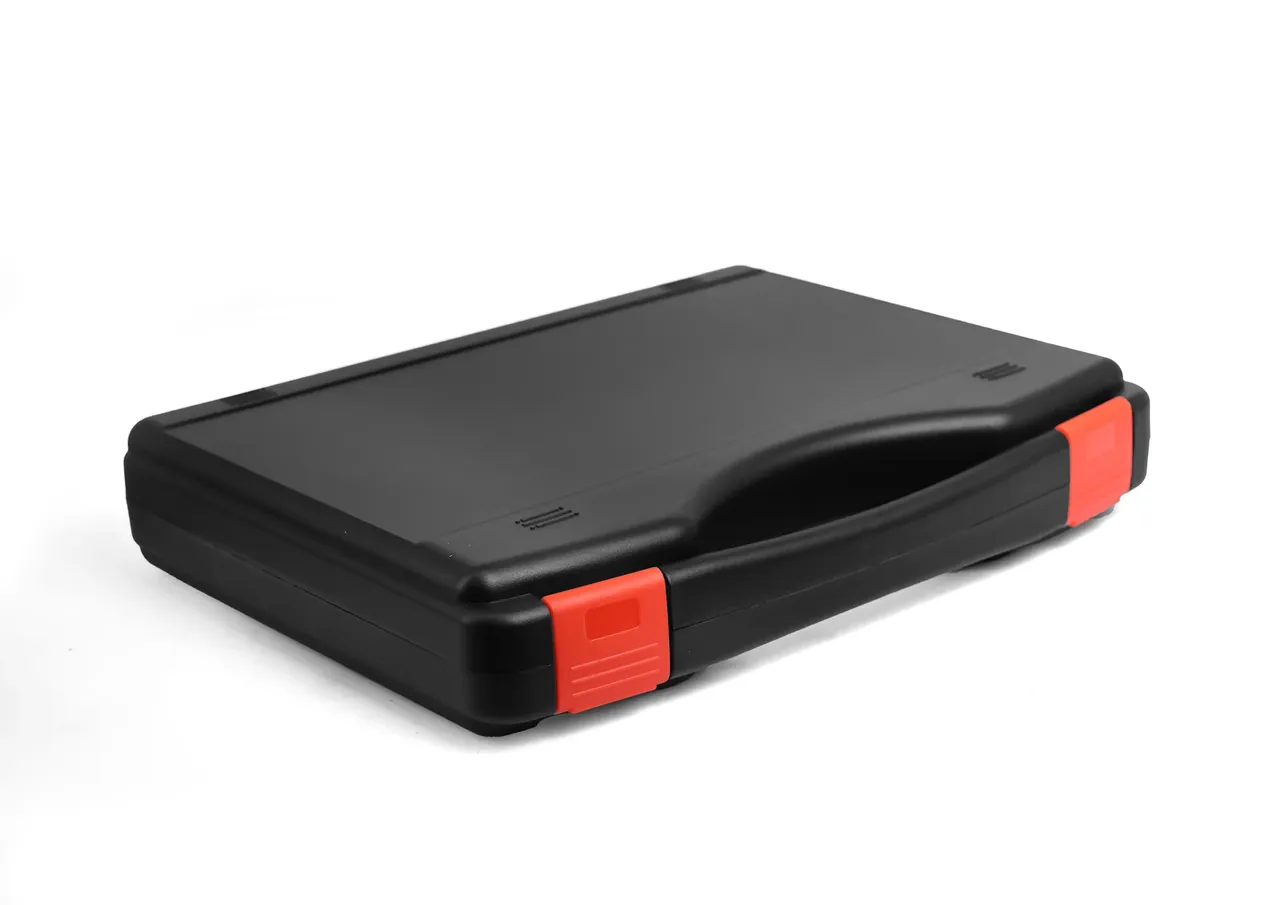
Quick answer: After 500 h of neutral salt spray to GB/T 10125, protective case hinges fail at the pin long before the PA66+GF30 body shows anything. A 304 pin pits to 0.15 mm and rates grade 6 on GB/T 6461 against grade 9 for 316, so drainage, molybdenum content and breakaway torque decide the choice.
Table of contents
- The Test Basis: What Protective Case Hinges Are Compared On
- 304 and 316 Pins: Three Grades Apart
- The Plastic Body Does Not Rust, the Water Creeps In
- Inland, Coastal, Shipborne: Three Configurations
- FAQ
1. The Test Basis: What Protective Case Hinges Are Compared On
The 500 h figure draws three lines: 96 h for short checks in dry inland sites, 240 h for coastal cities, 500 h for ship and offshore work. Conditions follow GB/T 10125 and ISO 9227: 5% sodium chloride at pH 6.5–7.2, a 35 °C chamber, fall-out of 1–2 mL/(80 cm²·h), specimens tilted 15°–30°, for 500 uninterrupted hours.
Comparability for protective case hinges needs three fixed items: a Ø3 mm pin, 1.5 N·m of preload, and sampling within 10 mm of the bore. Miss one and the six-versus-nine spread vanishes into scatter.
The failure sits in the crevice, not the visible face. A pin in the open keeps its passive film at 500 h; the 0.1–0.2 mm gap lets chloride in and keeps oxygen out, drops internal pH to 2–3, and pits from there. GB/T 6461 splits protection rating Rp from appearance rating RA; protective case hinges report on Rp, since every pit lands on the hidden bore wall.
2. 304 and 316 Pins: Three Grades Apart
304 (06Cr19Ni10) and 316 (06Cr17Ni12Mo2) differ by 2%–3% of molybdenum, which sets the pitting potential in chloride. At 500 h the 304 pin shows three to five pits on each side of the bore, 0.15 mm at the deepest, for grade 6; the 316 pin of the same size only loses lustre, for grade 9.
| Pin material | Molybdenum | Deepest pit at 500 h | GB/T 6461 grade | Delta per pin |
|---|---|---|---|---|
| 304 | 0 | 0.15 mm | 6 | 0 |
| 316 | 2%–3% | 0.02 mm | 9 | +0.6–0.9 |
| Zinc-plated steel | 0 | Red rust at 48 h on a scratch | 3 | -0.3 |
A 0.15 mm pit on Ø3 mm is 9% of the section: shear capacity falls from 1.42 kN to 1.29 kN, and after 20,000 cycles the crack starts at the pit floor. Grade 9 on appearance is not grade 9 in mechanics.
A 316 pin costs 0.6–0.9 more, 1.2–1.8 per case, under 1% of case cost; staying with 304 cuts a coastal inspection interval from 24 to 12 months.
3. The Plastic Body Does Not Rust, the Water Creeps In
PA66+GF30 does not corrode; 500 h only whitens the surface and exposes a little glass fibre, with dimensional change inside 0.3%. The steel inside is what fails: pin, spring and retaining ring go red at 500 h, and they are the only part of a protective case hinges pair that salt spray changes mechanically.
A plated pin carries 8–12 μm of zinc, loses a stripe to the bore on assembly and rusts at 48 h on that scratch. A 65Mn spring coil is a tighter crevice: spray enters, water cannot leave, rust marks appear at 240 h. Rust water does not stay outside. The bore sits behind 1.5 mm of wall. It wicks moisture 20–30 mm up the 0.1–0.2 mm gap until it seeps from the boss onto a pale liner. A Ø3 mm drain, 2 mm below the lowest point and chamfered 0.5 mm, is the only cut in that path. Without it one bore holds 0.08 mL of brine at 500 h.
Opening torque is the number to log. A new case runs 1.2–2.0 N·m and the 20,000-cycle life is quoted against that band; corrosion lifts friction from 0.15 to 0.35, the same protective case hinges pair needs 2.6 N·m, and the plastic boss climbs a step in stress.
4. Inland, Coastal, Shipborne: Three Configurations
Creep counts alongside the spray: 40 °C, 1.5 N·m preload and a 200 h hold leave 12% of opening torque gone, normal for PA66 near its glass transition. Preload at 2.2 N·m recovers half and adds 15% of boss stress.
| Site | Pin and spring | Extra treatment | Grade at 500 h | Service interval | Delta per unit |
|---|---|---|---|---|---|
| Dry inland interior | Zinc-plated steel | 8–12 μm zinc | 3 | 24 months | 0 |
| Within 5 km of coast | 304 | Passivation and silicone grease | 6 | 12 months | +1.2 |
| Ship deck, offshore | 316 pin and spring | Passivation and Ø3 drain | 9 | 24 months | +4.5 |
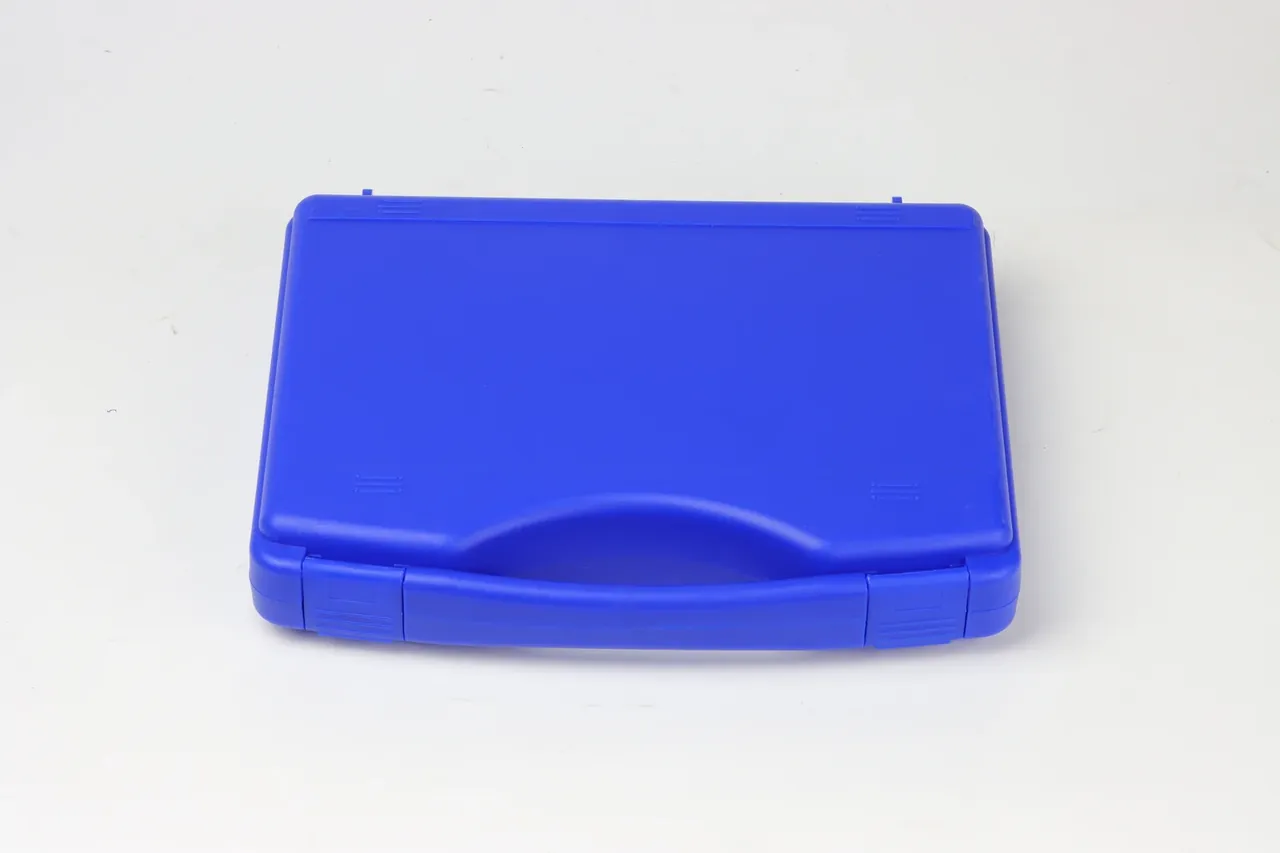
The tiers divide on chloride load and service access, not price. Inland with under 600 mm of rain and no sea contact, a plated pin is enough; within 5 km of the coast, rain carries salt, so 304 is the floor and a drain is mandatory; a deck sees 20–40 times that deposition, leaving 316 plus drain plus grease. JUNZHIJIA puts the 316 pin, spring and Ø3 drain on one shipborne drawing.
Changing pin material leaves the mould alone. The drain is the real change: Ø3 mm is a Ø2.5 mm insert worth 0.9 per unit across 5,000 pieces. Greasing the bore with 0.05 g of silicone grease pulls 500 h pitting from 0.15 mm to 0.06 mm.
Conclusion
The 500 h result is blunt. PA66+GF30 never corrodes, so the plastic is not the weak point; the crevice around the pin is, where 304 rates grade 6 at 0.15 mm of pitting and 316 rates grade 9 at 0.02 mm. For protective case hinges the choice turns on three checkable facts, not shell colour: coast within 5 km or deck, 2%–3% molybdenum in the pin, and a Ø3 mm drain under the bore. Meet all three and service runs at 24 months; miss one and a 12-month inspection eats the 1.2–1.8 saved per unit.
This article discusses only the container (case body) side of specifications and design intent, and does not cover any handling, loading or use of the contents.
Related Reading
- Stainless hinge pin and boss structure
- Counting and judging hinge cycles
- Latch and hardware material selection
- Grading neutral salt spray results
Related Products
- 8 Series — Gun Cases; Military Equipment Cases; Camera Equipment Cases; Drone Cases; Watch Cases; Knife Cases; First Aid Cases; Electronics Equipment Cases
- WL8-2812 PP Gun Case — model WL8-2812
- All protective cases and toolboxes: 7 series, 158 models