

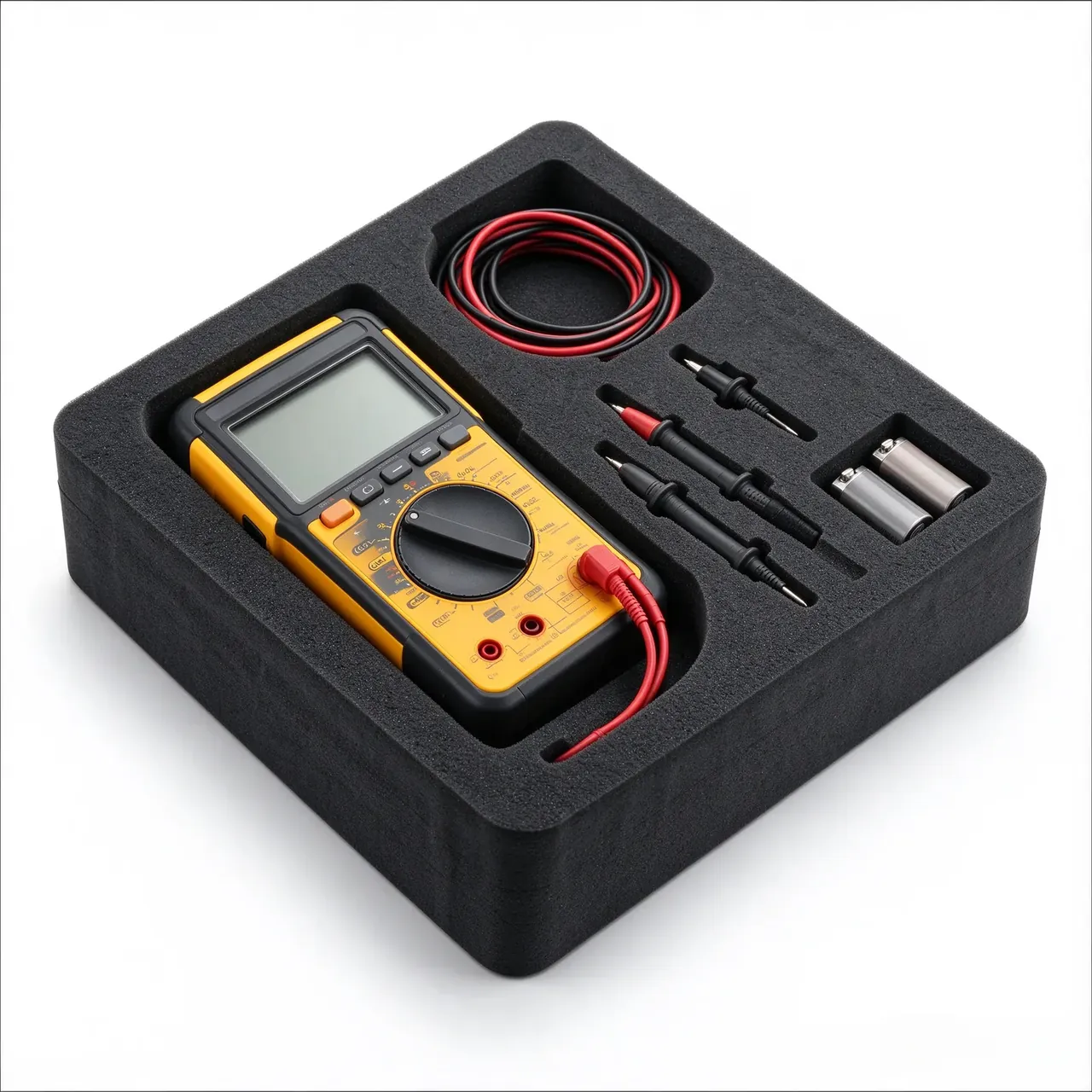
Quick answer: A Surveying total station protective plastic case absorbs 3–5 g of swing on 15 mm lid foam, a 0.5 mm cavity gap and 2 gasket passes.
Table of contents
- Load order across one relocation
- Lateral shock when tripod and case travel apart
- Dust path during the base-unit carry
- Lid foam witness marks at loading
- Checks in the order they run back at base
- FAQ
1. Load order across one relocation
One relocation splits into five legs: depot loading, the walk-in, opening at the station, closing, and the return. The Surveying total station protective plastic case meets a different force on each. Loading applies a vertical stack, the walk-in applies lateral swing from a one-handed carry, the station applies lip friction plus falling dust, and the return repeats all three on a shell already 30 min older.
The Surveying total station protective plastic case measures 520×420×230 mm outside and 470×370×170 mm inside, with a 3.5 mm wall, 4.0 kg empty and 10.6 kg loaded. Read against the five legs, wall thickness answers the drop, lid foam answers the walk-in, and the gasket answers the station.
| Leg | Dominant load | Magnitude | Shell feature involved |
|---|---|---|---|
| Depot loading | Vertical stack | 21 kg over 3 layers | Lid ribs and corner blocks |
| Walk-in | Lateral swing | 3–5 g at 1.5 Hz | Lid foam and cavity walls |
| Station open | Dust and lip rub | 20–75 μm particles | Gasket groove and lip |
| Return | Accumulated cycles | 3000 open-close | Catches and hinge seats |
The walk-in is the urgent leg. At 10.6 kg by the handle the wrist rises every 0.7 s, so swing sits near 1.5 Hz and peaks at 3–5 g. That is far below a drop, yet it arrives twice a second for half an hour, which is why a Surveying total station protective plastic case is judged on foam compression rather than impact strength.
2. Lateral shock when tripod and case travel apart
The tripod rides on a shoulder at 5.6 kg, the Surveying total station protective plastic case hangs from one hand, and the 1.4 kg base unit goes in a third load. No hand is free to steady anything, so handle, wrist and lid foam absorb the motion. A cavity cut to the instrument outline with no clearance turns the four corners into load paths, and every footfall feeds the full 3–5 g into the shell.
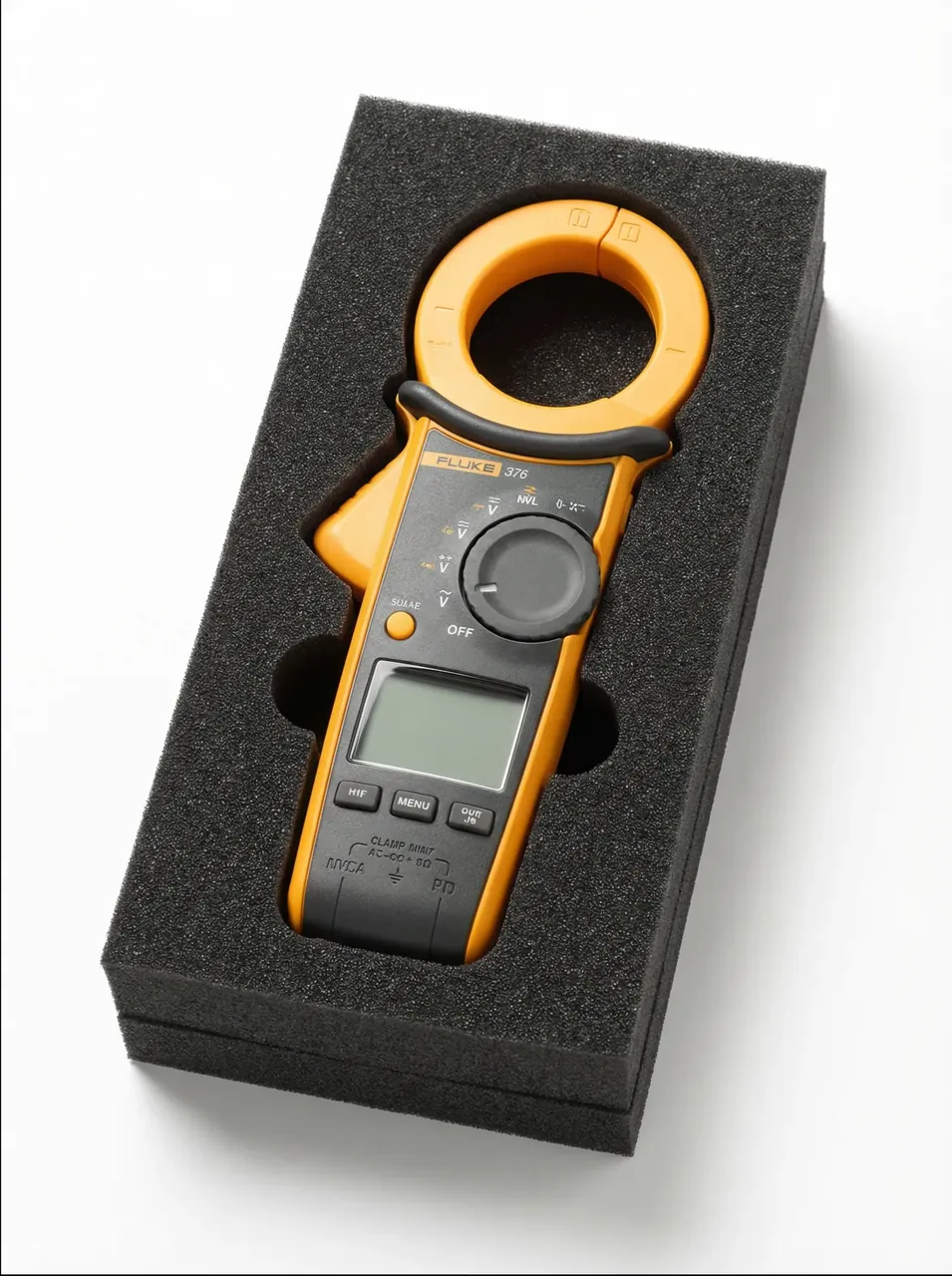
Lid foam of 15 mm at 60 kg/m³ EPP, compressed 30%, removes roughly half the footfall peak. The rest passes to the cavity wall, where a 0.5 mm gap per side leaves about 1 mm of lateral room. Open it to 1.0 mm and the unit slides, so shock becomes repeated collisions; close to 0.2 mm and the foam binds against the housing.
The cavity floor of a Surveying total station protective plastic case carries 5.6 kg over roughly 190 × 150 mm, about 2 kPa, taking 20 mm base foam to 17 mm. That pre-compression must survive 3000 open-close cycles, or the instrument sits lower and the lid foam spends its 15 mm of travel before the walk-in starts.
3. Dust path during the base-unit carry
The base unit travels alone at 1.4 kg, and the lid of a Surveying total station protective plastic case stands open about 4 min at each station. Any breeze pushes 20–75 μm grit toward the lip, and that band lodges between lip and groove wall. Once a particle is pressed into the gasket face it stays, and the next closure turns it into a seepage path.
A dust chamber run to the IP6X condition for 8 h should show zero ingress, which no field site reproduces. The practical answer is 2 gasket passes at 25% compression in a 2.2 mm groove with a 3.0 mm lip. Raise it to 35% and the root hardens at −10 ℃, so the lid pulls it out; drop to 15% and dust fills the void before the 1 m / 30 min immersion of IP67 is reached.
Field temperature runs −10 ℃ to 45 ℃. PP holds a heat deflection temperature near 105 ℃ at 0.45 MPa, and notched impact at −20 ℃ sits near 25 J/m. Shrinkage of 1.5–2.0% is what lets the cavity hold ±0.5 mm, which keeps a second shot from the same tool interchangeable with the first.
4. Lid foam witness marks at loading
Stacked three high, the bottom lid carries 21 kg and is held to 3 mm of centre deflection. Beyond that the rib pitch is too wide, lid foam squeezes thinner, and 15 mm of travel drops to 12 mm. Witness depth is the cheapest gauge available: past 2 mm, replace the foam.
Drop and immersion are read separately. From 1.2 m onto concrete the pulse lasts 6–8 ms and lands on corners and catch seats, while immersion follows the 1 m / 30 min condition of IP67, confirmed by looking for water marks. MIL-STD-810H Method 516.8 covers shock and Method 514.8 covers vibration; the sine sweep of 514.8 is a fair reference for a hand-carried swing.
| Check | Limit | Action |
|---|---|---|
| Lid foam witness depth | ≤2 mm | Replace foam |
| Cavity gap per side | 0.5 mm | Shim above 1.0 mm |
| Lid deflection under 21 kg | ≤3 mm | Inspect rib pitch |
| Water marks after immersion | None | Inspect lip and groove |
5. Checks in the order they run back at base
At the depot the lip is wiped first, the cavity gap measured second, and the empty Surveying total station protective plastic case closed last to read lid offset. Wipe after closing and dust is already pressed into the gasket face, which makes both later readings meaningless. A 0.5 mm feeler gauge goes into all four sides, and a spread above 0.3 mm points to one wall wearing faster.
Catch seats may move 0.8 mm after 3000 cycles, the handle is checked at 250 N, and lid deflection between 4.0 kg empty and 10.6 kg loaded must stay under 1.5 mm. The first item to fail is replaced alone, since scrapping a whole Surveying total station protective plastic case over one worn catch wastes a shell with years left in it.
Conclusion
The account for a Surveying total station protective plastic case settles on three forces: 3–5 g of swing split between 15 mm lid foam and a 0.5 mm gap, 21 kg of stack load on the lid ribs, and 20–75 μm of grit held off by 2 gasket passes at 25% compression. Run the checks in the order loading, walk-in, open-close, return, and the answer for a given shell is settled.
Related Reading
- Usable cavity ratio: what the four corners really give you
- Cavity and lid foam pairing for total station cases
- Field survey equipment cases and how they are carried
- Protective case or carton for e-commerce shipping
Related Products
- 8 Series — Gun Cases; Military Equipment Cases; Camera Equipment Cases; Drone Cases; Watch Cases; Knife Cases; First Aid Cases; Electronics Equipment Cases
- WL8-2812 PP Gun Case — model WL8-2812
- All protective cases and toolboxes: 7 series, 158 models