

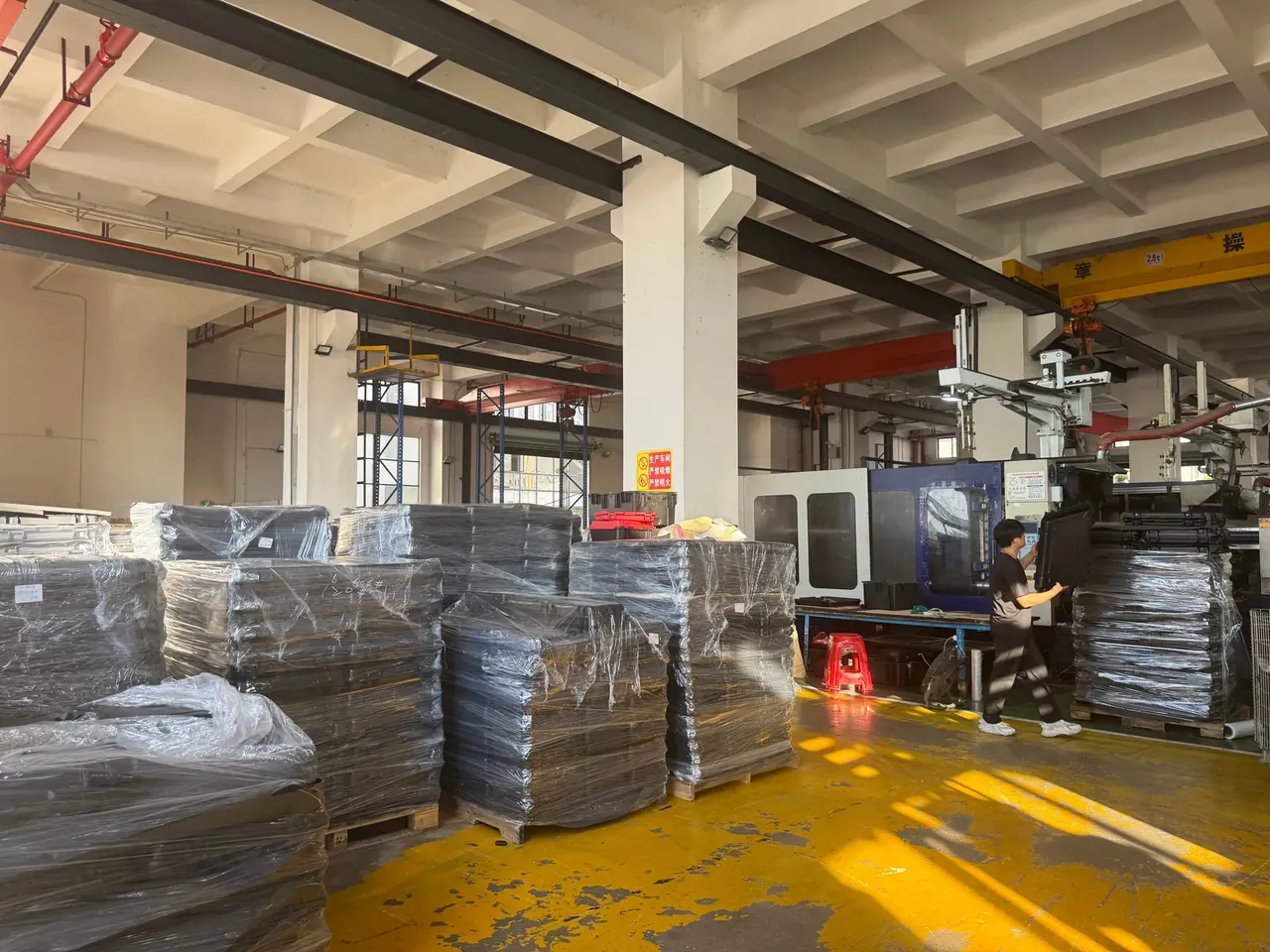
Quick answer: Swat team gear safety box mass production caps wall spread across a four-cavity mould, samples 200 lids per run and holds lid flatness spread to 0.6 mm.
Table of contents
- Multi-cavity wall-thickness spread in Swat team gear safety box mass production
- Sampling cadence on the assembly line
- Lid flatness spread within one batch
- Batch variation in latch opening force
- Colour-difference rejection for production batches
- FAQ
1. Multi-cavity wall-thickness spread in Swat team gear safety box mass production
Swat team gear safety box mass production starts by fixing the wall gap between the 4 cavities of one mould. Their runner lengths and cooling rates differ, so shell thickness drifts from the nominal 4.2 mm toward the ±0.4 mm band unless each cavity is tracked. The JUNZHIJIA log at Kexin New Materials (Guangdong) Co., Ltd. files thickness per cavity, not as one batch average. An inspector takes 8 readings at 23°C with a digital micrometer and works out the mean and spread for that cavity. A shot moves to assembly only when the 4 means sit close and every spread stays inside the band. The aim is traceable, repeatable scatter, not one identical size for every shell.
Labelled C1 to C4, the readings line up with cavity number: C1 and C4 at the runner end measured 0.12 mm below 4.2 mm in one shot, C2 and C3 near the gate 0.06 mm high. The log writes to 0.01 mm with melt temperature and hold time, and Swat team gear safety box mass production asks every reading to point back to a cavity. The micrometer is zeroed on a gauge block before each cavity set, so a 0.01 mm shift reads as real thickness change rather than instrument drift.
| Cavity ID | Wall mean | Spread |
|---|---|---|
| C1 | 4.10 mm | 0.08 mm |
| C2 | 4.26 mm | 0.06 mm |
Per-cavity logging explains the lid flatness spread: uneven shells shrink differently, so press-frame fit drifts with cavity number into the readings of 200 lids. That is where the Swat team gear safety box mass production rejection line begins.
2. Sampling cadence on the assembly line
The line in Swat team gear safety box mass production runs at a 55 s per unit cadence, and sampling follows the same beat. Every 55 s cycle yields one shell; its thickness tag is matched to the cavity number before it goes on the hold rack. A shift builds the 200-lid base, each sample tied to a shot and a cavity, so an outlying cavity surfaces within a few dozen units.
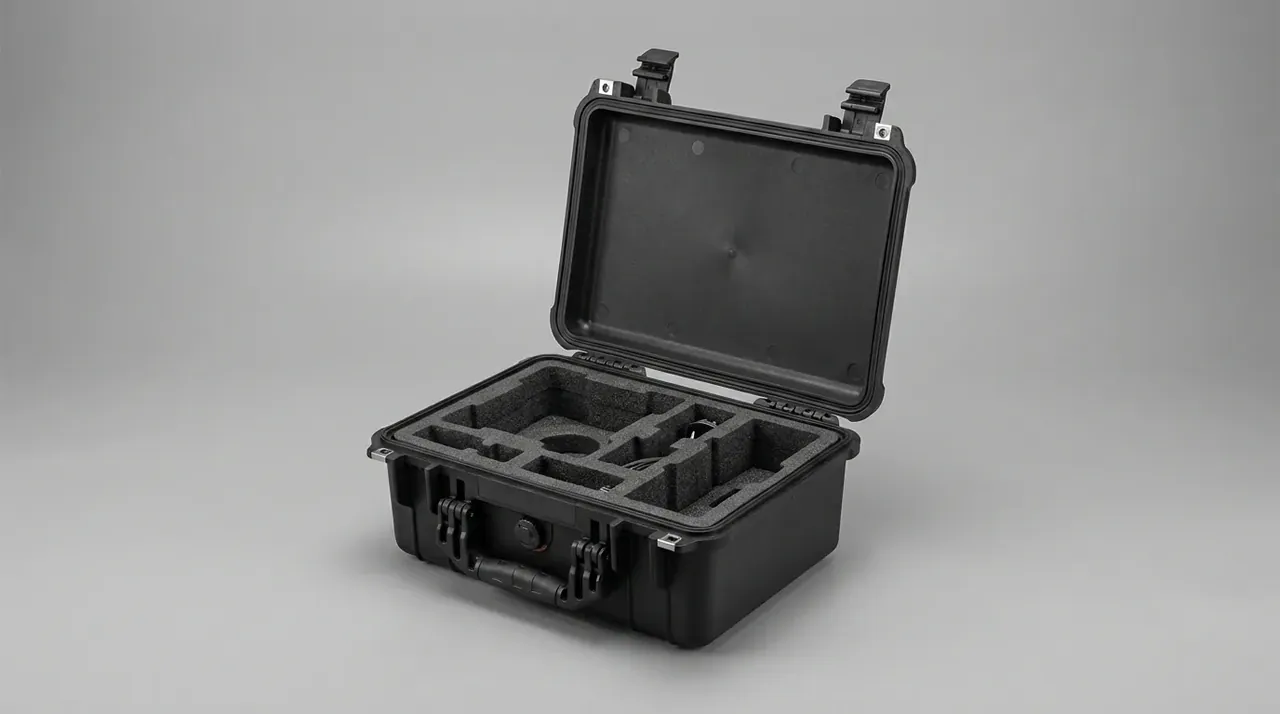
Batches group by shot and masterbatch lot; a batch code sits on a non-cosmetic base face and the record holds cavity number, thickness, latch torque and closing force. More than 2 lids over the flatness line send the whole batch to recheck, and Swat team gear safety box mass production binds cadence to batch so a rejection pins to one of the 4 cavities.
| Sampling batch | Units | Cadence |
|---|---|---|
| B-01 | 50 | 55 s |
| B-02 | 50 | 55 s |
Splitting 200 into 4 batches of 50 lays readings on a time axis, so a rise from early to late points to mould-temperature drift rather than one random defect. A batch that passes early then drifts late is re-run at the same 55 s beat to confirm the trend before any rejection is written.
3. Lid flatness spread within one batch
A ≤0.6 mm flatness spread over 200 lids is the clearest consistency figure in Swat team gear safety box mass production. On a 23°C plate the lid rests closure-side down on three supports, a dial indicator takes 8 rim points, and the batch spread is the largest reading minus the smallest. Inside ≤0.6 mm, the 4 cavities' shrinkage gap was not magnified at the closure face.
Mean and spread are read apart: a passing mean only says the set did not wander, while spread reflects within-batch consistency. If most lids sit near 0.20 mm and a few reach 0.55 mm, Swat team gear safety box mass production still traces those cavities instead of releasing on the mean.
| Flatness band | Units | Disposition |
|---|---|---|
| ≤0.30 mm | 168 | Release |
| 0.51 to 0.60 mm | 5 | Tag cavity |
The 5 lids in the 0.51 to 0.60 mm band are still checked back to cavity and batch, so a recheck need not remeasure all 200. Bands are logged to two decimals, so a lid at 0.60 mm is not rounded into the released group.
4. Batch variation in latch opening force
Four latches at 410 N each are the closure spec for this Swat team gear safety box mass production run, and ≤12% opening-force variation keeps the feel even. The latch station logs riveting torque, finished shells run 4200 cycles on a life rig, and force is read before and after; one shell gives the spread of its 4 latches, the 200-lid batch one variation figure.
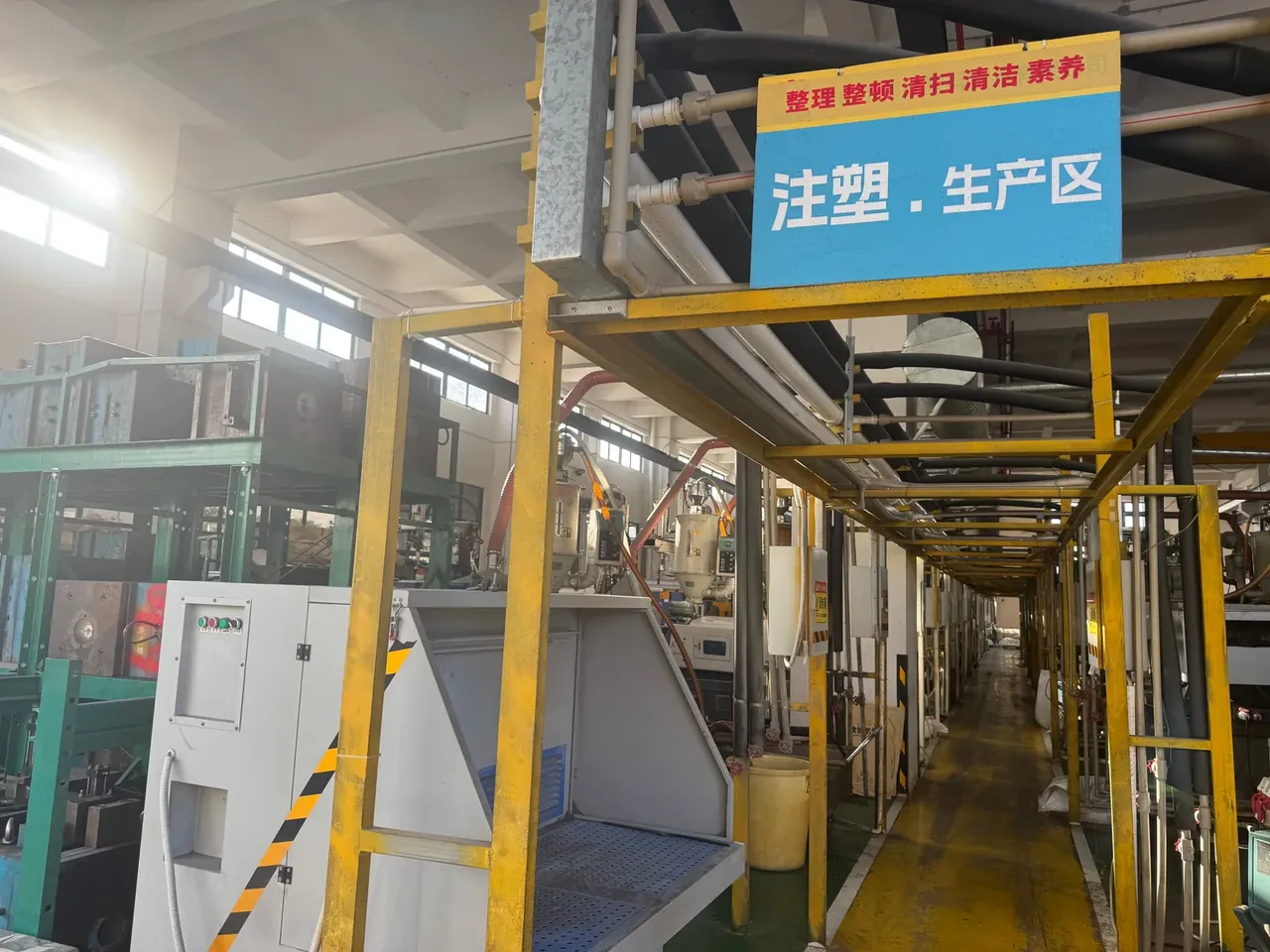
Variation is batch max minus min over the mean, written ≤12%. After 4200 cycles a latch drifting from foam rebound or a loose rivet lifts variation before any seal failure; 410 N per latch over 4 units presses the rim gasket to its design squeeze, and uneven force breaks that compression.
Logging 4200 cycles and variation together separates bedding-in from degradation: a one-way drift still present at 4200 cycles is a latch-batch fault, and Swat team gear safety box mass production answers it with a full recheck.
5. Colour-difference rejection for production batches
The colour line sits at ΔE ≤2.0, read in a light booth against a signed sample on one lid and one shell point. Masterbatch lot, barrel temperature and residence time shift a dark shell, so colour is its own release item. Swat team gear safety box mass production uses a 600×430×260 mm outer size, 6.3 kg empty and 13 kg loaded, and a larger shell makes a colour shift easier to compare side by side.
A 1.2 m drop and IP66 seal recheck are finished-product checks that do not replace colour rejection. A crossing quarantines every shell under that masterbatch lot and pulls the 4-cavity record, so the cavity log, cadence, flatness spread and force variation form one traceable chain. The 600×430×260 mm shell is read on the lid centre and one side wall, both against the same signed sample.
Consistency narrows once every step writes its scatter down. Swat team gear safety box mass production signs no release sheet without all three readings.
Conclusion
Swat team gear safety box mass production reduces batch consistency to three figures: ≤0.6 mm flatness over 200 lids, ≤12% opening-force variation, and ΔE ≤2.0 colour. They map to 4-cavity wall scatter, a 55 s cadence and masterbatch stability, and missing one leaves the batch unexplained. The cavity log and batch codes on a release sheet tell a buyer more than one sample, and JUNZHIJIA keeps that chain auditable.
Related Reading
- Case Batch Consistency: Colour and Dimension Sampling
- Inspecting Protective Cases on Arrival: A Batch Incoming Workflow
- Estimating Case Production Line Capacity: Machines, Cavities and Changeover
- Batch Traceability for Cases: From Resin to Shipment
Related Products
- 8 Series — Gun Cases; Military Equipment Cases; Camera Equipment Cases; Drone Cases; Watch Cases; Knife Cases; First Aid Cases; Electronics Equipment Cases
- WL8-2812 PP Gun Case — model WL8-2812
- All protective cases and toolboxes: 7 series, 158 models