

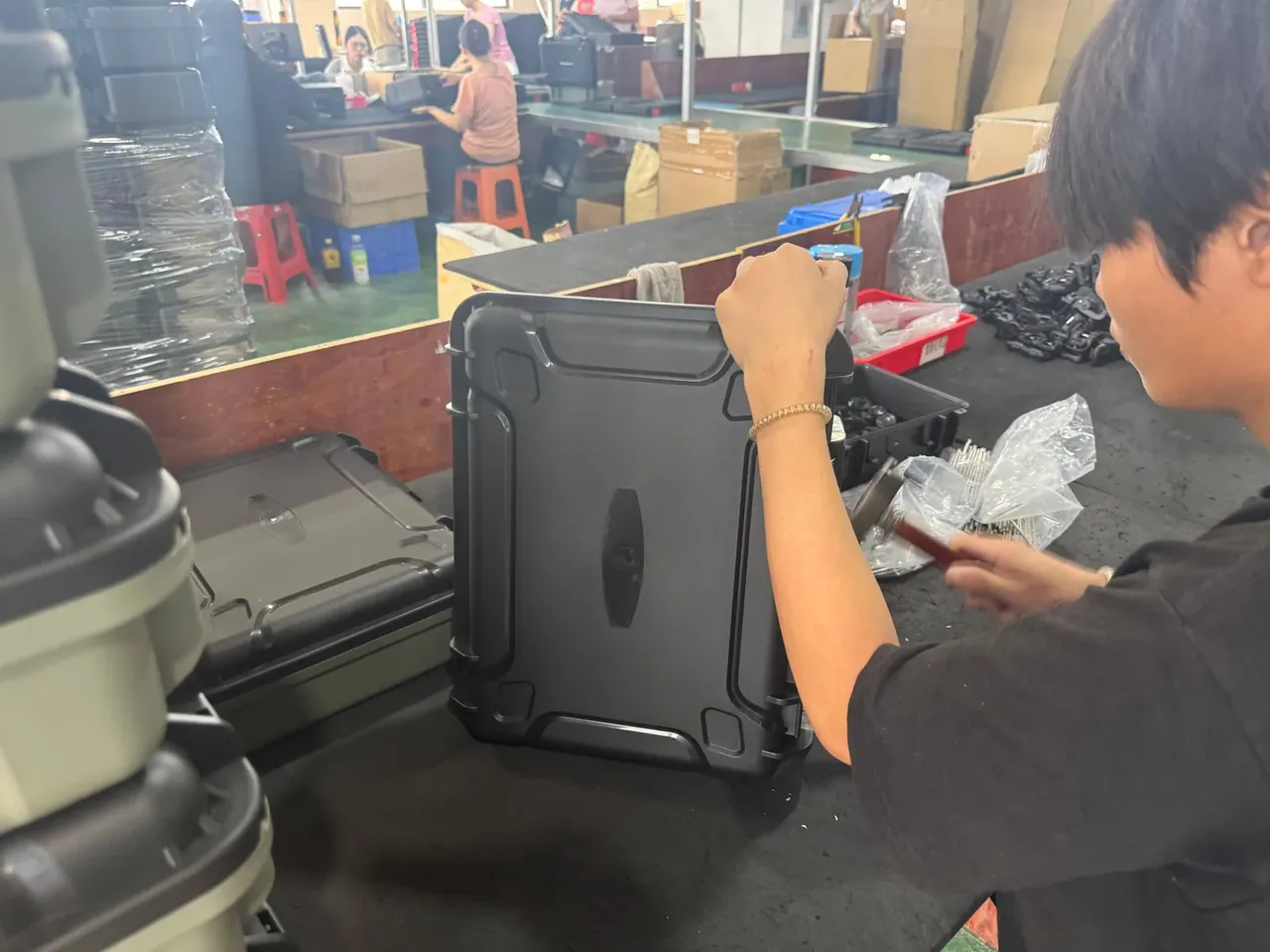
Quick answer: Tactical field survival rescue tool case holds displacement ≤1.4 mm after 5–200 Hz / 3 h vibration, set by 9 mm corner guards and 8.2 mm cone depth.
Table of contents
- Tactical field survival rescue tool case corner-guard thickness
- Depth of the base locating cone
- Displacement readings after broadband vibration
- Foot-pad contact under offset-load retest
- Cone-depth lower bound for field batches
- FAQ
1. Tactical field survival rescue tool case corner-guard thickness
Field transport differs from static stacking because excitation is broadband, and each cone-depth grade shifts the shell response. The Tactical field survival rescue tool case takes load at four corners: a 9 mm guard absorbs the tiedown force, then spreads it along the 5.1 mm wall. Between a 700×470×310 mm outer size and a 630×405×235 mm cavity sits the transition zone for guards and feet. Too thin a guard dents locally; too thick a one lifts the lid and upsets the 24% compression of two gasket rings.
Guard grades depend only on the thickness-to-wall ratio. The 9 mm reference of the Tactical field survival rescue tool case pairs with 5.1 mm for a ratio near 1.76; 11 mm stiffens the corner but risks lid misalignment, while 7 mm saves 0.3 kg yet marks under 1.7 kN. All three are pressed on one tool, and an uncracked guard is the minimum before the vibration bench.
| Guard grade | Thickness | Wall ratio | Reading after tiedown |
|---|---|---|---|
| Thinned | 7 mm | 1.37 | Corner indentation, rejected |
| Reference | 9 mm | 1.76 | Guard intact, displacement converges |
| Thickened | 11 mm | 2.16 | Lid misalignment, retest needed |
2. Depth of the base locating cone
Four cones decide whether feet meet the platen as a surface or a point. The Tactical field survival rescue tool case uses an 8.2 mm cone depth, seated before and after a 9.5 kg empty shell is loaded to 23 kg. A shallow cone lets the foot creep, so displacement no longer separates shell flex from drift; a deep one drives its tip into the platen under the 1.7 kN four-point tiedown.
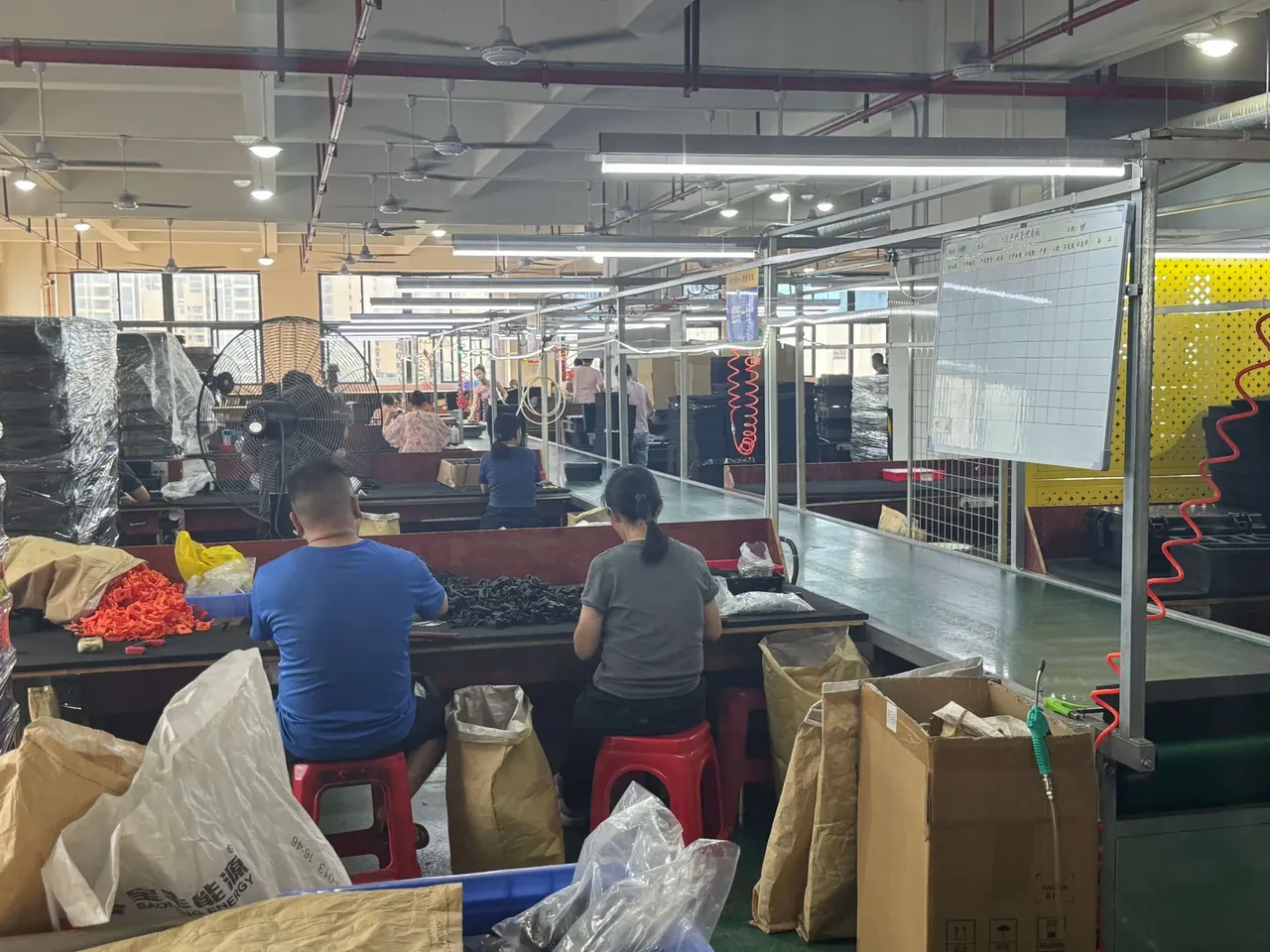
Guards and cones share one load path in the Tactical field survival rescue tool case: force runs through the guard into the cone seat, then out to the platen. Across the 5–200 Hz / 3 h sweep, 8.2 mm gives the steadiest trace while 7.4 mm and 9.0 mm step in one band. After 3500 cycles the seat is remeasured; four latches at 470 N each must not lever the foot off. Guard grade and cone grade are logged as a pair, since neither table alone fixes the lower bound.
3. Displacement readings after broadband vibration
A broadband reading is the envelope over the full 5–200 Hz / 3 h run, not one peak. The Tactical field survival rescue tool case is strapped at four points with 1.7 kN each; displacement ≤1.4 mm and an uncracked guard are parallel criteria, one for drift and one for corner integrity. Mid band raises the shell response into a small hump whose position moves with the cone grade.
| Vibration band | Frequency range | Hold time | Displacement reading |
|---|---|---|---|
| Low band | 5–40 Hz | 1 h | Within 0.6 mm |
| Mid band | 40–120 Hz | 1 h | Near the 1.4 mm limit |
| High band | 120–200 Hz | 1 h | Falls back to 0.9 mm |
Values are traced by band, not handed over as a run average. The Tactical field survival rescue tool case is most stressed at 40–120 Hz, where 8.2 mm holds the peak inside 1.4 mm and 7.4 mm crosses earlier; the three grades give the cone-depth lower bound a band to be derived from.
4. Foot-pad contact under offset-load retest
The retest moves a 23 kg load toward one corner, so the four feet of the Tactical field survival rescue tool case carry unequal pressure and the cone gap hidden at 9.5 kg empty appears. Only the mid band is revisited; the reading must match the even-load case and no foot may lift.
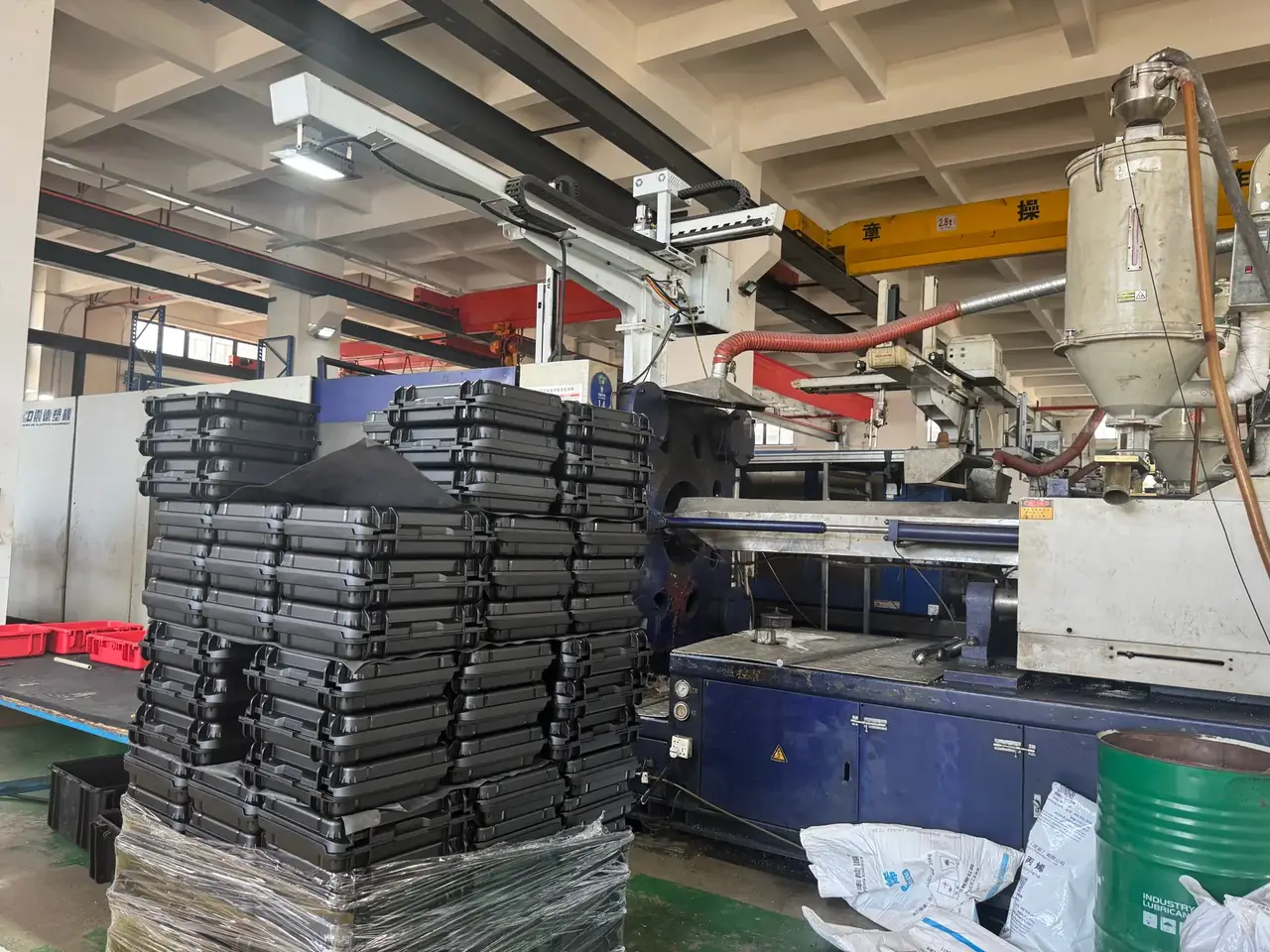
Latches and gaskets constrain the retest. The Tactical field survival rescue tool case uses four latches at 470 N with two gasket rings at 24% compression, benchmarked against IP67, and the lid must seal after 3500 cycles. A lifted foot twists the lid about the diagonal, so an over-line reading may be a contact failure rather than a guard fault; a 0.3 mm even-versus-offset difference sends the shell back for a cone-seat check.
| Displacement value | Cone depth | Foot contact | Verdict |
|---|---|---|---|
| 0.8 mm | 9.0 mm | Four feet seated | Keep |
| 1.2 mm | 8.2 mm | Four feet seated | Reference |
| 1.6 mm | 7.4 mm | One foot lifted | Reject |
5. Cone-depth lower bound for field batches
The field batch of the Tactical field survival rescue tool case closes on a cone-depth lower bound, traced back to the band where displacement first breaks 1.4 mm; later readings are a trend only, never acceptance evidence. The mid-band peak anchors the line, so a tidy high-band falloff cannot loosen it.
The bound settles at 8.2 mm, and 7.4 mm samples are excluded as a lot. The Tactical field survival rescue tool case writes 9 mm guards, 8.2 mm cones, 23 kg load and four tiedown points at 1.7 kN onto one card; the 700×470×310 mm outer size and 630×405×235 mm cavity are checked once on the drawing, while the bench measures displacement and the guard. The 3500 cycles, 470 N latches and 24% compression stay on the shell side between batches.
Conclusion
The displacement criterion of the Tactical field survival rescue tool case rests on a 9 mm guard paired with an 8.2 mm cone, cleared by holding ≤1.4 mm after 5–200 Hz / 3 h. Guard-grade, vibration-band and displacement-value tables link the three facts into one traceable chain. The 1.4 mm threshold and the 40–120 Hz band stay fixed for every production lot, so a field batch of the Tactical field survival rescue tool case has an acceptance line that can be checked rather than assumed.
Related Reading
- Outdoor emergency rescue supply safety case
- Fire rescue tool cases and fast access
- Disaster emergency supply cases for storage and deployment
- Field airtight retest of protective cases
Related Products
- 8 Series — Gun Cases; Military Equipment Cases; Camera Equipment Cases; Drone Cases; Watch Cases; Knife Cases; First Aid Cases; Electronics Equipment Cases
- WL8-2812 PP Gun Case — model WL8-2812
- All protective cases and toolboxes: 7 series, 158 models