

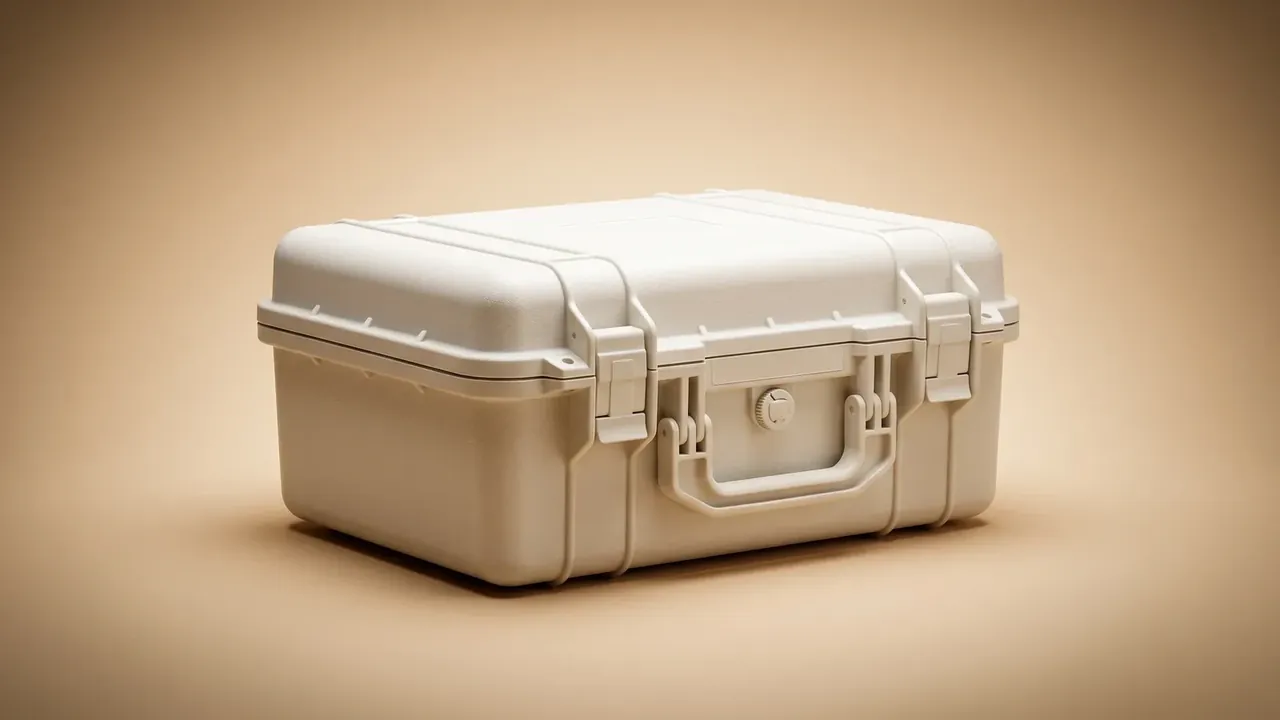
Quick answer: Acceptance of a temperature-controlled case should rest on three things a third party can re-check: the clause cited, the curve recorded, the sample kept. This article gives the clause, the on-site method and the pass line for thermal cycling, insulation, ingress, vibration and drop.
Table of contents
- Three things to fix before acceptance
- Thermal cycling: dwell and transfer limits
- Insulation: reading pull-down and recovery curves
- Seals and ingress: jet spray and pressure decay
- Vibration and drop: levels, fixtures, read-out
- Disposition: rework, concession, batch hold
- FAQ
1. Three things to fix before acceptance
Most disputes about a temperature-controlled case are not about a broken product but about two parties meaning different things by pass: the buyer pictures a duty cycle, the supplier holds an outgoing report.
The bridge is a clause number: IEC 60068-2-14 Na and Nb for cycling, MIL-STD-810H 514.8 for vibration, 516.8 for drop, IEC 60529 for the IP code. Then a sealed sample with measured wall thickness and latch batch, and records that survive review six months later: equipment ID, probe positions, ambient temperature, untouched curve file. Leave one open and later tests become opinions.
| Check | Clause | On-site method | Pass line |
|---|---|---|---|
| Thermal cycling | IEC 60068-2-14 Na | Two chambers, 3 hours each | No cracking or set after 5 cycles |
| Insulation | Contract curve | Log cavity centre and wall | Drift under 2.5 °C over 10 hours |
| Ingress | IEC 60529 IP67 | Immersion 1 m, 30 minutes | No water or mist inside |
| Vibration | MIL-STD-810H 514.8 | 1 hour per axis | Latches shut, liner in place |
| Drop | MIL-STD-810H 516.8 | Edge, face, corner at 1.2 m | No through-crack, lid closes |
The pass line is a floor, not a target: put a floor plus tolerance in the contract.
2. Thermal cycling: dwell and transfer limits
Variation between laboratories sits in dwell and transfer. Under IEC 60068-2-14 Na the sample must be stable before the dwell starts: a change under 1 °C within 3 minutes at the reference point. Nb allows transfer before stability. A temperature-controlled case carries heater film and cold packs, so a wall-mounted probe runs minutes ahead of the cavity centre.
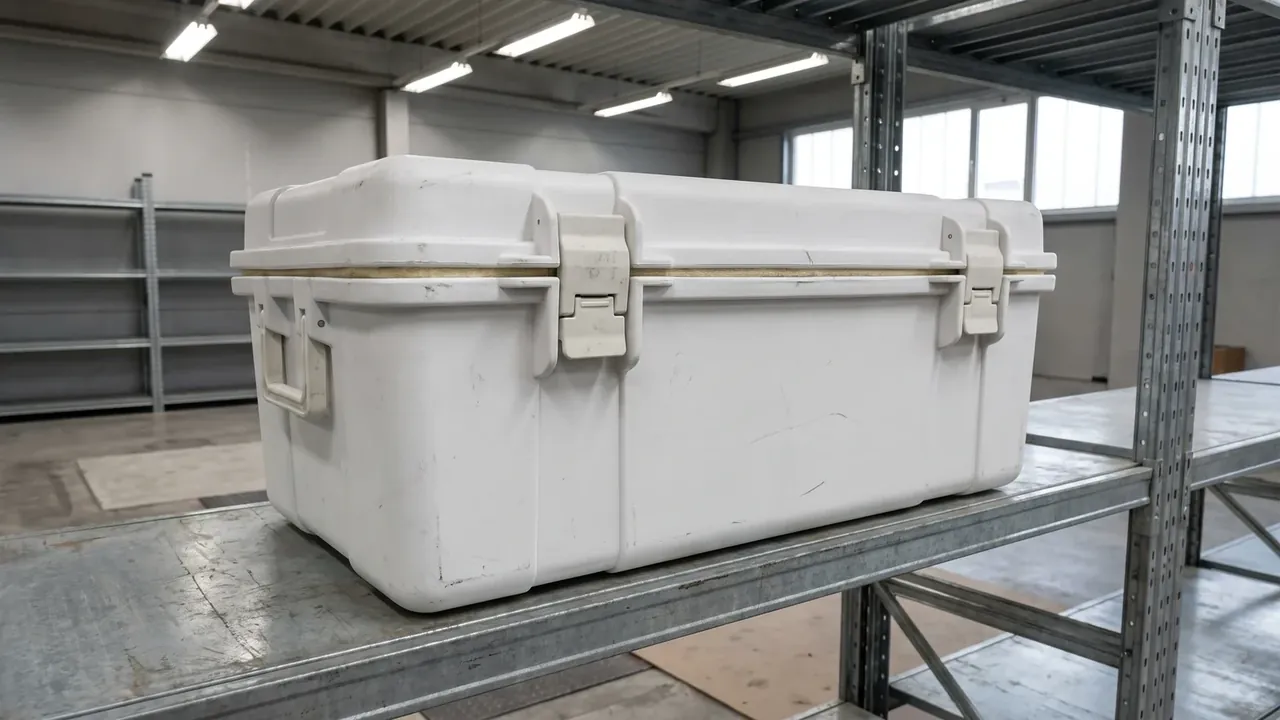
Transfer time is where protocol meets reality: five minutes in the plan becomes seven in a corridor. The record sheet needs a measured transfer time column; an excursion beyond the limit invalidates that cycle.
3. Insulation: reading pull-down and recovery curves
Judge insulation on curve shape; a single number can come from any construction.
- Start point: load the case, measure the cavity centre, record the measured value.
- Pull-down: active units log the drop per minute; passive units log start and end.
- Hold: 10 hours, one reading per hour, keep the worst deviation.
- Recovery: from -25 °C into a 23 °C room, log every 15 minutes.
- Verdict: hold within 2.5 °C, no pooled condensate within 90 minutes.
Step three is the one most often faked: a probe pushed into foam reads foam. Suspend it at the cavity centre, 50 mm clear of the wall. Wall thickness then decides whether the hold stays flat: 38 mm is a common nominal, 36 to 40 mm is normal scatter, and a point below 34 mm means uneven powder in the rotomould, which shows on the curve as 4 to 6 °C a day.
4. Seals and ingress: jet spray and pressure decay
Ingress disputes stall between IP65 and IP66: water jets against powerful water jets, different pressure and nozzle. For IP66, fix four items on the record: nozzle bore, pressure, spray distance, time per face.
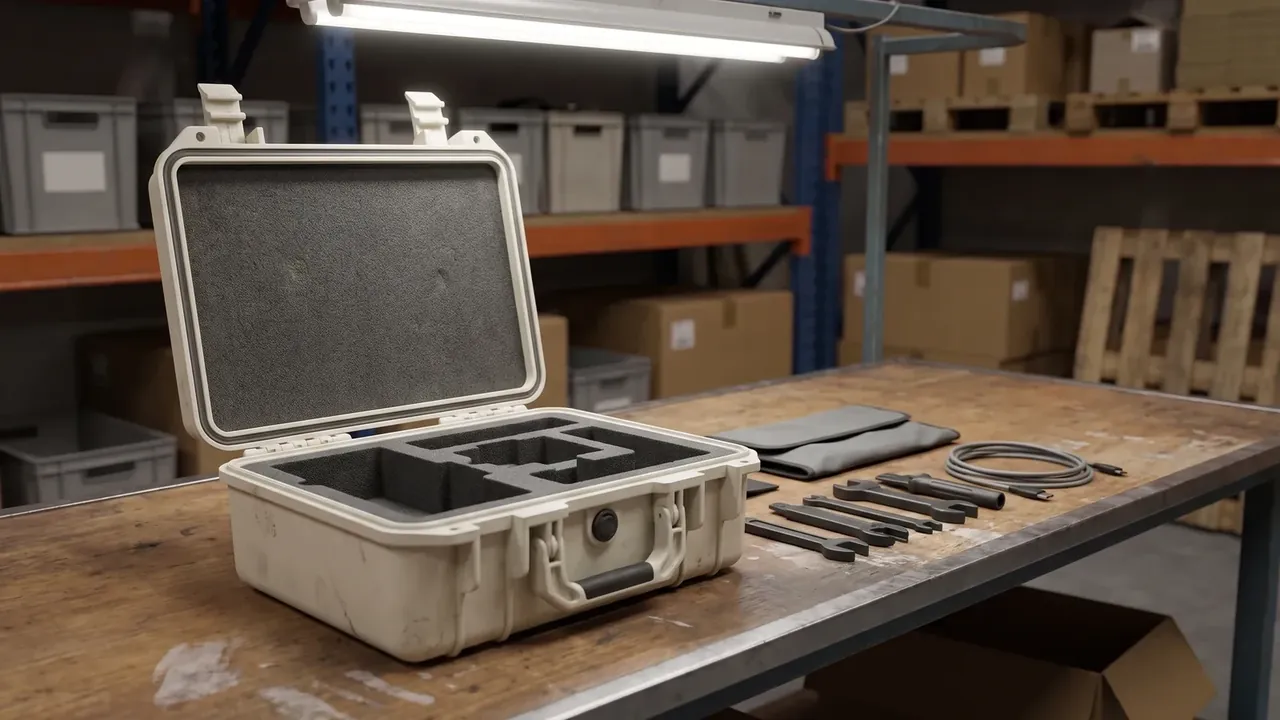
A workable setup is a 12.5 mm nozzle at 100 kPa from 3 m for 3 minutes per face. Open it at once and check the corners, latch seats and gasket root.
Log the gasket separately: 55 to 65 Shore A at about 30% compression holds; past half compression the profile takes a set and leaks within six months. For line sampling, charge to 3 kPa and read the drop over 60 seconds; beyond 0.5 kPa the seal fails.
5. Vibration and drop: levels, fixtures, read-out
Random vibration follows the transport mode: road sits near 1.04 grms, rail and air differ, and mixing them means nothing. MIL-STD-810H 514.8 gives the method, not the level, so spectrum and duration per axis belong in the contract.
A flexible fixture eats vibration, so ask for fixture photographs. Drop testing follows 516.8 at 1.2 m, edge, face and corner onto steel, read on structure and function.
6. Disposition: rework, concession, batch hold
Disposition has three buckets; blanket rejection is as indefensible as blanket release. The split follows whether a defect is reversible and whether it touches function.
| Type | Applies to | Follow-up | Sign-off |
|---|---|---|---|
| Rework | Thin wall, mis-set latch seat, loose foam | Repeat the failed test | Quality engineer |
| Concession | Colour drift, flow marks, shifted label | Signed waiver, 5% cap | Buyer and quality |
| Hold | Seal failure, dead module, through-crack | Line stop, root cause, lot re-test | Programme manager |
Rework cannot stop at cosmetics: the unit repeats the test that failed. Batch hold usually points at mould or assembly.
Write the outcome as one line: rework, concession or hold, plus owner and date.
Conclusion
Acceptance turns a vague word into reproducible numbers: clause, probe position, transfer time, pass line. Split nonconformity into rework, concession and hold and the loop closes. Whether a temperature-controlled case meets its specification is decided by curves and records, not by a promise.
This article discusses only the container (case body) side of specifications and design intent, and does not cover any handling, loading or use of the contents.
Related Reading
- Temperature-Controlled Case Selection: temperature bands, hold time and power draw
- Temperature-Controlled Case vs Cooler Box: active and passive trade-offs
- Airdrop Case Structure and Cushioning Principles
- Artillery Shell Box: dangerous goods packaging standards
- Case Pallet Marking: shipping marks, counts and weight
Related Products
- 8 Series — Gun Cases; Military Equipment Cases; Camera Equipment Cases; Drone Cases; Watch Cases; Knife Cases; First Aid Cases; Electronics Equipment Cases
- WL8-2812 PP Gun Case — model WL8-2812
- All protective cases and toolboxes: 7 series, 158 models