

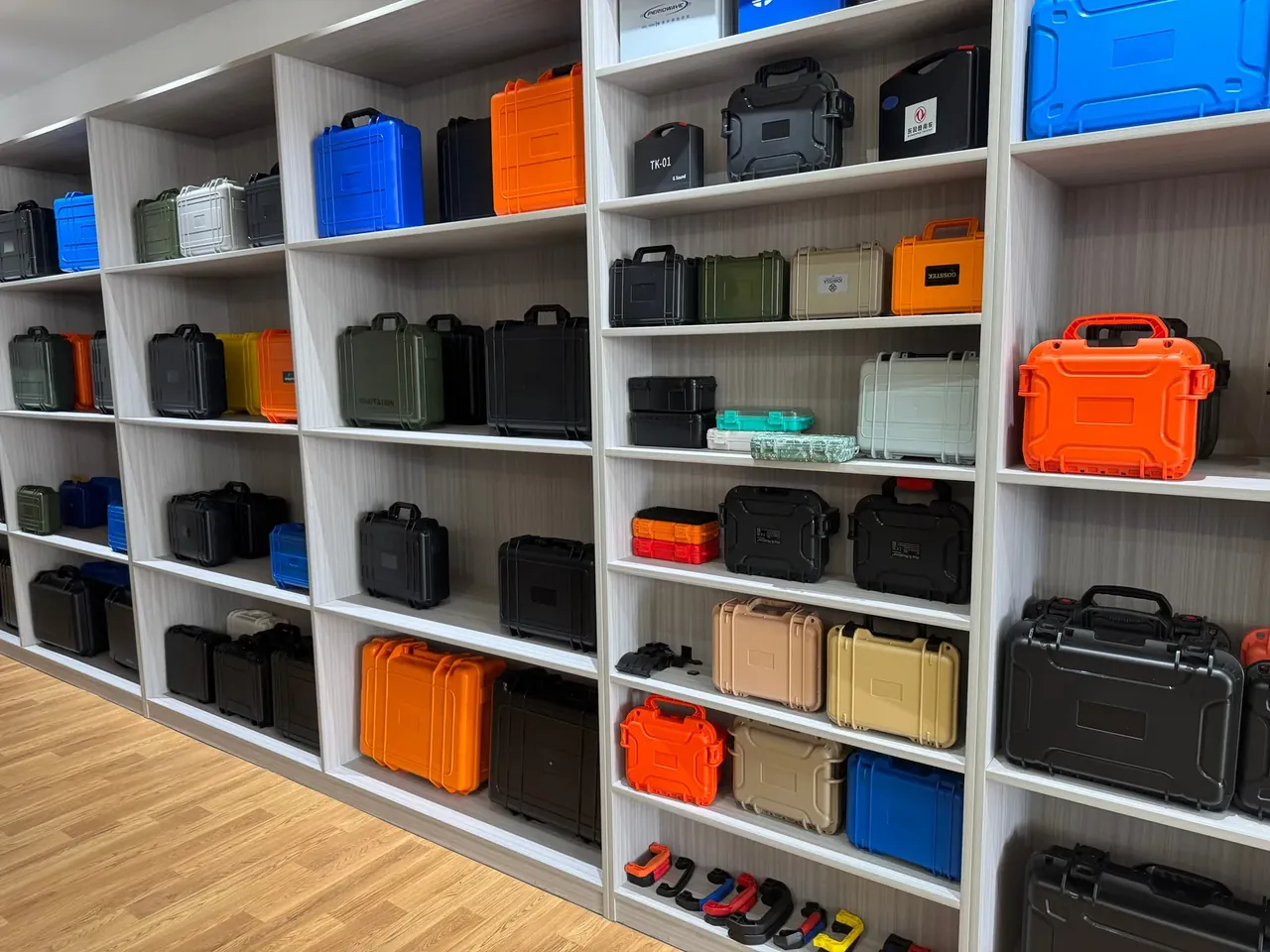
Quick answer: A thin-wall protective box holds 1.2 mm walls by keeping flow ratio at 280, with a 0.35 mm living hinge and 0.6 mm latch compression.
Table of contents
- Where Flow Ratio Sets the Wall Floor of a Thin-Wall Protective Box
- Living Hinge Web Thickness and Flex Life
- Single-Latch Seal: Compression and Tongue Travel
- Warpage Control and Cooling Set
- First-Article Check and Batch Release
- FAQ
1. Where Flow Ratio Sets the Wall Floor of a Thin-Wall Protective Box
Thin wall is not a race to the smallest number a press fills. On a thin-wall protective box the gate-to-corner path is 320 mm, so a 1.2 mm wall runs at a flow ratio of 267; at 1.0 mm the ratio reaches 320, past what standard PP carries. Homopolymer PP tops out near 250 to 300, ABS at 150 to 200, so this shell is designed at 280 with 20 in reserve.
Fill pressure rises with the inverse square of wall thickness: 31 MPa at 1.2 mm, 70 MPa at 0.8 mm, 180 MPa at 0.5 mm. Clamp tonnage cannot buy flowability, so the answer is a thicker wall, another gate or a higher-flow grade. This thin-wall protective box adds two gates and cuts the longest run to 110 mm, keeping thickness elsewhere inside plus or minus 10 percent; a heavy patch at the lid blend cools last and dishes a flat panel.
| Wall floor | Flow ratio | Fill pressure | Flow length served |
|---|---|---|---|
| 1.5 mm | 210 | 20 MPa | Up to 315 mm |
| 1.2 mm | 267 | 31 MPa | 320 mm (this design) |
| 1.0 mm | 320 | 45 MPa | Two gates needed |
| 0.8 mm | 400 | 70 MPa | Three gates or more |
2. Living Hinge Web Thickness and Flex Life
A living hinge lives on the web. This thin-wall protective box runs a 0.35 mm web, a 1.5 mm land and an R0.75 relief radius on the back face. The 180 degree fold puts about 19 percent strain on the outer fibre, inside what homopolymer PP tolerates; at 0.6 mm the same fold reaches 29 percent and the first closure can start a crack.
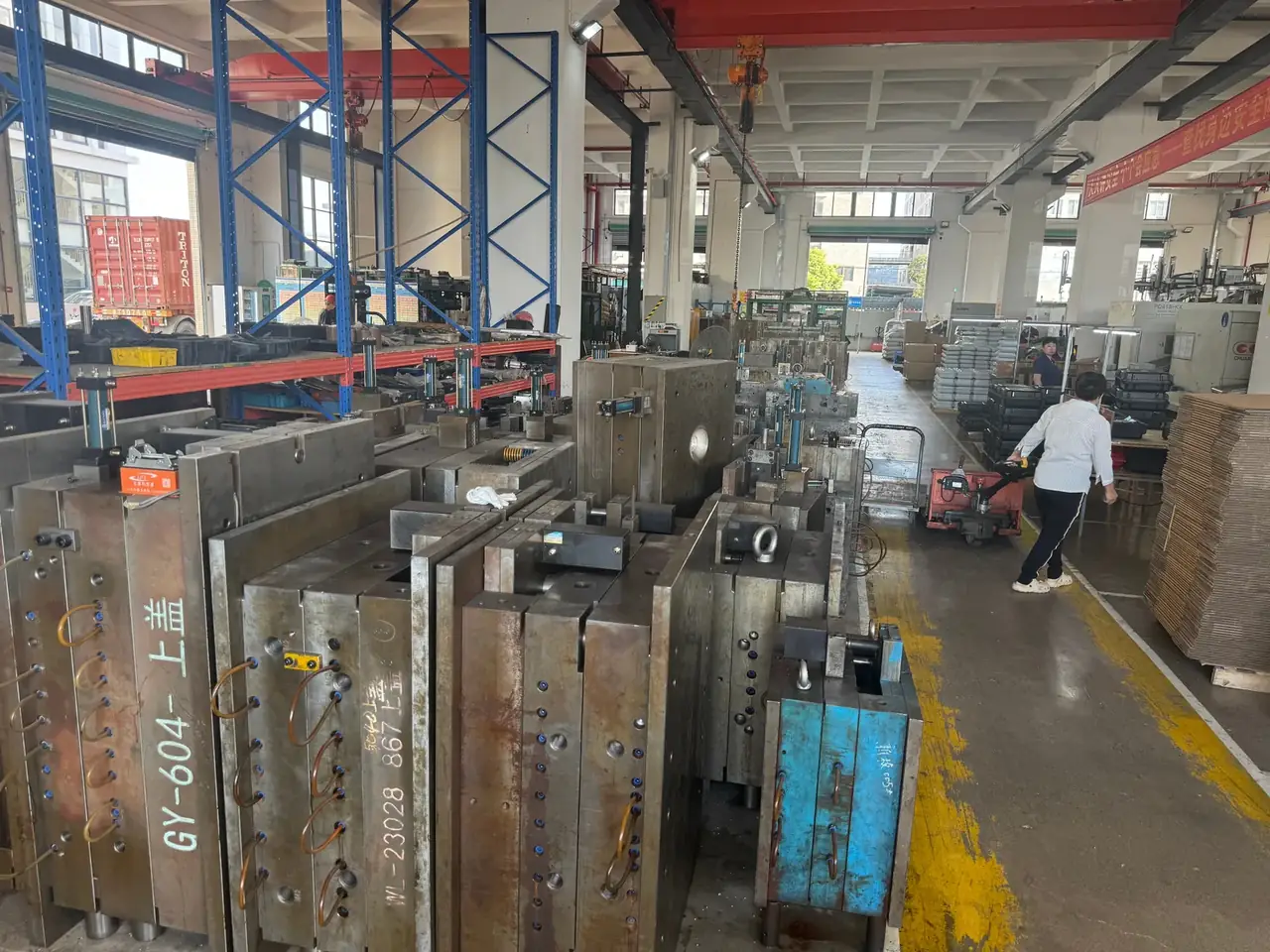
Grade sets the ceiling. Homopolymer PP at 0.25 to 0.35 mm passes a million flexes, copolymer PP 500,000 to 800,000, ABS not 100,000. The thin-wall protective box is released at 10,000 closures because failure starts at the junction radius, where whitening appears first. Melt must cross the web: the gate sits 35 to 50 mm from the hinge centreline, and parts are flexed three times warm.
| Hinge web | Closures sustained | Typical failure |
|---|---|---|
| 0.25 mm | Over a million | Short shot, notched web |
| 0.35 mm | Over 100,000 (this design) | Whitening at the root radius |
| 0.45 mm | Tens of thousands | Outer fibre tears |
| 0.60 mm | A few thousand | Crack on first fold |
3. Single-Latch Seal: Compression and Tongue Travel
One latch has to flatten a 2.0 mm cord evenly along the rim of the thin-wall protective box. A 1.4 mm groove leaves 0.6 mm of squeeze, 30 percent compression inside the 25 to 40 percent band for static seals; the groove is 2.6 mm wide, 1.3 times the cord, so the rubber can move sideways. Past 40 percent the silicone takes a set; below 20 percent a spray test weeps at mid-side.
The 4 mm tongue travel makes the squeeze workable: 0.6 mm compresses the cord, 3.4 mm absorbs shell tolerance, gasket ageing and latch wear. A 1.2 mm rim band inside the seal line spreads the load; local compression drops about 0.1 mm where the band breaks.
| Latch compression | Compression ratio | Seal result | Feel |
|---|---|---|---|
| 0.4 mm | 20 percent | Weeps under spray | Loose, dull click |
| 0.6 mm | 30 percent (this design) | Passes | Audible seat, clean rebound |
| 0.8 mm | 40 percent | Passes, takes a set | Tight |
| 1.0 mm | 50 percent | Cord extrudes | Needs two hands |
4. Warpage Control and Cooling Set
Warp comes from a temperature gap across a thin panel. Mould temperature is 60 degrees C, high for thin-wall work, so the melt freezes later and free shrinkage is more even. Cooling goes from 3 s to 5 s at a 1.2 mm wall, adding about 2 s per cycle. Cavity and core stay within 5 degrees C, with 8 mm lines 16 mm from the cavity face.
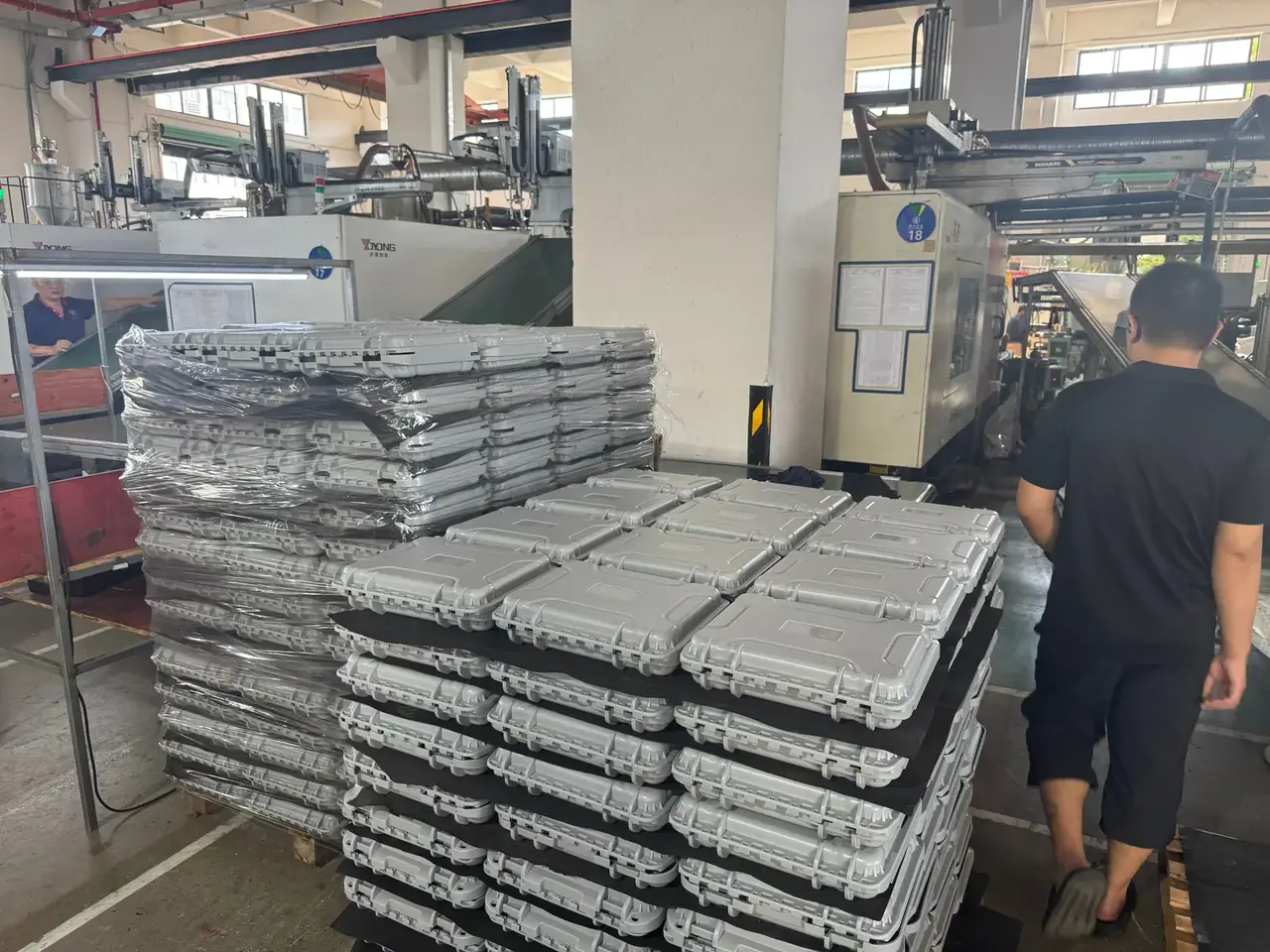
Warp needs a datum to be read. The lid of the thin-wall protective box rests free on a granite plate and a feeler gauge measures the largest gap along a 400 mm diagonal, with 0.5 mm allowed. Ejection is held at 60 to 70 degrees C: above 70 the panel bulges at the pads, below 50 the pads whiten the inside of the lid.
5. First-Article Check and Batch Release
Five parts come off consecutive shots and are checked for whitening at the web root, flow marks and one-push latch seating. A first article of this thin-wall protective box warped beyond 0.5 mm, or a hinge that whitens when cycled, sends the batch back: warp points at cooling, whitening at web thickness or radius.
Batch release for this thin-wall protective box samples five parts at start-up, three every 2 h and three before the shift ends, recording warp, compression and latch force. Isolation follows the cavity number, since two cavities run 0.05 to 0.1 mm apart in warp.
Conclusion
Three settings carry the margin of a thin-wall protective box: a flow ratio of 280 fixing the 1.2 mm floor, a 0.35 mm web with an R0.75 radius surviving 10,000 closures, and 0.6 mm of squeeze inside a 4 mm tongue travel. A 60 degrees C mould and a 0.5 mm warp limit let those numbers hold. A rejected batch at first article costs less than sorting at assembly.
Related Reading
- How Case Wall Thickness Is Chosen
- High-Strength Hinge Construction
- Latch Force and Opening Feel
- Rib Design Principles for Cases
Related Products
- 8 Series — Gun Cases; Military Equipment Cases; Camera Equipment Cases; Drone Cases; Watch Cases; Knife Cases; First Aid Cases; Electronics Equipment Cases
- WL8-2812 PP Gun Case — model WL8-2812
- All protective cases and toolboxes: 7 series, 158 models