

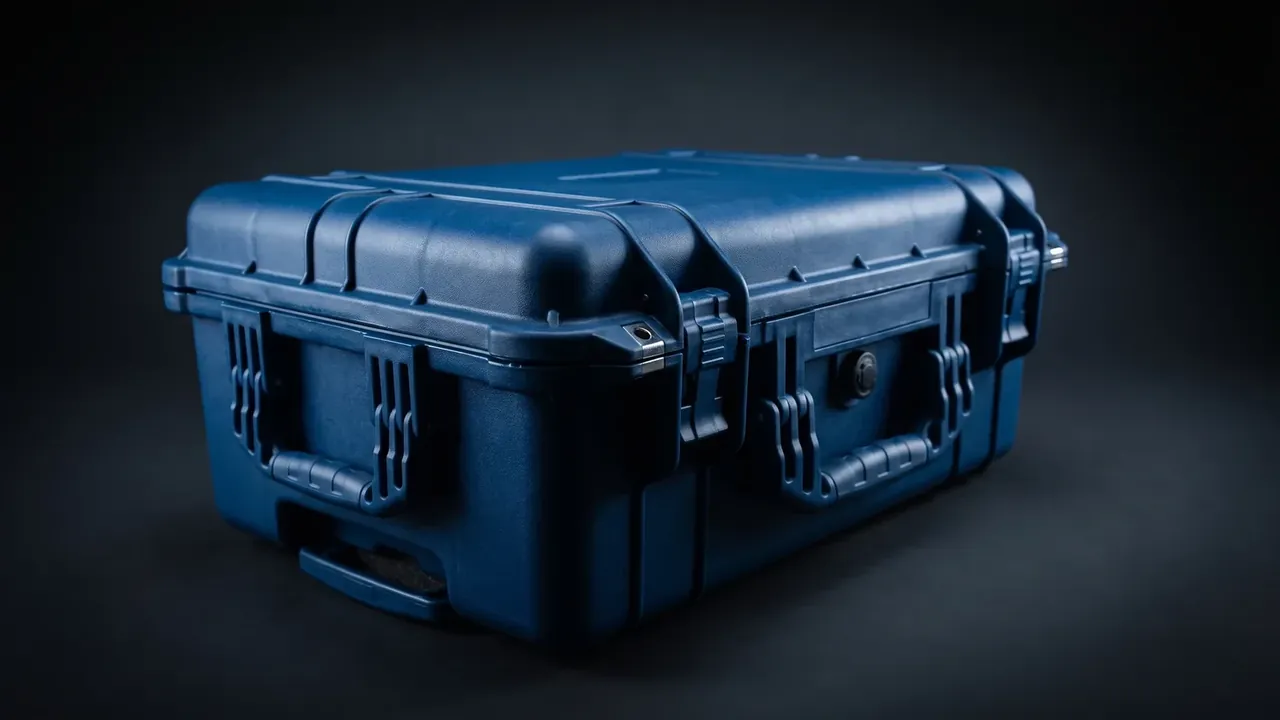
Quick answer: A tool box specification is built backwards from four inputs: the largest item's dimensions, loaded weight, stacking levels and service temperature. Fix those and cavity, wall and load rating each have one answer.
Table of contents
- The four inputs behind tool box specifications
- Building the internal dimension chain
- Wall thickness and rib design
- Load rating and stacking
- Tolerances, material grades and how to specify
- FAQ
1. The four inputs behind tool box specifications
The cavity size is the field most often copied from another unit, which is why many tool box drawings start in the wrong place. Work backwards from the largest item, the loaded weight, the stacking levels and the temperature range.
Stacking is the input most often skipped, because it sets the static pressure on the top face: a 560×380×220 mm case stacked two high is a different structure from one stacked five high.
| Use | Cavity reference | Loaded weight | Stack |
|---|---|---|---|
| Single-person inspection | 420×300×150 mm | 12 kg | 2 high |
| Workshop tool set | 560×380×220 mm | 35 kg | 3 high |
| Vehicle kit | 620×420×280 mm | 48 kg | 2 high |
| Store spares | 800×600×340 mm | 70 kg | 4 high |
2. Building the internal dimension chain
A cavity is not the outside size minus two walls. The chain runs through outside size, wall, draft, corner radius and cavity: a 560×380×220 mm cavity at 3.0 mm wall, 1° per side and R8 corners lands near 572×392×232 mm outside.
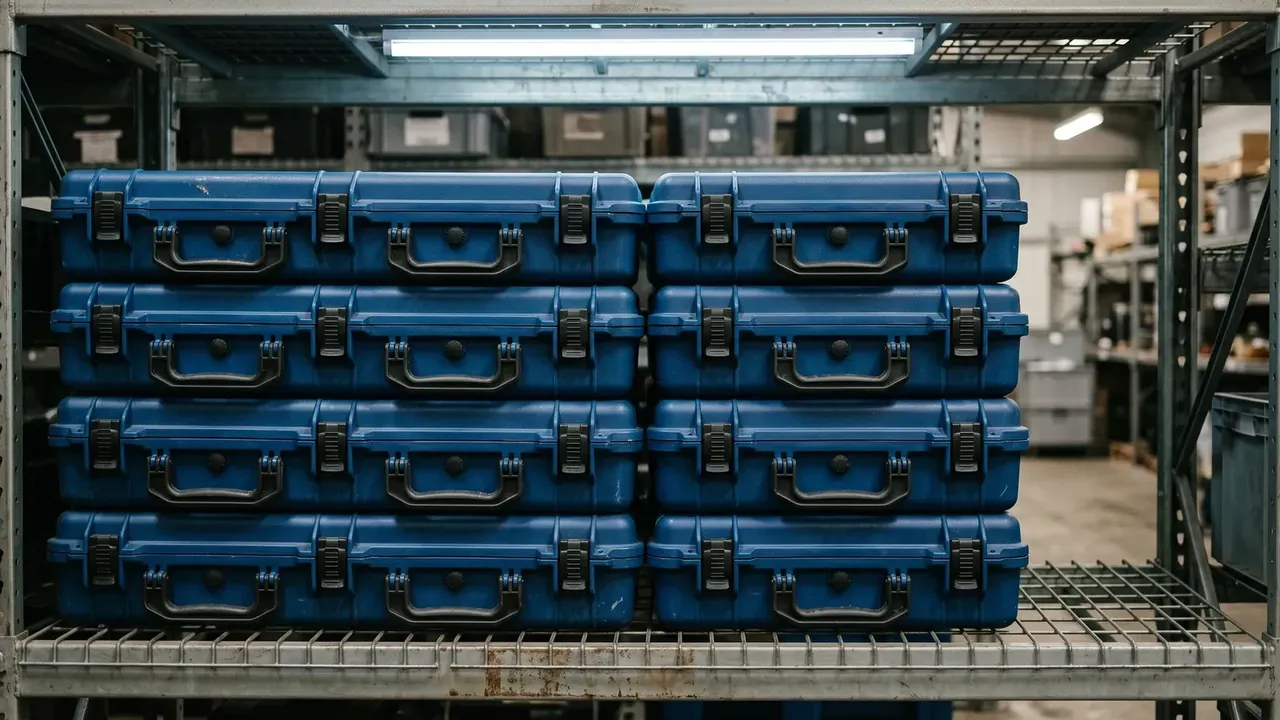
Height is calculated separately. Lid depth at about thirty percent of cavity height lets tools lift straight out; under twenty percent traps long tools against the rim.
Errors come from three places: shrink, tool wear and ejection distortion. At 1.5 percent shrink, and 100,000 cycles of wear, a cavity grows 0.2 to 0.3 mm, so the allowance belongs in the tolerance.
3. Wall thickness and rib design
Thicker is not stronger. Cooling scales with the square of wall thickness, so 3.0 to 4.0 mm nearly doubles the cycle and raises sink and stress. Practice is 2.8 to 3.2 mm on walls, 2.5 to 3.0 mm on the lid and 3.5 mm on the base.
| Area | Wall | Rib | Constraint |
|---|---|---|---|
| Side wall | 3.0 mm | 1.8 mm | rib at 0.6 of wall |
| Lid | 2.8 mm | 1.5 mm | ribs no more than 80 mm apart |
| Base | 3.5 mm | 2.0 mm | cross ribs plus corner gussets |
| Hinge ear | 4.0 mm | none | local thickening for repeated closing |
Rib direction matters more than thickness. Ribs should run across the bending direction of a drop; ribs that follow it add mass, not stiffness. Roots need an R0.5 fillet.
4. Load rating and stacking
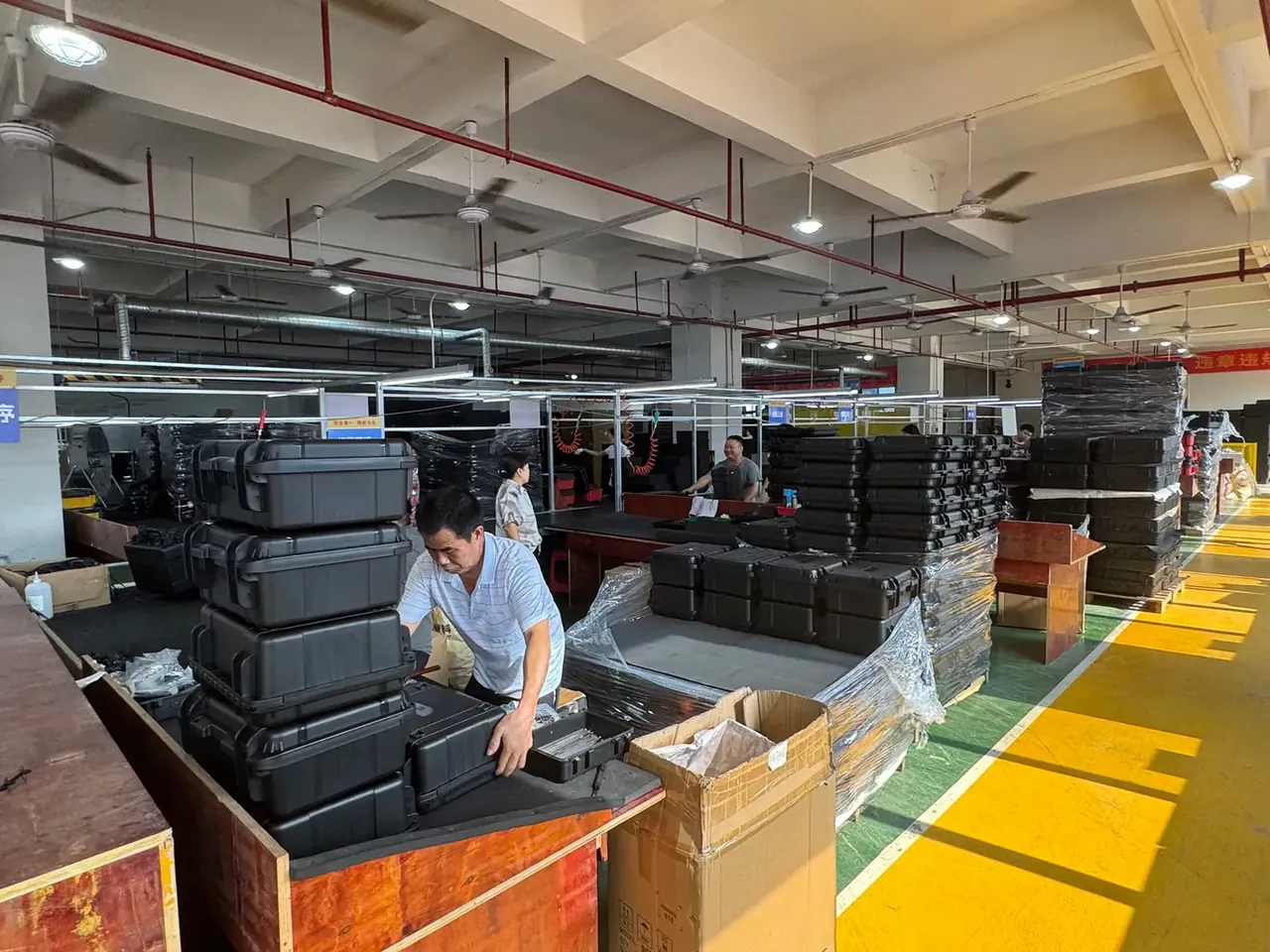
Catalogue ratings are static, while the floor cares about dynamic load and stacking. A 45 kg static case carries about 30 kg under 1.5 times impact, and in a five-high stack the bottom unit takes four cases on its top face.
| Cavity | Own weight | Static load | Stack | Top-face pressure |
|---|---|---|---|---|
| 420×300×150 mm | 2.1 kg | 18 kg | 4 high | 72 kg |
| 560×380×220 mm | 3.6 kg | 45 kg | 5 high | 180 kg |
| 620×420×280 mm | 5.2 kg | 60 kg | 3 high | 120 kg |
What matters is contact area, not level count: a top face with recesses loads narrow bands at twice the average pressure.
5. Tolerances, material grades and how to specify
"Accurate dimensions" means nothing; a tolerance has to be measurable. Cavity length and width at plus or minus 1.0 mm, height at 1.5 mm, base flatness 0.8 mm and lid gap under 1.2 mm give an inspector something to check. Tighter only adds tool cost.
Material goes to grade level. "PP" says nothing; the useful line is block copolymer polypropylene, melt flow 8 to 12 g/10 min, notched Charpy 40 kJ/m² at 23 °C, plus a minus 20 °C figure.
Conclusion
A tool box specification is one chain: four inputs set the cavity, the cavity sets the outside size, that sets the wall and ribs, those set the load rating, and tolerances with a material grade make it checkable. Finish the chain and what you have is a workable tool box specification.
This article discusses only the container (case body) side of specifications and design intent, and does not cover any handling, loading or use of the contents.
Related Reading
- How a tool box is built
- Tool box and alternatives compared
- Protective case size ranges explained
- Specifying custom foam inserts
Related Products
- 8 Series — Gun Cases; Military Equipment Cases; Camera Equipment Cases; Drone Cases; Watch Cases; Knife Cases; First Aid Cases; Electronics Equipment Cases
- WL8-2812 PP Gun Case — model WL8-2812
- All protective cases and toolboxes: 7 series, 158 models