

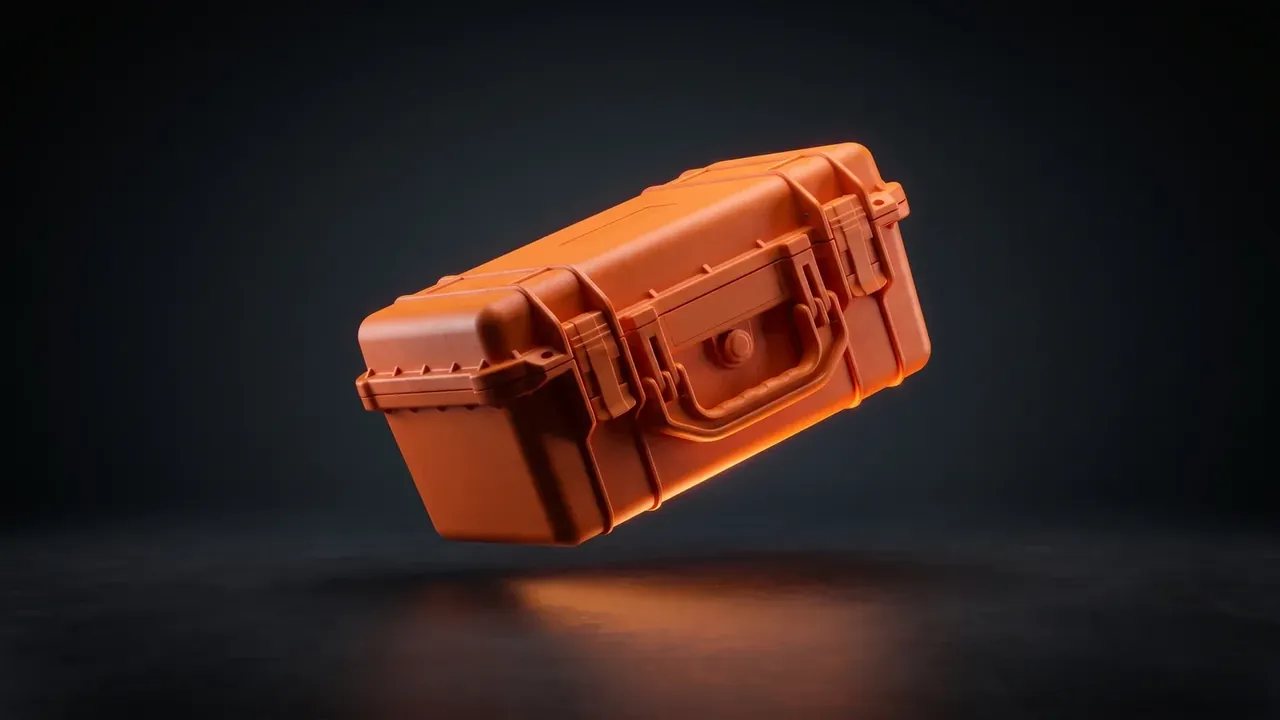
Quick answer: A tool carrier is accepted by turning MIL-STD-810 drop and vibration methods plus IEC 60529 ingress conditions into shop-floor steps, each with one pass line. Fail the line and the batch goes to quarantine.
Table of contents
- Three judgement lines that cover a tool carrier acceptance
- Drop and vibration: reproducing lab methods on the floor
- Sealing and ingress: where IP6X and IPX7 part ways
- Service-life items you can measure again and again
- Disposition after a failed test
- FAQ
1. Three judgement lines that cover a tool carrier acceptance
Most arguments start with the case looking fine. Appearance is opinion, a clause is evidence, so pin the argument to three lines: structural strength, sealing, and the life of the parts a person touches. Each line carries a reference clause that fixes how the test runs; the pass line is the buyer's job, since a standard gives method, not your number.
Missed items sit on the second line. A sealing test waits 24 hours after demoulding, because a part still holding internal stress reads high.
| Test item | Reference clause | Shop-floor method | Pass line |
|---|---|---|---|
| Free drop | MIL-STD-810 Method 516.8 | 1.2 m, 26 impacts, corners edges faces | No through-crack, latches close one-handed |
| Random vibration | MIL-STD-810 Method 514.8 | 5–500 Hz, one hour per axis | Insert stays put, hinge pin shows no play |
| Dust | IEC 60529 first digit 6 | Talc cabinet, 20 mbar vacuum, 8 hours | No visible dust inside |
| Water | IEC 60529 second digit 7 | Immersion at 1 m, 30 minutes | Absorbent paper stays dry |
| Latch cycling | Buyer acceptance spec | 5,000 cycles at 20 per minute | Latch force drop under 30% |
The third line looks minor. Latches and hinges rarely fail in a drop; they fail at the 800th opening.
2. Drop and vibration: reproducing lab methods on the floor
Method 516.8 is about posture coverage rather than height: corners, edges and faces across three axes, 26 impacts at 1.2 m. Three conditions must be fixed: a concrete base at least 100 mm thick, a release that adds no initial velocity, and a height measured to the lowest point of the body.
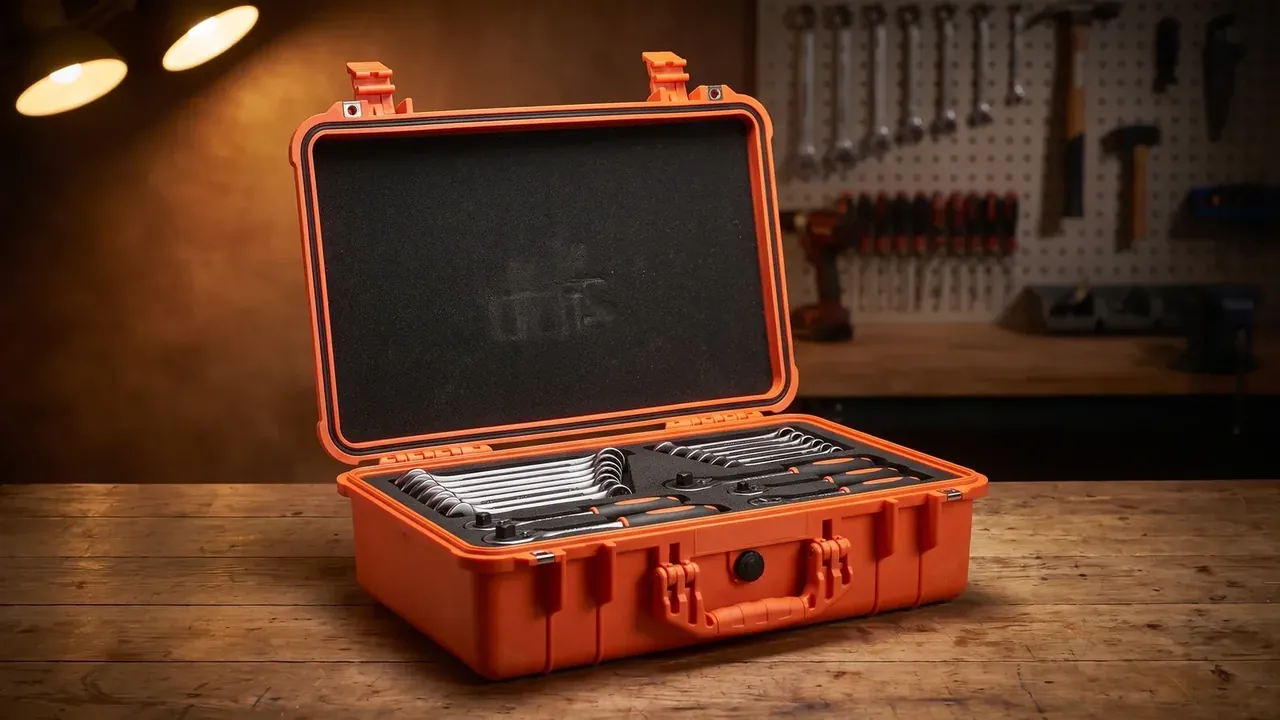
Reading a case takes longer than dropping it. A through-crack fails, while stress whitening is only recorded. Close each latch one-handed, since a latch that will not close means a deformed seat. Sight along the parting line, because a lip offset beyond 2 mm points to a pulled hinge seat. Press the valve and weigh the case, as a slow return or a batch gaining 1% both mean water in the gasket groove. A tool carrier that survives this still needs its insert checked for cracks at the screw bosses.
Vibration follows the drop. A drop moves the latch seats, so a later spectrum no longer reflects the original state. Sweep 5–500 Hz for one hour per axis.
Cold soak is often skipped. A polypropylene body at 3.2 mm wall, held at minus 20 °C for four hours, splits at the latch seat far more often.
3. Sealing and ingress: where IP6X and IPX7 part ways
IEC 60529 splits dust and water into two independent digits, the first for solids and the second for liquids, so acceptance cannot fold them into one phrase about being sealed. Name the test medium in the purchase order.
| Rating | Medium and condition | Usual failure point | Retest precondition |
|---|---|---|---|
| IP5X | Talc at 2 kg/m³, 8 hours, no vacuum | Gasket joint not bonded | Gasket seated, left 24 hours |
| IP6X | Talc at 2 kg/m³, 8 hours, 20 mbar vacuum | Valve diaphragm edge, latch seat root | Above, plus valve pressure hold |
| IPX5 | Nozzle 6.3 mm, 12.5 L/min, 3 m, 3 minutes | Parting line of lid and base | Every latch engaged |
| IPX7 | Immersion at 1 m, 30 minutes | Hinge bore, label adhesive | Water and case within 5 °C |
The gap between IP6X and IPX7 is mechanism, not difficulty. Dust is pulled in by vacuum, water creeps in under static head, so a case can pass immersion and fail the dust cabinet.
4. Service-life items you can measure again and again
This section uses a list rather than a table, since each item fits one sentence.
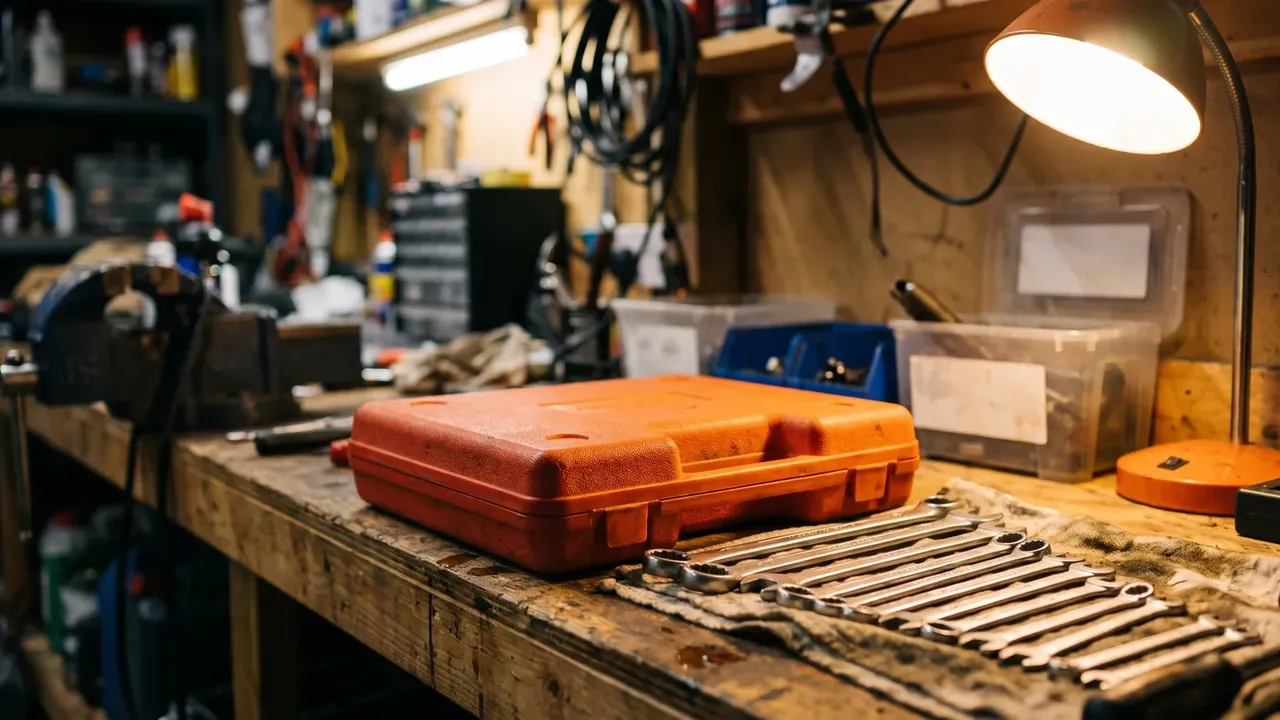
- Latch: 5,000 cycles at 20 per minute, force drop under 30%, no notch worn into the tongue.
- Hinge: 20,000 flips, after which the lid holds any angle without falling shut.
- Handle: 25 kg static for 60 seconds, measured again after 10 minutes, set under 1 mm.
- Valve: equalises within 30 seconds at 0.3 bar differential, no leak in reverse.
- Marking: legible after 96 hours of neutral salt spray, edges not lifting.
The latch usually goes first, because its load path matches the direction a user pulls.
5. Disposition after a failed test
Disposition has three steps: quarantine, retest, classify. Quarantine seals adjacent batches from the same shift.
Sampling follows GB/T 2828.1 level II at AQL 1.0, with destructive items at double rate. Retest covers the failed item and the items sharing its process step.
Reworked parts never return without the full test for that item. A concession needs a written deviation naming quantity, batch and measured value.
Conclusion
Accepting a tool carrier is translation work: clause into step, step into number. Pick the wrong clause and the test proves nothing. Put all three into one spec, and every tool carrier behaves the same way.
This article discusses only the container (case body) side of specifications and design intent, and does not cover any handling, loading or use of the contents.
Related Reading
- What a tool carrier is and where it sits in a workflow
- Tool carrier selection by load, travel distance and handover
- Airdrop case acceptance: drop sequences and pass lines
- Mould storage case grades and acceptance criteria
Related Products
- 8 Series — Gun Cases; Military Equipment Cases; Camera Equipment Cases; Drone Cases; Watch Cases; Knife Cases; First Aid Cases; Electronics Equipment Cases
- WL8-2812 PP Gun Case — model WL8-2812
- All protective cases and toolboxes: 7 series, 158 models