

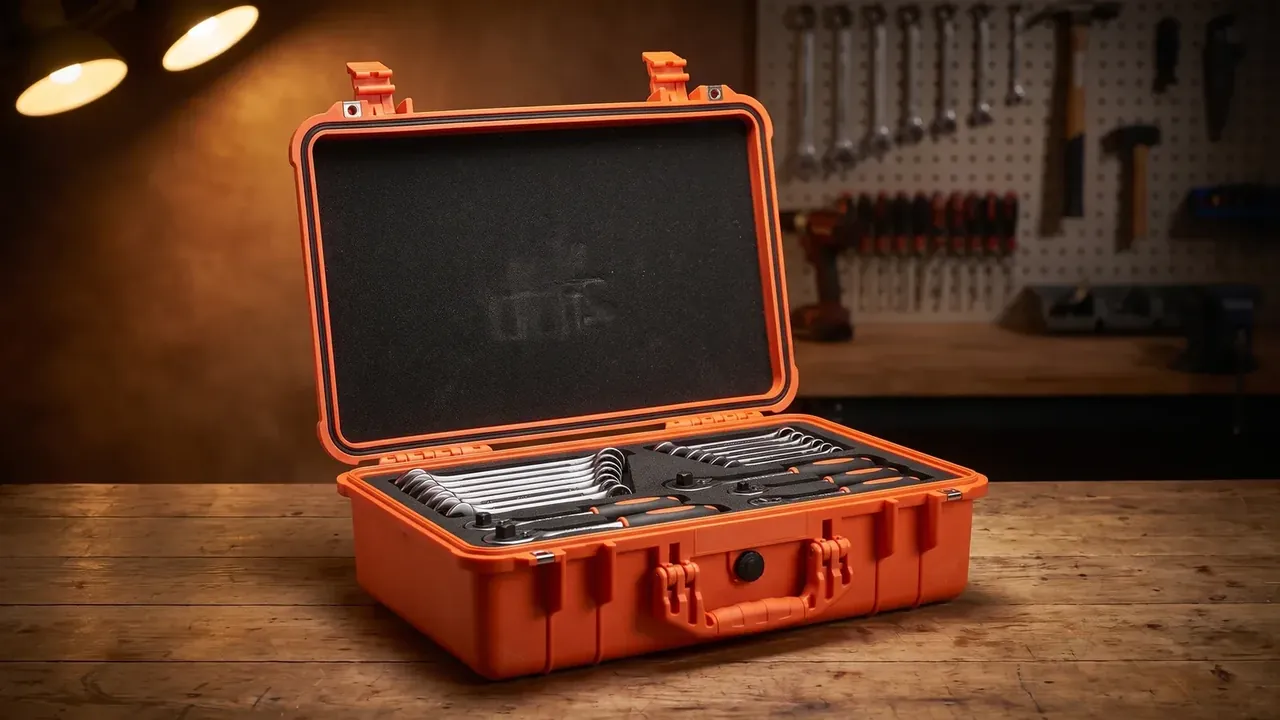
Quick answer: A Tool Kit Chest is chosen by five tests: the load list sets the cavity, compartments set the foam cuts, load rating sets wall and handle, opening style sets the access angle, and handling decides whether it needs wheels.
Table of contents
- Building the Tool Kit Chest Load List
- Compartments and Foam Layout
- Load Rating and Stacking
- Opening Style and Access Angle
- Handling Conditions
- FAQ
1. Building the Tool Kit Chest Load List
Selecting a Tool Kit Chest starts with the list, not the box: size, weight and count for every item.
The longest item sets the length: a 380 mm wrench needs a 420 mm cavity with 20 mm at each end for foam and fingers, and a 130 mm tallest item needs 150 mm depth. With 10.4 kg of tools inside, the box stays under 3.6 kg, since 14 kg is the one-hand limit.
| List item | Measured | Cavity figure |
|---|---|---|
| Longest item | 380 mm | 420 mm length, 20 mm foam each end |
| Tallest item | 130 mm | 150 mm depth, 20 mm above |
| Item count | 23 pieces | 6 cells at 95 x 110 mm |
Count decides compartments, not box size. Twelve sockets, six spanners and five long bars fill six cells; extra cells make the box larger while the load stays the same.
2. Compartments and Foam Layout
A Tool Kit Chest layout works when every item has one home: three cells for sockets, two for spanners, one for long bars, with 8 mm walls between.
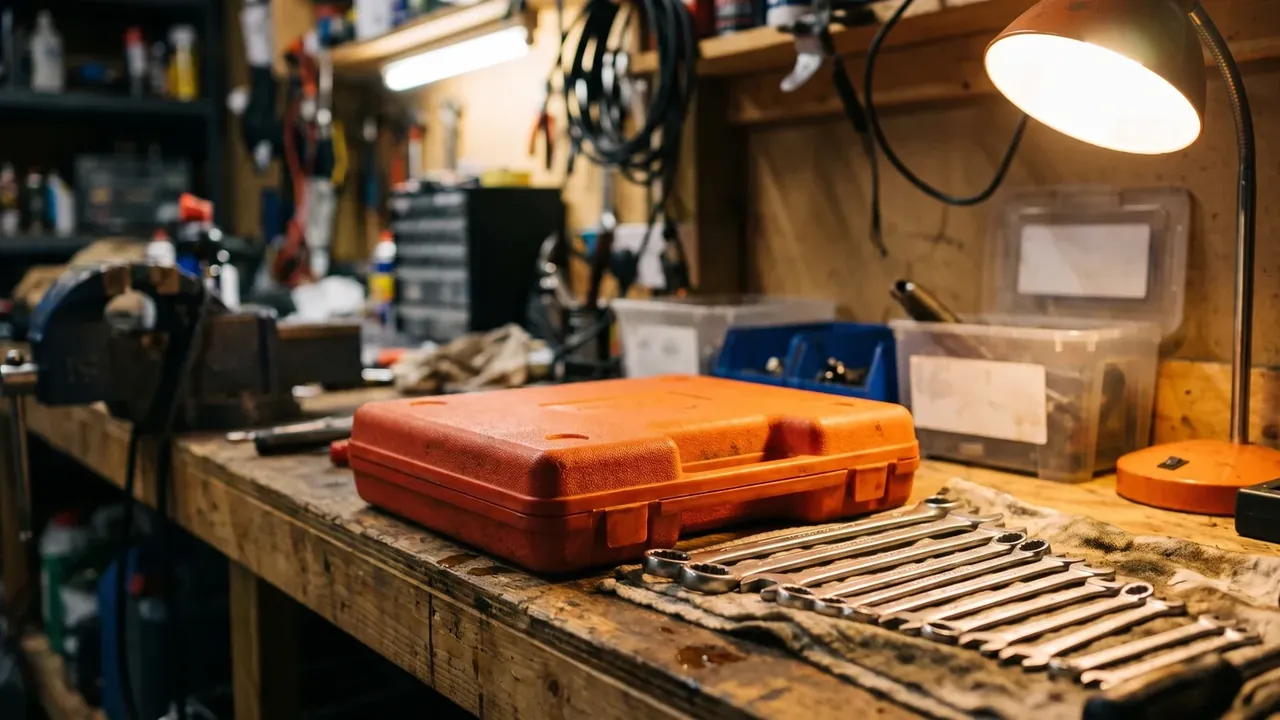
Foam follows density. PE at 38 kg per cubic metre suits hand tools under 1 kg and EVA at 60 suits edged or polished items, so many builds put PE on the floor and 10 mm of EVA under the edges.
Cut tolerance sits at plus or minus 1 mm. A slot 1 mm wider releases easily, 3 mm wider lets the tool shift in transit, and 0.5 mm narrower leaves no room for fingers.
3. Load Rating and Stacking
Load has three layers: point load on a wall, stacking on the lid and pull on the handle. A 1.8 mm PP wall deflects about 2 mm under 40 kg, and the bottom of a five-high stack carries four boxes.
| Check | Pass value | Typical failure |
|---|---|---|
| Handle pull | 25 kg static for 10 minutes | Root of the handle splits |
| Stacking | 40 kg on the lid, 24 hours | Lid sags in the middle |
| Hinge | 8 000 cycles, no play | Hinge seat tears |
Stack height takes the lower limit. Racking at 1.5 m allows eight layers of a 180 mm Tool Kit Chest, a 1.2 m van allows six, so the quoted figure is five. A lid sag over 3 mm after 24 hours rules that out.
4. Opening Style and Access Angle
Three styles exist: full lid, split lid and drawer. A Tool Kit Chest usually uses a full lid hinged at the rear that stops at 105 degrees, and the figure to measure first is how tall it stands open.
| Style | Height when open | Constraint |
|---|---|---|
| Full lid | Box height plus 300 mm | Clear space behind |
| Split lid | Box height plus 180 mm | Centre seam takes width |
| Drawer | Pull-out plus 100 mm | Slides take depth |
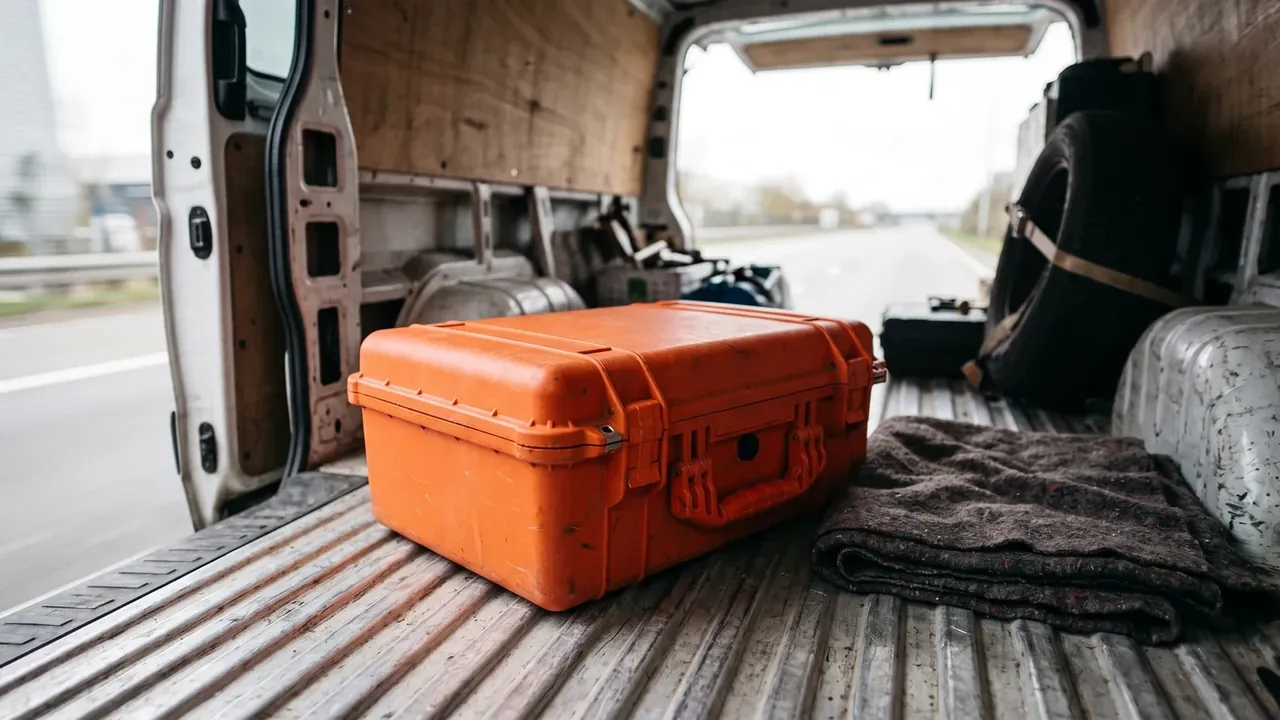
On a 900 mm bench a 180 mm box tops out at 1 380 mm, near the 1 550 mm eye line, while in a 600 mm van bed it reaches 1 080 mm and access means bending. Hinges follow length: two at 300 mm centres on a 460 mm body, since one hinge shifts the lid 1.5 mm after 2 000 cycles.
5. Handling Conditions
Handling decides whether a Tool Kit Chest carries wheels. Three questions settle it: distance per trip, steps on the route, and whether the loaded weight passes 20 kg.
Flat ground under 200 m is fine on a folding handle, while 200 m between workshops calls for two 100 mm castors adding 1.2 kg. Steps need a strap, since wheels are useless without a ramp.
Wheel size follows the floor: concrete at 100 mm, gravel at 125 mm or more. Every extra 25 mm cuts the push over a 20 mm threshold by about 30 percent, and 15 mm of housing comes out of the cavity.
Conclusion
Order matters more than any single figure: the load list sizes the cavity, foam fixes the layout, load rating sets wall and handle, opening style sets posture, and handling decides the wheels. Work through those five and only colour is left to argue about on a Tool Kit Chest.
This article discusses only the container (case body) side of specifications and design intent, and does not cover any handling, loading or use of the contents.
Related Reading
- Where tool kit chests are used
- Setting tool chest specifications
- Choosing a portable tool box
- Matching internal dividers
Related Products
- 8 Series — Gun Cases; Military Equipment Cases; Camera Equipment Cases; Drone Cases; Watch Cases; Knife Cases; First Aid Cases; Electronics Equipment Cases
- WL8-2812 PP Gun Case — model WL8-2812
- All protective cases and toolboxes: 7 series, 158 models