

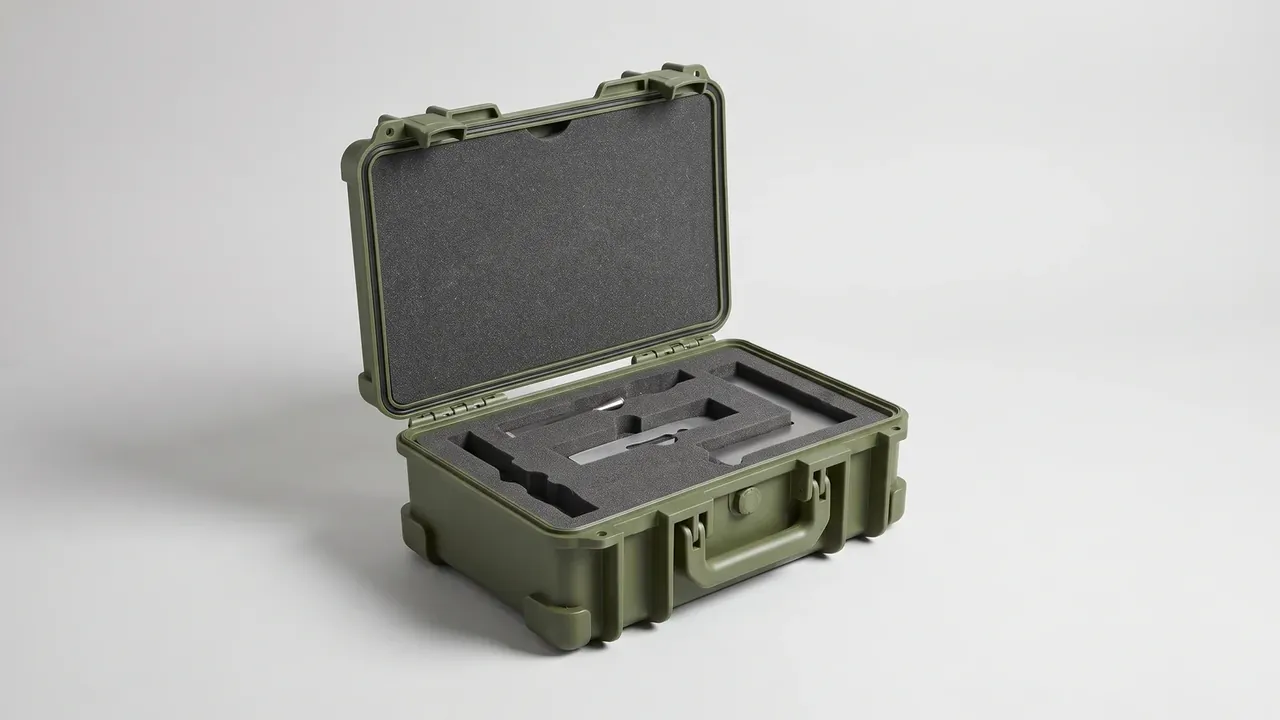
Quick answer: A Tool Kit Chest acceptance standard is a classified inspection list, a method and limit per item, and a sampling rule for the lot. Critical items accept zero; the rest are counted against AQL.
Table of contents
- Listing the Tool Kit Chest Inspection Items
- Appearance and Dimensions
- Seal and Drop Testing
- Latches and Handles
- Sampling and Lot Judgement
- FAQ
1. Listing the Tool Kit Chest Inspection Items
The first page of a standard is a list, not a limit. A Tool Kit Chest sorts items by consequence: critical for protection and safety, major for assembly and stacking, minor for appearance.
Every line needs four columns: item, class, method, limit. Drop one and the standard collapses. Seal good is not an instruction; a card unchanged after 30 minutes at 1 m depth is.
| Item | Class | Method | Limit |
|---|---|---|---|
| Seal | Critical | 1 m water, 30 min | No ingress |
| Drop | Critical | 1.2 m, 10 drops | No crack |
| Latch | Critical | Pull, opening direction | 300 N minimum |
| Cavity | Major | Go/no-go frame | Drawing tolerance |
Four of nine items are critical, and all the rejection power sits there. Critical items accept zero; the rest are counted against a plan.
2. Appearance and Dimensions
A Tool Kit Chest is judged for appearance at 500 lux, 500 mm viewing distance, 10 seconds per part. Fix the three and sink marks get a shared reading: no crack or hole, sink under 0.3 mm, flash under 0.5 mm, colour within ΔE 2.
Dimensions need a settled environment. Parts rest 4 hours at 20 degrees Celsius plus or minus 2, then are measured at gauge temperature; a fresh moulding runs 0.2 to 0.4 mm larger, so measuring hot guarantees a false call. Judge parts, not averages: any deviation fails that part at its largest value.
3. Seal and Drop Testing
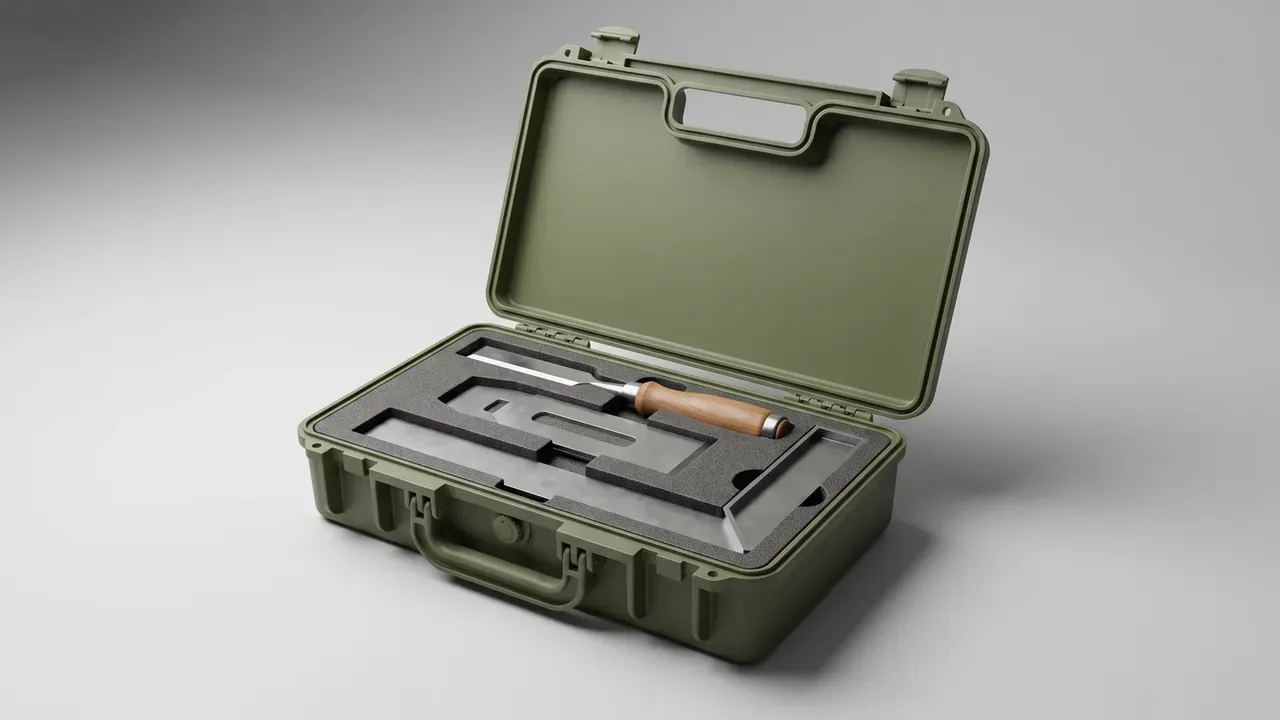
A Tool Kit Chest is cycled 30 times first, so the gasket sees compression, then held 30 minutes at 1 m depth with an indicator card inside. Dry it, open it: the only criterion is a card that has not changed colour. Skip the cycles and a new case proves nothing.
Drop testing copies transport: frozen at minus 20 degrees Celsius for 4 hours, then dropped from 1.2 m within 5 minutes, ten times over six faces, three edges and one corner. Polypropylene loses about half its notched impact strength at minus 20, so cases that pass warm often split cold. Seal is re-tested afterwards, since a groove can shift 0.5 mm without a visible crack.
4. Latches and Handles
Latches fail more often than any other part of a Tool Kit Chest, so the test fixes direction and rate: pull along the opening direction, ramp to 300 N in 30 seconds, hold 10; no release, no root crack, no plastic set. A sideways pull can look better and prove nothing.
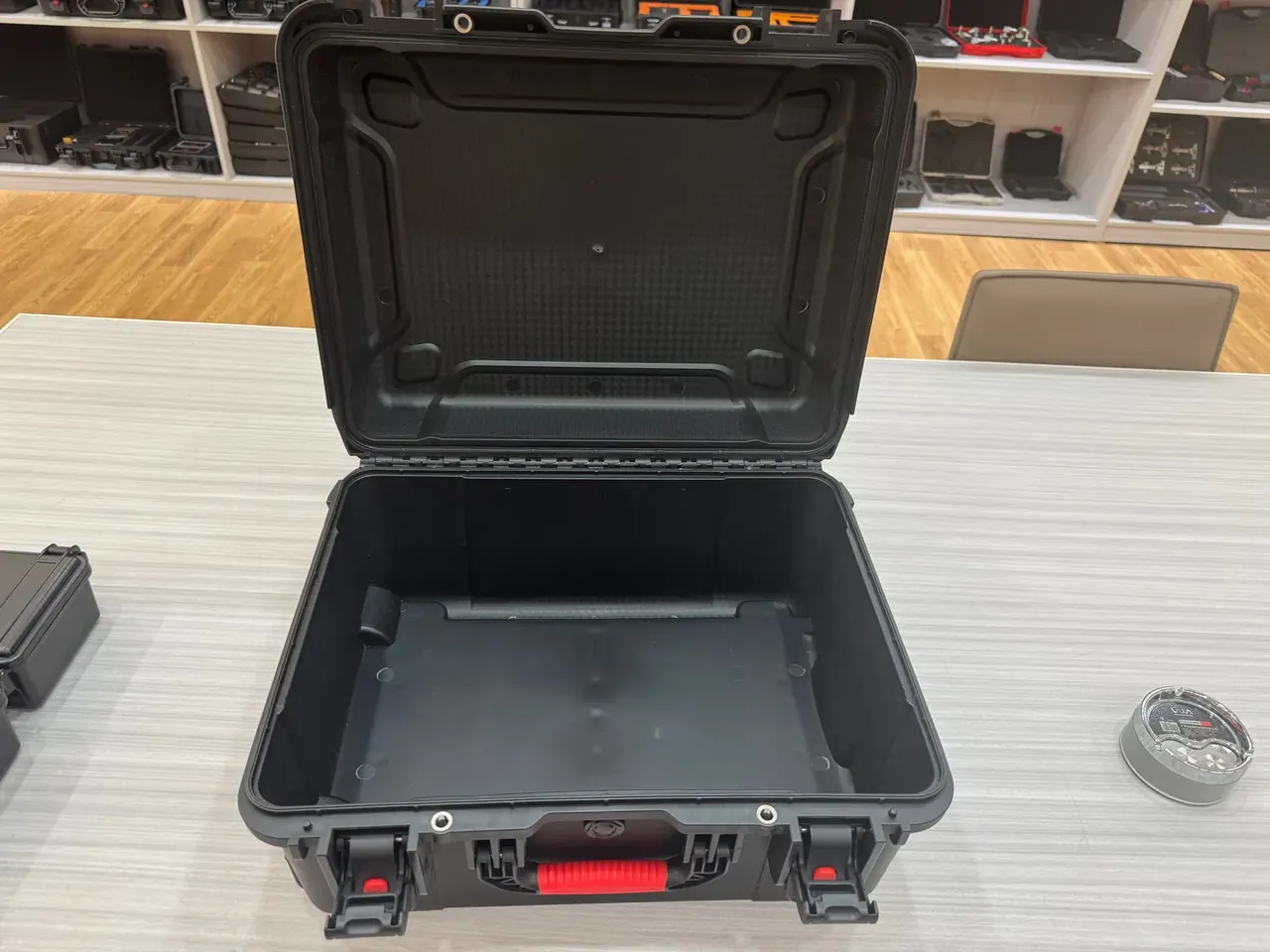
Handles take 1.5 times the carried weight: 30 kg of tools means 45 kg for 30 minutes, with 2 mm of permanent set as the limit. Lift acceleration runs 1.5 to 2 times gravity, so 1.5 is the floor. Hinges run 5000 cycles at 15 per minute, pin clearance 0.4 mm maximum.
5. Sampling and Lot Judgement
A lot is defined before sampling: one mould, one material grade, one shift, with a new lot at every change. Mix two sources and the defect rate averages into invisibility.
Sampling follows an attribute plan: level II, normal, single. For 501 to 1200 pieces the sample is 80. Critical items run at AQL 0, so one defect rejects the lot; major at 1.0, accept 2 and reject 3; minor at 2.5, accept 5 and reject 6.
| Lot size | Sample | Critical | Major | Minor |
|---|---|---|---|---|
| 281 to 500 | 50 | 0 | 1 | 5 |
| 501 to 1200 | 80 | 0 | 2 | 5 |
| 1201 to 3200 | 125 | 0 | 3 | 7 |
Judge critical first: one defect rejects the lot whatever the other classes scored, with no extra sample to reverse it. First-piece and patrol checks sit outside the plan: 3 parts fully inspected before a run, 5 parts every 2 hours, a type test every 12 months or after any mould change.
Conclusion
A Tool Kit Chest standard closes four loops: the list sets items, the method sets conditions, the limit sets the pass line, sampling decides the lot. Conditions get dropped first, and each one dropped pushes judgement back to opinion. Fix the conditions, accept zero on critical items, and the acceptance standard for a Tool Kit Chest becomes executable.
This article discusses only the container (case body) side of specifications and design intent, and does not cover any handling, loading or use of the contents.
Related Reading
- Maintaining a metal tool chest
- Case assembly quality control
- Inspecting military supply cases
- Setting waterproof hard case ratings
Related Products
- 8 Series — Gun Cases; Military Equipment Cases; Camera Equipment Cases; Drone Cases; Watch Cases; Knife Cases; First Aid Cases; Electronics Equipment Cases
- WL8-2812 PP Gun Case — model WL8-2812
- All protective cases and toolboxes: 7 series, 158 models