

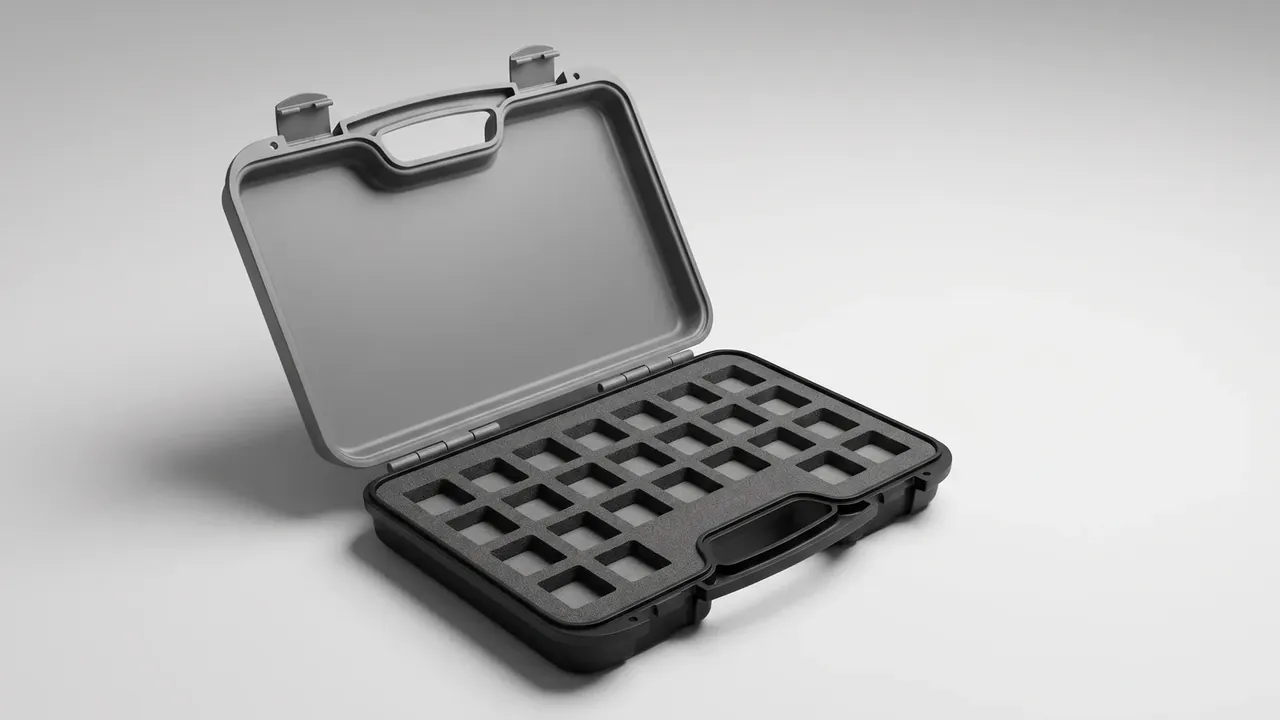
Quick answer: Set transport and storage container specifications outside in: fix the outer size from pallet module and stacking, subtract wall thickness for the inner size, work back from stacking load to wall and ribs, and write sealing as structure plus test condition rather than an absolute rating.
Table of contents
- Four Inputs Behind Transport and Storage Container Specifications
- Inside and Outside Dimensions: Where Tolerance Goes
- Wall Thickness and Ribs: Why It Is Never Even
- Converting Load Rating into Stacking Load
- Writing Sealing and Ingress Ratings
- FAQ
1. Four Inputs Behind Transport and Storage Container Specifications
Four inputs drive every number on the drawing: what goes inside, the pallet and stacking pattern, the transport duty, and the storage environment. Contents set clearance, stacking the outer module, transport the wall, storage the sealing wording.
| Input | Parameter it fixes | Typical figure | Owner |
|---|---|---|---|
| Load shape and weight | Clearance, ribs | 15 mm clearance | User |
| Pallet and stacking | Outer module | 1200 x 800 pallet | Logistics |
| Transport duty | Wall, dynamic factor | 4 high, 1.5 | Carrier |
| Storage environment | Seal, pressure valve | From 8 kPa | Warehouse |
Internal size is outer size minus two wall thicknesses, so designing from the inside out collides with the pallet module.
2. Inside and Outside Dimensions: Where Tolerance Goes
A mid-size transport and storage container runs 820 x 520 x 360 mm outside on a 6 mm wall, a theoretical inside of 808 x 508 x 348 mm. The drawing states 780 x 480 x 320 mm, the rest going to draft and floor ribs.
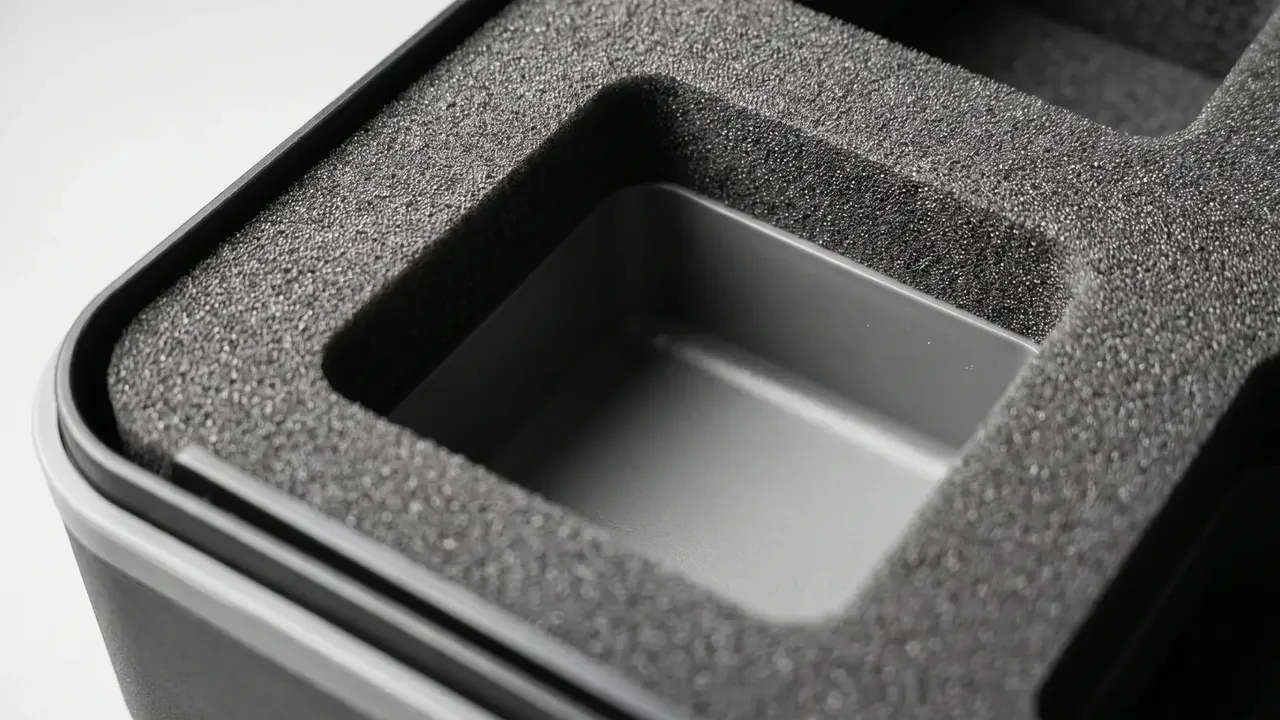
Tolerance runs at plus or minus 3 mm outside and 5 mm inside. The outer size follows the cavity, where shrinkage varies from 2.5% to 3.2%; the inner size adds wall distribution on top.
| Dimension | Datum | Tolerance | Main source of error |
|---|---|---|---|
| Outer length and width | Rim plane | Plus or minus 3 mm | Shrinkage |
| Inner length and width | Thinnest wall | Plus or minus 5 mm | Wall spread |
| Lid to base gap | Closed rim | 1.2 to 2.0 mm | Latch preload |
3. Wall Thickness and Ribs: Why It Is Never Even
Rotational moulding sets wall from powder charge and heat distribution. A unit specified at 6 mm usually measures 5.2 to 6.8 mm, thinnest at corners. Specify minimum wall, never average, since the thinnest patch sets strength.
Ribs carry stiffness: 14 mm height, 8 mm width, R3 root radius and 120 mm pitch is a common set. Thicker ribs sink outside, taller ribs tear on ejection. Draft at 1.5 degrees matters too: too little leaves the rim true while the base pulls in 6 to 8 mm.
4. Converting Load Rating into Stacking Load
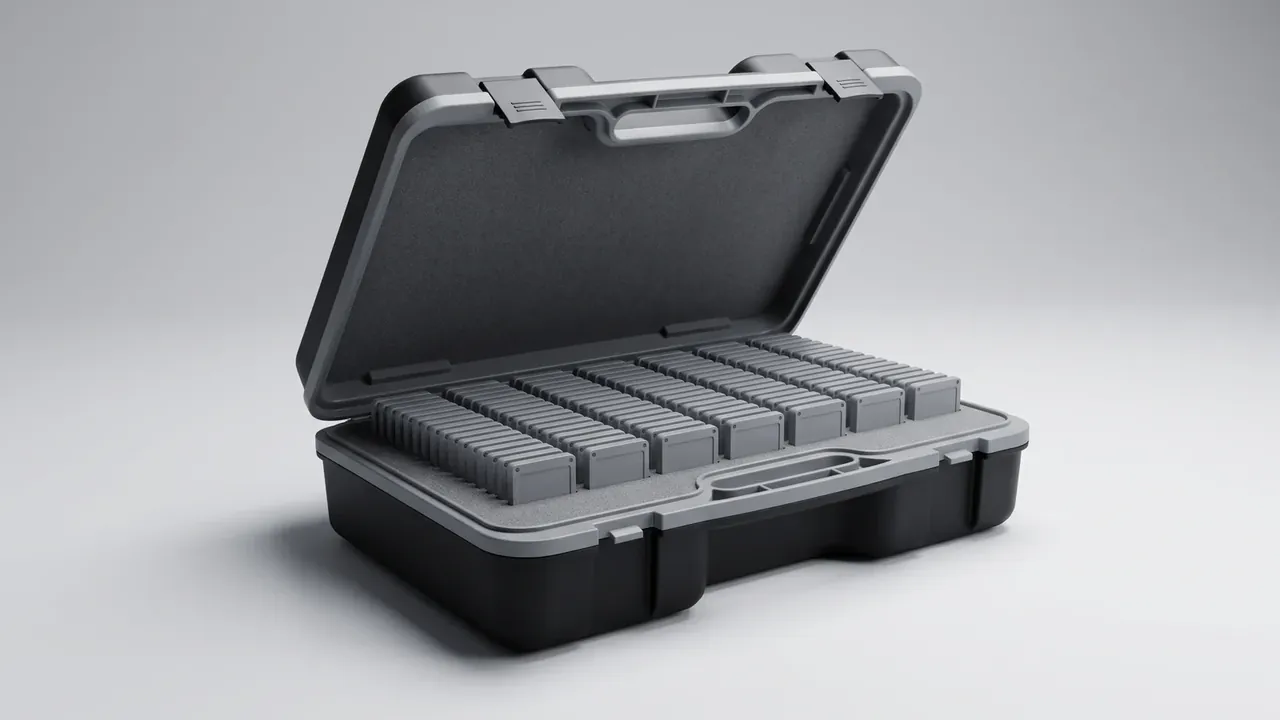
Load means two things: what one unit carries, and what the bottom unit carries when stacked. The first sizes handles and feet, the second sizes wall and ribs. A transport and storage container specification needs both, or acceptance has nothing to test.
With 45 kg of load, 8.5 kg empty and four units stacked, the bottom unit carries three layers: (45 + 8.5) x 3 = 160.5 kg static. With the 1.5 dynamic factor the figure to specify is 241 kg.
| Load case | Formula | Example | Checked part |
|---|---|---|---|
| Static stack | Gross x layers | 160.5 kg | Floor, ribs |
| Dynamic stack | Static x 1.5 | 241 kg | Side walls |
| Handle pull | Gross weight x 2 | 107 kg | Handle mounts |
Keep a safety factor of 3 to 1, so tested failure reaches three times the rating, and add a lid test of 200 kg for 5 minutes with deflection under 2 mm.
5. Writing Sealing and Ingress Ratings
Sealing belongs in the specification as structure plus test condition: an IP67 structure, no pressure equalisation valve, subject to a third-party report. That beats claiming a waterproof unit.
The pressure valve is often left out: cracking pressure from 8 kPa, vent flow at 0.02 litres per minute per litre of volume. Without it, a 30 °C swing builds over 10 kPa.
Conclusion
Transport and storage container specifications are numbers derived from four inputs, not chosen by feel. Fix the outer size from the pallet module, subtract wall thickness for the inner size, specify minimum wall and ribs, and convert stacking load in static and dynamic terms. On the drawing, those rules make the sheet survive acceptance.
This article discusses only the container (case body) side of specifications and design intent, and does not cover any handling, loading or use of the contents.
Related Reading
- How a transport and storage container is built
- Specifications for stackable boxes
- Specifications for specialised shipping boxes
- How a transport and storage container differs from alternatives
Related Products
- 8 Series — Gun Cases; Military Equipment Cases; Camera Equipment Cases; Drone Cases; Watch Cases; Knife Cases; First Aid Cases; Electronics Equipment Cases
- WL8-2812 PP Gun Case — model WL8-2812
- All protective cases and toolboxes: 7 series, 158 models