

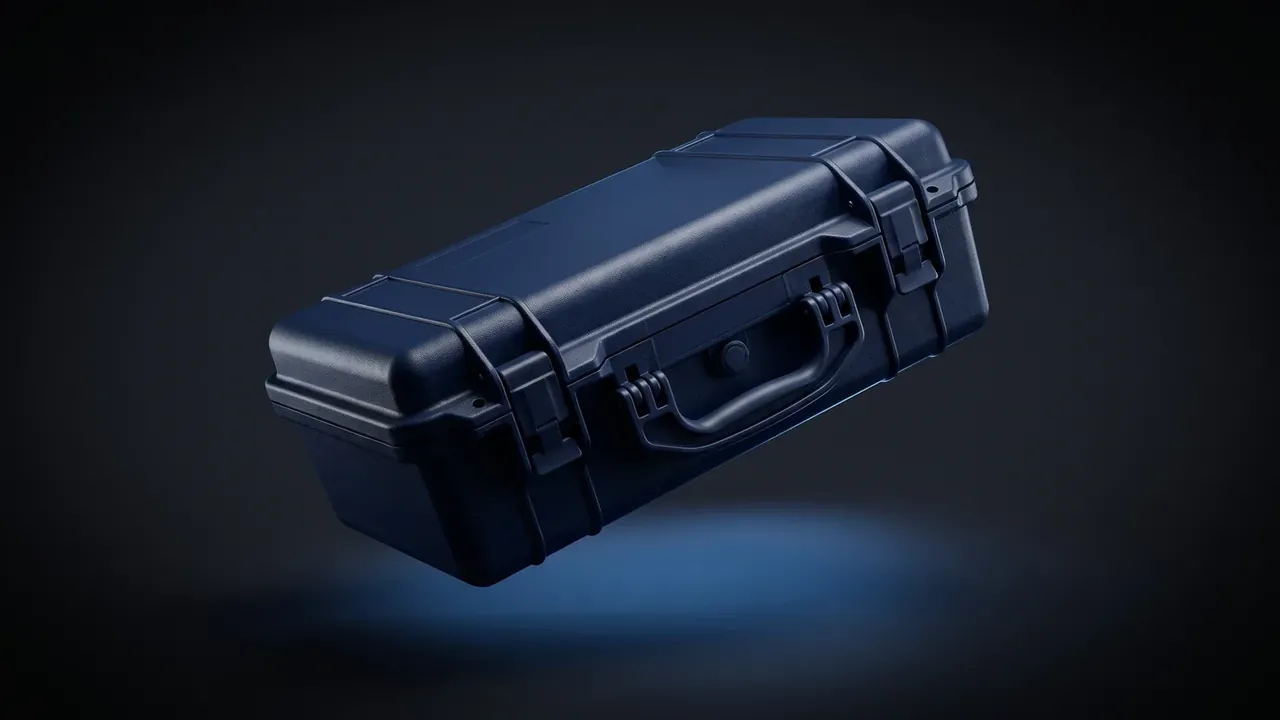
Quick answer: Price per unit says little about cost. Weigh mould, labour and rework together: below 15,000 units a year injection moulding is often the worst Travel Case Production route, while vacuum forming or outsourcing saves 30 yuan a case.
Table of contents
- Three cost lines in Travel Case Production
- Injection or vacuum: when vacuum wins
- Own line or outsourcing: below 15,000 units
- Material downgrades: where ABS replaces PC
- Three orders that should not go upscale
- FAQ
1. Three cost lines in Travel Case Production
An e-commerce luggage brand quoted 15,000 units a year and got two offers, 74 yuan apart: 268 and 342. The gap is not resin but how three accounts get spread: mould, labour, rework.
The mould is the only one-off. An aluminium tool runs 86,000 yuan, a steel tool 520,000, so on 15,000 units they carry 5.7 and 34.7 yuan a case. That line alone separates the two quotes.
| Cost line | One-off | Per case at 15,000 | When it turns |
|---|---|---|---|
| Aluminium, vacuum | 86,000 yuan | 5.7 yuan | Past 20,000 it wears out |
| Steel, injection | 520,000 yuan | 34.7 yuan | Under 8,000 it never spreads |
| Manual assembly | none | 26 yuan | Above 6,000 a month labour outruns machines |
| Rework, freight | none | 3 or 18 yuan | Past 3% rework a load ships again |
Labour counts in motions. A vacuum case takes 11 motions; an injection case forms the boss platform in the tool, dropping to 8 and from 26 yuan to 19. The break is 6,000 a month: below it hands beat fixtures, above it a fixture pays back in 4 months.
Rework is the forgotten account: three extra points adds 12 yuan a case, plus a 28-day sea leg and a re-shipped load. Travel Case Production quotes rarely say which side of that line they sit on.
2. Injection or vacuum: when vacuum wins
Vacuum forming costs a sixth of the tooling and pays for it in wall uniformity: 2.0 mm sheet goes in, the corner thins to 1.35 mm.
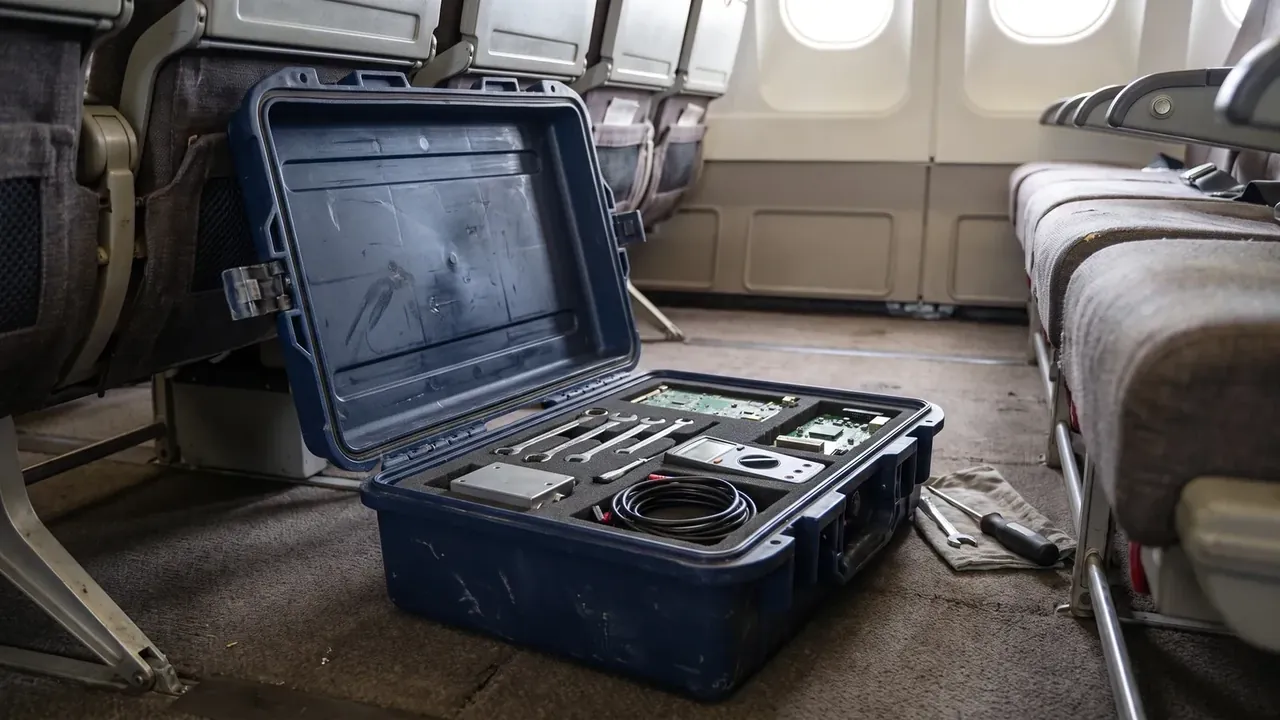
Injection is different: 2.4 mm in, 2.4 mm out, corner included. The split shows at a 1.2 m drop, where the vacuum corner cracks first and the crack runs up the thinned band.
Under 5,000 units of one design replaced yearly, vacuum wins; one design sold 3 years at 15,000 a year is where injection earns its 34.7 yuan back. The middle band only the client's rhythm settles.
The usual mistake is comparing list prices while ignoring secondary work. Trimming, drilling and boss fitting each need a fixture, 9 yuan a case. A 40 yuan paper advantage often leaves 12 yuan, and Travel Case Production buyers who skip that step pay twice.
3. Own line or outsourcing: below 15,000 units
A minimum in-house line is three presses, one assembly line and six people: 2.1 million yuan.
| Item | Own line | Outsourced | Gap |
|---|---|---|---|
| Equipment | 2.1 million yuan | 0 | 2.1 million |
| Processing a case | 41 yuan | 58 yuan | 17 yuan |
| Break-even | 124,000 a year | not applicable | 109,000 |
| Sample to volume | 25 days | 40 days | 15 days |
At 17 yuan saved a case, 2.1 million needs 124,000 units a year; a client at 15,000 never gets there in a Travel Case Production plan, and a design change means another tool.
Outsourcing charges twice: lead time and queue priority. Peak insertion adds 8% and lifts a case to 62 yuan; off-season slots fall to 52. So a split model holds: own capacity for 60% of the peak, farm the other 40%.
Tool ownership is the hidden item: leave a steel tool at the subcontractor and switching suppliers means cutting a new one. In Travel Case Production contracts that clause is worth more than the 17 yuan.
4. Material downgrades: where ABS replaces PC
Material and cost do not move in a straight line: PC to ABS cuts resin 32% and puts the penalty on cold impact.
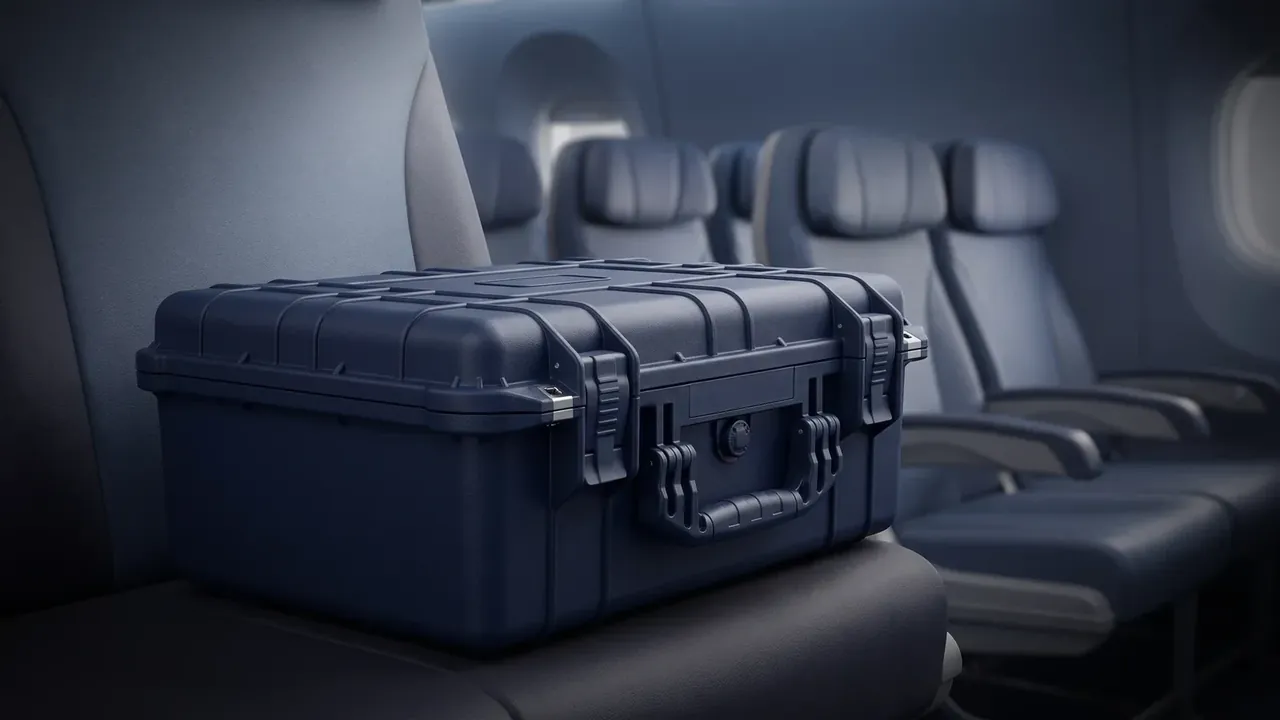
Soak at -25℃ for 72 hours, then drop from 1.2 m: PC corners whiten, ABS splits. At room temperature the two look identical, so the test runs cold.
PC/ABS alloy, the usual Travel Case Production compromise, sits between them on price and impact. Below that only regrind is left: 30% regrind saves 7 yuan a case while colour drift and cycle time rise, 68 seconds to 75.
| Material | Resin index | -25℃ impact | Fits |
|---|---|---|---|
| PC | 100 | whitens, holds | Air check-in, north |
| PC/ABS | 82 | whitens, holds | Most export orders |
| ABS | 68 | splits | Warm, short-haul |
| 30% regrind | 61 | splits, drift | Domestic economy |
5. Three orders that should not go upscale
Upscale is not a default. Three order types pay for features they never use.
One-off projects lead: an exhibition case works 5 days, and a wheel set rated 3,000 cycles sees under 200, so a 60 mm wheel buys nothing. Fast replacement comes second: a new design every 6 months leaves a 520,000 yuan tool at 87 yuan a case, retired half amortised. Light short-haul comes third: a cabin case under 8 kg does not need a 1.3 mm handle wall.
Set the line by order life: under 2 years upscale parts never enter the payback window, over 5 low-spec rework returns the difference. That is how Travel Case Production options are graded.
Conclusion
Spread the three accounts and the Travel Case Production decision gains edges: tooling follows volume, labour follows output, rework follows order life. Below 15,000 units go vacuum or outsourced, above 20,000 talk steel. The 74 yuan gap then becomes three price tags.
This article discusses only the container (case body) side of specifications and design intent, and does not cover any handling, loading or use of the contents.
Related Reading
- Where the two shell routes diverge
- Three acceptance tests and a failed lot
- Why military case costs sit where they do
- Cold impact across case materials
- Steel and plastic over a full life
Related Products
- 8 Series — Gun Cases; Military Equipment Cases; Camera Equipment Cases; Drone Cases; Watch Cases; Knife Cases; First Aid Cases; Electronics Equipment Cases
- WL8-2812 PP Gun Case — model WL8-2812
- All protective cases and toolboxes: 7 series, 158 models