

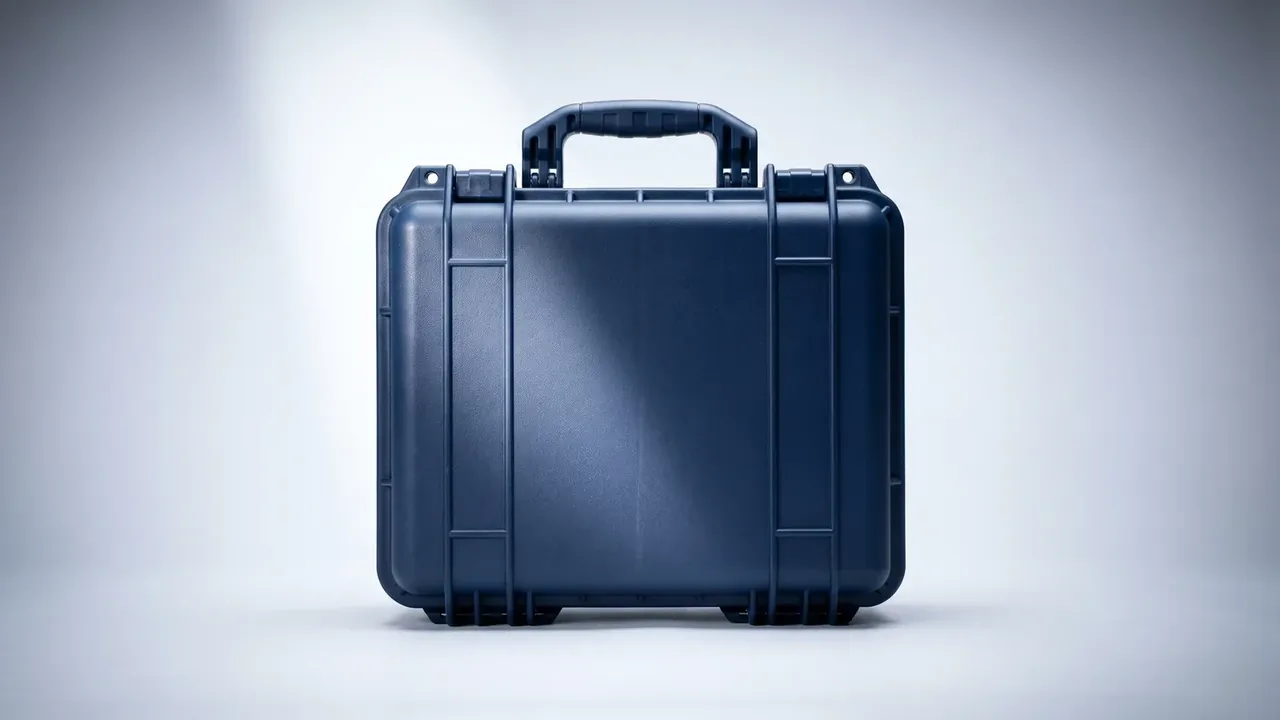
Quick answer: The first three sample batches almost always pass; the fourth is where travel case production slips. Measure five numbers on the sample, run one full-case check, and judgement moves from feel to repeatable figures.
Table of contents
- Five numbers to measure when samples arrive
- Handle wobble and wheel housing torque
- Wall thickness and the water test floor
- Latch wear and closing force
- Three signals before releasing a batch
- FAQ
1. Five numbers to measure when samples arrive
Lay the sample flat before loading it. Five readings take twenty minutes and beat ten pages of test reports.
The cavity is quoted at 420 x 300 x 180 mm, so measure each axis in three places and keep the spread within 1.5 mm. A spread of 2.5 mm means uneven cooling in the tool, and every later batch inherits it. Wall thickness, read by ultrasonic gauge at four corners and the long-side midpoint, should hold 3.2 mm; 2.8 mm means rib material was moved into the flat panels.
| Criterion | Pass line | Fail signal |
|---|---|---|
| Cavity spread | 1.5 mm | 2.5 mm diagonal gap, lid drags |
| Wall thickness | 3.2 mm | Midpoint reads 2.8 mm |
| Handle wobble | 2 mm | Audible slack at full extension |
| Closing force | 120 to 180 N | Needs two hands to seat |
| Total weight | 4.6 kg | Two samples differ by 300 g |
Closing force is read at the long rim midpoint. Press right above a latch instead and the gauge drifts 40 N high.
Weight is waved through most often. A 300 g gap between two samples of one drawing means regrind, and every 10 percent of regrind saves 1.8 yuan while drop height falls from 1.2 m to 0.8 m.
2. Handle wobble and wheel housing torque
Pull the handle to full height and push each way once: 0.6 mm of clearance per side and 2 mm of total wobble is the usable ceiling.
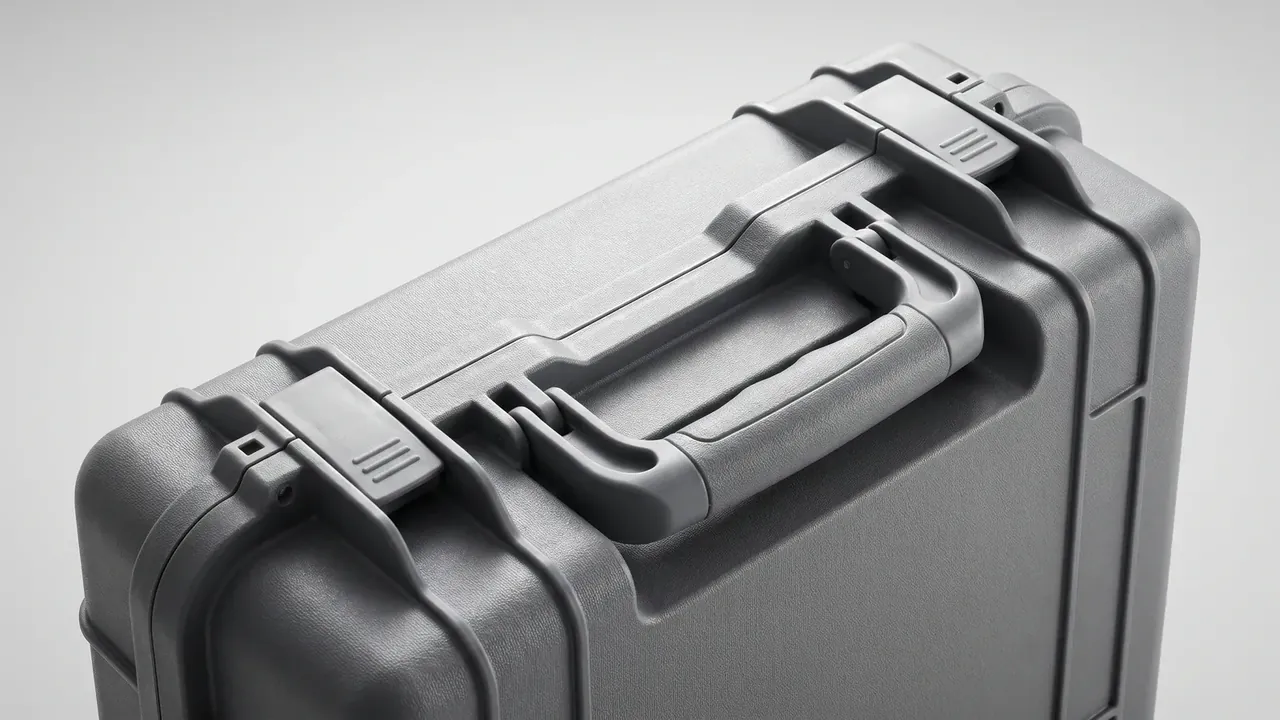
Housings need screw count and torque. Six screws beat four under off-centre load, and 1.8 N·m is the ceiling on a plastic boss; at 2.4 N·m the boss cracks, and the crack opens on the first rough handling.
Tip the case 15 degrees. A wheel sitting 5 mm off the floor means a sprung base, one wheel carrying the load and tread gone in three months.
The combination is what hides: a loose handle, a soft housing and a sprung base each sit inside tolerance until two kilometres of pushing on finished goods.
3. Wall thickness and the water test floor
Stiffness comes from wall thickness; sealing comes from a flat closing face.
Hold tolerance at plus or minus 0.2 mm. Outside it, a shell whitens when folded 90 degrees at -18℃, and that white line fails the first drop.
| Item | Condition | Pass line |
|---|---|---|
| Wall tolerance | 4 corners and midpoint | Plus or minus 0.2 mm |
| Cold fold | -18℃, 90 degrees | No whitening |
| Water test | 25 mm, 30 minutes | No seepage |
| Heat storage | 55℃, 24 hours | Deflection 1.5 mm or less |
The water test is blunt: fill to 25 mm, wait 30 minutes, then read the four corners and the latch seats. Seepage at a corner points to the mould radius; seepage at a latch seat points to gasket squeeze.
Depth and time belong together, since 10 mm or 5 minutes hides corner leaks. Nine in ten sealing complaints in travel case production land on the corners, where the shell is a single layer.
4. Latch wear and closing force
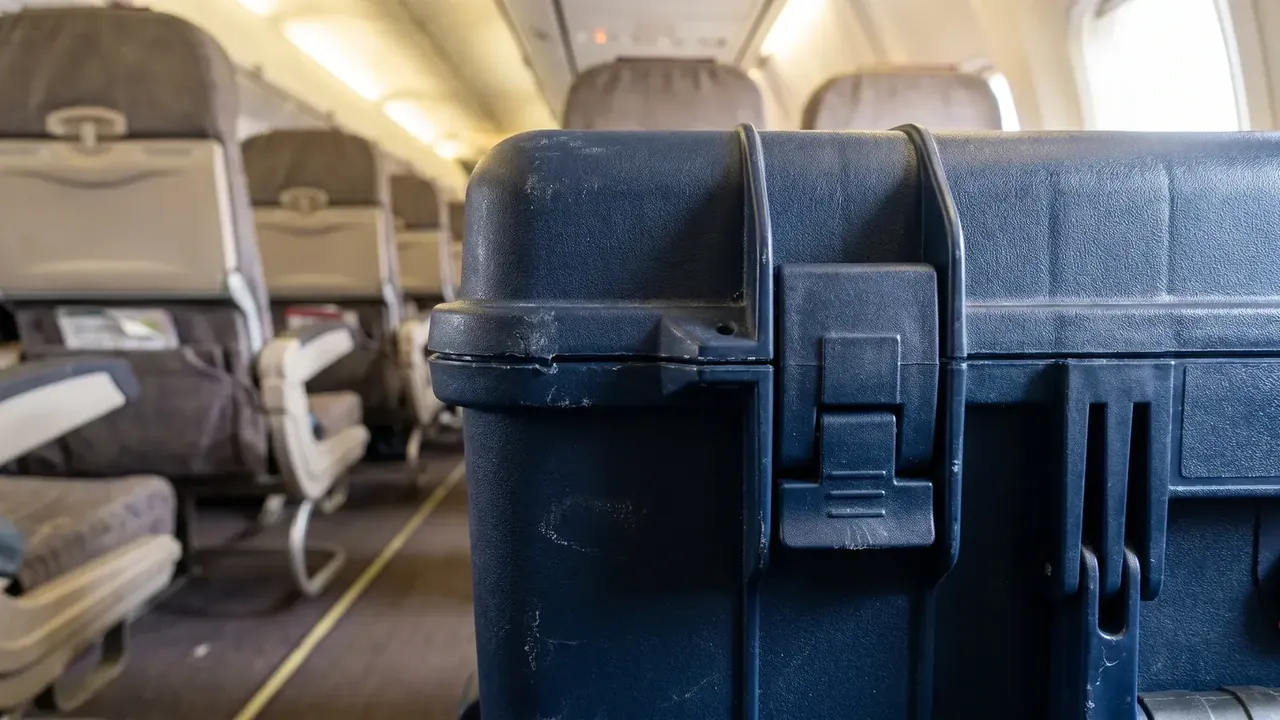
A new case closes at 180 N. After 200 cycles it reads 155 N; 25 N of loss is normal, while 45 N means rounded teeth and a gasket that no longer seats.
Two latches hold better for about 4 yuan. Under 420 mm one is enough, past 520 mm use two, and parcel sorting gets two at any length.
The 1.2 m drop runs once on eight corners and six faces. Heat matters as much: a case stored at 55℃ for 24 hours softens, and the unit beneath takes a 3 mm dent that stops the lid seating the next morning.
5. Three signals before releasing a batch
A good sample does not promise a good batch.
| Signal | Pass line | Usual cause |
|---|---|---|
| Colour | Difference 2.0 or less | Separate colour lots |
| Wheel wear | No side-to-side gap | Axle not parallel |
| Handle stiction | No catching in 5 cycles | Burrs in the tube |
Colour is read with five cases side by side at a window, because a difference above 2.0 shows to the eye. Wheel wear is read after a 20 m push: a warmer side means an axle out of parallel, and one airport trip removes 0.5 mm.
Keep one of the five sampled cases for the drop and use the rest for cycling and water tests. Then write the release date into the contract: first delivery 15 days after approval, five units pulled for the routine, a failed pull sending the batch back. Re-run it whenever the resin grade changes, because travel case production drifts with the material.
Conclusion
The figures are few: a 1.5 mm cavity spread, a 3.2 mm wall floor and a 180 N force ceiling. Hold those three and batch four looks like batch one; write them into the acceptance sheet and travel case production needs no retraining when the supplier changes.
This article discusses only the container (case body) side of specifications and design intent, and does not cover any handling, loading or use of the contents.
Related Reading
- Choosing and staffing a full production line
- How to compare plastic protective case grades
- Sealing criteria for airtight safety cases
Related Products
- 8 Series — Gun Cases; Military Equipment Cases; Camera Equipment Cases; Drone Cases; Watch Cases; Knife Cases; First Aid Cases; Electronics Equipment Cases
- WL8-2812 PP Gun Case — model WL8-2812
- All protective cases and toolboxes: 7 series, 158 models