

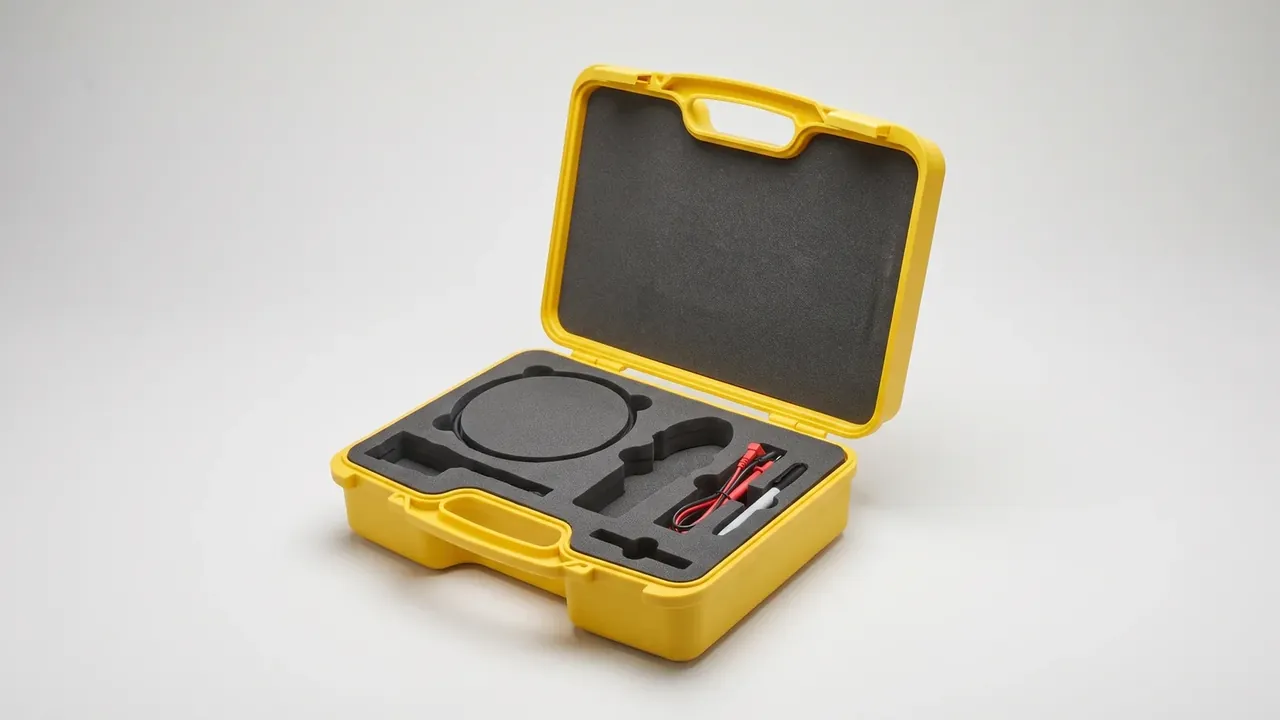
Quick answer: Six measurable signals — cycle time, mold change, flash, station density, first-article check and a continuous run — take about 40 minutes to collect, and show whether a case production line fits your batches.
Table of contents
- Three Signals to Fix Before You Walk In
- Cycle Time: Twenty Minutes with a Stopwatch
- Mold Changes: 19 Minutes Against 80 Minutes
- Station Density in Trimming and Assembly
- Fit: Batch Profile Against Line Flexibility
- FAQ
1. Three Signals to Fix Before You Walk In
Decide what you will measure before you enter the building. A stopwatch and a record sheet tell you more than a folder of specifications.
Most buyers spend a first visit looking at machine brands and floor area, yet two 630-tonne presses with different cooling circuits can run twenty seconds apart on the same part.
Fix three numbers and refuse to leave without them: seconds per part, minutes per mold change, and the pass rate of a random sample.
| Signal | How to take it on the floor | Common threshold |
|---|---|---|
| Seconds per part | Time ten consecutive shots, divide by cavities | Within 8% of the quoted cycle |
| Mold change | Last shot of the old mold to first good shot | 25 minutes or less, two-cavity case |
| First-pass yield | 30 parts, gauge walls, check flash, snap latches | 96% or better, flash 0.6 mm or less |
All three fit inside 40 minutes and none requires the supplier to prepare documents. Figures that appear only after someone offers to look them up were reconstructed for you.
2. Cycle Time: Twenty Minutes with a Stopwatch
Separate the two clocks. Mold cycle belongs to the machine; parts per hour belongs to the people who take the part out and trim it.
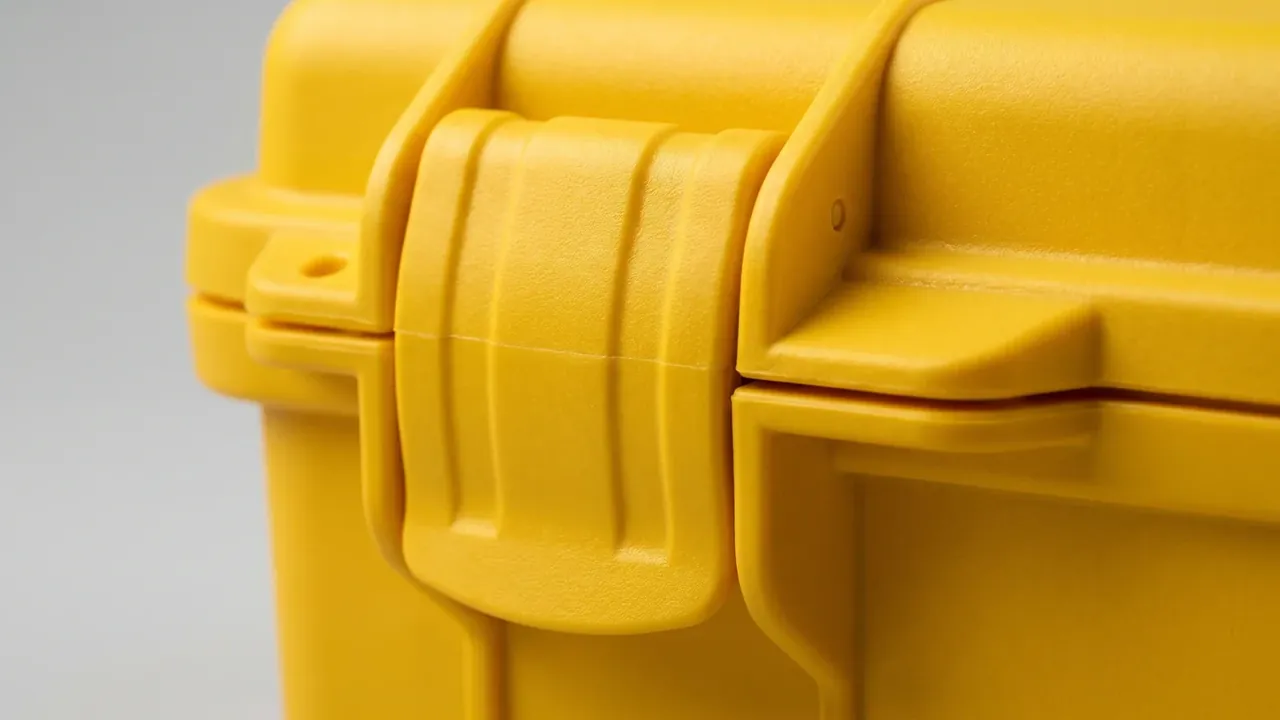
Start timing at clamp close and log ten full shots. Watch the barrel hold near 205°C, since a swing beyond 8°C points to wet resin; and watch whether parts rest thirty seconds on a bench before trimming, which quietly moves real output. Divide the ten-shot total by cavities for seconds per part. Time trimming separately, because 14 seconds and 22 seconds become dozens of units an hour. If the rate misses the quote by more than 8%, ask why; the answer is usually thin cooling or a shortened holding time.
The real constraint is often not the press. Stack height beside the bench is a more honest number than the machine display.
3. Mold Changes: 19 Minutes Against 80 Minutes
Changeover time decides whether a case production line can take mixed orders, and mixed orders are normal in custom case work.
| Changeover step | Quick-change setup | Standard setup |
|---|---|---|
| Mold handling | 8 minutes | 25 minutes |
| Water and oil coupling | 3 minutes | 18 minutes |
| Recipe recall | 2 minutes | 30 minutes |
| First-article approval | 6 minutes | 7 minutes |
| Total | 19 minutes | 80 minutes |
What the table hides is hardware. Quick change means hydraulic clamps and dry-break couplings; a standard setup relies on toe clamps and bolts, and torquing them alone takes a quarter of an hour. The price gap may be two dollars per case, yet three changes a day separate the setups by three hours.
Ask them to change a mold while you time it.
4. Station Density in Trimming and Assembly
Density comes down to two numbers — centre distance between adjacent stations and the pieces each station may hold.
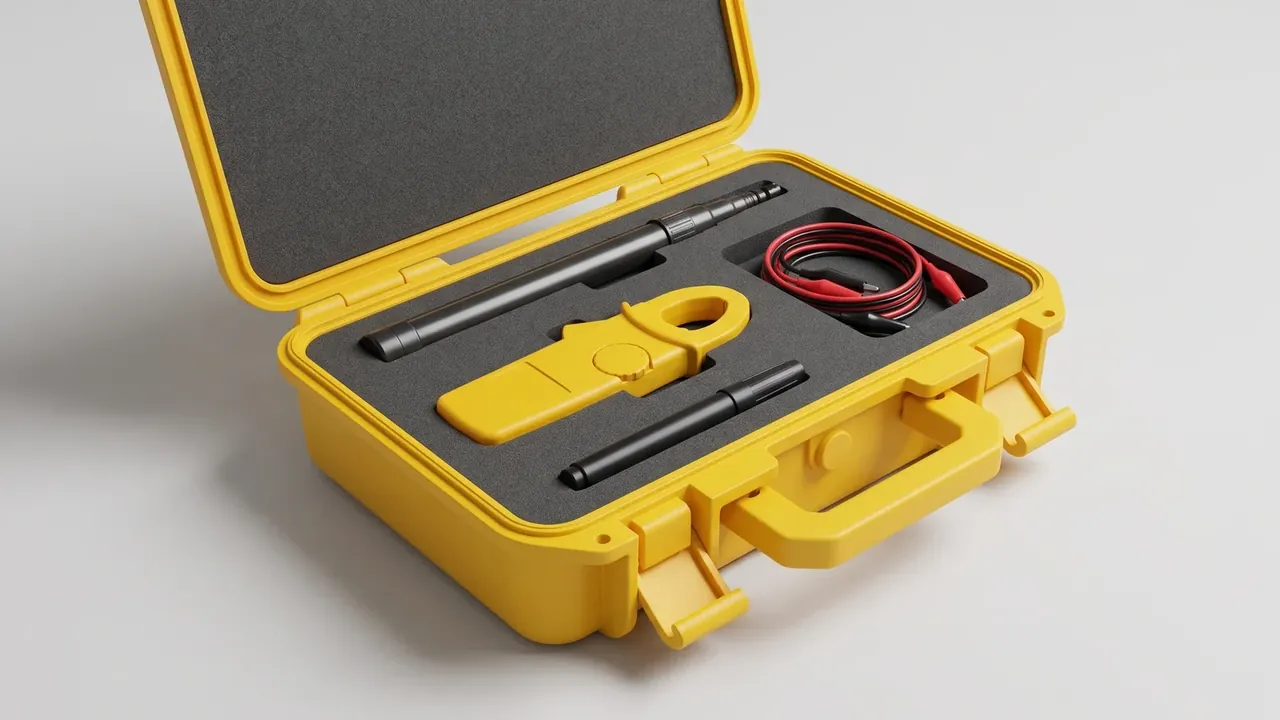
1.4 metres is the usual floor for centre distance. Below 1.2 metres, two operators turning at once have to yield to each other, adding three seconds per part. Cap work in progress at three pieces per station, or a reject gains room to slip back into the good bin. Assembly is measured by hardware count: four latches, two hinges and one handle take one person about 90 seconds, while the press delivers a part every 48 seconds, so the work splits into two stations of roughly 45 seconds each.
5. Fit: Batch Profile Against Line Flexibility
There is one test of fit: whether your batch distribution absorbs the changeover loss.
- Batches under 300 pieces, eight or more a month: single cavity with quick change, under 25 minutes
- Batches over 2,000 pieces in one colour: two cavities pay back, saving about four dollars per case
- Two batches a year, internal length from 380 mm to 620 mm: two molds on one press beat one mold on two
- Custom foam inserts: confirm a cutting station at the line end, or lead time grows by seven days
- Export orders: ask for three months of 500-hour salt spray records
Flexibility is a scheduling habit, not a machine specification.
A case production line serves you only if it stops willingly for small orders; one that will not stop pushes delivery dates back, however new the presses look.
Conclusion
You do not need molding expertise to judge a case production line; you need a stopwatch and three columns on a sheet of paper. If the cycle misses the quote, changeover runs past 25 minutes and stations sit closer than 1.2 metres, two of those findings are reason enough to look elsewhere. Record them before talking price, and any case production line becomes easier to read.
This article discusses only the container (case body) side of specifications and design intent, and does not cover any handling, loading or use of the contents.
Related Reading
- Estimating case production line capacity from presses, cavities and changeover
- How a case production line splits into molding, trimming, assembly and packing
- What a gun case production audit should check on the floor
- Laying out a case assembly line around hardware, foam and packing
Related Products
- 8 Series — Gun Cases; Military Equipment Cases; Camera Equipment Cases; Drone Cases; Watch Cases; Knife Cases; First Aid Cases; Electronics Equipment Cases
- WL8-2812 PP Gun Case — model WL8-2812
- All protective cases and toolboxes: 7 series, 158 models