

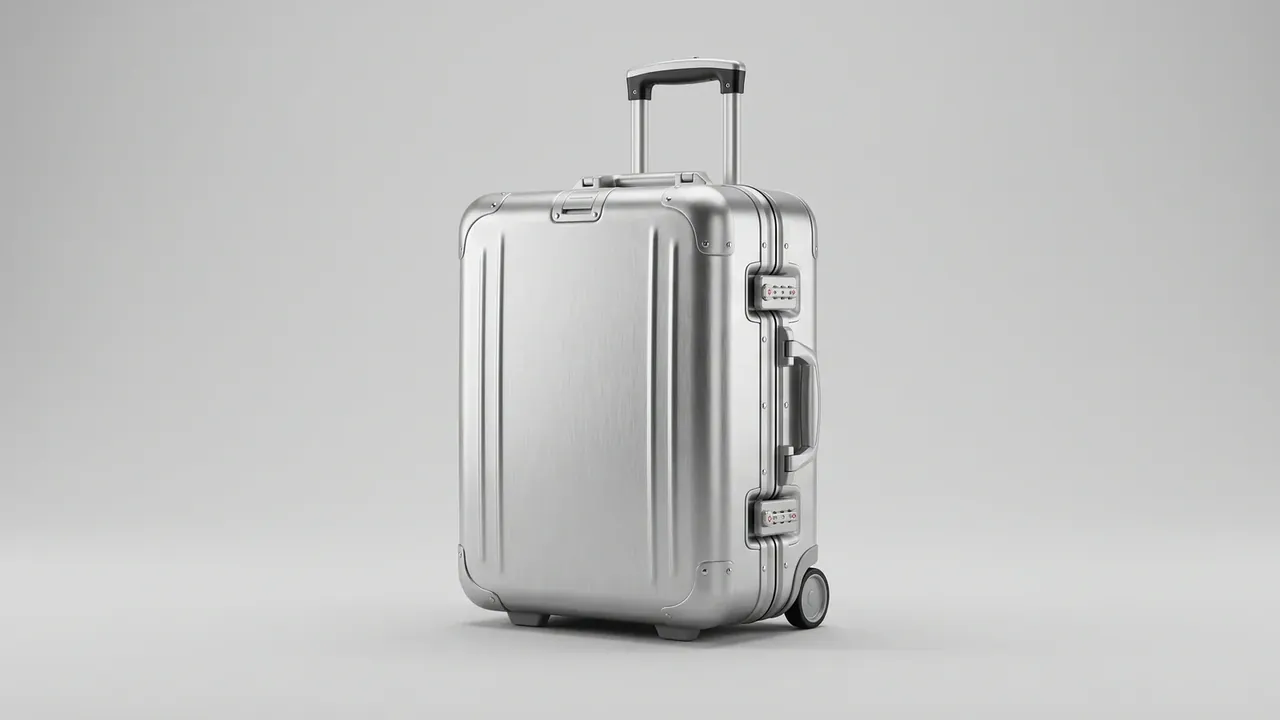
Quick answer: Specifications for Travel Case Production start from two inputs, a 32 kg load and a 0.9 m drop, not from an outline drawing. Those give a 2.2 mm wall across a 520 mm span; rib height, track and tube follow.
Table of contents
- Step one reading wall thickness from load
- Step two cavity size and wheel height
- Step three handle latch and hinge loads
- Step four tolerances validation and drawings
- FAQ
1. Step one reading wall thickness from load
Two numbers start the derivation, not a shape. At 32 kg and a 0.9 m drop, an energy estimate puts peak load near 18 times the weight, which is about 1.4 kN at each of four corners. That figure sets rib height as much as wall thickness.
Thickness follows from span. Across 520 mm, polypropylene at 1.4 GPa deflects 1.8 mm with a 2.2 mm wall and four ribs 12 mm tall, inside a 2 mm allowance. At 1.8 mm the span reaches 3.2 mm; below 2.0 mm the melt will not cross a 520 mm flow.
| Load case | Span | Wall | Ribs | Deflection |
|---|---|---|---|---|
| Static at 32 kg | 520 mm | 2.2 mm | 4 at 12 mm | 1.8 mm |
| Corner drop 0.9 m | 520 mm | 2.2 mm | 4 at 12 mm | 1.8 mm |
| Stacked 5 high | 520 mm | 2.2 mm | 4 at 12 mm | 2.6 mm |
Running the chain backwards costs money: 2.5 mm everywhere adds 0.4 kg and 12% of material per unit.
2. Step two cavity size and wheel height
The cavity is set at 520×360×210 mm, the largest item plus 8 mm per side. Liner and zip tape eat into that margin, and a nominal-litre claim that will not accept the item is worthless.
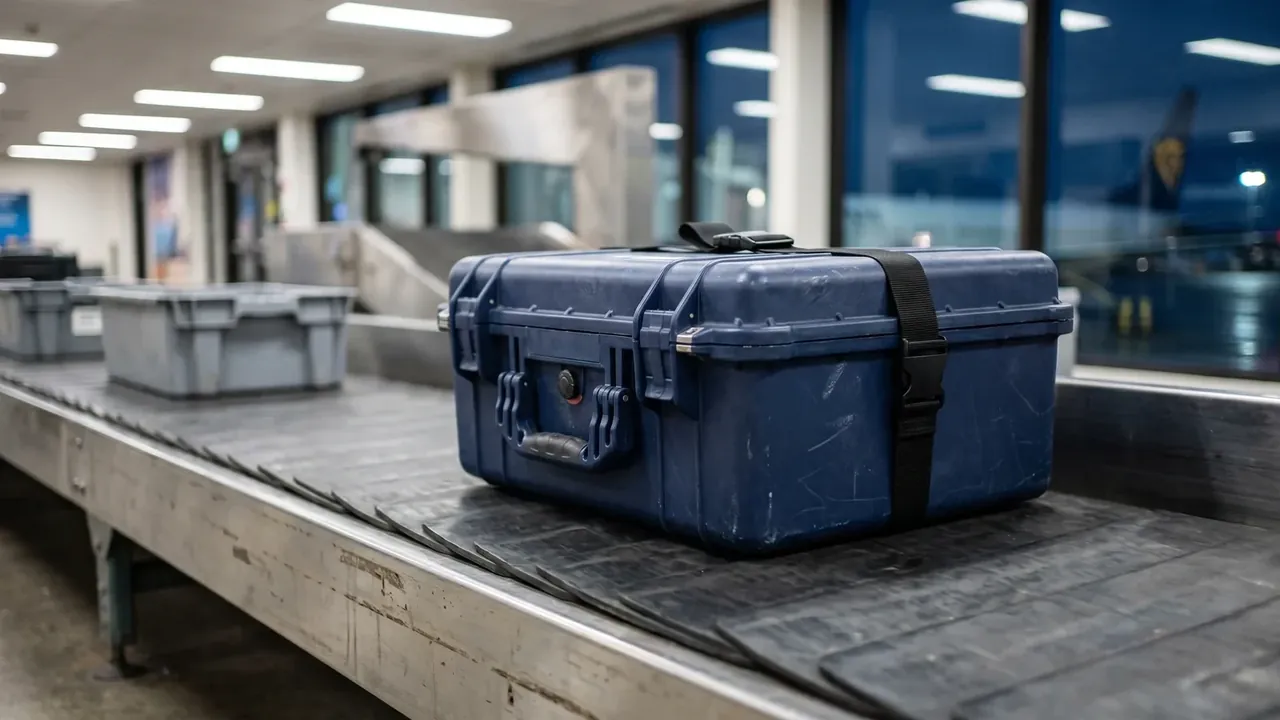
Wheel height comes from the centre of gravity. Loaded to 32 kg the centre sits about 145 mm off the base, and a 380 mm track holds the tipping angle at 21°. At 320 mm the same load tips at 15° and the case goes over on a narrow step.
Wheel diameter settles at 60 mm, a compromise between climbing and stability.
Dimension the cavity as a net size. Outside dimensions hide 4.4 mm of wall on two sides; a section view removes most of that argument.
3. Step three handle latch and hinge loads
The handle is sized from arm force. Someone pushing a case applies about 80 N sideways, so 22 mm tubes with 1.2 mm wall and 2 mm of clearance survive 5,000 extensions inside tolerance. At 0.9 mm the tube mouth ovalises first.
Latch holding force is set at 150 N, the line that keeps a lid shut when a loaded case rolls over, and the number most often cut to 100 N in Travel Case Production. Hinges take 4 mm stainless pins set 6 mm into each side.
| Element | Design load | Specified | Verified by |
|---|---|---|---|
| Handle | 80 N sideways | 22 mm OD, 1.2 mm wall | Play after 5,000 cycles |
| Latch | 150 N holding | 4 mm hook depth | Pull test every unit |
| Hinge | 12 N·m opening | 4 mm pin, 6 mm embed | 3,000 open-close cycles |
Torque the locking screws to 5.5 N·m; past 7 N·m the moulded insert pulls out.
4. Step four tolerances validation and drawings
Tolerances belong to the mould, not to assembly, and this step is skipped most often. Cavity length and width carry ±0.4 mm, base flatness 0.6 mm, and the lid step stays under 0.5 mm; past that the gasket cannot compress and the leak test finds it first.
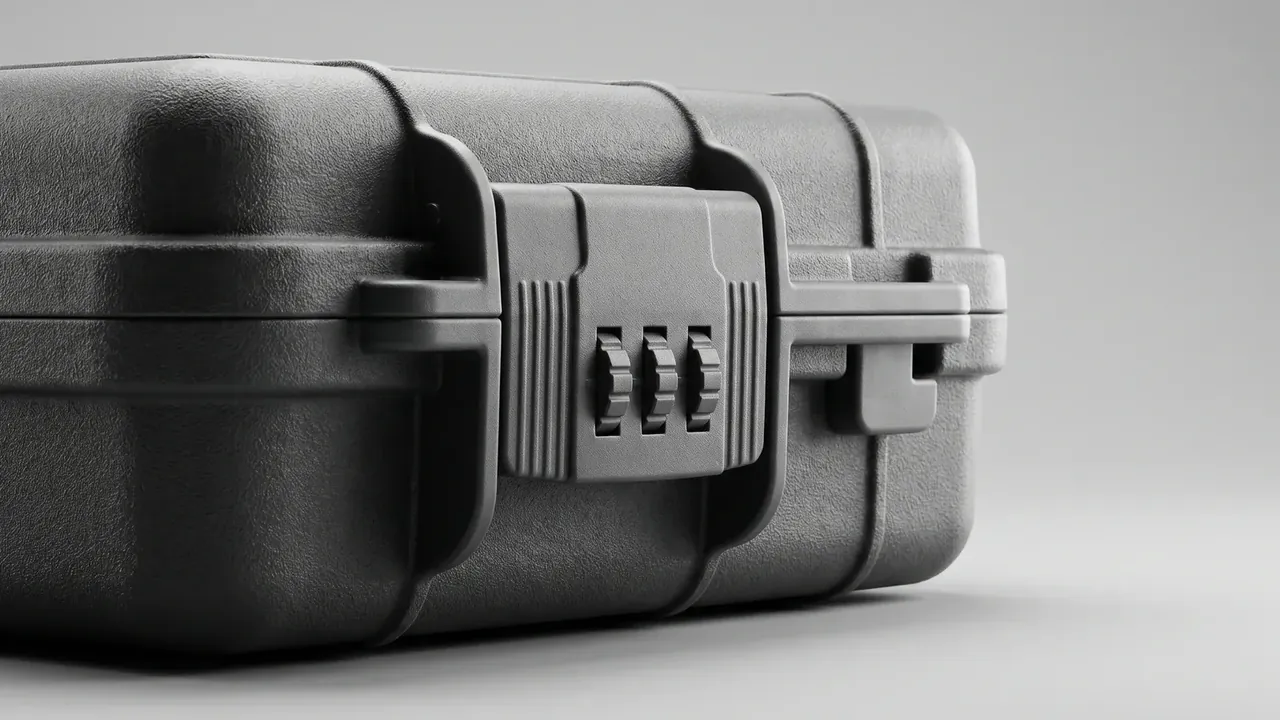
Shrinkage goes on the drawing. Polypropylene runs at 1.6% with a 65℃ mould and 10 seconds of hold, and all three together decide the dimension across 520 mm. Shrinkage alone puts the first trial shot 0.8 mm out.
A 120-tonne press with three slides covers this cavity: minimum order 500 units at 168 yuan, 35 days lead time, tool ownership attached to the contract.
Conclusion
Specifications in Travel Case Production form a one-way chain: 32 kg and 0.9 m produce 1.4 kN at each corner, a 520 mm span produces a 2.2 mm wall with four ribs, and only then come a 380 mm track, a 22 mm tube and ±0.4 mm of tolerance. Every number is explained by the one before it.
This article discusses only the container (case body) side of specifications and design intent, and does not cover any handling, loading or use of the contents.
Related Reading
- From moulding to wheel fitting
- The order of the fatigue tests
- Deriving cavity and wall for ammunition chests
- Load and stacking values for storage cases
Related Products
- 8 Series — Gun Cases; Military Equipment Cases; Camera Equipment Cases; Drone Cases; Watch Cases; Knife Cases; First Aid Cases; Electronics Equipment Cases
- WL8-2812 PP Gun Case — model WL8-2812
- All protective cases and toolboxes: 7 series, 158 models