

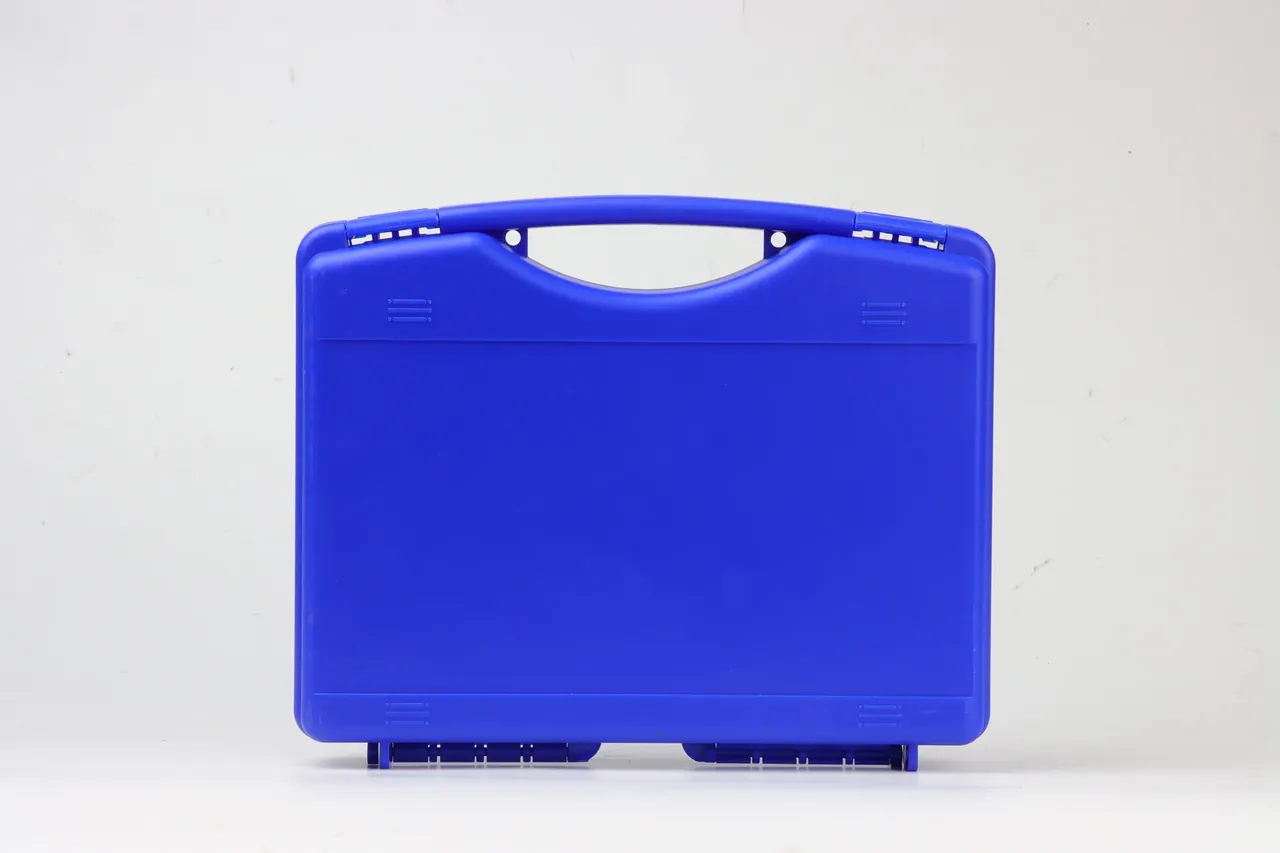
Quick answer: UL94 V-0 is a vertical burn rating with afterflame of 10 s or less per specimen, 50 s or less across five specimens, and no dripping that ignites cotton, while HB is a horizontal rating capped at 40 mm/min for walls 3 to 13 mm thick.
Table of contents
- Where UL94 V-0 and HB Fit
- Judging V-0 in the Vertical Burn
- HB and the Horizontal Burn Rate
- Material Routes and What Flame Retardant Costs
- FAQ
1. Where UL94 V-0 and HB Fit
UL94 describes how a material burns, not how a finished case behaves. The body is PP, the liner EVA foam, the latches PA66, and each part can hold a different rating.
Two questions settle the requirement: does anything inside generate heat or short out, and how long may the wall burn before dripping material ignites what sits below? Battery compartments, charger cases and cabinet liners belong to the first group. A cell venting in thermal runaway pushes local temperature past 600 °C, so the wall must self-extinguish within 10 s and drop no burning fragments.
Shipping cases, storage totes and empty tool boxes belong to the second group, where the threat is a spark or a cigarette and 40 mm/min is enough.
| Rating | Direction | Afterflame per burn | Total, five bars | Drip ignites cotton |
|---|---|---|---|---|
| V-0 | Vertical | 10 s max | 50 s max | Not allowed |
| V-1 | Vertical | 30 s max | 250 s max | Not allowed |
| V-2 | Vertical | 30 s max | 250 s max | Allowed |
| HB | Horizontal | Not applicable | Not applicable | Not applicable |
V-1 and V-2 differ in one line. V-2 permits a burning drip, which rules it out above a cable run: one drop takes out the insulation.
2. Judging V-0 in the Vertical Burn
The bar measures 125 mm by 13 mm, and thickness comes from the thinnest wall on the case. A body specified at 3.0 mm may sit at 1.8 mm at the rib root, and the flame finds that rib first, so 1.8 mm is what goes to the lab.
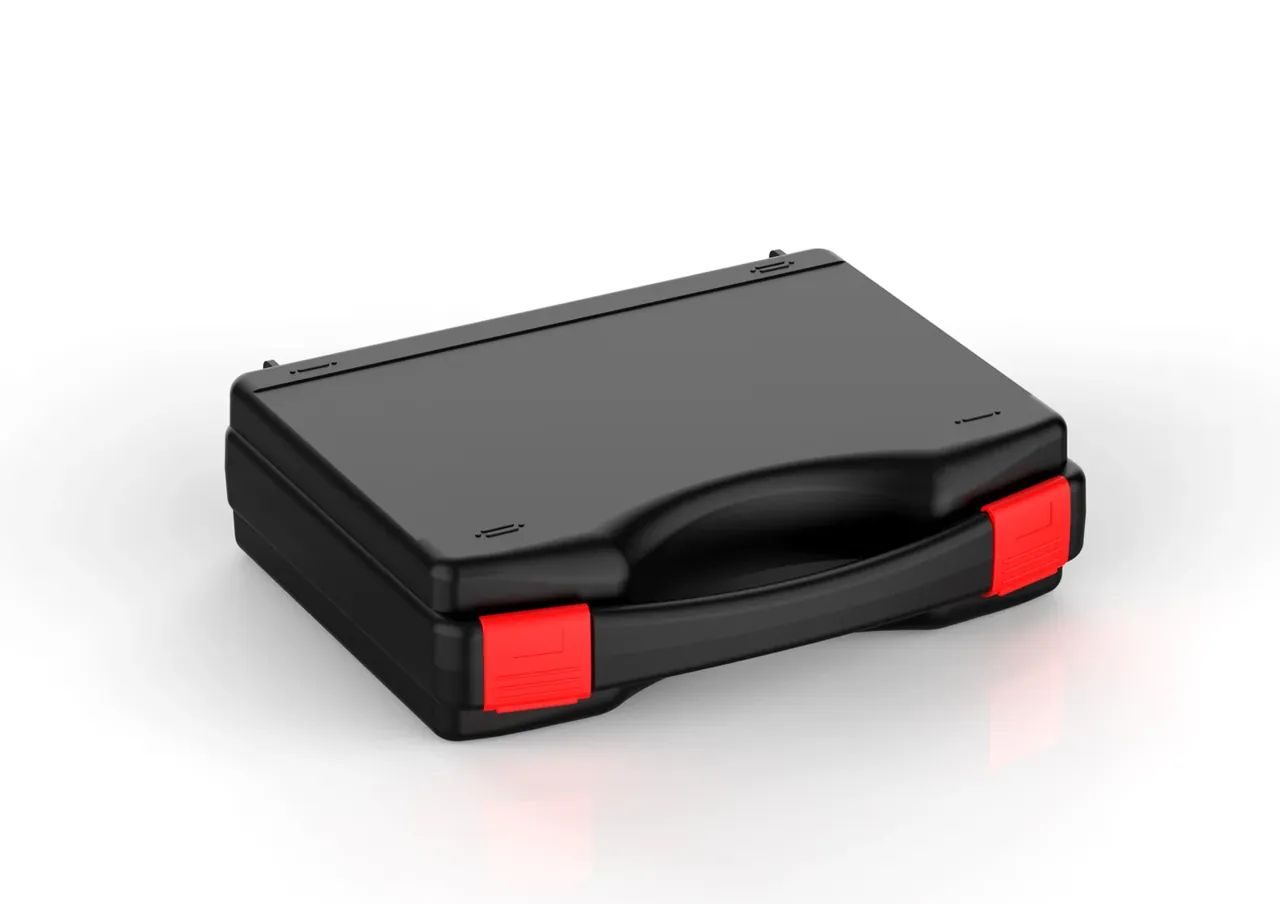
A 20 mm blue Bunsen flame is applied for 10 s and withdrawn while the afterflame is timed; it returns for another 10 s once the flame dies. Two applications per bar, ten across five bars, and one overrun fails the set. The bar hangs vertically with its lower end 300 mm above a 50 mm square of cotton, 6 mm thick.
Four criteria run together: afterflame of 10 s or less on any application; 50 s or less across ten applications on five bars; afterglow of 30 s or less; and no drip that lights the cotton.
| Criterion | V-0 limit | How it is recorded |
|---|---|---|
| Single afterflame | 10 s max | Timed per bar per application |
| Total, five bars | 50 s max | Ten readings summed |
| Single afterglow | 30 s max | Logged apart from afterflame |
| Drip ignition | Not allowed | Cotton watched for open flame |
Thickness is where procurement slips. A yellow card listing V-0 always carries a thickness after it, and a pass at 1.5 mm says nothing about 1.0 mm; nor does 3.0 mm approval cover a 2.0 mm lid. Colour needs a recheck too, since 2 percent titanium dioxide can shift the burn rate.
Conditioning runs either 48 h at 23 °C and 50 percent relative humidity, or 168 h at 70 °C, which mimics migrated additive. When a customer writes UL94 V-0 and nothing else, run the second.
3. HB and the Horizontal Burn Rate
The horizontal test clamps the bar flat, applies the flame for 30 s and withdraws it, then times the front from the 25 mm to the 100 mm mark.
| Thickness | Rate limit | Note |
|---|---|---|
| Under 1.5 mm | 75 mm/min max | Thin parts qualify separately |
| 3 to 13 mm | 40 mm/min max | The usual case wall range |
| Self-extinguish before 100 mm | Pass | Rate is not calculated |
Homopolymer PP at 3 mm often lands within a few mm/min of the line, and lot scatter of 5 mm/min flips passes into fails. Adding 10 percent talc pulls the rate to roughly 25 mm/min, at a cost in density and impact.
4. Material Routes and What Flame Retardant Costs
Three routes reach UL94 V-0: a halogenated masterbatch, an intumescent phosphorus-nitrogen masterbatch, or an inherently flame-retardant resin. Case bodies usually take the first two at 15 to 25 percent loading, compounded on a twin-screw line with a compatible colourant.
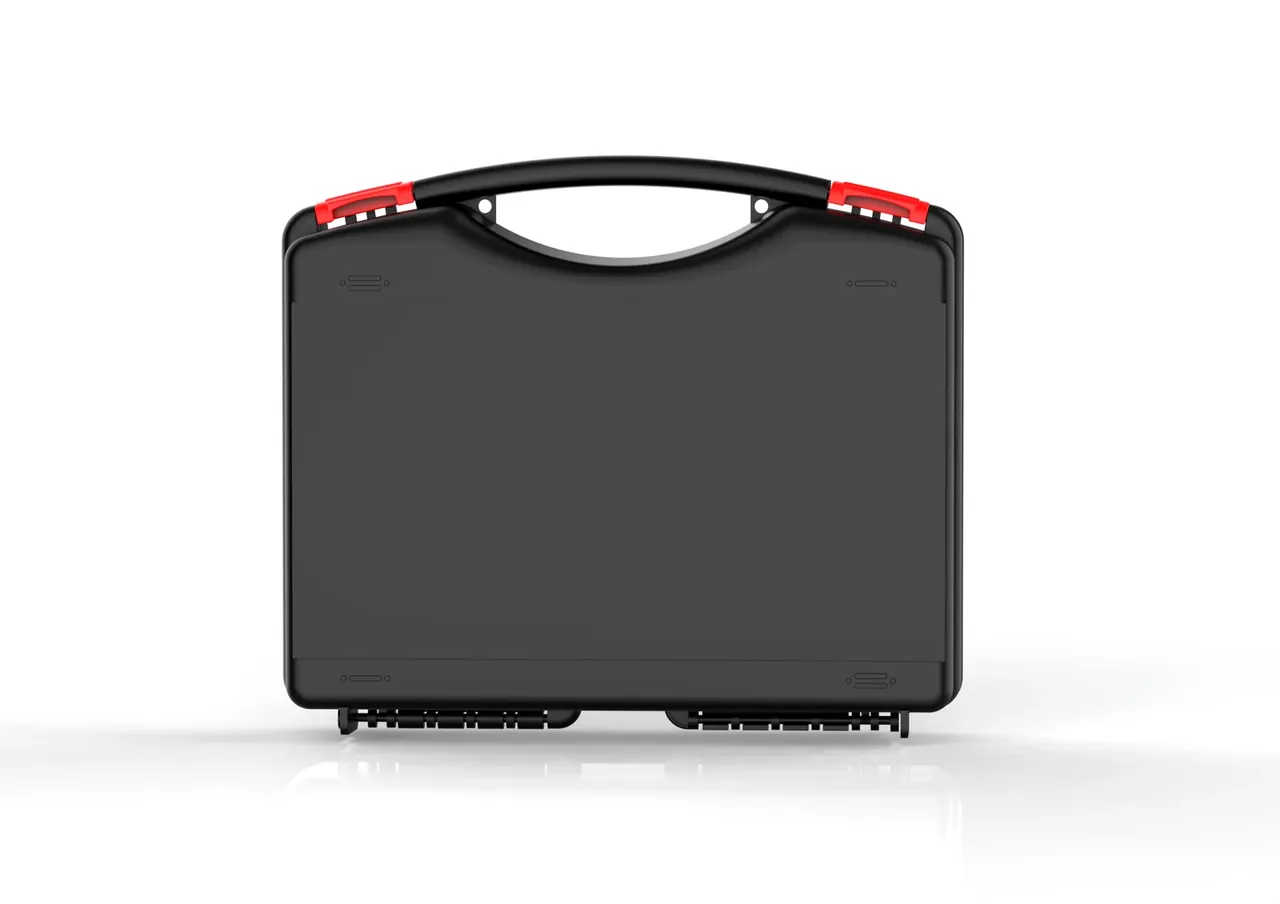
Impact strength pays first. The same PP with 20 percent FR masterbatch drops from 8 to 5 kJ/m² in notched Charpy at 23 °C. That is close to 40 percent. The gap widens at -20 °C. The fix is thickness or toughener, either 3.0 mm to 3.5 mm or POE back to 6 kJ/m². Both add mass.
Cost follows. FR masterbatch sells at 2 to 4 times the base resin price, so 20 percent loading lifts the material bill 10 to 25 percent, before the dispersion check.
Appearance comes third. Halogenated systems yellow, so off-white and light grey need more titanium dioxide, and that loading pushes the burn rate back up. Dark colours suffer less, which is why olive drab and black dominate.
Additive migration is the hidden cost. After 168 h at 70 °C a white bloom can appear, print adhesion falls and gasket bond strength drops 30 percent; powder on a wiping finger confirms it.
Purchase documents decide the argument that follows. Specify grade, thickness and rating together, for example a named PP at 3.0 mm rated UL94 V-0, with yellow card and report numbers attached. Writing flame retardant, or V-0 with no thickness, hands the judgement to the supplier.
Brominated systems also face a compliance gate. RoHS restricts polybrominated biphenyls and polybrominated diphenyl ethers, tested under the IEC 62321 series, and the report must show both values. A report holds 12 months; a new grade, colourant or a wall thinned 0.2 mm needs a fresh run.
Conclusion
The choice between UL94 V-0 and HB follows from whether heat sits inside the case and flame outside it. Battery compartments and charger cases need V-0 with thickness written to one decimal place; shipping and storage cases do fine on HB and save a fifth of the material cost. UL94 V-0 is judged on four lines at once, and a report missing one is void.
This article discusses only the container (case body) side of specifications and design intent, and does not cover any handling, loading or use of the contents.
Related Reading
- CE and RoHS documentation for cases
- Case raw materials compared side by side
- Material comparison for ammunition containers
Related Products
- 8 Series — Gun Cases; Military Equipment Cases; Camera Equipment Cases; Drone Cases; Watch Cases; Knife Cases; First Aid Cases; Electronics Equipment Cases
- WL8-2812 PP Gun Case — model WL8-2812
- All protective cases and toolboxes: 7 series, 158 models