

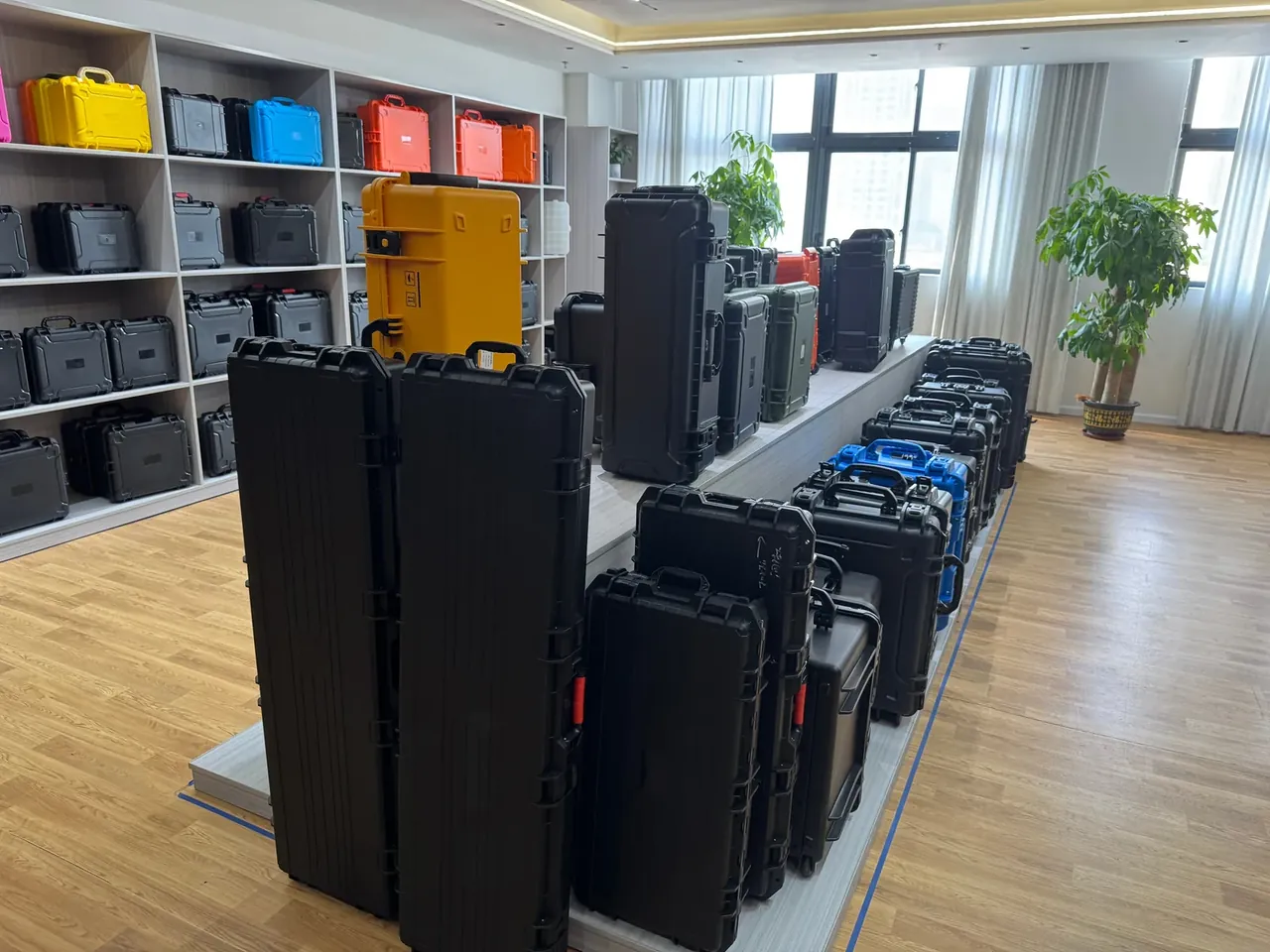
Quick answer: Underwater diving video light protective box fixes a 9 mm lip gap and 0.6 mm diaphragm preload, checked at 10 m for 30 min with hysteresis under 0.2 kPa.
Table of contents
- Twin-lip spacing in the Underwater diving video light protective box
- Diaphragm preload at the breather valve seat
- Seepage readings after hydrostatic holding
- Valve-seat hysteresis on the release retest
- Locking the lip gap for the diving batch
- FAQ
1. Twin-lip spacing in the Underwater diving video light protective box
A descent loads the shell with a one-way pressure difference: twin-lip spacing decides which way the seal yields, and diaphragm preload decides whether it returns after release. The Underwater diving video light protective box is drawn at 430x320x160 mm outside, 370x265x115 mm inside and 4.0 mm wall thickness, and these figures fix how wide a sealing band the groove may occupy. Once ribs squeeze that band, only one lip keeps its backing and the seal drifts toward the low-pressure side under a 10 m head. This batch therefore locks a 9 mm gap before revisiting the 0.6 mm preload, rather than changing both variables in one pressure run.
Split the 9 mm gap and the inner lip takes contact while the outer lip takes the stop, with a relief pocket left in the groove floor between them. The Underwater diving video light protective box uses 2 seal rings at 20% compression, and 2 latches at 320 N each press the lid to the datum face. Uneven latch force loads the lips differently, so the hydrostatic reading cannot tell a spacing fault from a latch fault.
| Lip-spacing tier | Twin-lip gap | Groove rebound at 10 m |
|---|---|---|
| Tier one | 7 mm | 88% |
| Tier two | 8 mm | 90% |
| Tier three | 9 mm | 91% |
2. Diaphragm preload at the breather valve seat
The diaphragm preload is 0.6 mm, an order smaller than the 20% seal compression yet opposite in effect. The valve seat of the Underwater diving video light protective box bleeds a little as inner pressure rises and pushes the diaphragm back as outside head falls; too much preload delays opening, too little leaves it unseated. It stays shut through the 10 m / 30 min hold and opens only at the designed differential, so a seat hysteresis of 0.2 kPa or less marks a full return.
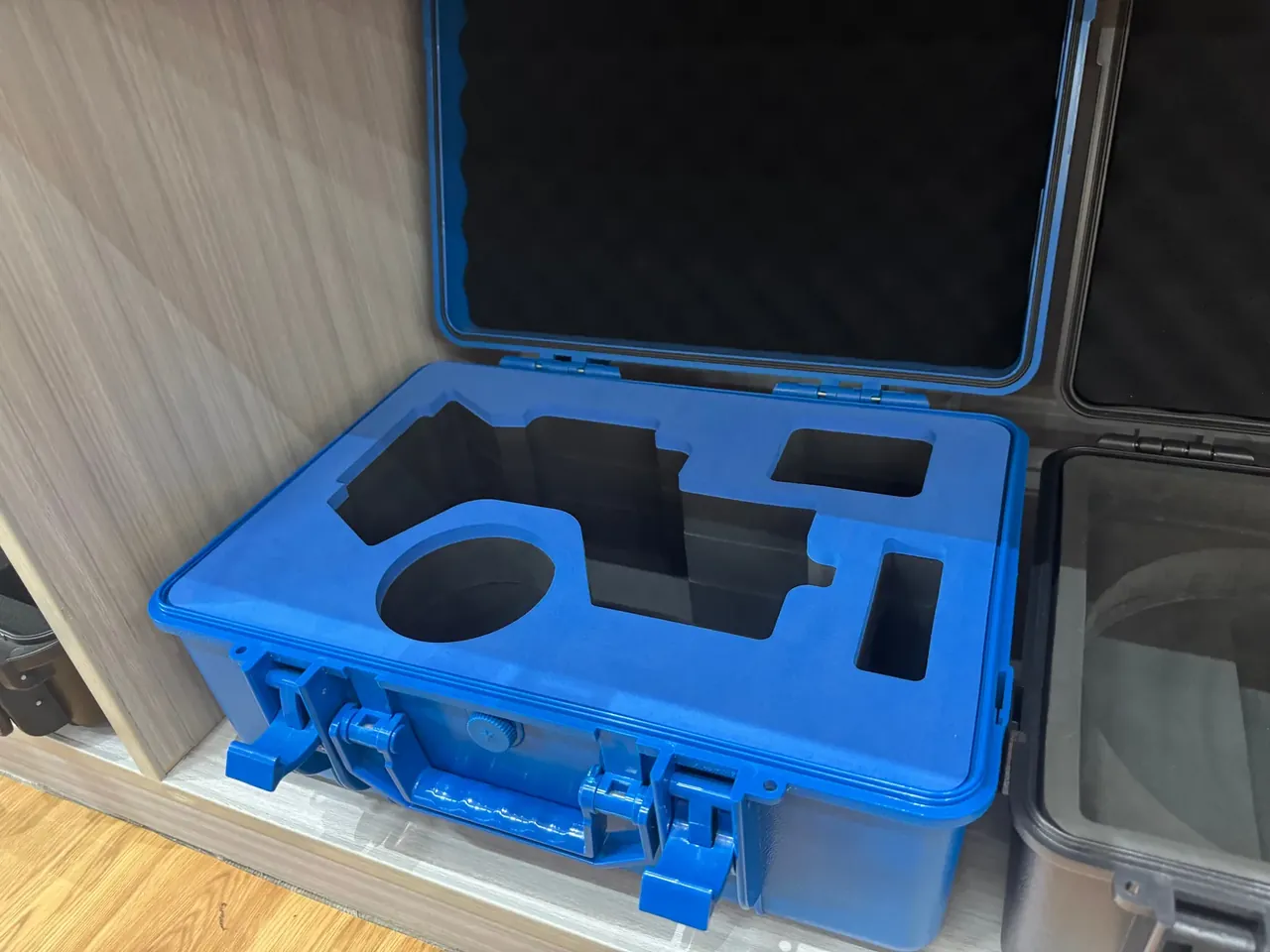
Preload and lip gap are not independent: a wider gap delays diaphragm opening and a small hysteresis hides groove-mouth seepage, while a narrower gap concentrates the release differential at the seat. The Underwater diving video light protective box logs both on one sheet and reruns the 30 min hold whenever either tier moves, verifying the shell-side reading against the IP68 immersion condition without writing the rating as achieved.
3. Seepage readings after hydrostatic holding
Seepage after the hydrostatic hold is read twice, at the end of the 30 min hold on the outer rim and after a return to ambient on the inner groove face. The Underwater diving video light protective box fixes its criterion at no visible seepage after 30 min, and a single trace retires that lip tier with no retest. Samples stay closed with latches seated, the 430x320x160 mm shell lies long edge horizontal, and the rig copies the empty 3.0 kg and loaded 5.5 kg states since seepage shows first at higher mouth preload.
| Pressure tier | Hold time | Mouth seepage after 30 min |
|---|---|---|
| 5 m | 30 min | none |
| 8 m | 30 min | none |
| 10 m | 30 min | none |
4. Valve-seat hysteresis on the release retest
Valve-seat hysteresis on the release retest is the cell most often skipped: a clean hold only proves the groove kept water out, and 0.2 kPa or less means the diaphragm is not stuck half open. After the 10 m head is removed the Underwater diving video light protective box rests, and a micro-manometer reads the residual difference across the seat alongside the latch state logged after 4100 cycles.
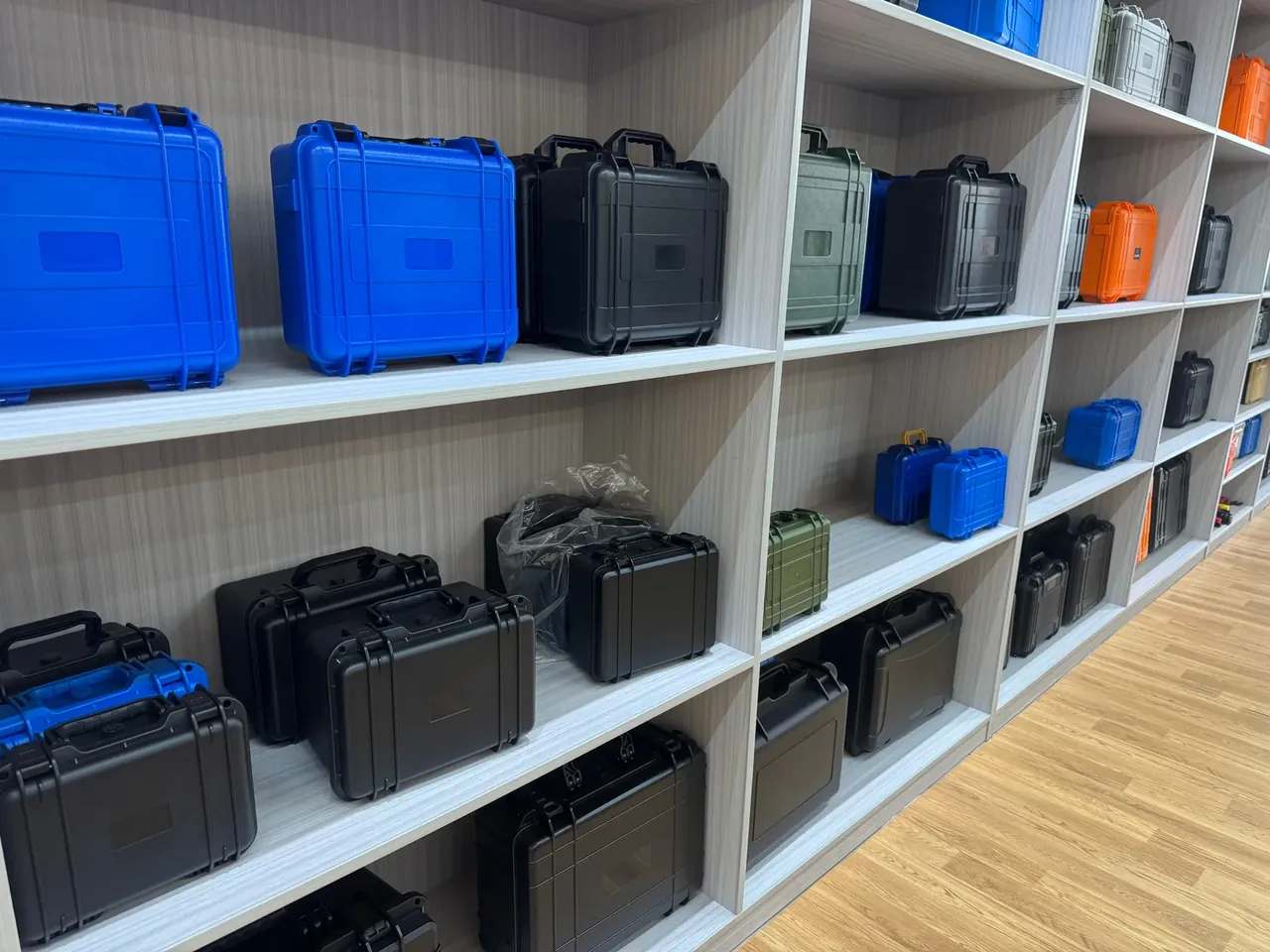
Groove rebound of 91% or more and seat hysteresis of 0.2 kPa or less move together: weak rebound implies a permanent set, while large hysteresis points to the 0.6 mm preload or the seat flatness. Only when both cells sit inside their limits are the 9 mm gap and 0.6 mm preload frozen as the diving-batch configuration.
| Hysteresis reading | Residual seat pressure | Groove rebound |
|---|---|---|
| Reading one | 0.14 kPa | 93% |
| Reading two | 0.18 kPa | 92% |
| Reading three | 0.20 kPa | 91% |
5. Locking the lip gap for the diving batch
At the locking step only one set of numbers enters the acceptance sheet. The diving batch of the Underwater diving video light protective box converges on the smallest passing lip gap and grants no range release.
The lip-gap value is the smallest tier whose hysteresis still holds 0.2 kPa after a 10 m head, and wider gaps are recorded but not entered. Once set, the 430x320x160 mm outside, 370x265x115 mm inside and 4.0 mm wall drawing is locked with 2 seal rings at 20% compression and 2 latches at 320 N each. Later 4100-cycle and -10 C to 45 C retests follow this one revision, so the Underwater diving video light protective box is released on shell evidence alone.
Conclusion
The seal verdict for the Underwater diving video light protective box rests on three shell-side readings: a 9 mm twin-lip gap, a 0.6 mm diaphragm preload and a 10 m / 30 min hydrostatic hold. Only when no visible seepage, seat hysteresis of 0.2 kPa or less and groove rebound of 91% or more stand together does that tier enter the diving-batch acceptance sheet. JUNZHIJIA speaks through drawing tolerance and rig readings, and Kexin New Materials (Guangdong) Co., Ltd. files temperature, cycling and hydrostatic retests side by side for later batch comparison.
Related Reading
- Diving equipment case guide: pressure and corrosion resistance
- Diving waterproof dry box plastic hard shell
- Underwater camera housing waterproof safety box
- Waterproof camera case: underwater and splash protection
Related Products
- 8 Series — Gun Cases; Military Equipment Cases; Camera Equipment Cases; Drone Cases; Watch Cases; Knife Cases; First Aid Cases; Electronics Equipment Cases
- WL8-2812 PP Gun Case — model WL8-2812
- All protective cases and toolboxes: 7 series, 158 models