

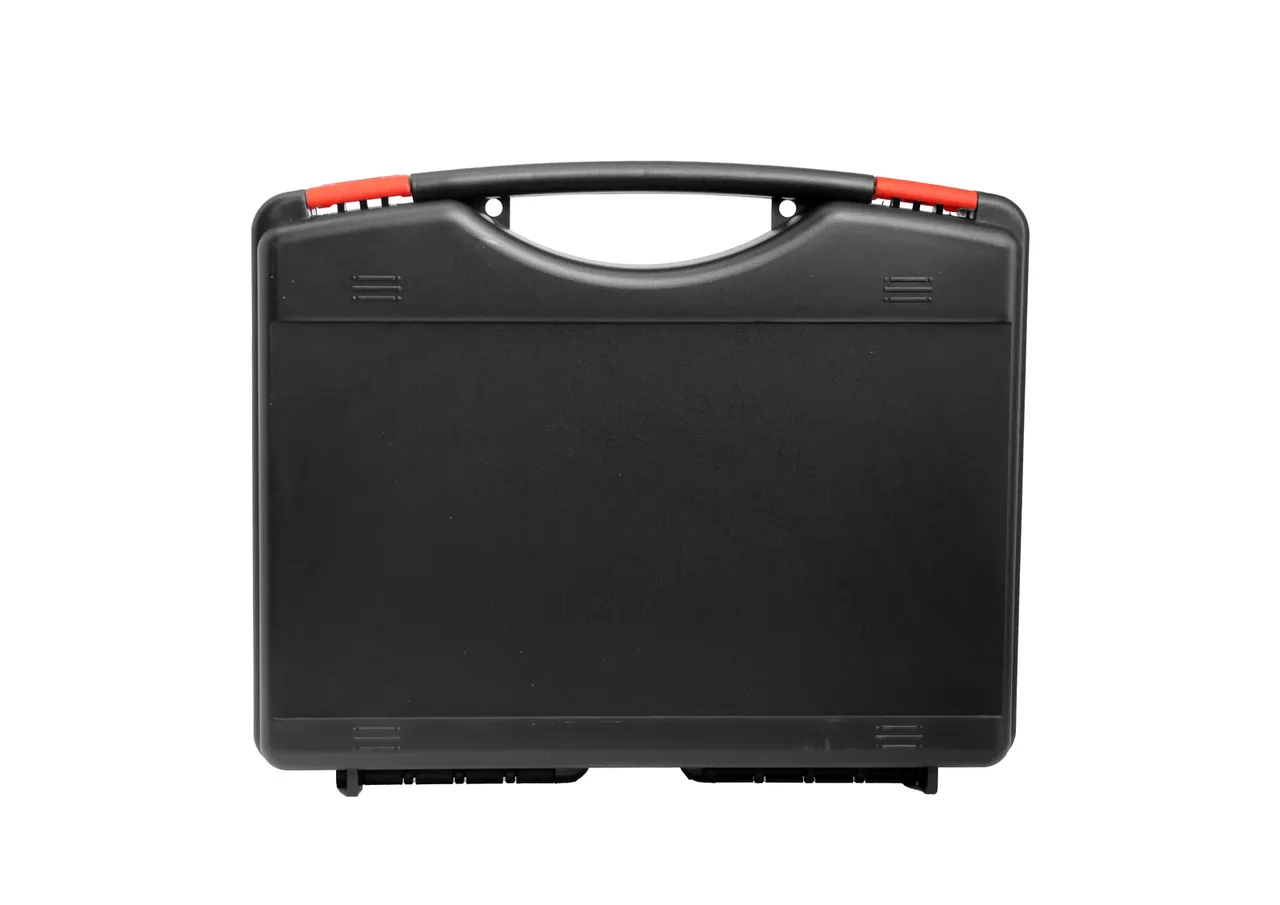
Quick answer: Vibration Testing does degrade sealing, but the cause is latch preload loss, not gasket ageing: 6 hours across three axes drops latch clamping force from 42 N to 31 N and raises leak-down from 18 Pa/min to 63 Pa/min, past the 50 Pa/min limit.
Table of contents
- Sealing loss starts at latch preload, not the gasket
- How resonance and axis time wear the preload away
- Three ways to read the leak-down curve
- Gasket compression set plays a minor part
- FAQ
1. Sealing loss starts at latch preload, not the gasket
A new case leaves the line at 15–20 Pa/min. After three-axis random vibration the same case often reads above 60 Pa/min. The gasket shows no crack and no hardening when the lid comes off. The latches do. Clamping force has fallen from 42 N to 31 N. Vibration Testing loads the shell as an elastic system, and the first parts to loosen are those that store energy in deflection.
Preload comes from over-centre bending of the latch arm. Closing bends it about 1.2 mm, and the springback presses the lid onto the gasket. Under vibration lid and latch seat slide by tens of microns; each cycle polishes off plastic, and once 0.05–0.12 mm is gone the springback shrinks.
Gasket ageing explains far less. One batch held at 70 °C for 168 h showed 25% compression set but only 24 Pa/min. Another batch run for 6 hours showed 22% set and 63 Pa/min. Similar deformation, more than double the leak: deformation is not the only variable, contact stress is.
| Location | Change after 6 hours | Share of leak rise | Reversible |
|---|---|---|---|
| Latch arm contact face | 0.05–0.12 mm worn away | about 68% | No |
| Gasket compression set | 22% | about 21% | Partly, after 24 h rest |
| Lid-to-body seam warpage | 0.3 mm | about 11% | No |
2. How resonance and axis time wear the preload away
A 5–500 Hz sweep at 1 oct/min, 2 hours per axis on three axes, is the common combination under ISTA 3A and ASTM D999. First resonance falls between 12 Hz and 35 Hz depending on shell size and payload: an empty case sits above 30 Hz, and 2.5 kg of ballast pulls it down to 16–22 Hz. At resonance the lid face moves 3.2 times the table input, so the alternating load on the latches scales with it.
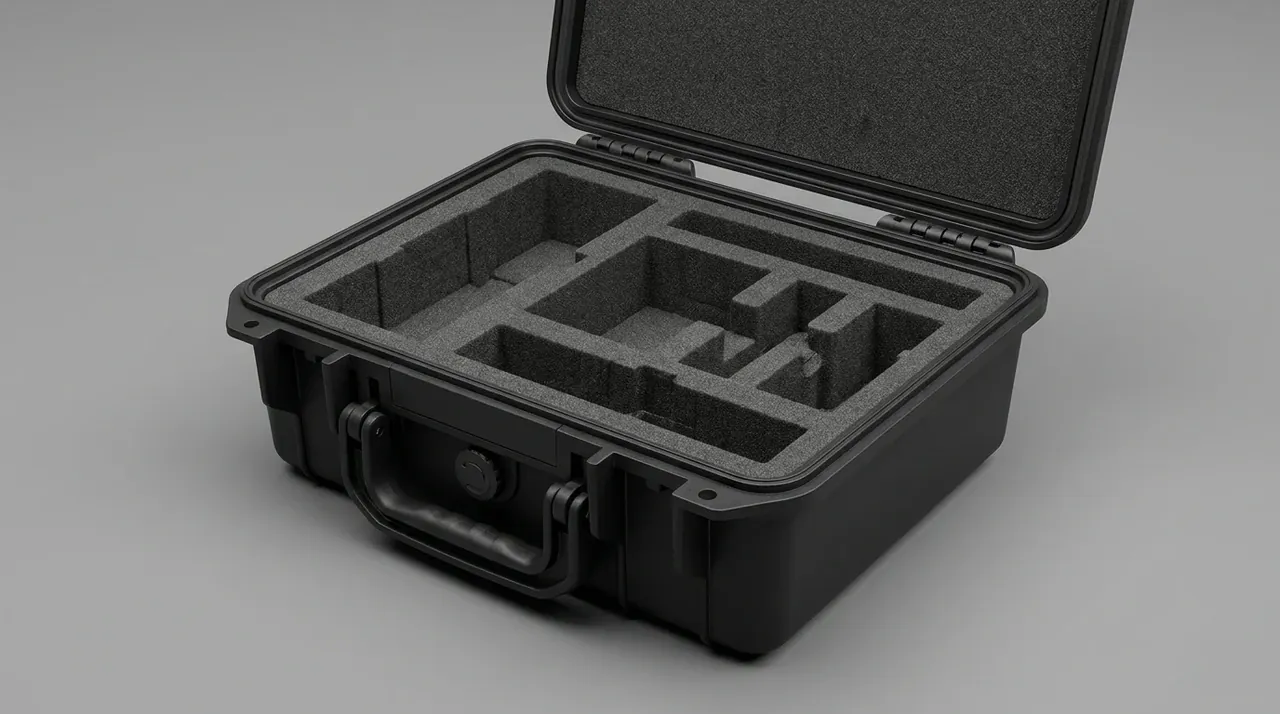
The axes do not wear equally. Vertical accounts for 6 N of the 11 N total, the two horizontal axes for 3 N and 2 N. Horizontal sliding runs close to perpendicular to the arm bend and removes material faster per cycle, while vertical simply delivers the most impacts. A 2-hour vertical run alone costs 3 N and leaves 24 Pa/min, which looks acceptable and is easy to misread.
Payload mass amplifies everything. An empty case loses 4 N over 6 hours; with 2.5 kg of unbonded ballast it loses 11 N, and peak stress at the latch seat rises 40%.
3. Three ways to read the leak-down curve
Sealing is rechecked at 500 Pa, held for 60 s, then logged for 3 min at 23 °C and 50% relative humidity. Read the curve in three parts: the first 30 s is gasket seating and a fast drop there is normal; 30 s to 2 min is the stable section used for a verdict; a rate that climbs again in the final minute means a channel has opened.
| Leak-down rate | Verdict | Action |
|---|---|---|
| Below 50 Pa/min | Pass | Release to stock |
| 50–120 Pa/min | Hold | Rest 24 h, retest; still above 50 means strip the latches |
| Above 120 Pa/min | Fail | Open the lid, inspect gasket and seam, replace latches |
Temperature rewrites the number. From 23 °C to 35 °C the reading drops about 8% because the gasket softens and seats better; down to 5 °C it rises 12%, and a flat 50 Pa/min limit at that temperature rejects good cases. Correct by 0.4 Pa/min per degree.
Method matters more than the figure: same instrument, same 3 min window, same temperature.
4. Gasket compression set plays a minor part
The gasket is EPDM at 70 Shore A with a D profile and a designed compression of 25%–30%. Compression set by GB/T 7759 at 70 °C for 24 h has a 30% limit, and this compound measures 22%. The strip loses only 4%–6% of its springback, far too little to vent 500 Pa in 3 min on its own.
Contact stress is what seals. At 42 N the gasket carries about 0.35 N/mm at 0.9 mm compression; at 31 N it carries 0.26 N/mm at 0.66 mm, still above the minimum needed. Add 0.3 mm of seam warpage and leak-down jumps from 30 Pa/min to 90 Pa/min.
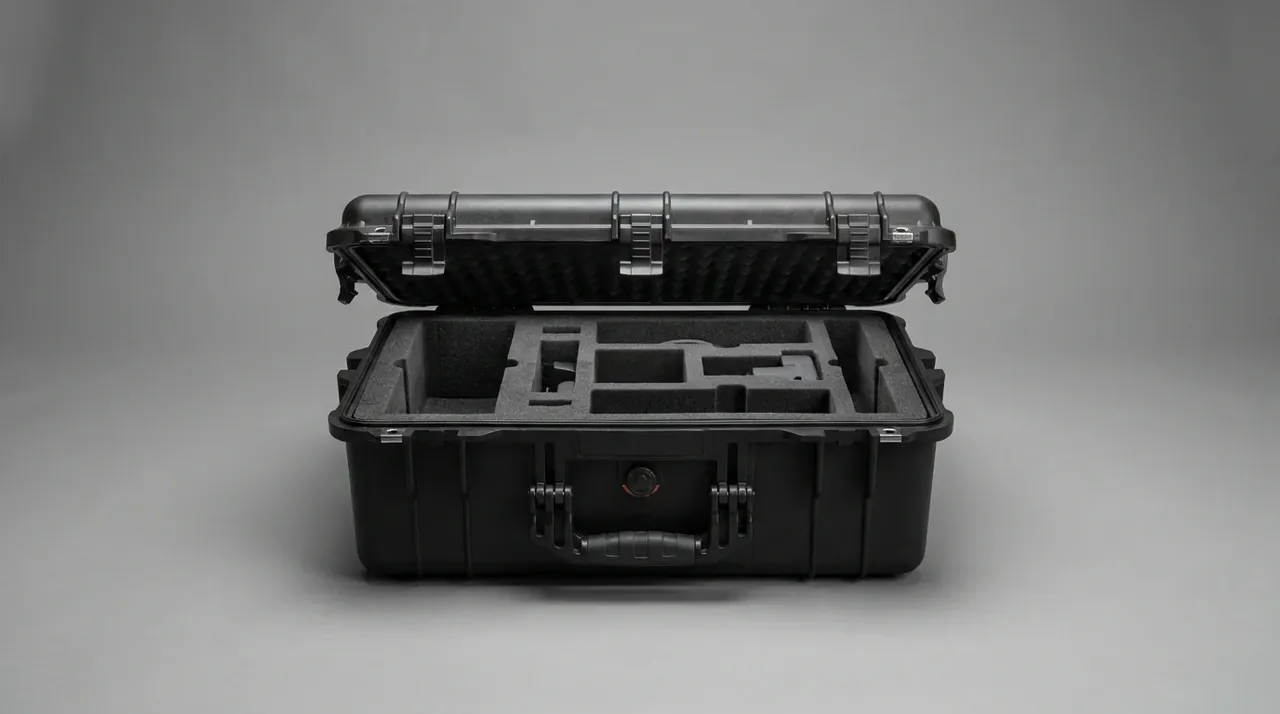
After 24 h of rest, clamping force returns to 37 N and leak-down to 34 Pa/min. That 6 N is viscoelastic springback, not repaired wear. A second 6-hour run takes the same case from 37 N to 30 N and 71 Pa/min, and each round decays faster than the last.
New latches beat a new gasket: on the same case they restore 44 N and 21 Pa/min with the original gasket still fitted. Stainless steel changes nothing here, because the wear sits in the contact geometry, not in the steel grade.
Conclusion
After Vibration Testing, recheck sealing against three lines: retest above 50 Pa/min, strip and inspect above 120 Pa/min, and replace latches below 35 N rather than replacing the gasket. Keep the gasket while its compression set stays under 30%. Vibration Testing measures preload reserve, so write the 42 N baseline into the goods-in sheet and hold 20% headroom on new tooling; that is cheaper than finding the loss at final test.
Related Reading
- Vibration test conditions and pass criteria for cases
- When a case gasket has aged enough to replace
- Choosing gasket profile and compression ratio
Related Products
- 8 Series — Gun Cases; Military Equipment Cases; Camera Equipment Cases; Drone Cases; Watch Cases; Knife Cases; First Aid Cases; Electronics Equipment Cases
- WL8-2812 PP Gun Case — model WL8-2812
- All protective cases and toolboxes: 7 series, 158 models