

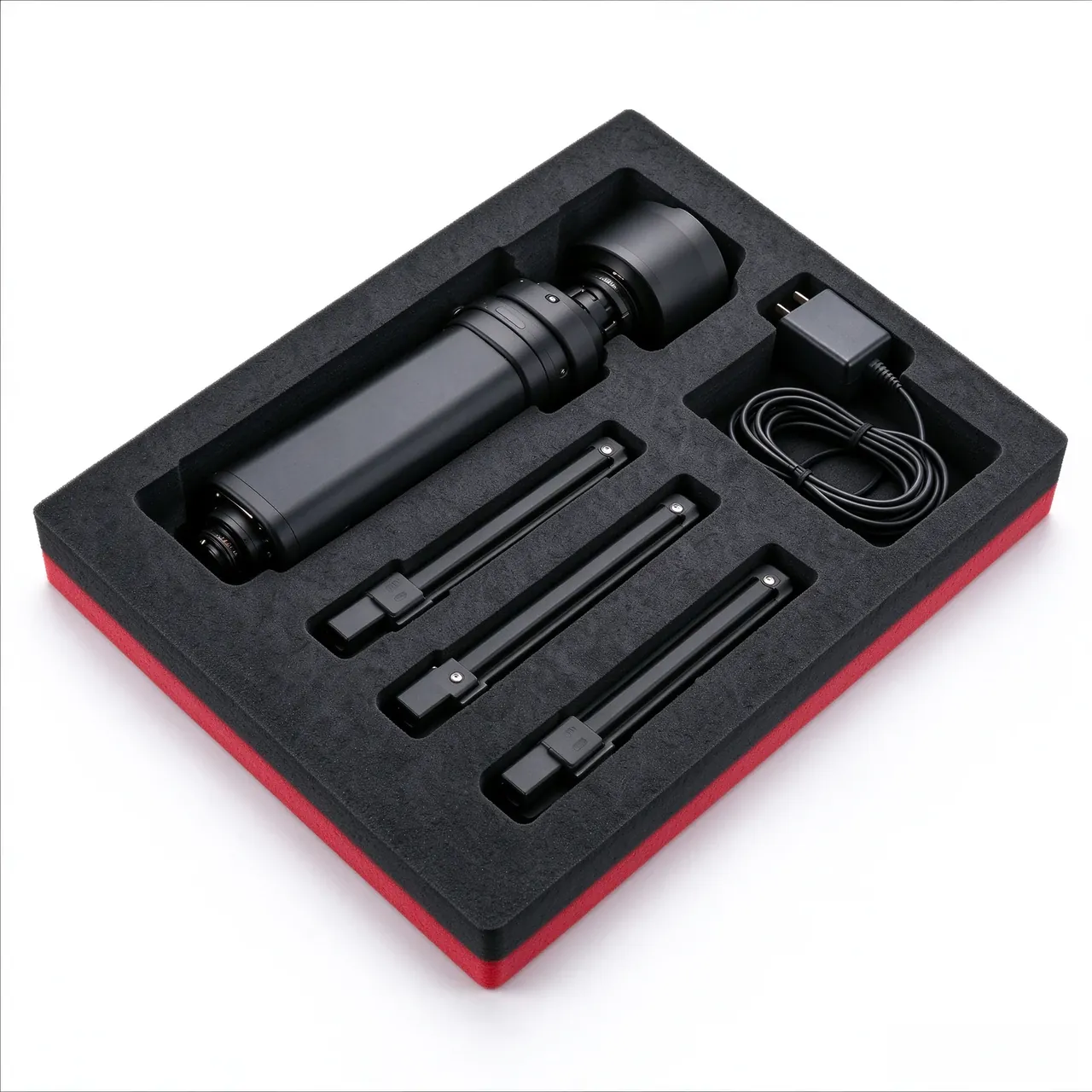
Quick answer: A VR 360 camera precision shockproof box protects one number, 0.1 mm: past that mount shift stitching fails, however well a 1.0 m drop is absorbed.
Table of contents
- Where a panoramic camera loses precision in transit
- Keeping a multi-lens array coaxial without load
- How the three damping layers work
- Humidity and lens fungus prevention
- Why calibration files travel in the same case
- FAQ
1. Where a panoramic camera loses precision in transit
Once a panoramic seam shifts, post-production cannot pull it back. A rig passes four stages: loading, stacking in the vehicle, sorting at a hub, unboxing. A VR 360 camera precision shockproof box is rarely blamed for the first or the last. Precision goes in the second stage, when another case is stacked on top and the load enters through the side wall at an angle the foam was never shaped to take.
A six-lens body weighs about 1.5 kg, an eight-lens body close to 2.5 kg, both on a lens plate held by a handful of screws. Under side load the foam yields first, the mount follows, and at 0.1 mm the overlap zones stop lining up. Stitching can blur a seam; it cannot close one.
| Precision risk | Transport stage | What the case does |
|---|---|---|
| Mount shifts sideways | Cases stacked against one wall | Vertical ribs, foam islands around each lens bore |
| Lens cavity floors out | 1.0 m vertical drop | Base foam at 30 to 50 kg/m³ that springs back |
| Glass fogs | Cold truck, warm location | Compressed gasket, interior at or below 40 %RH |
| Calibration file lost | Re-packing at a hub | File pocket beside the body, separate anti-static bag |
The first row is the quiet one in a VR 360 camera precision shockproof box: the shell shows nothing, and the fault appears at stitching. A 1.0 m drop is the usual acceptance height, and once a side load has spent the foam travel, the vertical event has nothing left.
2. Keeping a multi-lens array coaxial without load
Coaxial does not mean clamping the body until it cannot move. In a VR 360 camera precision shockproof box it means constraining each lens along its axis and leaving 1 to 2 mm of radial clearance. Clamp harder and shell deflection reaches the mount through the insert; the lens flanges already sit on one plane, so a small warp moves the seam.
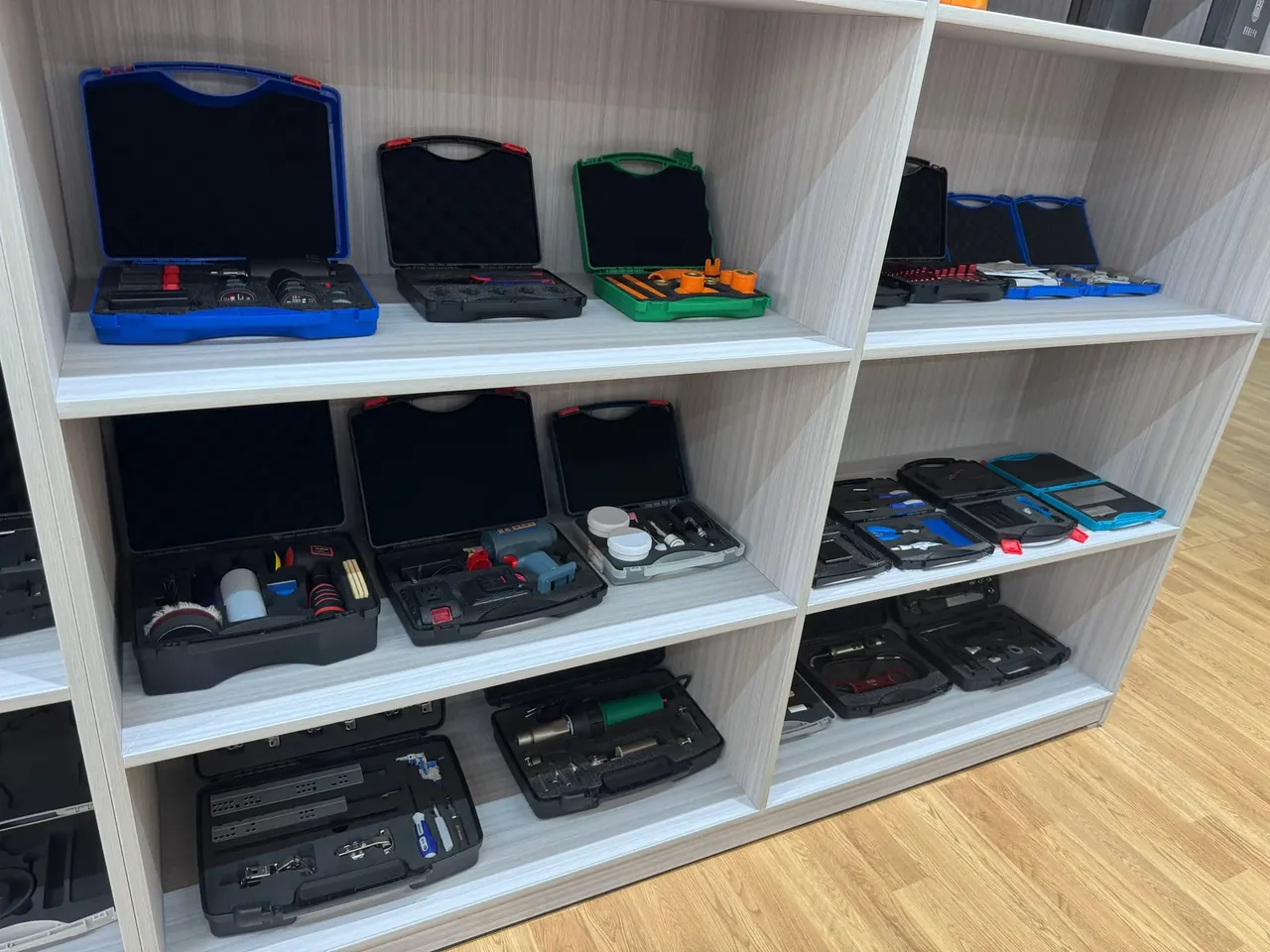
Each lens gets its own round bore, 1.5 mm clearance per side, with a 3 mm locating step machined into the floor. The body lands on the step, the bore centres it, and the mount carries no load; force travels through the base plate.
Shell and frame have separate jobs. The shell resists side compression, the frame presses the two foam blocks together, and the latches only preload the joint. Twist latches spread preload more evenly than draw latches, so a long case needs four twist latches rather than six draw latches. Fingers reach only the lower corners, so force should stay under 15 N, or the body rocks and the locating step rounds off.
3. How the three damping layers work
Inside a VR 360 camera precision shockproof box, three layers are three stiffnesses handling three frequency bands, not three sheets of the same foam. The shell takes the first peak, the middle foam takes the bulk of the energy, the inner liner takes the small vibration the body makes on its own.
| Damping layer | Material and thickness | What it handles |
|---|---|---|
| Outer | PP shell, 3 mm wall, ribs every 60 mm | Side compression and puncture |
| Middle | EVA at 45 kg/m³, 20 to 30 mm | Most of the energy in a 1.0 m drop |
| Inner | EVA at 30 kg/m³, 8 to 10 mm | Body contact and high-frequency buzz |
Density belongs between 30 and 50 kg/m³, and higher is not better. Dense EVA holds static load and resists compression set, yet has little travel left for a drop. Light EVA recovers fast and bottoms out early. Precision inserts sit between those two failures.
The acceptance rule fits on one line: any mount that moves more than 0.1 mm means the insert has failed. Test by loading the body, dropping the case 1.0 m onto six faces, and checking mount-to-wall clearance with a feeler gauge.
Temperature changes the foam too. EVA stiffens at −10 ℃ and recovers slowly, so it absorbs less; a day at 45 ℃ inside a parked vehicle leaves a slight set. A VR 360 camera precision shockproof box rated −10 to 45 ℃ needs foam chosen for that range.
4. Humidity and lens fungus prevention
Fungus needs moisture, warmth and food at once. Above 60 %RH spores germinate; below 40 %RH they never get started. A gasket that does not seal makes every damping layer pointless, because moist air keeps cycling through the gap.
Sealing in a VR 360 camera precision shockproof box has two parts, a foamed silicone gasket and a tongue-and-groove lip. The gasket should sit at 20% to 30% compression: tighter and it takes a permanent set, looser and it leaks as temperature swings. A sachet of colour-change silica shows the trend earlier than a hygrometer.
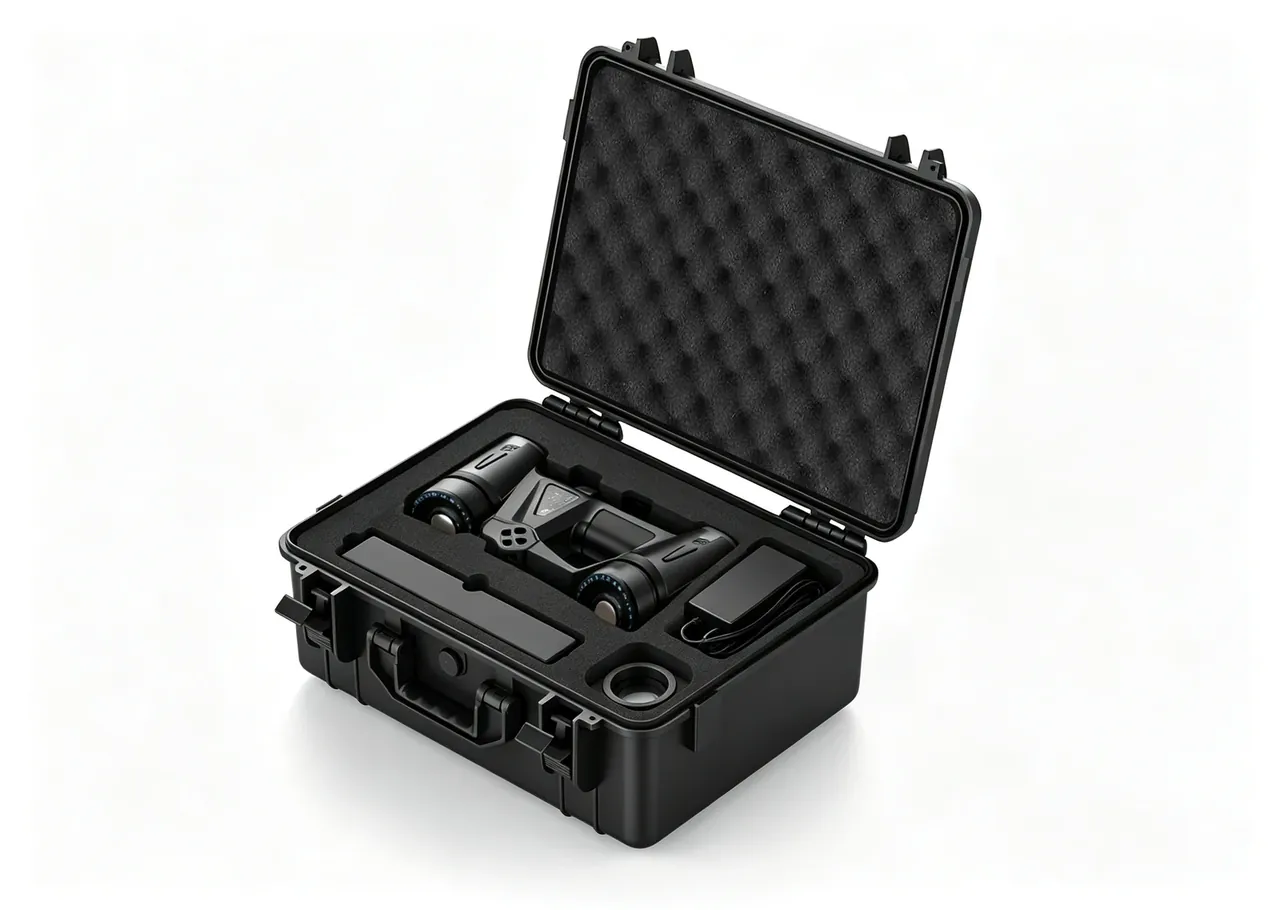
Temperature difference is the other door. Moving from a −10 ℃ cold truck to a 30 ℃ street condenses water on the shell, and droplets run down the lid. Let the closed case sit indoors for 30 min before opening; the egg-crate foam catches the little that forms and keeps it off the glass.
5. Why calibration files travel in the same case
Stitching in a VR 360 camera precision shockproof box depends on a calibration file, one per lens count, and the file runs 20 to 80 MB. Lose it and the camera still records, but the footage needs a fresh calibration before stitching, which means waiting until the crew is back at the studio.
A VR 360 camera precision shockproof box should give the file a fixed home: an anti-static bag clipped to the lid mesh or a wall slot, never in the same compartment as batteries and cables. The file travels with the body, so changing cases, vehicles or operators does not break the link. USB sticks and SD cards work between −10 and 45 ℃, but a summer in a 45 ℃ trunk warps the plastic and oxidises the contacts.
Related Reading
- Long-haul practice for wheeled lens cases
- Holding humidity inside a gear case
- Usable volume, cavities and corner radii
- Choosing a camera equipment case step by step
JUNZHIJIA
Related Products
- 8 Series — Gun Cases; Military Equipment Cases; Camera Equipment Cases; Drone Cases; Watch Cases; Knife Cases; First Aid Cases; Electronics Equipment Cases
- WL8-2812 PP Gun Case — model WL8-2812
- All protective cases and toolboxes: 7 series, 158 models