

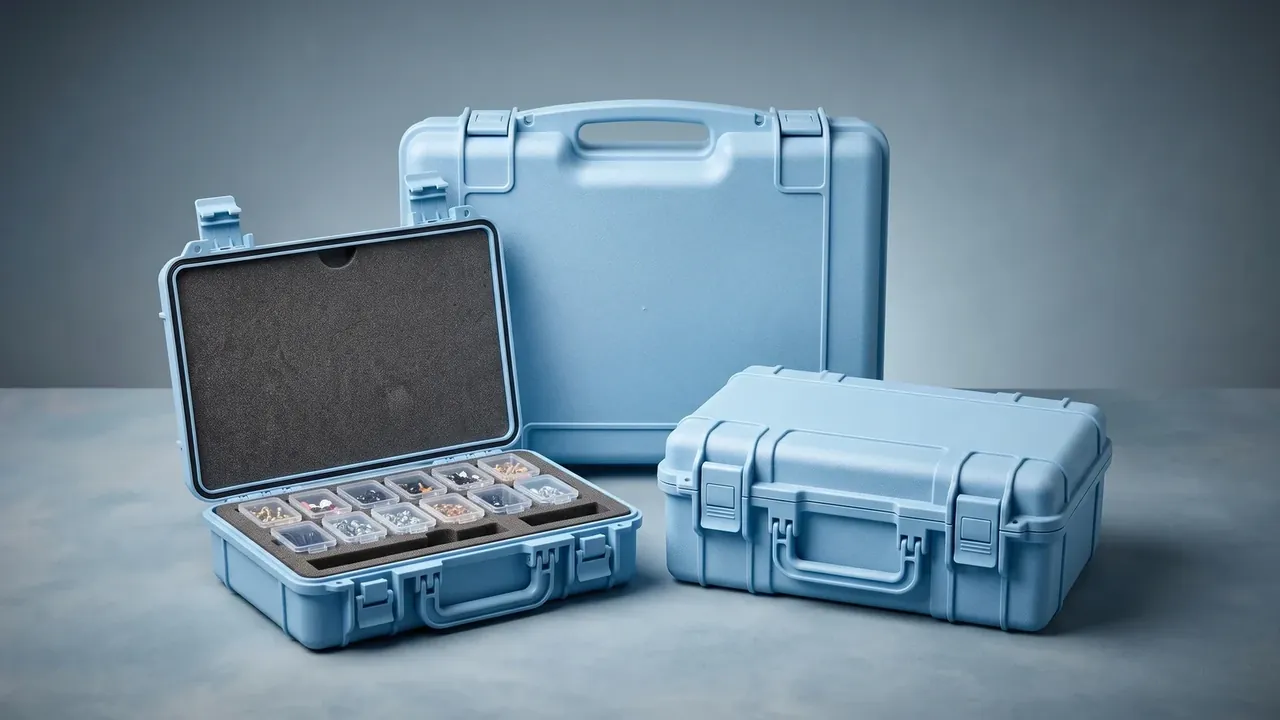
Quick answer: A rating states intent, not endurance. For a waterproof plastic box small enough to carry by hand, four measured values decide the outcome: handle load, latch cycles, drop and stacking behaviour, gasket compression. Fix them for the 300 × 220 × 120 mm class instead of copying a large case sheet.
Table of contents
- Where the Rating Ends and the Test Starts
- Handle and Latches: First to Fail, First Skipped
- Drop, Stacking and Cold: Three Mechanical Judgements
- Gasket Compression and Opening Force
- Grading and Disposition
- FAQ
1. Where the Rating Ends and the Test Starts
Last year a run of 300 × 220 × 120 mm cases came through at 1.4 kg empty with a 2.5 mm wall, drawing marked IP67. The customer packed handheld instrument accessories, under 2 kg per box, which looks like the safest kind of job there is.
Eight hundred units shipped, 37 came back within two weeks. The reasons clustered in two places: cracks at the handle root, and a gap along one side of the closed lid. Neither appears anywhere in a rating description.
| Item | Drawing value | Accept value | Usual deviation |
|---|---|---|---|
| Wall thickness | 2.5 mm | Not below 2.3 mm | 1.9 mm at corners |
| Handle static load | Blank | 30 kg held 10 min, no crack | Stress at the root |
| Latch cycles | Blank | Still closing after 5000 | Rounded catch |
| Gasket compression | 25% | 22% to 28% | One corner unpressed |
For a waterproof plastic box small at this size, the top three rows were blank on the drawing, and that omission was ours.
2. Handle and Latches: First to Fail, First Skipped
Small cases fail in a different order from large ones. Large cases leak first; small ones break first.
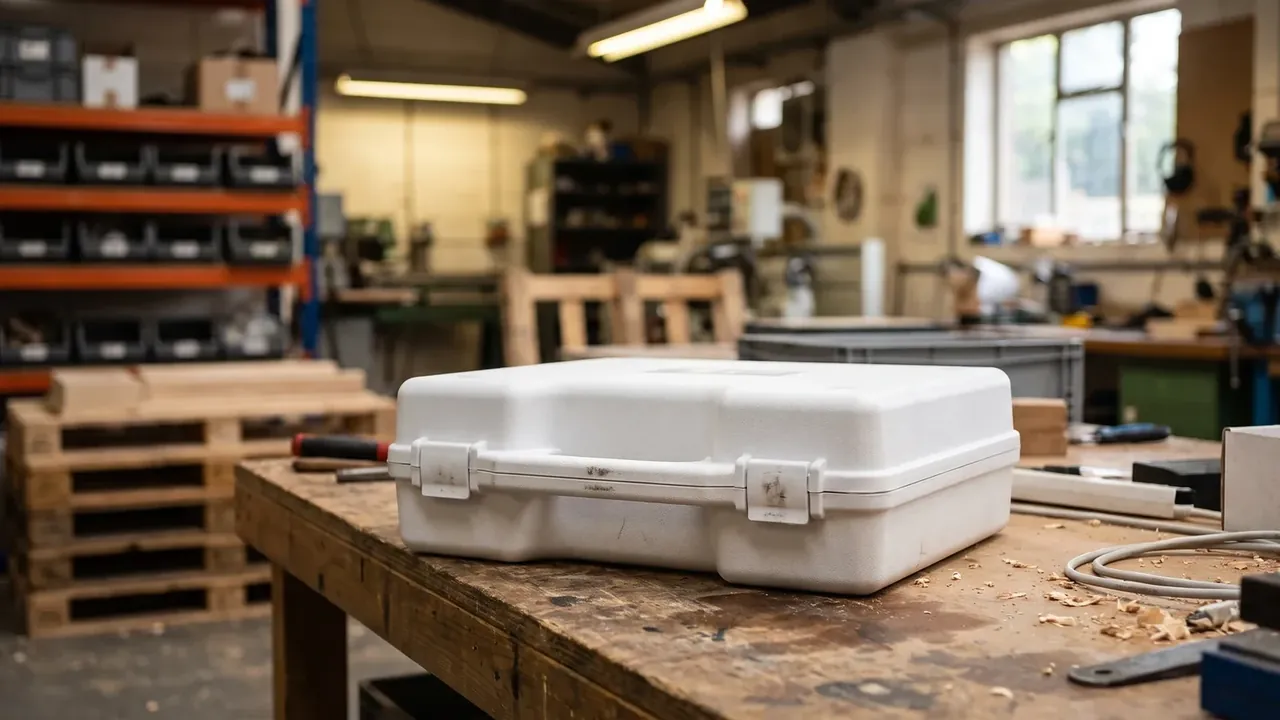
Six checks cover the handle and latches:
- Load the handle with 30 kg for 10 minutes, then look for whitening at the root.
- Run 2000 lift-and-set cycles and watch the rivet or overmould for play.
- Open and close each latch 5000 times; closing force may drop by no more than 30%.
- With the latch closed, try a 0.1 mm feeler along the lid gap; entry means the gasket is unpressed.
- Press both latches together and check that the lid centre sinks less than 0.5 mm.
- Reject any sink mark deeper than 0.3 mm where the handle meets the body.
The third check is the one usually dropped, because it eats a working day. It is also the reason most small cases come back.
3. Drop, Stacking and Cold: Three Mechanical Judgements
The three mechanical tests belong in one session, because they trade against each other. For drop, a waterproof plastic box small at this size goes from 1.2 m onto six faces, three edges and one corner, loaded to its rated weight, and must show no crack, no latch release and no gasket shift beyond 0.5 mm. For stacking, five layers sit for 72 hours at 40℃, and the bottom case may lose no more than 1.0 mm of height, since more means the wall or the ribs are thin. For cold, the case spends 2 hours at −20℃ and then opens with a force of 80 N or less, because above that a gloved hand simply cannot work the latch. A sample that passes drop but sags in stacking, or stiffens in cold, will fail in the field in the first winter rather than in the lab. All three results go on one record sheet, and a single miss keeps the lot from being accepted.
4. Gasket Compression and Opening Force
On a waterproof plastic box small, gasket compression judged by feel is wrong about three times in ten.
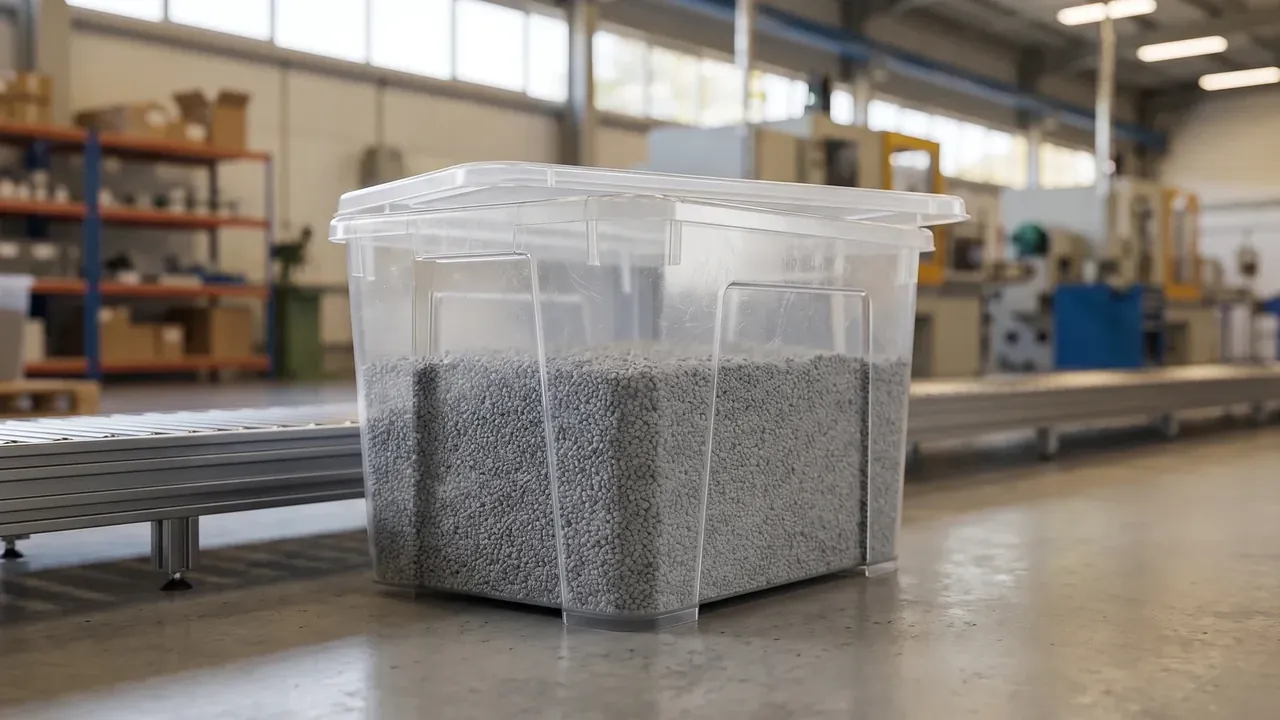
Compression is designed at 25% and measured between 22% and 28%. The method is plain: measure from the rim to the top of the gasket before closing, measure again after, divide the difference by the free height. Below 22%, water finds a path on the latch side. Above 28%, the gasket stays squashed and its rebound is gone within a year.
A waterproof plastic box small carries a narrow gasket section, often 4 mm wide by 3 mm high, so a slight offset leaves one corner untouched. We measure all four corners and take the lowest figure.
5. Grading and Disposition
| Class | Finding | Action |
|---|---|---|
| Critical | Handle root crack, broken latch, crack after drop | Reject the lot, re-check the tool |
| Major | Compression below 22%, stacking loss above 1.0 mm | Sample 20 more, reject if still failing |
| Minor | Sink marks, colour shift, label offset | Release with a record, up to 5% |
Each action needs an owner. Tool faults sit with the supplier, structural faults split by the drawing terms of the waterproof plastic box small, and without that clause a return turns into an argument.
Conclusion
Failures in this size class rarely start at the wall; they start at the handle, the latches and the gasket line. Replace the rating with values that can be measured, grade the findings, and returns fall away. A waterproof plastic box small enough to carry all day should still close after it has been dropped, stacked and frozen.
This article discusses only the container (case body) side of specifications and design intent, and does not cover any handling, loading or use of the contents.
Related Reading
- Hard case inspection items
- Small arms ammunition box values
- Airdrop case drop and lashing
- Mould storage and upkeep
Related Products
- 8 Series — Gun Cases; Military Equipment Cases; Camera Equipment Cases; Drone Cases; Watch Cases; Knife Cases; First Aid Cases; Electronics Equipment Cases
- WL8-2812 PP Gun Case — model WL8-2812
- All protective cases and toolboxes: 7 series, 158 models