

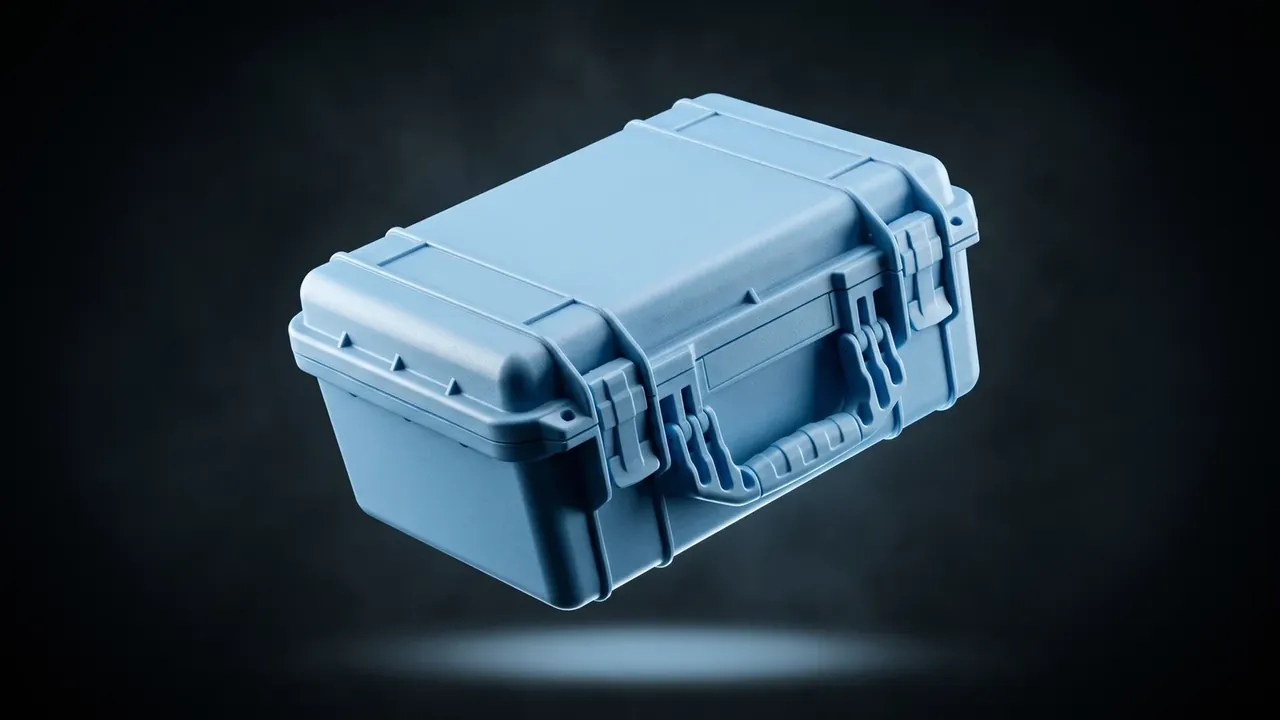
Quick answer: Acceptance of waterproof plastic electrical boxes runs in three rounds: six judgement items at sign-off, three bench tests during sampling, a 13-piece pilot sample graded by defect class. Each round leaves data, not adjectives.
Table of contents
- Six Judgement Items Fixed Before the Mould Is Signed Off
- Three Bench Tests: Spray, Pressure Decay and Torque
- Sample Size and Defect Classes for a 420-Unit Lot
- Drilling and Fitting: Keeping a Torque Record
- Five Things to Look At on a Factory Visit
- Closing the Loop with Reports and Retained Samples
- FAQ
1. Six Judgement Items Fixed Before the Mould Is Signed Off
The job started with one sampling request: 400 mm × 300 mm × 160 mm external, 2.6 kg empty, two terminal blocks and one breaker inside. The drawing said IP67 and nothing else.
Six items went to the top of the first-article sheet.
| No. | Item | Accept value | Method and tool |
|---|---|---|---|
| 1 | Wall and base thickness | 3.2 mm side wall, 4.0 mm base | Ultrasonic gauge, 5 points per face |
| 2 | Gasket compression | 28%, window 25% to 30% | Rim height before and after closing |
| 3 | Latch retention | 280 N without release | Tensile pull at 20 mm/min |
| 4 | Air tightness | −20 kPa held 60 s, decay ≤0.5 kPa | Fixture with differential gauge |
| 5 | Spray | 6.3 mm nozzle, 12.5 L/min, 3 min per face | Spray rig |
| 6 | Heat stability | 60℃ for 4 h, diagonal change ≤0.8 mm | Oven and vernier caliper |
Only thickness and outline come from the drawing. Compression is the item people leave vague: it is not a design value but the deformation after the lid closes, and it drifts with each resin batch. Once signed, the tool for these waterproof plastic electrical boxes is frozen.
2. Three Bench Tests: Spray, Pressure Decay and Torque
Three parts reached the bench and the first check was fit, not water. A 0.2 mm feeler stayed out of the closed rim except at two places.
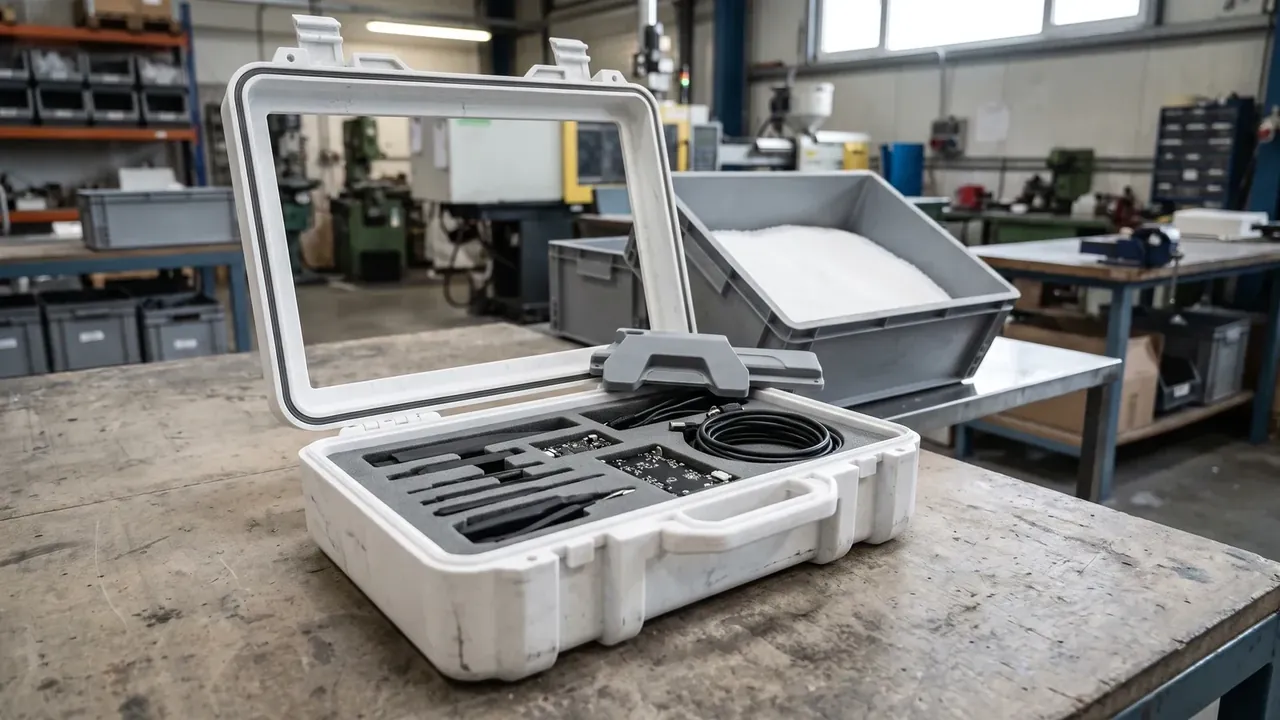
On the spray rig these waterproof plastic electrical boxes stay empty and latched, the nozzle 1.5 m away, each face wetted 3 minutes in the order top, front, side, back, bottom. The rim is wiped dry before the lid opens; the paper inside must stay free of marks. Water is held at 18℃ to 25℃, because a cold gasket stiffens and flatters the result. A mark is never fixed by respraying; the entry point is recorded first. Retests stop at two attempts, the second on a new gasket. A part still leaking on the third attempt is rejected.
Pressure decay catches more than spray before water is involved. At −20 kPa a 400 mm lid sees about 3.2 kN, so a warped rim shows as a curve falling inside the 60-second hold.
Torque is the third item: the M20 × 1.5 gland goes to 1.8 N·m, a marker line at the root is checked 24 hours later.
3. Sample Size and Defect Classes for a 420-Unit Lot
The pilot lot held 420 units, which at level II means 13 pieces across three cavities and two shifts, not one pallet.
| Class | Typical findings | AQL | Disposition |
|---|---|---|---|
| Critical | Body crack, broken latch, decay above 0.5 kPa | 0 | One piece returns the lot |
| Major | Water mark after spray, wall below 3.0 mm | 1.0 | One piece in 13 triggers another 13 |
| Minor | Flow lines, colour shift, skewed label | 2.5 | Recorded and released, up to 3 |
4. Drilling and Fitting: Keeping a Torque Record
What separates an enclosure from a plain box is the hole. These waterproof plastic electrical boxes carry one M20 × 1.5 opening with a nylon gland, and the mould leaves a 1.5 mm shoulder to press the washer flat.
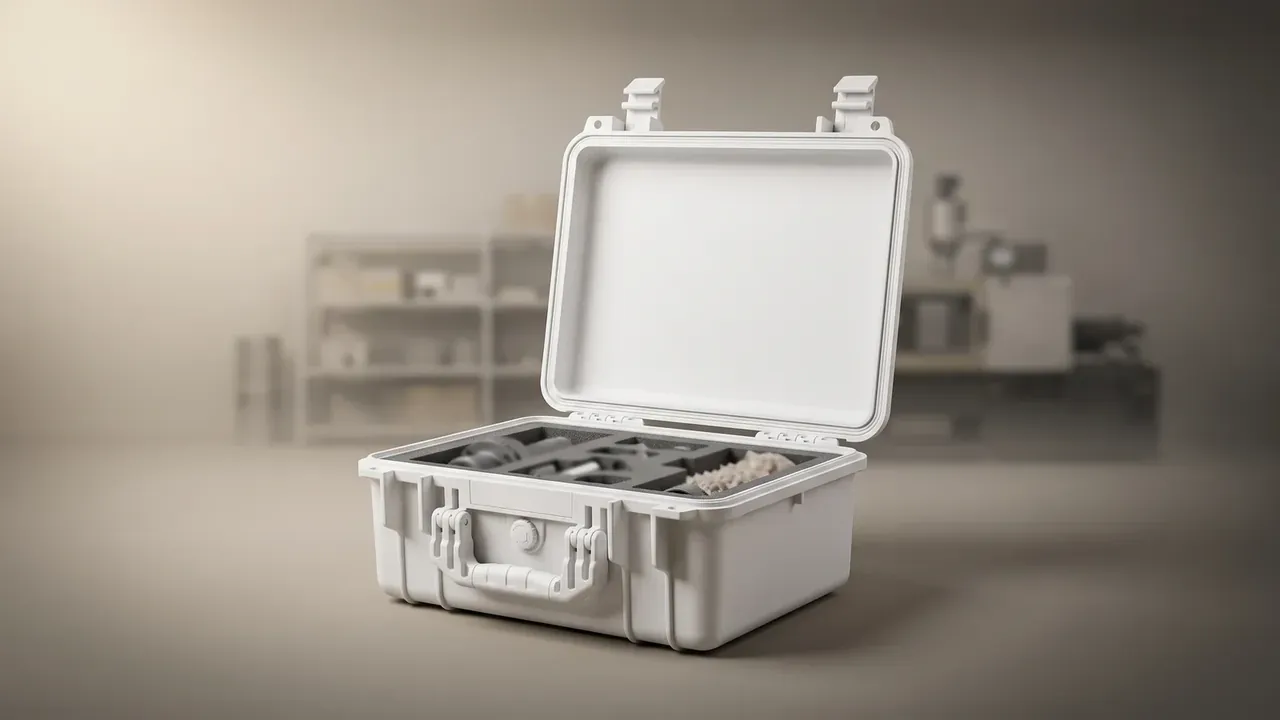
Position matters. Within 25 mm of the lower edge, condensation runs along the gland and inward; higher up, the bend radius has to be respected.
Every gland gets three entries: torque, time, operator number. Miss one and the record is worthless at an audit.
5. Five Things to Look At on a Factory Visit
- Measured values for all six items on the first-article sheet.
- Calibration window of the nozzle and flow meter; a worn 6.3 mm nozzle over-delivers.
- Gasket groove section, width and depth, on a projector.
- Clamp-force logs against the process card, since a 3.2 mm wall needs steady packing.
- Three units from the previous lot, with decay curves.
6. Closing the Loop with Reports and Retained Samples
A report stating a conclusion alone is decoration. Ours carries four curves, two photographs and one grading table.
Three units per lot number of waterproof plastic electrical boxes are kept for 18 months.
Numbers plus a retained sample let both sides retest the same case.
Conclusion
Three rounds are worth running because each leaves data a third party can reproduce. The sheet pins the items, sampling proves the tests, the lot fixes grading. Whether waterproof plastic electrical boxes keep their seal comes down to records this ordinary.
This article discusses only the container (case body) side of specifications and design intent, and does not cover any handling, loading or use of the contents.
Related Reading
- Hard case inspection items
- Airdrop case drop and lashing
- Mould storage and upkeep
- Shell case stacking and sealing
- Case production SOP checkpoints
Related Products
- 8 Series — Gun Cases; Military Equipment Cases; Camera Equipment Cases; Drone Cases; Watch Cases; Knife Cases; First Aid Cases; Electronics Equipment Cases
- WL8-2812 PP Gun Case — model WL8-2812
- All protective cases and toolboxes: 7 series, 158 models