

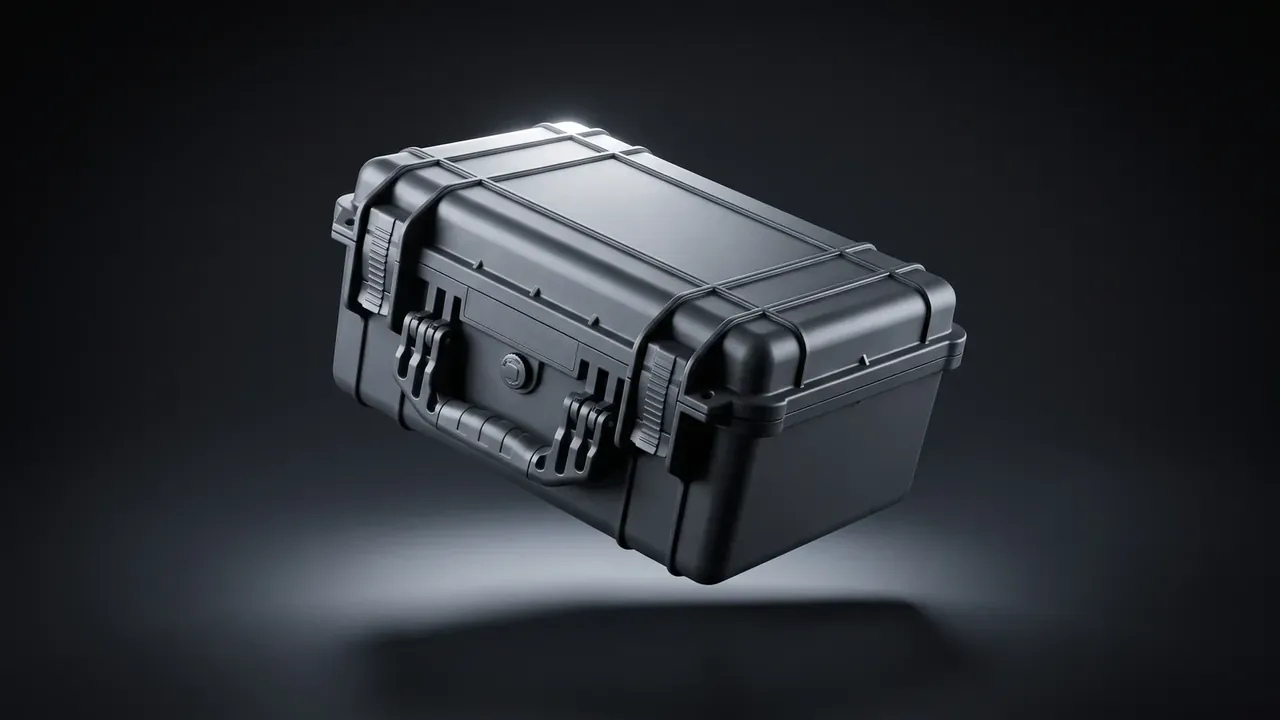
Quick answer: A waterproof plastic equipment case is judged on pressure, not hose time. Hold 15 kPa for 60 seconds with decay under 0.5 kPa, keep gasket compression at 20% to 30%, and prove latch retention above 500 N.
Table of contents
- Why Three Minutes of Hose Water Proves Nothing
- Case and Lid Fit: Six Dimensions That Decide
- Gasket Compression and Groove Size
- Latch Retention and Hinge Life
- IPX4 and IPX7 on the Floor
- Disposition and One Recheck
- FAQ
1. Why Three Minutes of Hose Water Proves Nothing
The common floor habit is to run a hose over a closed case for three minutes and look for droplets. It decides nothing: the jet is under 0.1 bar, comes from one direction, and a gasket with 0.2 mm of compression stops it.
| Floor habit | What is wrong | Replace with |
|---|---|---|
| Hose for 3 minutes | Under 0.1 bar, one direction | 15 kPa, 60 seconds, decay ≤ 0.5 kPa |
| Opening at once | Rim water runs in, reads as a leak | Dry outside, open from the back |
| Front only | Latches and hinge never loaded | Spray four sides and base |
| Droplet hunt | Below 0.05 mL is invisible | Paper inside, weigh, ≤ 0.1 g |
A waterproof plastic equipment case leaks because of pressure, not direction. Closed, a few tens of millibars separate cavity from room, and that gap decides where water goes.
2. Case and Lid Fit: Six Dimensions That Decide
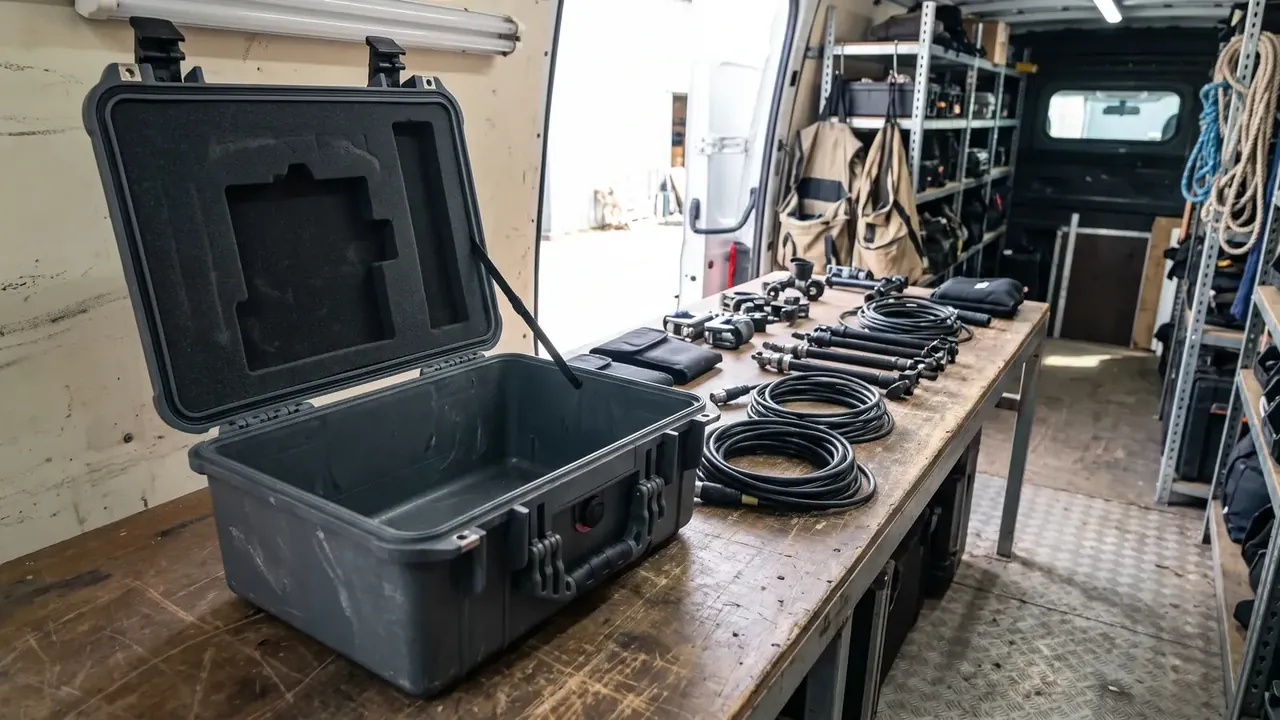
Face pressure seals a case, and it depends on how flat rim and lid meet. Too little overlap and no gasket helps.
| Item | Value | Method |
|---|---|---|
| Cavity | 420 × 320 × 180 mm, ±2 mm | Calipers, three axes, smallest |
| Wall | 3.2 mm, floor 2.9 mm | Ultrasonic, two per side |
| Lid overlap | Not below 6 mm | Feeler gauge, depth rule |
| Rim flatness | Not over 1.5 mm | Plate and feeler, full length |
| Groove width | 6.0 mm, +0.2 mm | Calipers, three points |
| Groove depth | 4.0 mm, ±0.1 mm | Depth rule, off corners |
Overlap is skipped most. A lid gripping 3 mm can shift in one drop and shear the gasket.
3. Gasket Compression and Groove Size
Compression is the heart of a waterproof plastic equipment case seal. The band is 20% to 30%, steadiest near 25%: under 15% nothing is pressed, over 35% the rubber takes a set in heat. A 5.5 mm cord in a 4.0 mm groove gives 1.5 mm of squeeze, about 27%.
| Item | Value | Note |
|---|---|---|
| Hardness | 60 ± 5 Shore A | Three lengths per batch |
| Compression set | 70 ℃, 24 hours, ≤ 25% | Standard platen |
| Cold recovery | -20 ℃, 24 hours, no crack | Refit in 5 minutes |
| Joint strength | Not below 80% of body | Vulcanised ring first |
The joint is the weak point: a vulcanised ring has no seam but costs more; a glued joint goes brittle in cold.
4. Latch Retention and Hinge Life
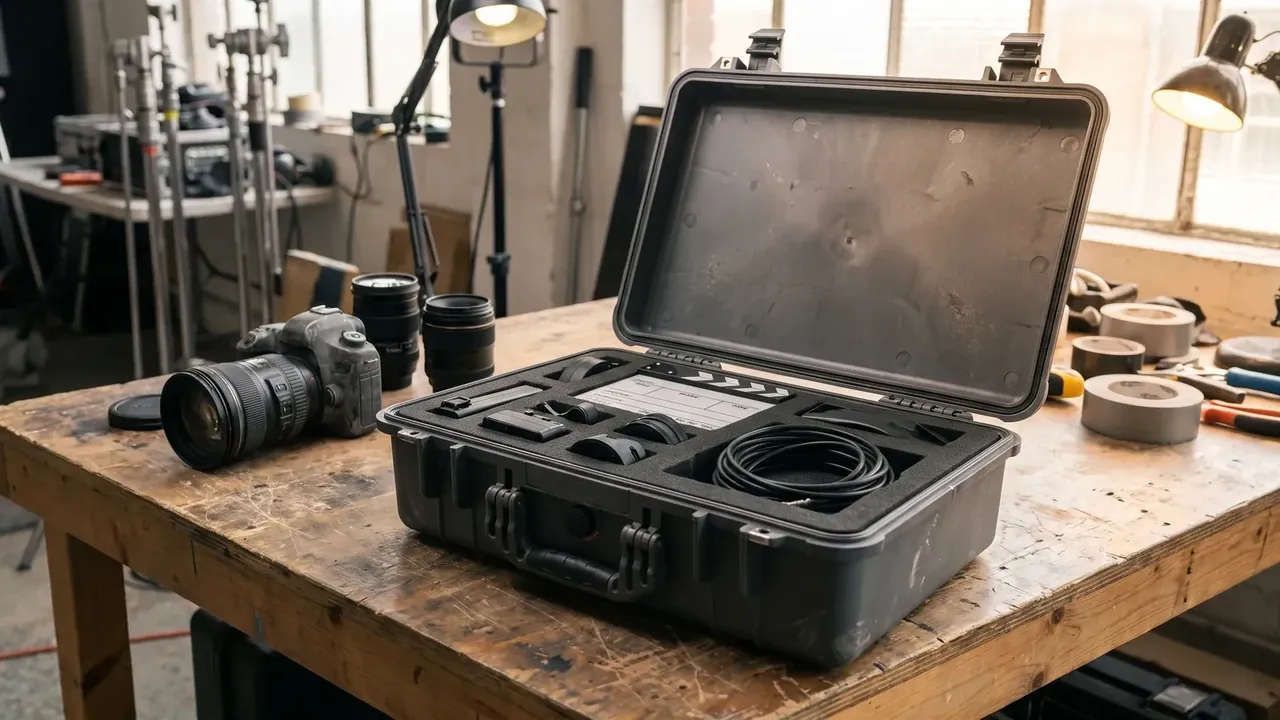
A waterproof plastic equipment case opens constantly, so latches and hinges fail first.
Six checks in order, stop at the first failure:
- Latch retention: pull along opening, three readings, lowest not under 500 N.
- Latch cycling: 3000 cycles, retention loss within 15%.
- Hinge life: 5000 cycles loaded, no pin crack, play under 0.3 mm.
- Handle: twice rated load, 30 minutes, no set.
- Valve: 0.3 bar, 60 seconds, no continuous bubbles.
- Hardware: 72 hours neutral salt spray, rating 9 or better.
The hinge fails first; the latch only follows. Life cycles before retention would let fatigue pose as an initial value.
5. IPX4 and IPX7 on the Floor
IPX4 uses an oscillating tube at 10 L/min, five minutes per side. IPX7 is immersion at 1 m for 30 minutes, highest point 150 mm under. Temperature ruins the first run on any waterproof plastic equipment case: a case moved from a 40 ℃ floor into 15 ℃ water chills trapped air, the cavity pulls a vacuum, and water is drawn in. Timing ruins the second: open a wet case and rim water runs straight in. Lift it out, dry the outside, wait ten minutes. Both errors look like product defects.
Then pull the gasket and read the groove floor: water in the groove only means the seal held; water in both means compression was short.
6. Disposition and One Recheck
Three grades, fixed outcomes.
| Grade | Defect | Disposition |
|---|---|---|
| A | Pressure decay, water inside, latch release | Lot returned, 100% recheck |
| B | Wall under 2.9 mm, compression under 20% | Sample doubled, second failure returns lot |
| C | Colour shift, flash, label offset | Concession, price adjustment |
Grade A has no concession path. Water inside a waterproof plastic equipment case means stripping the gasket and cleaning cured adhesive, which costs more than moulding a new one.
Conclusion
Acceptance of a waterproof plastic equipment case rests on the pressure difference that keeps water out, not the volume poured over it. Write decay, compression and latch force into the sheet, and a waterproof plastic equipment case passes on evidence or fails on it.
This article discusses only the container (case body) side of specifications and design intent, and does not cover any handling, loading or use of the contents.
Related Reading
- Waterproof hard case grades and test conditions
- Structure and test requirements for airdrop cases
- Specification limits for mould storage cases
- Sealing and marking rules for artillery shell boxes
- Standard work documents for case production
Related Products
- 8 Series — Gun Cases; Military Equipment Cases; Camera Equipment Cases; Drone Cases; Watch Cases; Knife Cases; First Aid Cases; Electronics Equipment Cases
- WL8-2812 PP Gun Case — model WL8-2812
- All protective cases and toolboxes: 7 series, 158 models