

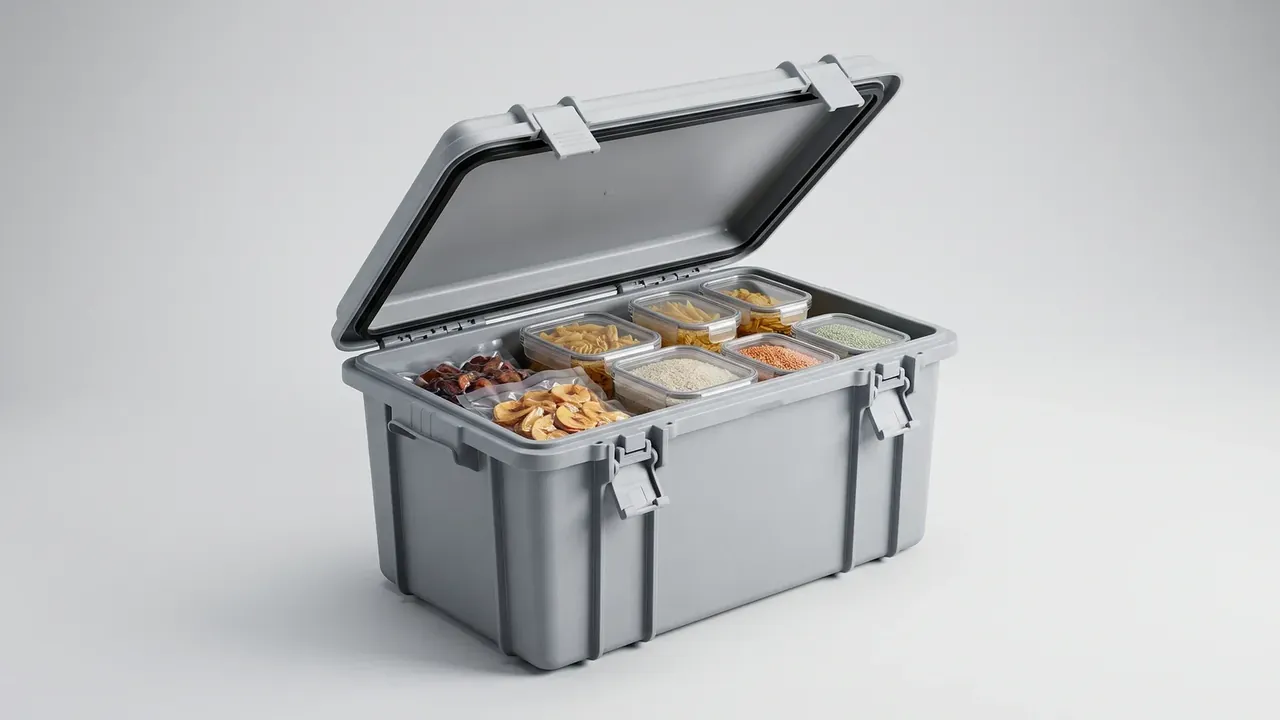
Quick answer: Filling waterproof plastic storage boxes for three days proves very little. A 500 mm water column adds about 5 kPa inward, while stacking and temperature push 20 kPa the other way. Test with vacuum decay, weighing, creep and cycle decay instead.
Table of contents
- Three Misreads Behind the Water-Fill Test
- Pressure Decay Before Weighing
- Stacking Creep and Base Deflection
- Seal Decay Across 3000 Openings
- Grading Rejects and Sampling
- FAQ
1. Three Misreads Behind the Water-Fill Test
Filling the box is the commonest shop-floor habit and the easiest way to certify a bad unit. A 500 mm column gives roughly 5 kPa of static head, pressing outward, while loading and transport push up to 20 kPa inward.
| Common habit | What it measures | What it misses | Replace with |
|---|---|---|---|
| Fill and wait 72 hours | 5 kPa inward to outward | Reverse pressure, gasket rebound | Minus 25 kPa held 90 seconds |
| Squeeze the lid, watch bubbles | Local contact only | Even compression around the rim | Corner impressions within 15 percent |
| Weigh dry box only | Total mass after soaking | Seepage below 0.8 g | Mass before and after soaking |
All three habits share one flaw: they treat visible water as the verdict. Seepage in waterproof plastic storage boxes surfaces in month four as a ring on the base.
2. Pressure Decay Before Weighing
Vacuum first, weighing second. Reversed, water left inside lifts the decay reading and a good unit fails.
Pull the interior to minus 25 kPa, hold 90 seconds, and pass at 0.4 kPa decay or less. That figure equals about 4 metres of water head, covering bilge pooling and roof leaks. Connect the pump at the breather valve; drawing from the latch gap sucks the gasket into the seam.
| Method | Setting | Limit | What it catches |
|---|---|---|---|
| Vacuum hold | Minus 25 kPa, 90 s | 0.4 kPa decay | Gasket contact around the rim |
| Soak and weigh | 500 mm, 30 minutes | 0.8 g gain | Pores and weld lines |
| Re-test after cycling | 3000 openings | 0.6 kPa decay | Seal wear at the hinge |
Do not skip the weighing. Absorbent paper only shows a real leak; 0.5 g of seepage barely marks it, though a balance reads it. Both must agree.
3. Stacking Creep and Base Deflection
Stacking measures creep under sustained load, not short-term strength. Load waterproof plastic storage boxes with 25 kg, stack four high, hold 72 hours at 38 °C, cool two hours, then measure the bottom unit. Height change must stay within 3 mm.
| Condition | Load | Duration | Limit |
|---|---|---|---|
| Four high | 25 kg per unit | 72 h at 38 °C | 3 mm height change |
| Base under pressure | 150 kg spread | 1 hour | 2 mm deflection |
| Side wall point load | 300 N | 10 minutes | No whitening or crack |
Temperature is the variable most often fudged on waterproof plastic storage boxes. Creep at room temperature runs about 60 percent of the 38 °C value.
Once the base deflects past the limit, the box settles on its centre rather than its corners, and gasket compression shifts. Read deflection and decay together.
4. Seal Decay Across 3000 Openings
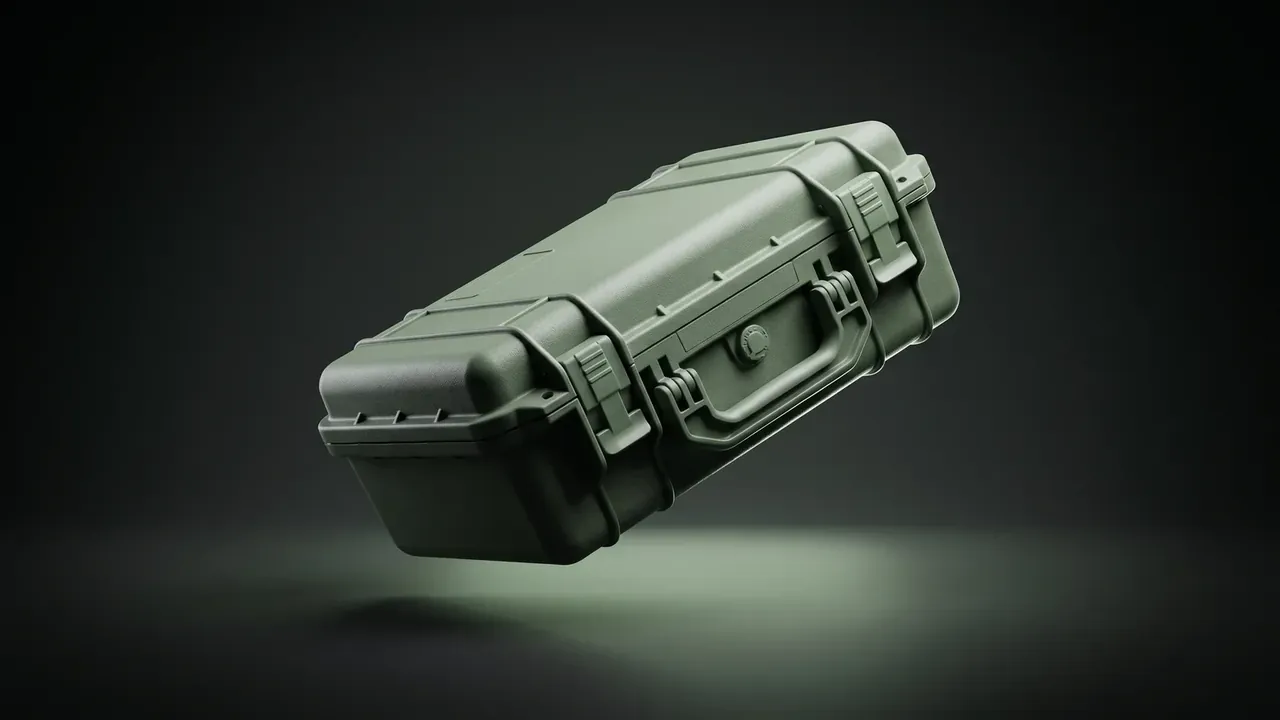
Opening and closing is the loss path unique to storage boxes, and the one new-unit testing never sees. Three thousand cycles is about three years at three openings a day, and 0.1 mm of pin wear moves the lid 0.3 mm sideways. Once the lid shifts, the gasket rolls in its groove and thins at one spot, so decay climbs from 0.25 kPa to 0.6 kPa. At 0.6 kPa the box still holds water, but half the margin is gone. Acceptance of waterproof plastic storage boxes therefore belongs after 3000 cycles, not on a fresh sample. A batch that passes new and drifts later has a gasket material problem, not a structural one. Put the cycle test on the sheet and the gasket moves from regrind to virgin compound.
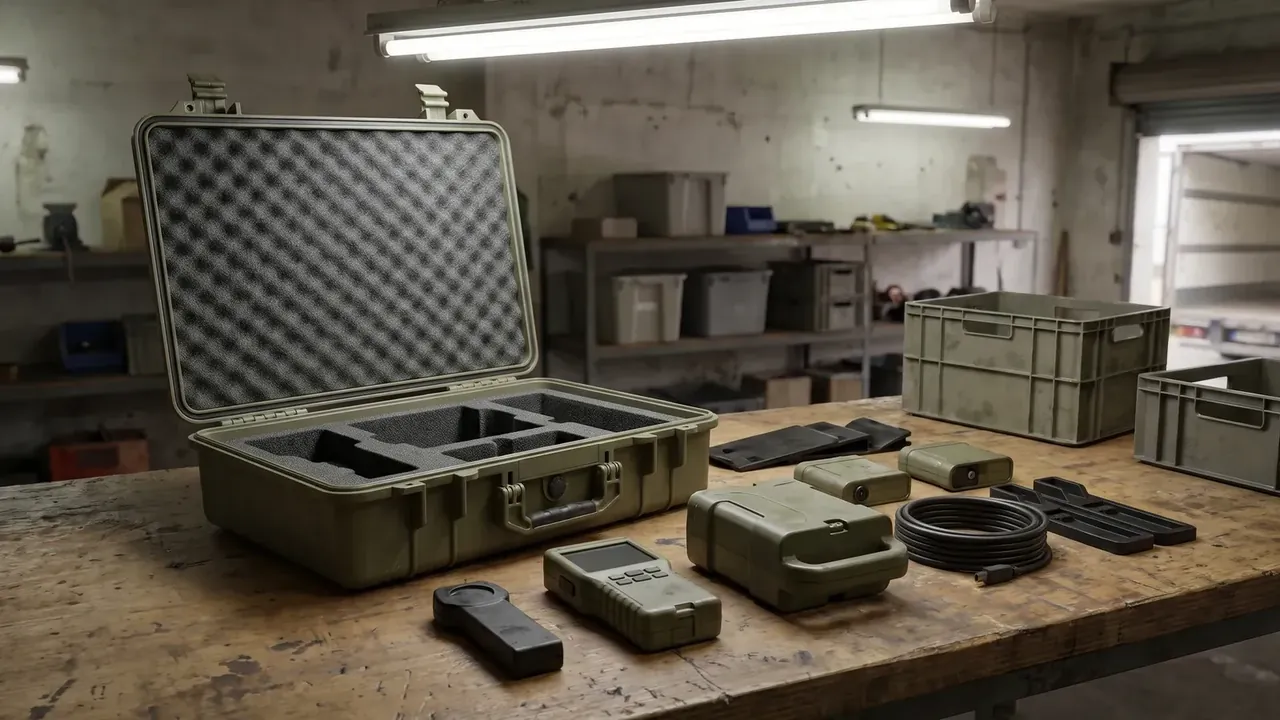
UV ageing only concerns stock kept outdoors. Run 340 nm at 0.76 W/m² for 500 hours, and hold colour shift within 2.5 ΔE.
5. Grading Rejects and Sampling
Not every defect justifies returning a lot of waterproof plastic storage boxes.
- Class A, leakage or cracking: return the lot, no re-inspection after rework
- Class B, decay between 0.4 and 0.6 kPa: double the sample, rework all, retest 100 percent
- Class C, colour shift or wrong marking: written concession, this lot only
- Class D, flash and burrs: trim on site, then re-inspect as Class A
- Sampling: 13 units from a lot of 91 to 150, AQL 4.0 appearance, 1.5 function
- Records: grade, concession number and rework lot filed together
Class C is where control slips. A concession without a lot number simply opens the same argument next month.
Conclusion
The water-fill habit is not wrong so much as backwards, loading the seal at a fifth of the real pressure. Vacuum decay checks contact, weighing catches seepage, stacking exposes creep, and the cycle re-test prices wear. Pass all four and a lot of waterproof plastic storage boxes earns its signature.
This article discusses only the container (case body) side of specifications and design intent, and does not cover any handling, loading or use of the contents.
Related Reading
- Storing and maintaining case moulds
- Foam stock storage and ageing limits
- Rules for munitions shipping and storage cases
- Batch marking rules for ammunition boxes
Related Products
- 8 Series — Gun Cases; Military Equipment Cases; Camera Equipment Cases; Drone Cases; Watch Cases; Knife Cases; First Aid Cases; Electronics Equipment Cases
- WL8-2812 PP Gun Case — model WL8-2812
- All protective cases and toolboxes: 7 series, 158 models