

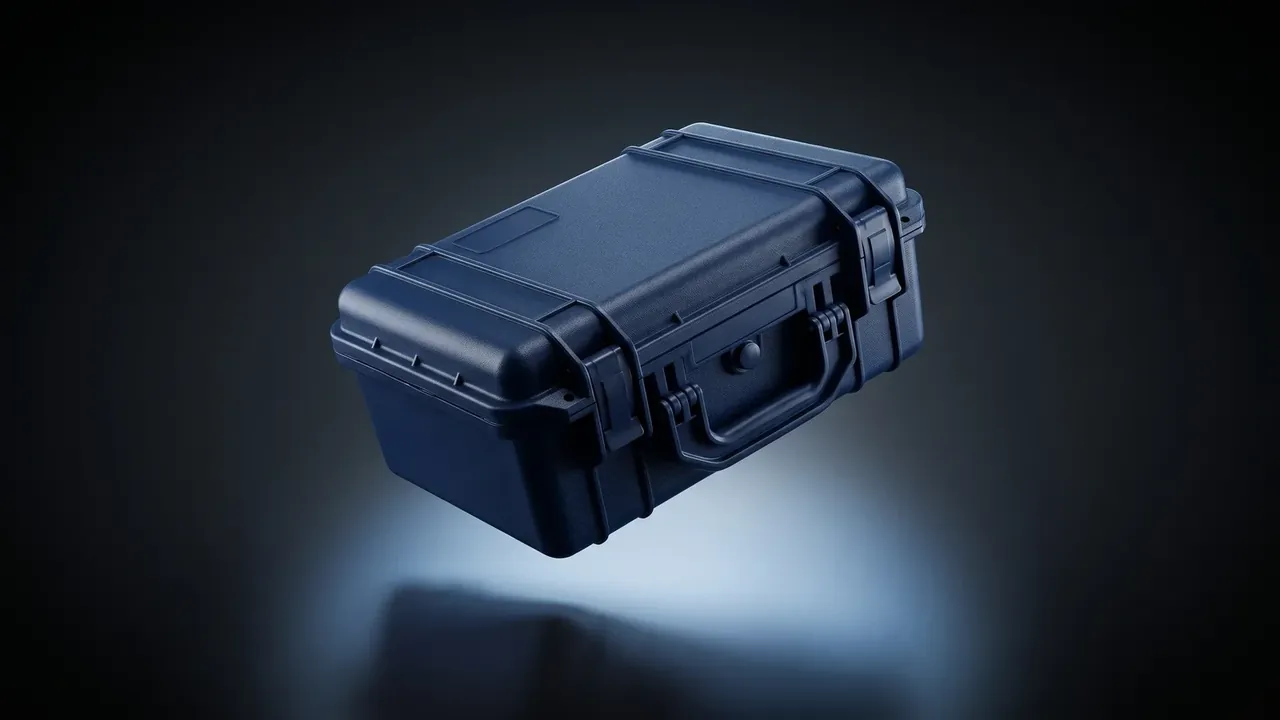
Quick answer: A Weapon Storage Cabinet is better serviced by door cycles than by the calendar: under thirty openings a day go quarterly, thirty to eighty monthly, above eighty every two weeks, and each visit measures six dimensions and checks four wear parts.
Table of contents
- Setting the Interval by Door Cycles
- Body and Frame: Six Dimensions Every Quarter
- Locking and Hinges: Cycles Beat Calendars
- Gasket, Liner and Castors: Four Replacement Lines
- A Quarterly Checklist You Can Print
- Repair or Replace: Three Sums
- FAQ
1. Setting the Interval by Door Cycles
One depot logged ninety days across forty-two cabinets: a site average of forty-seven openings a day, and one unit beside the duty-room door at a hundred and sixteen. Servicing all of them in the same annual shutdown month meant borrowing cabinets to keep the store working; spreading the same workload evenly across twelve months gave the busiest unit the same hours as one opened nine times a day.
That is how wear gets misallocated. A Weapon Storage Cabinet spends its life at the hinge pin, the bolt and the gasket, and all three track openings rather than months. Put the interval on cycles and the labour lands where the metal is actually moving.
| Band | Openings a day | Typical location | Inspection | Deep service |
|---|---|---|---|---|
| Low | up to 30 | Reserve store, sealed store | Quarterly | Once a year |
| Medium | 31 to 80 | Duty point, training store | Monthly | Every two years |
| High | above 80 | Duty room, issue window | Fortnightly | Once a year |
| Damp | any | Coast, basement, no dehumidifier | Monthly plus quarterly rust check | Twice a year |
The damp band stacks on top of the others rather than replacing them. A cabinet opened forty times a day in a basement store is inspected monthly as a medium-cycle unit and gets one extra rust inspection each quarter; running it on the damp band alone would hide the hinge wear that comes from frequent use.
No software is needed to keep the count. Tape a thirty-box card inside the door, mark a box per opening, swap the card when it fills and have the storekeeper collect it monthly. Thirty seconds a shift, and far harder to fake than a spreadsheet.
2. Body and Frame: Six Dimensions Every Quarter
Three tools cover it: a 300 mm steel rule, a feeler set from 0.02 to 1 mm, and a 5 m tape. Together they cost less than a single replacement lock, and one set per store lasts a decade.
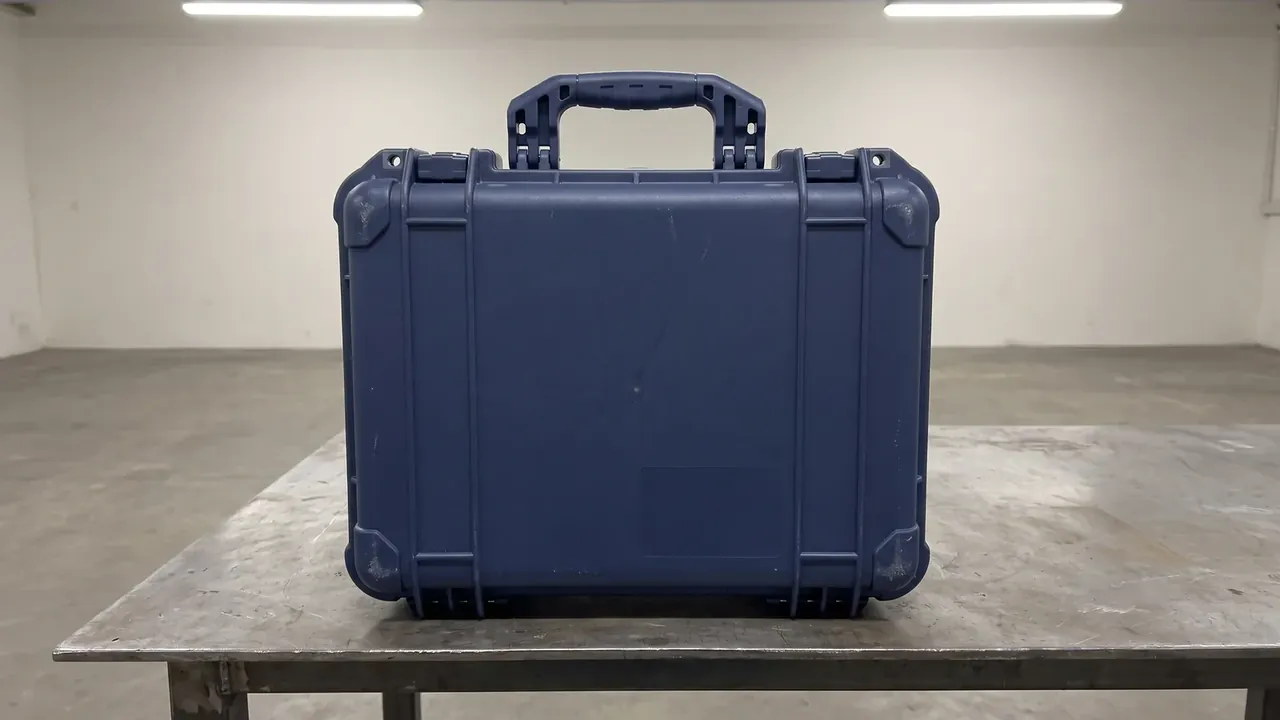
Start with the door skin. The unit in the photo already carries a haze of fine scratches, which is ordinary handling; what matters is whether a scratch has gone white at the bottom, because that means the coating has worn through and the substrate is exposed. Drag a fingernail across it and the resistance changes abruptly. Once the coating is broken, moisture enters at the edge, rust starts on the far side, and by the time a blister shows on the outside the sheet has already lost thickness.
Measure in a fixed order so two sets of readings can be compared:
- Door gap at four points, top, bottom, left and right: 0.5 to 1.5 mm is normal, and more than 1 mm difference top to bottom means the door has dropped.
- Door sag: open to 90 degrees, measure the free lower corner against the frame; the increase since the last reading should stay under 2 mm.
- Hinge pin clearance: a 0.3 mm feeler should not enter between pin and bush. Two consecutive visits where it does means a new pin.
- Diagonal difference: no more than 3 mm between the two diagonals, and a change of more than 2 mm from the delivery figure means the body has twisted and no hinge adjustment will fix it.
- Body plumb: a plumb line against the face, top offset within 3 mm per metre.
- Anchor torque: 25 N·m on M8, 45 N·m on M10, re-torqued quarterly, including the anti-tip bracket bolts.
The first four tell you whether the door can still be adjusted; the last two tell you whether the cabinet is still standing where it was installed. Gap and sag are the sensitive pair: 0.1 mm of pin wear opens the free edge by roughly 0.6 mm, which no eye will catch and a rule will.
3. Locking and Hinges: Cycles Beat Calendars
Bolt projection is measurable and should be measured. A new bolt reaches 12 mm past the door edge into the frame; at 9 mm only a third of the engagement is left, and a pry bar will walk the door open in two strokes. Hold a steel rule against the door edge with the lock closed and the figure is visible without dismantling anything.
Three-point linkage sync is the item people skip. One lock drives an upper and a lower rod, and once the rods are more than 2 mm out of step the leading bolt lands first, the remaining two are forced home by bending the door, and the closing action feels heavy. Users blame the gasket. The fix is to slacken the rod clamps on the inside face, back all three bolts to half travel, push them home together, then tighten.
Lubricant choice decides how long a lock lasts. Graphite powder, a small puff twice a year, is enough; oil and penetrating sprays turn the dust inside the cylinder into paste and the key gets stiffer within three months. Hinge pins take lithium grease every six months, a thin film only, since a thick coat collects grit and grinds faster. Gaskets take silicone oil or talc and must never see mineral oil, because the rubber swells and the door stops seating within half a year.
Key control belongs to maintenance, not only to security. Keep three levels apart, and test the spare quarterly, because many depots discover on the day the lock fails that the spare no longer enters the cylinder: the pins have rusted in place. Insertion force above 15 N is the signal to clean the cylinder.
Across a year the rhythm is modest: dimensions quarterly, lock check monthly, lubrication twice. That is about 3.5 hours per Weapon Storage Cabinet, roughly half an annual overhaul, and it surfaces a failing part three to five months earlier. The expensive event was never the service visit; it was the morning the door would not open, with a locksmith to call, a cabinet to borrow and a register to rewrite.
4. Gasket, Liner and Castors: Four Replacement Lines
Gasket ageing is a compression question, not an age question. A new seal is pressed to about thirty percent and springs back; once it only recovers to fifteen percent it stops following the frame and the gap appears at the corners. Measure thickness before and after closing, and replace when the ratio falls under 85 percent. Winter readings are more honest, because cold rubber is stiff to begin with.

The yellow seal around the rim in the photo is the cheapest part of the whole assembly and the easiest to postpone. Its failure raises no alarm, it simply lets humidity climb until white rust appears on the back of a shelf, and by then a wet season has passed.
| Wear part | Measure | Replace at | Expected life | Note |
|---|---|---|---|---|
| Door gasket | Compression ratio | under 15% | 3 years | Silicone oil, never mineral oil |
| Lock cylinder | Key insertion force | above 15 N or 20,000 cycles | 5 years | Graphite, no oil |
| Hinge pin | Bush clearance | above 0.3 mm | 6 years | Pin only, keep the door |
| Castor | Tread worn flat | above 1.5 mm | 4 years | Derate load to one third |
| Shelf bracket | Mid-span deflection | above 5 mm | load dependent | Reweld or replace |
Castors get swapped as consumables more casually than anything else on the cabinet. Cheap wheels use regrind tread, and once 1.5 mm is gone the rolling resistance doubles, so people start shouldering the cabinet along, the body takes a side load and the frame distorts. Change the whole castor assembly, not just the wheel; a new wheel on a tired bracket starts growling within three months.
Foam liners sit on a cleaning schedule rather than a replacement one. Lift dust out of the pockets with a soft brush and a vacuum, never with water, because a saturated liner gains density, loses rebound and keeps the imprint of whatever was pressed into it. When the pocket walls start shedding powder the material has broken down, and a new liner costs a fraction of a new cabinet.
5. A Quarterly Checklist You Can Print
One column per cabinet number, twelve units to a sheet, with signature boxes for the person who measured and the person who checked. The verdict column takes numbers only; words like fine or good tell you nothing when you read the sheet a year later.
| No. | Check | Tool | Limit | Action if exceeded |
|---|---|---|---|---|
| 1 | Door gap, four points | Feeler gauge | 0.5 to 1.5 mm | Adjust hinges |
| 2 | Door sag | Steel rule | Rise under 2 mm | Replace hinge pin |
| 3 | Bolt projection | Steel rule | 9 mm minimum | Replace lock body |
| 4 | Three-point sync | Feeler gauge | Within 2 mm | Adjust rod clamps |
| 5 | Gasket compression | Caliper | 15% minimum | Replace gasket |
| 6 | Body rust spots | Eye and fingernail | Under 25 mm² each | Sand and touch up |
| 7 | Anchor bolts | Torque wrench | 25 or 45 N·m | Re-torque and log |
| 8 | Castor rolling | Force gauge | Under 30 N to push | Replace castor set |
The 25 mm² figure in row six is a working threshold, roughly the face of a small coin. Below it, sanding back to bare metal and one coat of matching paint will hold; above it, especially on a weld or a frame corner, the corrosion is travelling from the inside and paint only flattens the surface for a season.
Keep completed sheets for three years. That span covers one gasket cycle and one castor cycle, and reading back shows whether a particular cabinet number exceeds the same limit every year. When it does, the fault is not in the servicing but in where that unit stands or how it is used.
6. Repair or Replace: Three Sums
First, cost: once annual repair on one unit passes 8 percent of a new cabinet price, start pricing replacements. The figure is not arbitrary; it approximates the yearly cost of a new cabinet written down over twelve years, and beyond it you are paying interest on old steel.
Second, structure: through-wall corrosion, a frame twisted more than 3 mm, or sheet tearing around a hinge seat. Any one of the three rules out repair. Sheet metal can be straightened, but the stress has already been released at the bend and the next distortion arrives sooner.
Third, parts: a discontinued lock, a gasket with no equivalent profile, a shelf bracket that needs new tooling. Once any of those is true, the remaining service life of that Weapon Storage Cabinet is being decided by a parts catalogue rather than by the cabinet.
Where none of the three applies, keep repairing. The outcome to avoid is the half-finished job with no spare available, door off for two months and a storage gap that has to be covered some other way.
Conclusion
Care for a Weapon Storage Cabinet is really the conversion of an annual overhaul into cycle-based inspection: intervals that follow openings, six measurements per visit, and replacement decided by compression, clearance and tread depth rather than by opinion. The routine costs a store under forty labour hours a year, and what it buys is a door that always opens, a bolt that always turns, and rust that stays inside the size of a coin. The difference between two depots is rarely the cabinet they bought; it is whether somebody walks the aisle each quarter with a feeler gauge.
This article discusses only the container (case body) side of specifications and design intent, and does not cover any handling, loading or use of the contents.
Related Reading
- Weapon Storage Cabinet specifications
- Rust removal and repainting cycles for steel tool chests
- Judging ageing and repair on rotationally moulded bodies
- Preventing impact damage in store
Related Products
- 8 Series — Gun Cases; Military Equipment Cases; Camera Equipment Cases; Drone Cases; Watch Cases; Knife Cases; First Aid Cases; Electronics Equipment Cases
- WL8-2812 PP Gun Case — model WL8-2812
- All protective cases and toolboxes: 7 series, 158 models