

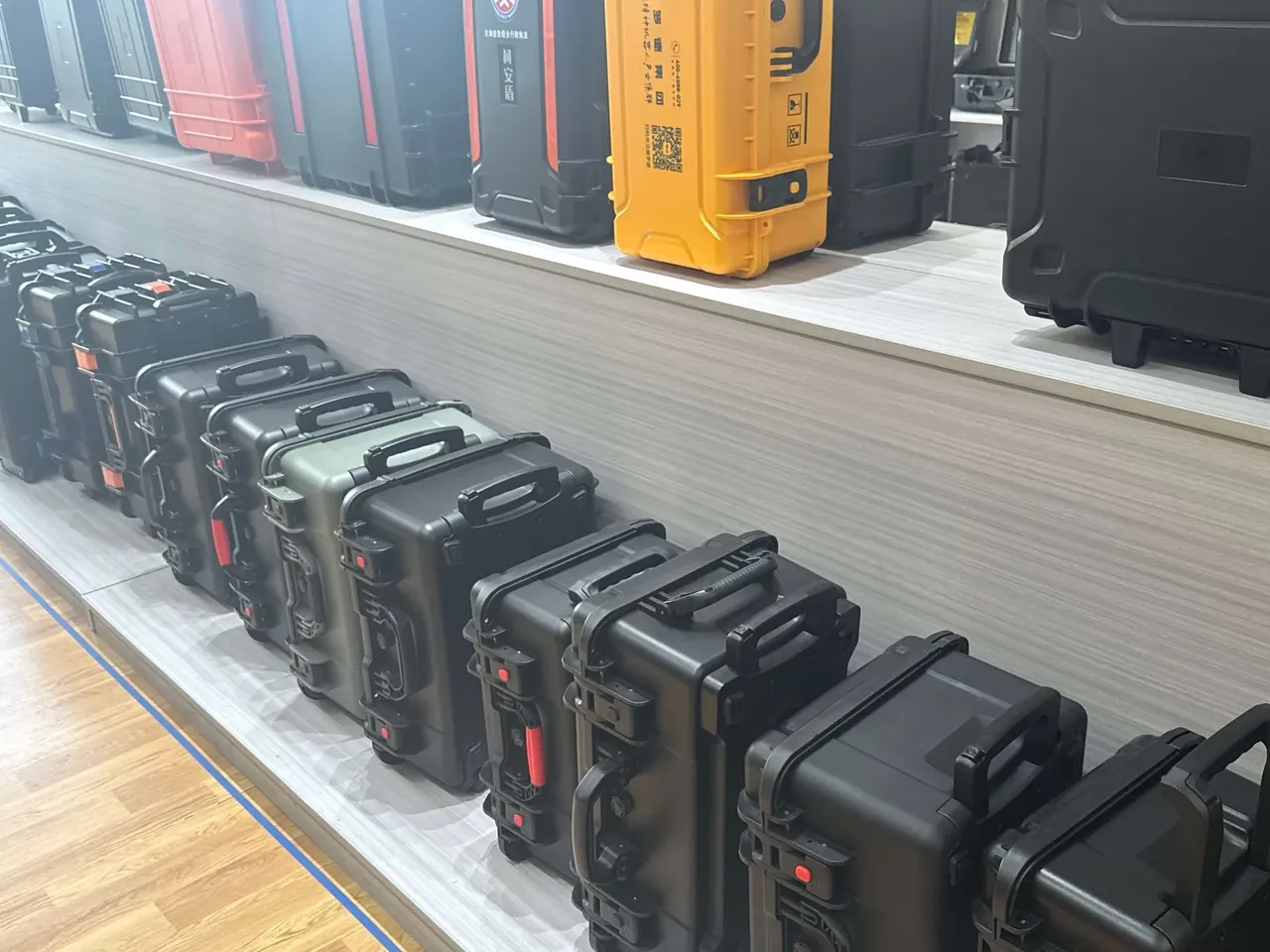
Quick answer: The first move on case wheel noise is not to pull the wheel but to change the floor: one case reads 62 dB at 1.0 m/s on epoxy and 78 dB at the same speed on Ra 6.3 concrete, and all 16 dB belongs to the floor.
Table of contents
- Two branches: noise that follows the floor or the case
- Lifting the wheels off the ground
- Pulling a wheel and listening to 608ZZ
- Re-testing on rough ground
- FAQ
1. Two branches: noise that follows the floor or the case
Case wheel noise has only two sources: one follows the floor and disappears on a smooth surface, the other follows the case and sounds the same everywhere. The split needs no tools, just two runs.
Hold the conditions fixed: push at 1.0 m/s, measure 1 m from the case and 0.5 m above the floor, A-weighted. Run the same case with the same load over epoxy, then over concrete, and read both numbers. A gap above 8 dB puts the fault on the floor.
The 62 dB and 78 dB gap comes out of the wheel diameter. An 80 mm wheel rolls 251 mm per turn, and on Ra 6.3 concrete it climbs two to three asperities per revolution, which throws impacts into the 100 to 400 Hz band, right where the ear is most sensitive. | Sound | Main band | With speed | With 40 kg load | First read |
| Steady hiss | 2–4 kHz | Rises linearly | Barely moves | Dry bearing or worn race |
|---|---|---|---|---|
| Periodic click | Tied to rotation | Rate doubles | Gets louder | Race dent, debris, chipped tread |
| Low rumble | 90–200 Hz | Little change | Clearly louder | Rough floor or hollow tile |
A description never points at a part; the frequency does.
Order checks by cost: floor re-test 2 min, lift and spin 5 min, pull the wheel 8 min. Most case wheel noise is settled in the first two.
2. Lifting the wheels off the ground
Lift the case onto two 50 mm timber offcuts so the wheels hang 10 mm clear, then push it so they spin about three turns at roughly 1 s each, and listen close to the hub.
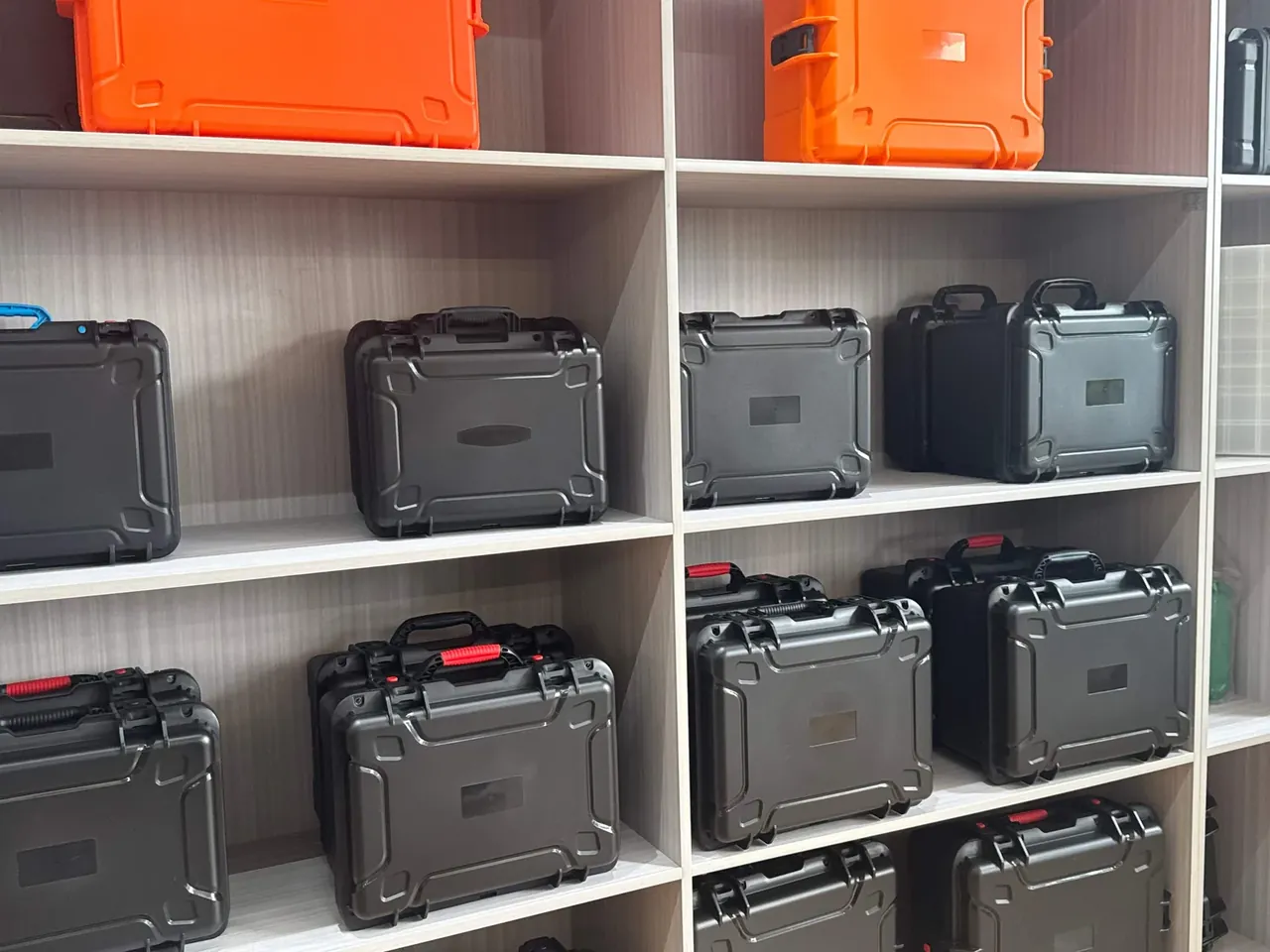
Still noisy in the air means the wheel itself; quiet in the air means the floor, or something stuck to the tread. One detail decides accuracy: let the case weight press on the axle while it spins, because a bearing held in the hand does not behave like one under 40 kg.
Airborne, only two sounds are left. A steady hiss comes from metal rubbing after the grease is gone. A click once per revolution comes from a dent in the race or grit pressed into it.
Lateral play is measured by pull: refit the wheel on the axle and push it up and down. Past 0.3 mm of travel the wheel is replaced, because that play turns into the low rumble inside the 78 dB reading, and the wheel slaps the axle twice per turn.
Lifting takes 5 min and removes 80% of the wheel pulling that follows. Record the baseline reading on the original floor first, then listen with the wheels in the air; the two numbers split the account for case wheel noise before any part is touched.
3. Pulling a wheel and listening to 608ZZ
Spin the removed wheel: dry hiss, periodic click, and a wheel that spins freely on the bench but rattles once back on the case.
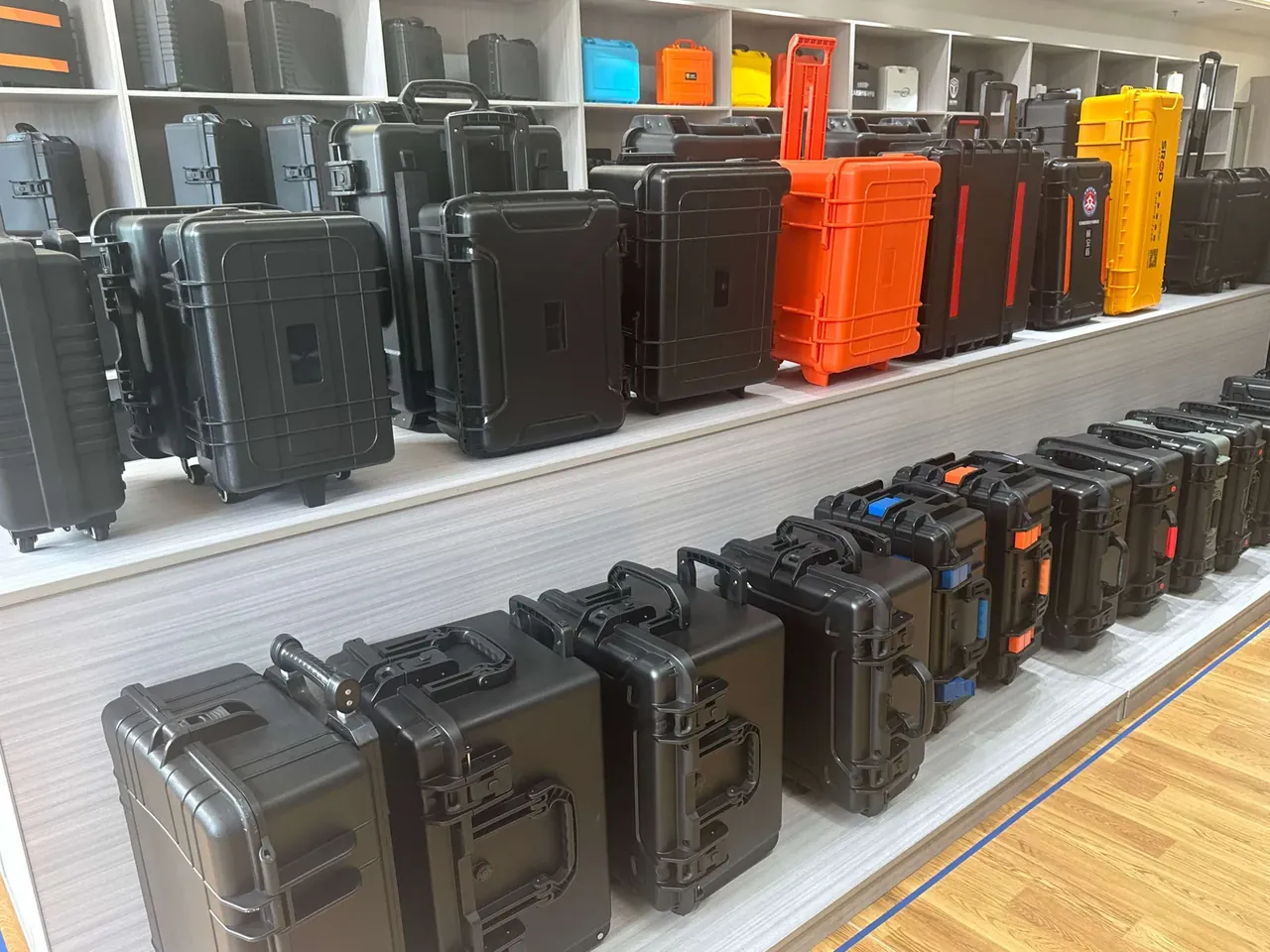
The first is missing grease. A 608ZZ measures 8 mm bore, 22 mm outside and 7 mm wide, ships with 2 g of grease and lasts about 2 years in normal use. Once cleaner or water has washed that grease out, 20 min of dry running is enough to cut a 0.01 mm groove into the race, and no amount of fresh grease brings it back.
The second is race damage. The click locks to rotation, gets denser as the case goes faster, and grease will not help; the wheel is replaced.
The third is the one people miss: smooth on the bench, noisy on the case, usually a loose axle-to-hub fit or a bent bracket, checked in the same pass.
Replacement takes 8 min: two fixing screws out, old wheel off, old grease wiped from the axle, new wheel on, three hand turns to confirm silence. One wheel costs 18 yuan, a case carries four, so a full set runs 72 yuan against three days of factory return.
Greasing helps only before the groove appears: a wheel noisy for two weeks drops about 3 dB, but the play stays and the noise returns inside a month. Write the greasing date on the case label and the return interval for case wheel noise becomes a record.
4. Re-testing on rough ground
A floor re-test measures how many decibels the floor contributes: same case, same load, same speed, one variable changed.
Epoxy sits near Ra 0.8 and concrete near Ra 6.3, almost eight times rougher. An 80 mm wheel is close to pure rolling on Ra 0.8 and lands a series of impacts on Ra 6.3, which is where the 16 dB comes from.
| Floor | Ra | No load | 40 kg | Note |
|---|---|---|---|---|
| Epoxy | 0.8 | 62 dB | 70 dB | Few joints, rolling |
| Concrete | 6.3 | 78 dB | 86 dB | Dense asperities, impact |
| Short carpet | — | 55 dB | 61 dB | High band absorbed, low band stays |
Load adds on top: 62 dB at 12 kg empty, 70 dB at 40 kg, exactly 8 dB more. A customer who says the case only rumbles once packed is hearing the floor amplified.
Point placement matters more than the meter: moving the microphone from 0.5 m to 1.2 m high changes the reading by 4 dB, from 1 m to 0.3 m away by 9 dB, so both distances belong in the record.
Diameter and obstacles trade off: an 80 mm wheel gains 6 dB at a 5 mm joint yet still climbs a 10 mm step, while a 50 mm wheel is quieter at joints but must be lifted over steps.
Short carpet reads 55 dB because the high band is absorbed while the low rumble stays, the dull thud a warehouse worker reports. Push three passes and take the median; the first starts from rest and reads 2 dB high.
Conclusion
Work the three steps in order: floor re-test, 2 min, same speed on epoxy and concrete, a gap under 8 dB clears the floor; lift and spin, 5 min, 10 mm of air, silence in the air puts the fault back on the floor or the tread; pull the wheel, 8 min, hiss means grease, click means race damage, smooth-on-the-bench means axle or bracket fit. Two actions remain: past 0.3 mm of play, replace the wheel at 18 yuan, 72 yuan per case, 8 min of work; under 0.3 mm with only a hiss, add 2 g of grease and re-test. Write the 62 dB and 78 dB readings into the service record, so the next case wheel noise on the same floor starts with the ground, not with a pulled wheel.
This article discusses container-side specifications and design implications only, and does not cover any handling, loading or use of the contents.
Related Reading
- Wheel bearing service and replacement intervals
- How wheels and the trolley handle work together
- Daily maintenance for wheeled protective cases
- Wheel material, load and wear
Related Products
- 8 Series — Gun Cases; Military Equipment Cases; Camera Equipment Cases; Drone Cases; Watch Cases; Knife Cases; First Aid Cases; Electronics Equipment Cases
- WL8-2812 PP Gun Case — model WL8-2812
- All protective cases and toolboxes: 7 series, 158 models