

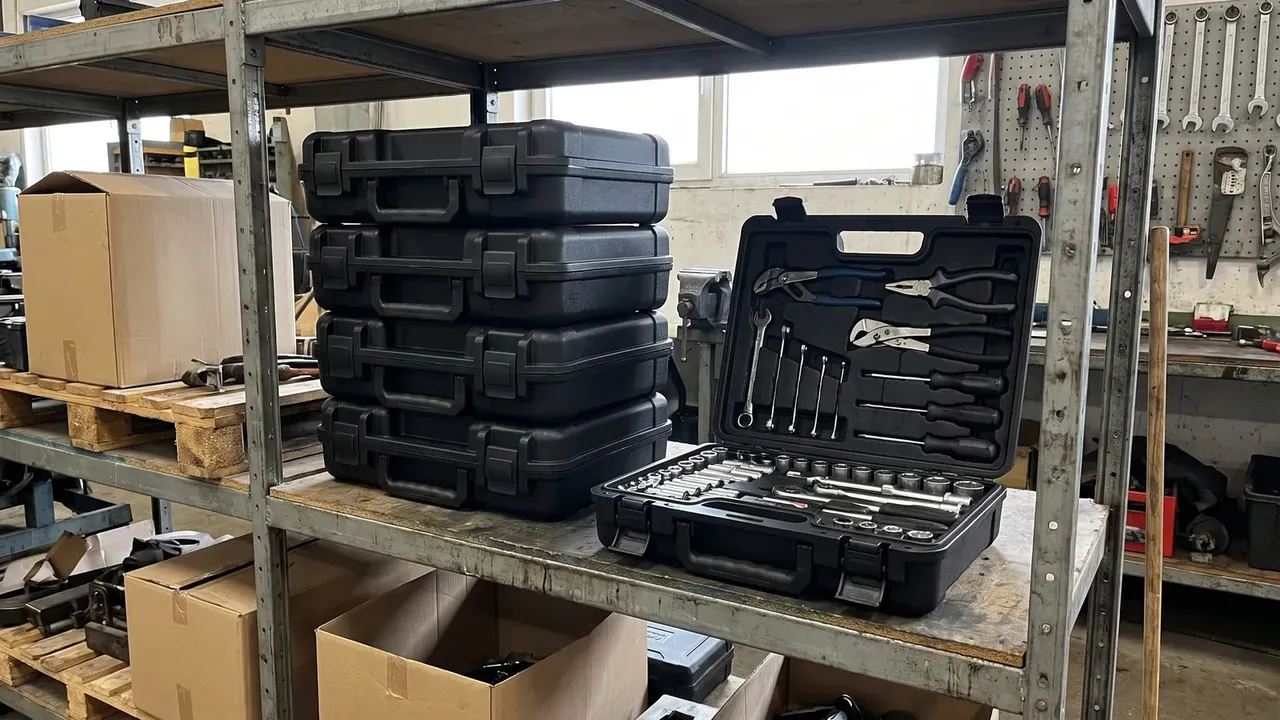
Quick answer: Wind power maintenance engineer tool box cuts 24 slots in 45 kg/m³ EVA across 2 zones for 3.0 s blind picks and 0.8 mm wall collapse at a 1.2 m drop.
Table of contents
- One-hand opening rhythm of a Wind power maintenance engineer tool box
- 45 kg/m³ EVA cut into 24 slots across 2 zones
- A 2.5 mm slot chamfer and blind-pick feel
- Holding 3.0 s per pick across 4000 cycles
- Wall collapse at 0.8 mm and latch checks after a 1.2 m drop
- FAQ
1. One-hand opening rhythm of a Wind power maintenance engineer tool box
Start by splitting the rhythm into two timed moves: one hand lifts the lid to a fixed angle, then a part is taken out or dropped back without looking into the slot. The first move is set by latch and hinge damping, the second by slot depth and chamfer. Both live on the case and its insert.
The dimensions bound that rhythm. A Wind power maintenance engineer tool box measures 640 x 440 x 210 mm outside, 585 x 385 x 165 mm inside, with 3.9 mm walls, 5.8 kg empty and 15 kg rated load. A 165 mm cavity means slots cannot be too deep or fingertips lose the floor. A stiff shell keeps the mouth from twisting when the lid is flicked open one-handed.
2. 45 kg/m³ EVA cut into 24 slots across 2 zones
The insert is 45 kg/m³ EVA cut into 24 slots. A Wind power maintenance engineer tool box splits those 24 slots into 2 zones by frequency: the high-frequency zone near the hinge side with wider mouths, the low-frequency zone further back with tighter forms. 45 kg/m³ keeps slot walls standing after 4000 picks yet soft enough for a blind reach.
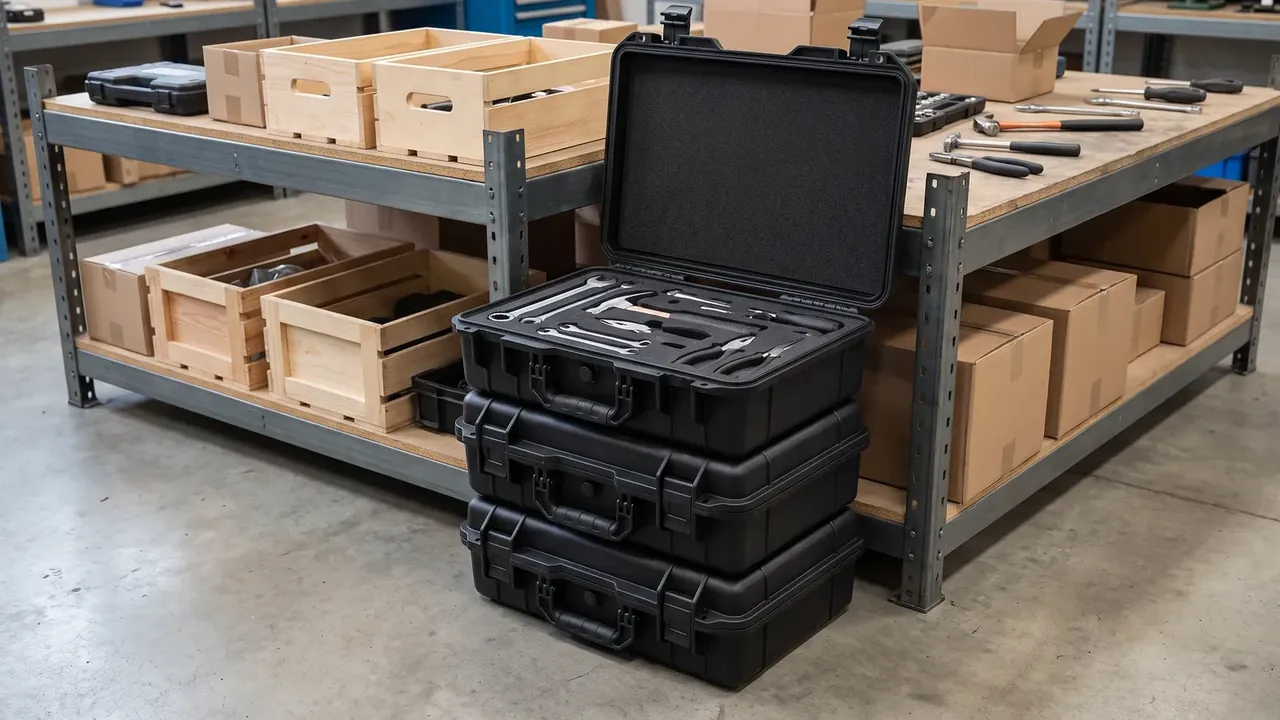
Zoning shortens the blind path. The high-frequency slots of a Wind power maintenance engineer tool box run in one row along the opening arc, so the hand never crosses the whole insert; low-frequency slots stack into a second row. All 24 slots keep the same spacing allowance for the 2.5 mm mouth chamfer.
| Pick-frequency zone | Slot form | Cycle value |
|---|---|---|
| High-frequency, hinge side | Wider mouth, single row | 3.0 s or less per part |
| Low-frequency, far side | Tighter form, second row | 3.0 s or less per part |
45 kg/m³ and 24 slots are the floor of the rhythm.
3. A 2.5 mm slot chamfer and blind-pick feel
A 2.5 mm mouth chamfer makes a blind pick feel certain. If the slot edge of a Wind power maintenance engineer tool box were cut square, fingertips would have to line up every time; the 2.5 mm bevel lets the part slide to the floor on its own. The bevel touches only the mouth surface, so the 45 kg/m³ EVA walls stay intact.
One-hand opening and blind picking share one geometry. The lid of a Wind power maintenance engineer tool box holds its angle without springing back, which frees the hand to find a slot; latch travel and hinge damping are matched to that angle so lift force barely drifts across 4000 picks.
| Slot form | Structural constraint | Acceptance value |
|---|---|---|
| Mouth bevel | 2.5 mm chamfer, depth unchanged | Part slides into slot |
| Slot wall | Single 45 kg/m³ EVA sheet | No collapse at 4000 picks |
4. Holding 3.0 s per pick across 4000 cycles
The 3.0 s figure must still hold after 4000 picks. A Wind power maintenance engineer tool box times the check at the end of life: the first 1000 picks run slightly slow, readings settle after bedding in, and if walls collapse near 4000 the part rattles and the pick slows again.
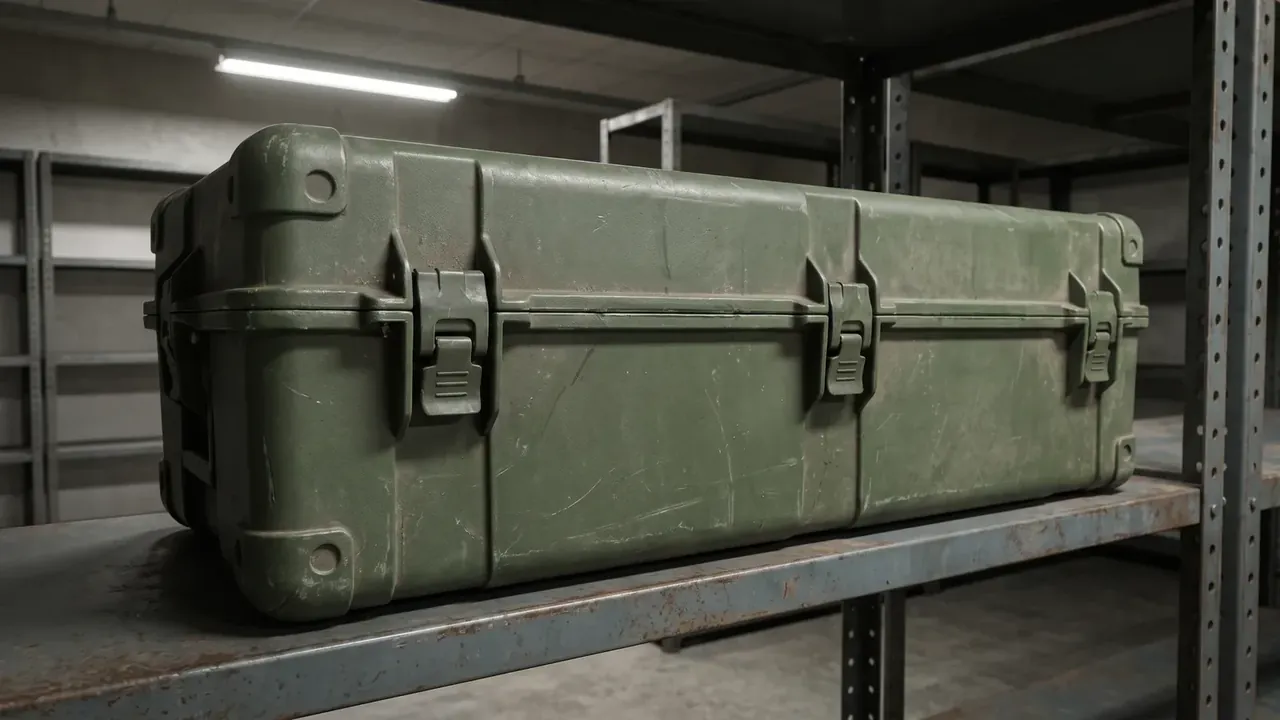
So the criterion is wall collapse at 0.8 mm or less after a 1.2 m drop. A Wind power maintenance engineer tool box treats the drop as one extreme pick: with 15 kg aboard, if a wall caves past 0.8 mm the fingertip must find the edge again and the 3.0 s rhythm breaks. The latches must stay engaged too.
| Cycle value | Object | Condition |
|---|---|---|
| Pick at 3.0 s or less | Any of 24 slots | At end of 4000-cycle life |
| Wall collapse at 0.8 mm or less | Slot wall | After 1.2 m drop |
5. Wall collapse at 0.8 mm and latch checks after a 1.2 m drop
The opening hardware is checked by load. A Wind power maintenance engineer tool box carries 2 handles each rated 430 N, with seats moulded into the shell so a one-hand carry cannot skew the mouth. Latches staying shut after a 1.2 m drop is the precondition for the 0.8 mm wall-collapse limit, since a loose lid leaves the insert to absorb the impact alone. IP66 covers dust and water-jet conditions, the operating range is -20 to 55 C, and the drop leaves the shell uncracked.
Read as one rhythm part, a Wind power maintenance engineer tool box ties five quantities together: insert density, chamfer, zoning, hinge damping and drop margin. Change density and wall rebound moves. Change the chamfer and slide-in feel moves. Change zoning and hand travel moves. Change damping and the one-hand lift pause moves. Change drop margin and the end-of-life reading moves. JUNZHIJIA times all 24 slots at sample stage, and every lot is checked against the same rhythm card so a 3.0 s reading compares across batches.
Conclusion
A Wind power maintenance engineer tool box turns one-hand opening and blind picking into timed specifications: 45 kg/m³ EVA, 24 slots in 2 zones, a 2.5 mm chamfer, 3.0 s per pick over 4000 cycles, and 0.8 mm wall collapse after a 1.2 m drop. These figures hold each other in check, so counting slots or quoting density alone will not protect the rhythm. Reading each value off one card beats comparing slot counts.
Related Reading
- Pick-rhythm design of an assembly-line tool case
- Applications of industrial tool boxes
- Specification points for a custom EVA insert
- Structural reference for an aviation maintenance tool case
Related Products
- 8 Series — Gun Cases; Military Equipment Cases; Camera Equipment Cases; Drone Cases; Watch Cases; Knife Cases; First Aid Cases; Electronics Equipment Cases
- WL8-2812 PP Gun Case — model WL8-2812
- All protective cases and toolboxes: 7 series, 158 models