

814 Load Challenge: One Model at a Time
Take one case and press it in three rooms held at different temperatures. The case is the same object; the material inside it is not behaving the same way. We ran −20 ℃, 23 ℃ and 50 ℃, letting each case settle before it went onto the same rig. What follows traces one variable only: how stiffness shifts with temperature, why cold makes a wall crack before it bends, and why heat lets it settle down. Every figure is a typical range, never a promise about a single unit.
01Three set points chosen for stiffness, not for a chart
The three temperatures map onto real storage: an unheated site in winter, a workshop at room temperature, a closed van in summer. Each case spent 2–4 h in the chamber so wall and air agreed. Thick sections need longer — allow 1.5–3 h more before the core catches up with the skin.
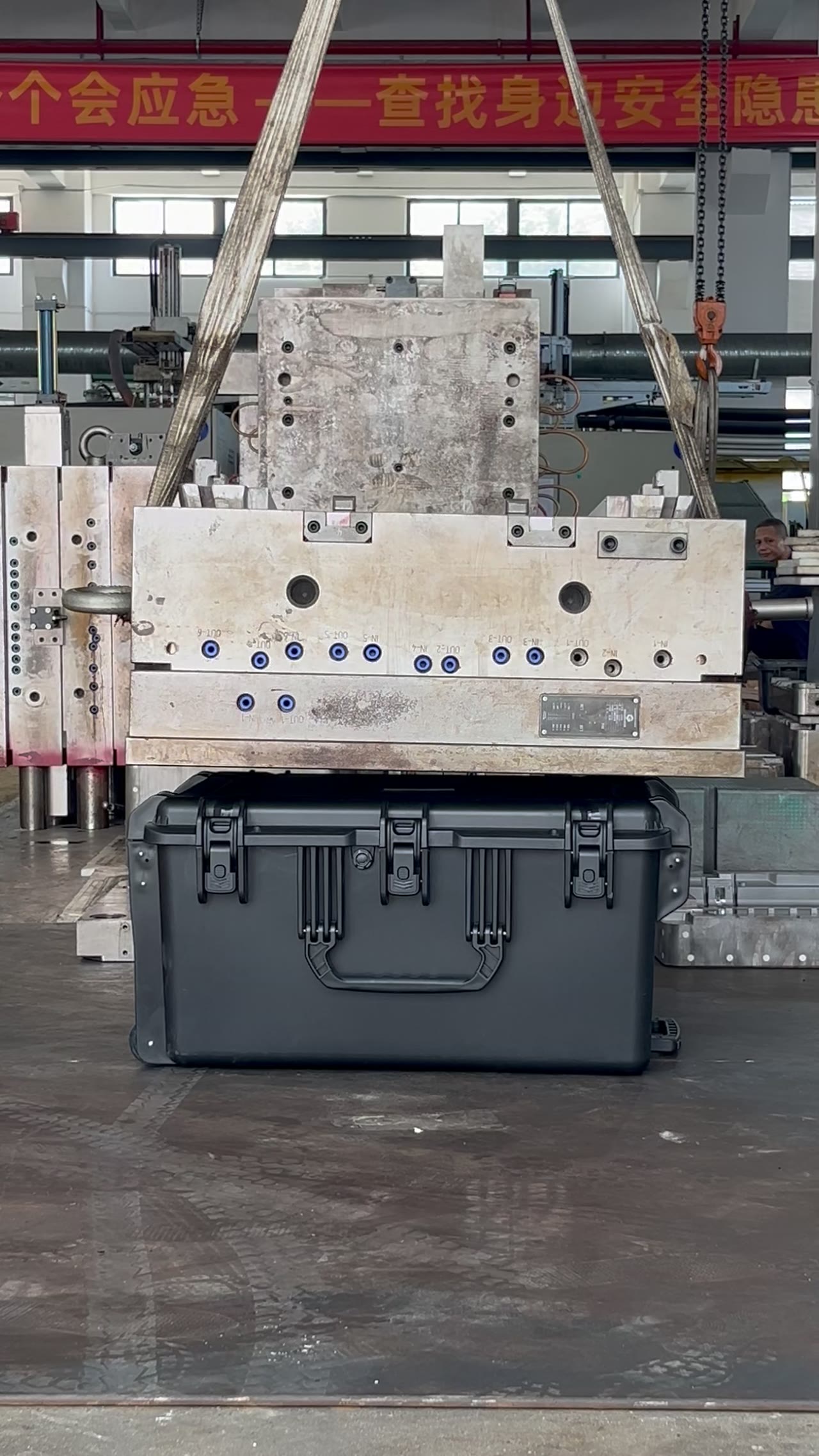
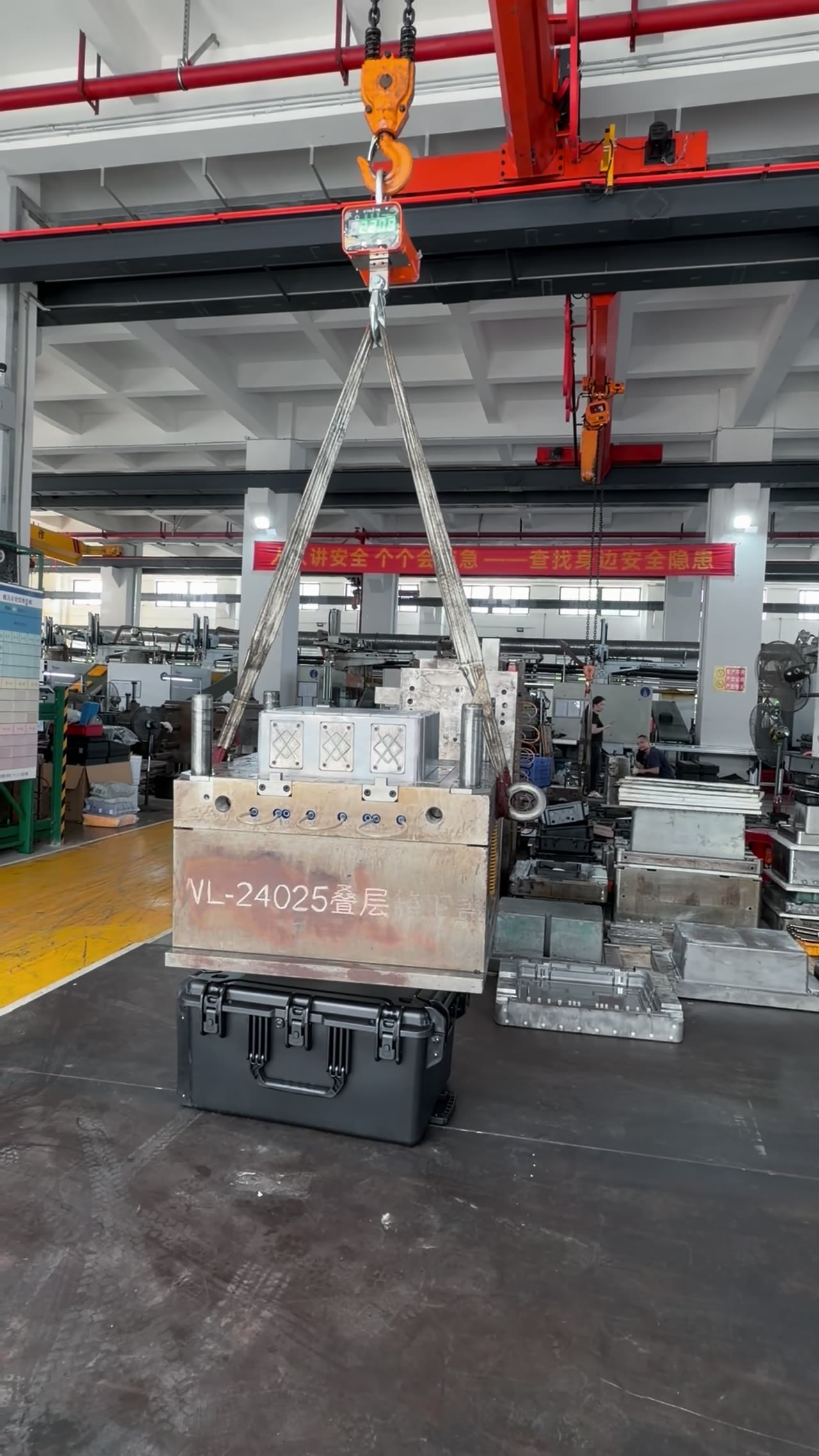
One rule held across all three runs: platen and supports never moved. Change the contact geometry between runs and the temperature effect vanishes into the scatter. An early attempt with a repositioned platen produced a swing wider than the entire cold-to-hot spread, which would have been logged as a temperature effect and was not. Same rig, same load, different room.
02Cold stiffens the wall, then makes it brittle
Cool the material and the modulus rises, so a naive prediction says deflection should shrink. What we measured went the other way in places: local deflection grew to 1.8–3.5 times the room-temperature figure. Brittleness explains it. Elongation at break collapses, a crack opens at the stress raiser, and stiffness at that crack falls faster than the modulus climbed.
Impact energy at low temperature dropped 20–40% across the same span, which is the cleanest evidence of embrittlement available — the material absorbs far less of the same strike. That is why the cold run is judged on cracking rather than on a deflection number. Once a crack exists, no further reading adds anything.
03Heat removes stiffness and capacity follows it down
At 50 ℃ the modulus falls, the same load produces more movement, and capacity reads 15–35% below the room-temperature run. The band is wide because the loss also tracks wall thickness, rib direction and where the load lands; move the contact point on one case and the shift can exceed the temperature effect itself. Because the loss is continuous, 50 ℃ is a repeatable point rather than a boundary.
Deflection also keeps growing while the load sits there. Read the dial at the end of the specified interval; an early reading flatters the case. Two hot runs with different loading intervals cannot be compared, even on the same unit — the longer one always looks worse, and the difference gets blamed on the case instead of the clock.
04A van at 55–70 ℃ is harsher than a chamber at 50 ℃
Parked in sun with the doors shut, air in a cargo area commonly reaches 55–70 ℃, and a dark case skin runs hotter still. The 50 ℃ chamber is a controlled point, not a ceiling on what the case will meet in service. Treating a test point as an operating limit is a category error.
Position matters too. Against the van wall, under other cargo, or beside the rear glass are three different thermal environments, and the spread between them is not small. In a load of identical cases the hottest one sets the reference for the rest. That wall-to-air gap is often wider than the gap between the three chamber set points.
05Read in order: crack first, capacity second, numbers last
Sequence protects against a wrong conclusion. Check the cold run for cracks or whitening first; a crack fails the unit outright. Then ask whether the hot run moved further than the room-temperature run at the same load. Only then compare magnitudes. Do it the other way round and a cracked case can end up looking like the best performer.
The procedure is mundane and specific: log case temperature before it enters the chamber, get it onto the rig within 60 s of leaving, and record clock and ambient at the moment of reading. Footage shows the procedure; the decision belongs to the formal record — temperature, duration, judgement item. Nothing here certifies a temperature rating.
| Temperature set points | 3 points (−20 ℃ / 23 ℃ / 50 ℃) |
|---|---|
| Cold-run deflection change | 1.8–3.5 times (typical range) |
| Modulus shift | −30% to +25% across the span |
| Van interior ceiling | 55–70 ℃ in direct sun |
| Chamber soak time | 2–4 h |
| Low-temperature impact drop | 20–40% |
| Hot-run capacity derating | 15–35% |
| Thermal equalisation time | 1.5–3 h to the core |
FAQ
Why stop at −20 ℃ instead of going to −40 ℃?
This series covers the −20 ℃ step only. Lower steps need a different cooling arrangement and a different set of judgement items, and neither was part of this run. Writing an untested step as survivable is just turning a range into a promise.
Is 55–70 ℃ inside the case or outside?
It is the air temperature in the cargo area. Air inside the case tends to run lower, depending on position, how often it is opened and what else is packed with it. That gap is why the chamber point was set at 50 ℃.
Can the three runs be averaged into one number?
No. They are three separate conditions, and averaging erases two distinct failure modes — cracking when cold, derating when hot. A mean tells you nothing about how the case failed.
Does a hot van matter if the case is only stored there?
At the top of that band the shell softens noticeably and the latches feel slack under the thumb, which is an early signal you can check without instruments. Whether to leave it there depends on position and duration.