

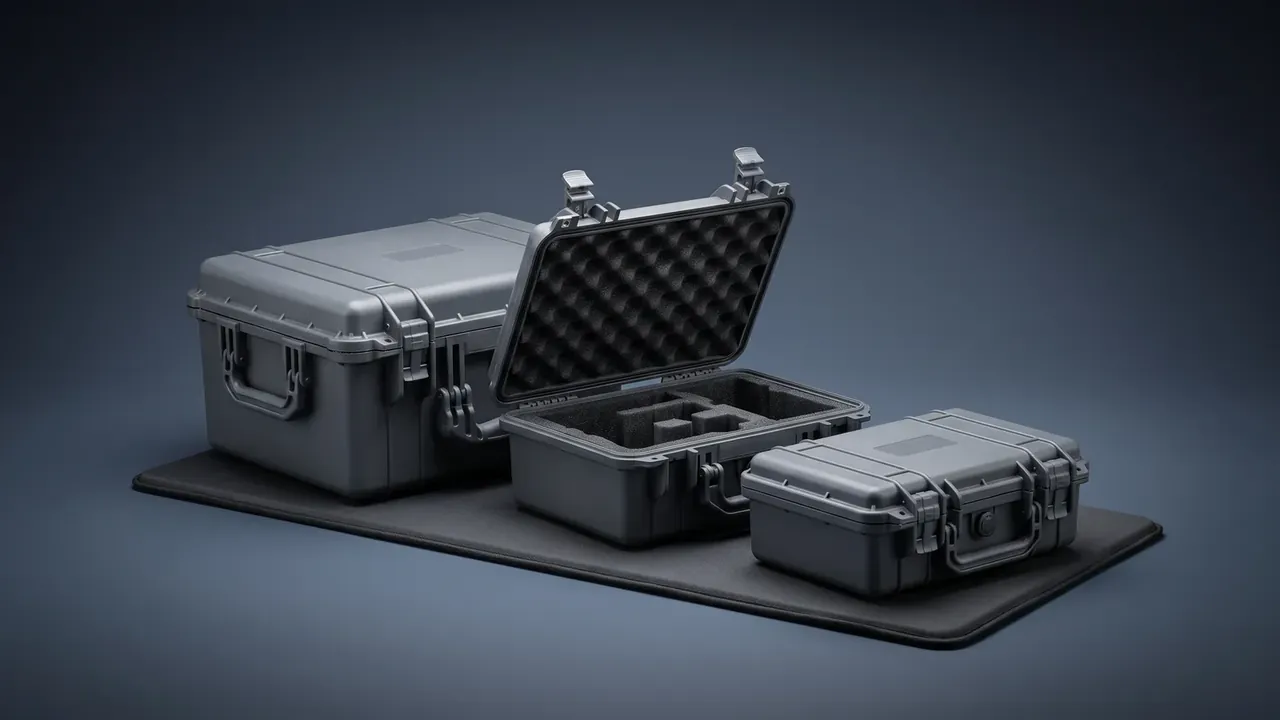
Quick answer: Put an ammunition storage container into a cold-chain run at minus twenty and compare it with a plywood crate, an aluminium frame case, a steel cabinet and a drawer tote. One-way or returnable, regular or odd cavity, gloves or hands.
Table of contents
- Where the comparison starts at minus twenty
- Opening a frozen case with thick gloves
- Five hours of random vibration
- Two-point lifting and six tiers
- Four jobs where it should not be used
- Folding rework into unit cost
- FAQ
1. Where the comparison starts at minus twenty
Fix the duty first. A refrigerated body at minus twenty, 640 km one way, 24 cases three tiers high, handlers in three-layer gloves, opened twice for a count. The difficulty is not strength but every open and close once the case is cold.
Hold the variables: cavity 760 by 520 by 330 mm, gross 21.5 kg, same foam. Compare four things: cold opening, vibration, lifting and stacking, and who owns the cost.
An ammunition storage container is cheapest when returnable trips, an odd cavity and no pallet all hold.
| Duty | This container | Better substitute | The gap |
|---|---|---|---|
| Opening at minus twenty | 85 N, 6 seconds | Clip aluminium case, 120 N | 9 seconds in gloves |
| 5 to 200 Hz, five hours | 1.2 mm slip | Plywood crate, 2.8 mm | 1.6 mm more |
| Two-point lift, no pallet | Four eyes at 1.5 t | Steel box needs pallet | One rigging step |
| 800 km out, empty return | 0.44 per trip | Crate at 68 | 522 on trip one |
2. Opening a frozen case with thick gloves
An ammunition storage container that has gone cold through fails at the latch, not the wall. EPDM gasket still rebounds at minus thirty; silicone stiffens at minus twenty-five, and force climbs from 85 N to 210 N. In thick gloves that is 6 seconds against 22, or eleven minutes a day at forty openings.
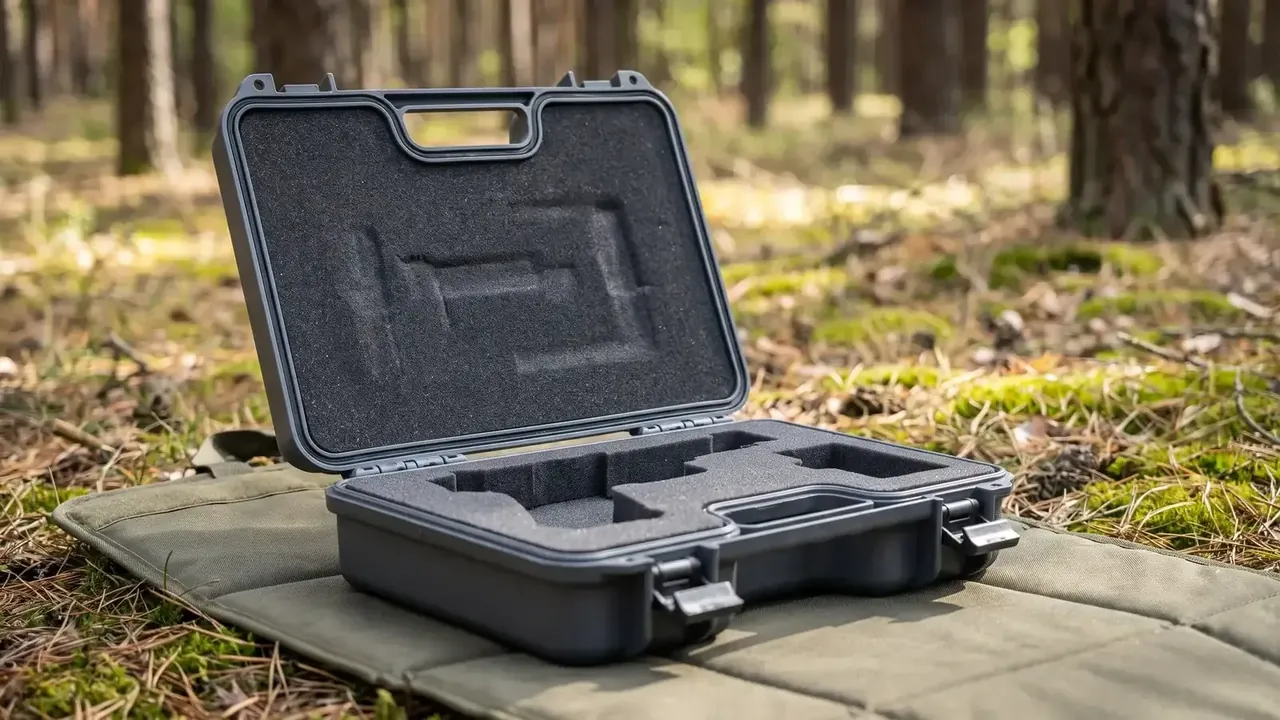
Condensation follows: within thirty seconds of opening, frost forms inside. Wipe it or it melts into the gasket groove, freezes next trip, and pushes a gap open.
A groove six millimetres deep keeps the margin.
3. Five hours of random vibration
Run 5 to 200 Hz at 1.04 g RMS for five hours: 640 km of road plus site track.
| Internal fixing | Peak slip | Surface mark | Inspection per case |
|---|---|---|---|
| Moulded foam wrap | 1.2 mm | none | 0.3 hour |
| Dividers only | 2.8 mm | polished patch | 1.1 hours |
| Bubble wrap | 4.6 mm | coating worn | 1.8 hours |
Past two millimetres, polish turns into bare coating.
4. Two-point lifting and six tiers
Road to rail to short haul means six moves instead of two, so the ammunition storage container is lifted and forked three times as often. The four eyes carry 1.5 t each, so a 21.5 kg case goes up on two points without a pallet. A pallet adds a forklift action to every move; six moves at four and a half minutes is seventeen extra minutes per load. Six tiers is nominal, the bottom case carries 107.5 kg, and the top face spreads 520 kg over 0.4 square metres, which is 1,300 kg per square metre against an 800 kg limit.
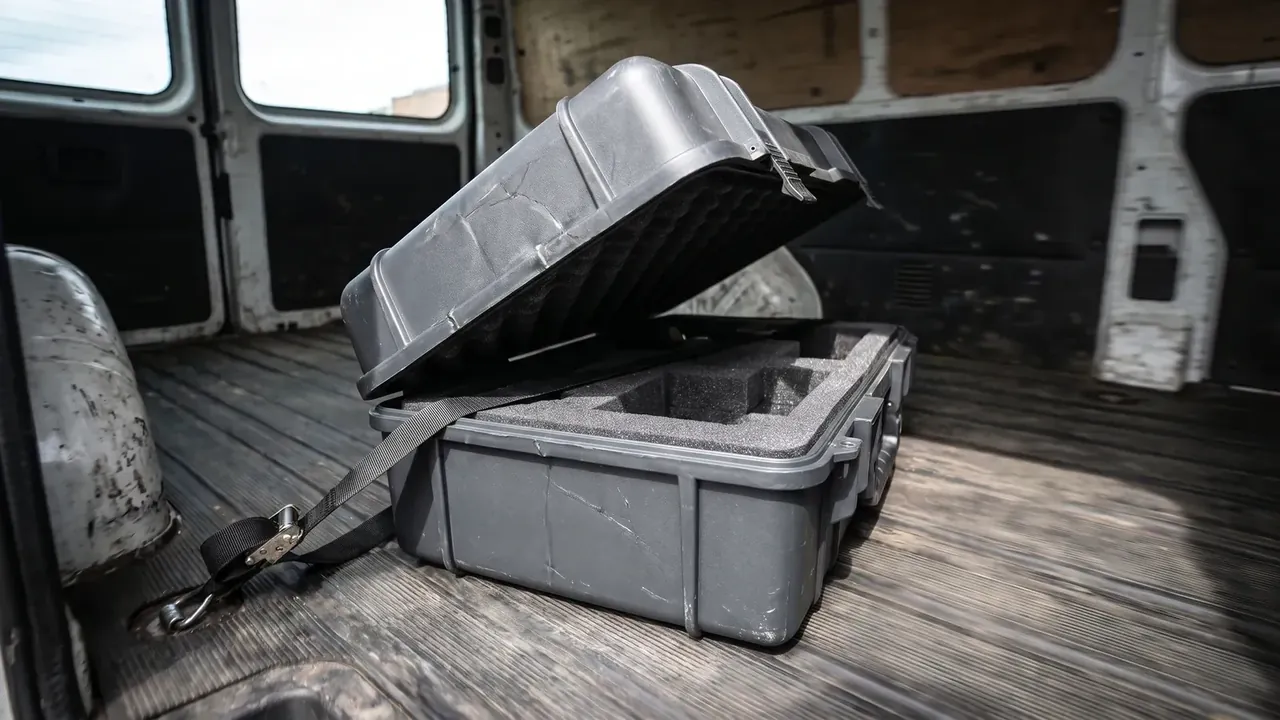
Securing changes too. Two channels under the base take the strap, the hook catches the floor rail, and one strap per case is enough. An aluminium frame needs corner brackets instead.
Lifting without a pallet is the real value here.
5. Four jobs where it should not be used
Here an ammunition storage container is not the best answer.
- One way over 800 km, empty return: a corrugated crate costs 68 and knocks down on arrival.
- A cavity over 1.4 m or an irregular section: aluminium frame is cut by the metre at 38 per extra 200 mm, against a mould from 30,000.
- Fixed storage for three years: a steel cabinet holds 120 per cubic metre against 76 here.
- Over 200 picks a day: a drawer tote takes 4 seconds, this takes 14.
- Air freight by weight: 7.8 kg empty against 4.2 kg.
6. Folding rework into unit cost
Unit cost is price plus lifetime rework, divided by cycles. One damp incident means unpacking, drying and re-inspection: 4.5 hours at 60, 270, half a case.
| Option | Price | Cycles | Unit cost | Note |
|---|---|---|---|---|
| Ammunition storage container | 590 | 1,340 | 0.44 | gasket and latches replaceable |
| Corrugated crate | 68 | one | 68 | knocked down on arrival |
| Aluminium frame case | 1,180 | 620 | 1.90 | brackets work loose |
| Steel cabinet | 2,400 | 3,000 | 0.80 | static |
| Drawer tote | 320 | 900 | 0.36 | small items only |
The drawer tote is cheapest per trip and cannot take a long item. Read across, not down.
Conclusion
An ammunition storage container wins on cold opening, long vibration and pallet-free lifting, and yields on one-way returns. Judge the trip type first, the cavity shape second, the price last.
This article discusses only the container (case body) side of specifications and design intent, and does not cover any handling, loading or use of the contents.
Related Reading
- Shell materials compared: five resins
- Gasket and latch service intervals
- Turning duty into parameters
- Metal ammunition box materials
- Packing materials compared
Related Products
- 8 Series — Gun Cases; Military Equipment Cases; Camera Equipment Cases; Drone Cases; Watch Cases; Knife Cases; First Aid Cases; Electronics Equipment Cases
- WL8-2812 PP Gun Case — model WL8-2812
- All protective cases and toolboxes: 7 series, 158 models