

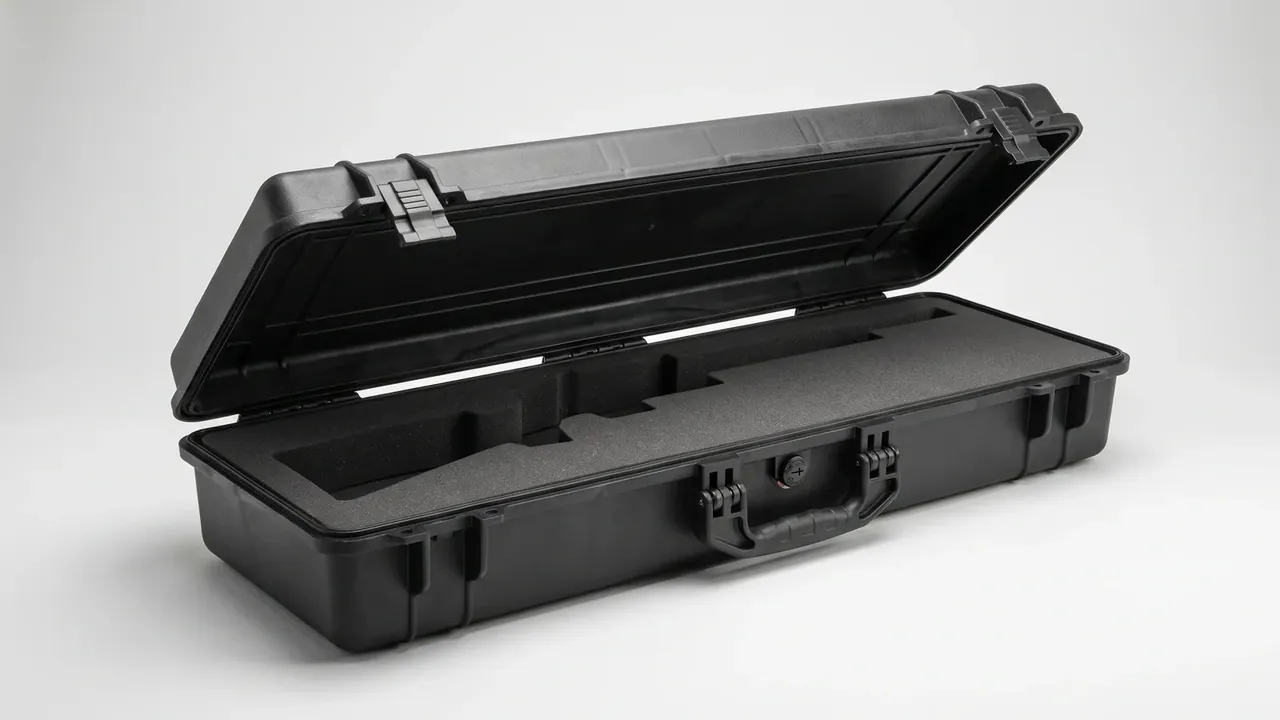
Quick answer: Most price gaps on an ammunition storage container come from four fields never aligned: unit price, mould amortisation, volumetric weight and tax basis. This article turns them into checkable numbers, plus three order lines, five lead-time stages and six traps.
Table of contents
- Four Fields on the Quotation
- Three Order-Quantity Lines and Mould Ownership
- Breaking Lead Time into Five Stages
- Payment Structure and Cash Rhythm
- Six Recurring Traps in a Quote
- Three Moves to Watch at the Factory
- FAQ
1. Four Fields on the Quotation
Numbers on a quote look modest one by one and differ by a third in total. Compare four fields, not totals.
| Field | Typical wording | What to ask | How to write it in |
|---|---|---|---|
| Unit price | 58 per piece | Insert, latches, printing extra? | Itemise by process |
| Mould amortisation | 28,000 one-off | At what quantity does it reach zero | Refund after 6,000 pieces |
| Volumetric weight | Per carton | How many per carton, carton size | Carton 620 × 420 × 380 mm |
| Tax basis | Includes 13 % VAT | Freight and clearance included | Ex-works and landed |
A bare case at 58 becomes 74 with foam cutting, gluing and trial fitting; that 16 is the line most often missed.
Treat mould amortisation on an ammunition storage container as a clause that reaches zero: 28,000 up front, full refund at 6,000 pieces, so the first batch carries just over 4 each.
The tax basis: ex-works with 13 % VAT, or landed with freight. The 8 to 12 percent gap makes an unaligned comparison useless.
2. Three Order-Quantity Lines and Mould Ownership
A minimum order quantity is not arbitrary; it sits on three cost lines.
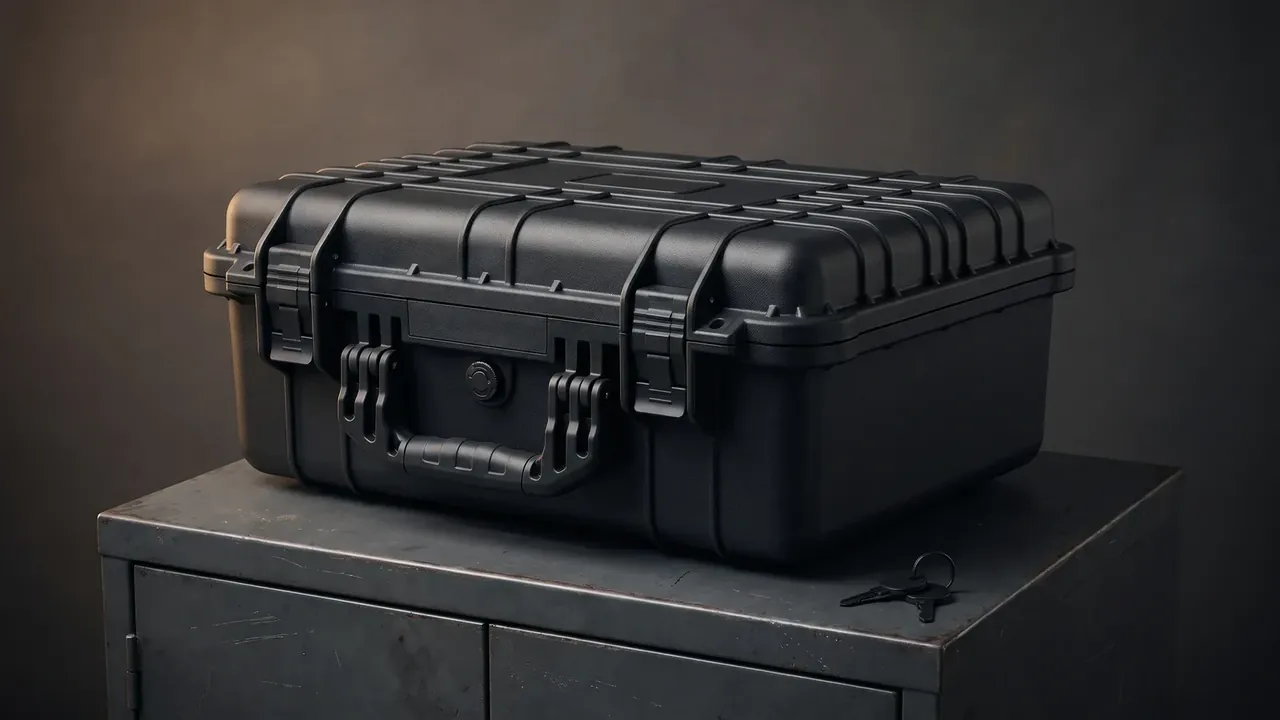
Trial line: 200 pieces, existing mould with a colour change or new insert, 15 percent premium, enough to validate assembly feel and stacking.
Economic line: 1,000 pieces, where changeover fades and the mould fee returns per unit. Most projects land here.
Container line: 3,200 pieces, 800 cartons of four, one 40-foot high cube. Unit freight falls to a third of the trial figure.
Mould ownership needs four clauses: who pays, shot rating, transfer rights, maintenance. A P20 tool on a 380-tonne press is rated near 300,000 shots, then flash appears at the slide. Without transfer rights the tool stays behind.
3. Breaking Lead Time into Five Stages
Delivered 55 days after deposit is not a commitment: any day can be absorbed silently. Split it and date each stage.
| Stage | Days | Trigger | Where it stalls |
|---|---|---|---|
| Drawing and insert sign-off | 3 | 3D file or sample | Cavity depth revised again |
| Tooling and trial | 22 | Drawing signed | Poor venting at the slide |
| First-article approval | 5 | Trial parts shipped | Colour match, latch effort |
| Production | 20 | First article signed | Resin grade substituted |
| Inland and clearance | 5 | Balance paid | Commodity classification |
Tooling slips most often: a 380-tonne press needs its slot booked a week ahead, so a finished tool waits.
Do not compress first-article approval. Colour is checked under one light source, latch effort by hand plus a gauge, one rejection costs 12 days.
Write penalties per stage, not a blanket 0.3 percent per day that is never enforced.
4. Payment Structure and Cash Rhythm
Thirty percent deposit, sixty against the bill of lading copy, ten after acceptance at 30 days. What each tranche buys matters more.
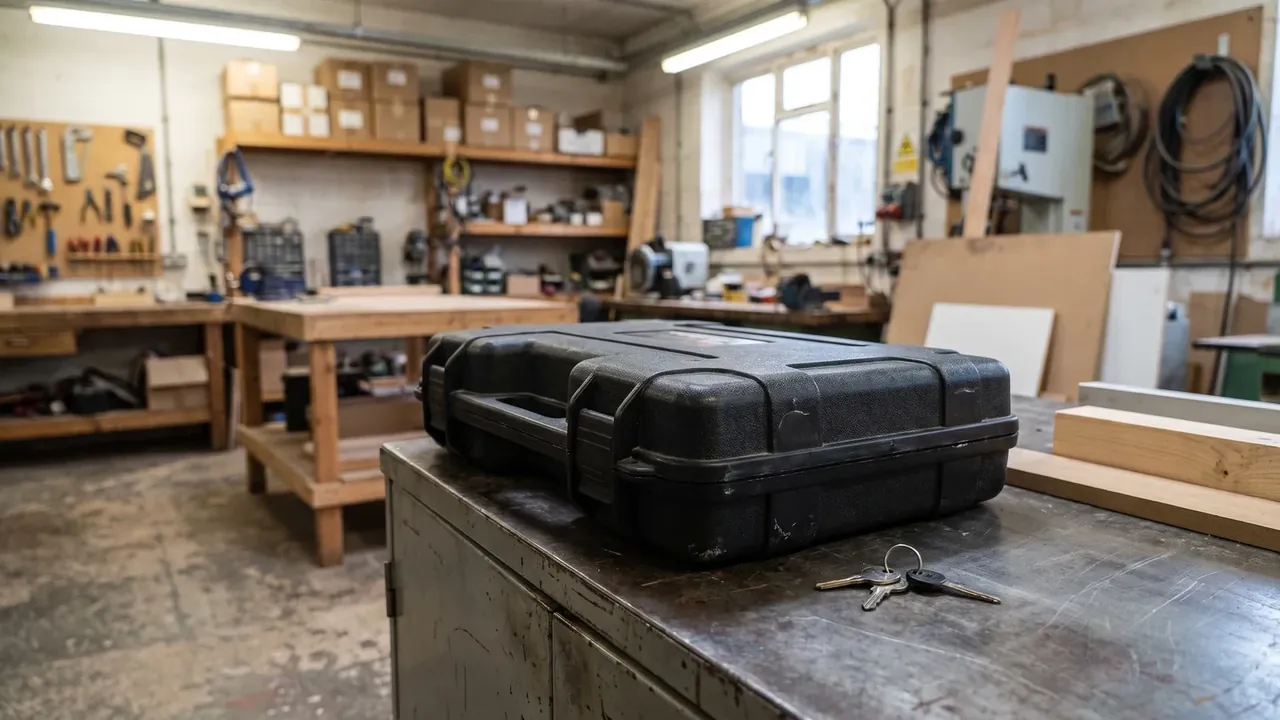
Push the deposit on an ammunition storage container below 20 percent and tooling gets billed separately, payable up front, a quiet increase. Negotiate on the total including tooling.
A letter of credit looks safer than it is: amendments, discrepancies and couriers eat 1.5 percent of margin. Holding the balance until acceptance keeps leverage over a failing lot.
5. Six Recurring Traps in a Quote
- A unit price that excludes the insert: add both, then divide
- Regrind left unwritten: require at least 90 percent virgin resin
- Packing quoted by net weight, volume billed later: get the carton size
- Tooling renamed development cost, no refund: fix the 6,000-piece trigger
- Lead time only as after deposit: date the five stages
- Acceptance by sample with none sealed: seal three, one each
Regrind is the hardest to detect on an ammunition storage container: colour and hardness barely move at first, yet past 30 percent the latch root turns brittle.
6. Three Moves to Watch at the Factory
Walk the floor less, watch three moves: a mould change, a wall-thickness check, a packing station.
Time the mould change. More than 90 minutes from stop to first good part points to a mismatch between temperature controller and robot; a colour change then costs two days.
Check the spread on the ammunition storage container, not the average. A range above 0.4 mm across three cases means unstable packing pressure against a 3.0 mm wall.
Watch the packer's hands: forty seconds per unit is normal, seventy means the insert fits loosely.
Conclusion
Sourcing is not about asking more questions but about asking precise ones. Align four fields, pick one of three lines, date five stages, and only process quality is left variable. Run an ammunition storage container purchase this way and the second order rarely needs renegotiating.
This article discusses only the container (case body) side of specifications and design intent, and does not cover any handling, loading or use of the contents.
Related Reading
- Quarterly checks and retirement criteria
- Selection guide: stock, turnaround and environment
- Storage and care standards for case moulds
- Custom and OEM process for firearm cases
- How to read ammunition container specifications
Related Products
- 8 Series — Gun Cases; Military Equipment Cases; Camera Equipment Cases; Drone Cases; Watch Cases; Knife Cases; First Aid Cases; Electronics Equipment Cases
- WL8-2812 PP Gun Case — model WL8-2812
- All protective cases and toolboxes: 7 series, 158 models