

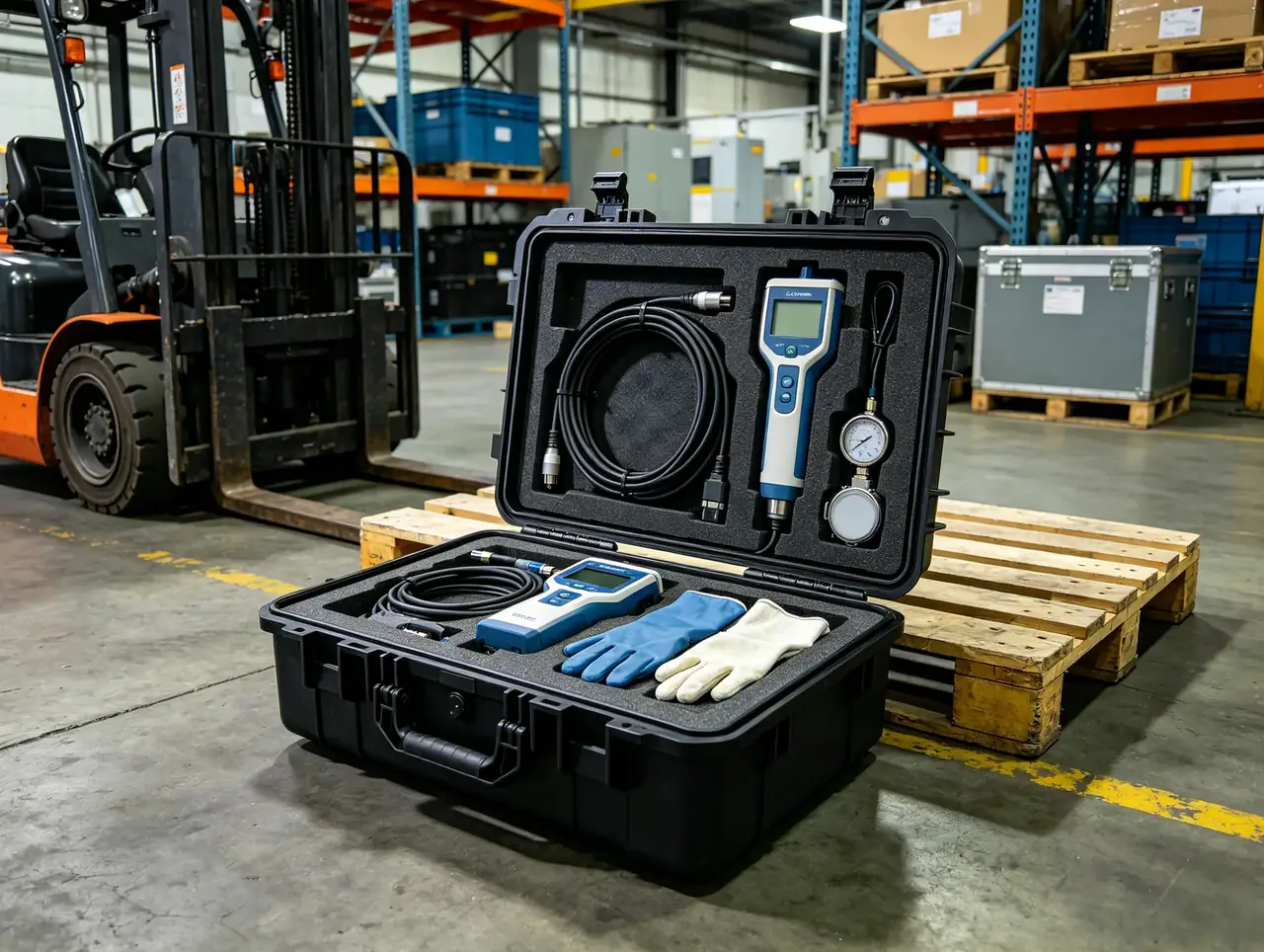
Quick answer: ASTM D4169 assurance levels run from AL I to AL III; severity falls as the cost index drops from 112 to 92, so choose by item value and route.
Table of contents
- What an Assurance Level Actually Buys
- Three Levels, Four Levers
- What One Level Up Has to Save
- Distribution Cycles: 68 kg Is Only a Common Split
- Drop Heights, 1.04 Grms and Three Samples
- FAQ
1. What an Assurance Level Actually Buys
A 21 kg instrument case in the 18–27 kg band drops 460 mm under AL II. Move it to AL I and the band reads one step higher: 610 mm. Nothing changed in the tool or the mould; 150 mm arrived from a risk decision.
A level is not a pass mark; it states how much loss a programme will carry across a chain, and it is settled with money.
AL I takes the upper limits, AL II is the default for most industrial goods, and AL III takes the lower limits for low-value goods replaced quickly. The higher the tier, the tighter the sampling and the judgement. Four questions decide it: what one damaged unit costs, route length, replenishment speed, and whether a stop line costs more than the goods. Heavy answers on all four point to AL I.
Level and cycle are independent: the cycle fixes which tests run and in what order, the level how hard each is driven. A contract carrying only the standard number leaves both blank.
| Assurance level | Severity | Loss exposure | Typical goods | Cost index |
|---|---|---|---|---|
| AL I | High, upper limits | Low | Above 10,000 CNY, long lead | 112 |
| AL II | Standard, usual default | Medium | Instruments of 3,000 to 10,000 CNY | 100 |
| AL III | Low, lower limits | High | Goods under 1,000 CNY, quick resupply | 92 |
2. Three Levels, Four Levers
The gap between AL I and AL III sits on four adjustable items: drop height, vibration level and duration, stacking load, and shock count. Name all four in the contract annex, or the lab reads AL I its own way.
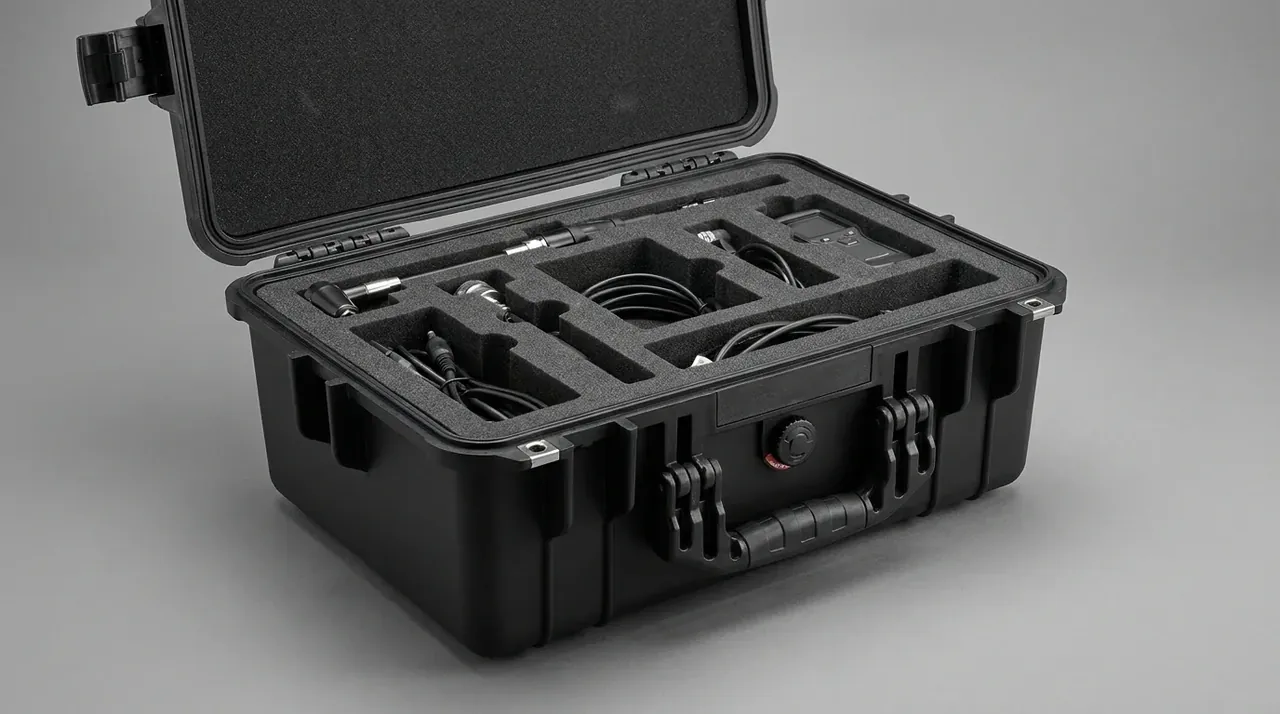
Drop height is the visible lever. Common bands run 760 mm below 9 kg, 610 mm from 9 to 18 kg and 460 mm from 18 to 27 kg, the current edition table governing. Neighbouring bands differ by 150 mm, which more than doubles peak acceleration on steel and changes the load on every latch.
Vibration and stacking move with the level too, one in time and Grms, the other in tier count. Raise all four and cost follows, so no tier should rise on instinct.
3. What One Level Up Has to Save
The arithmetic needs one side only: extra pack cost is recovered by failures that no longer happen. A 38 CNY pack rising 12% adds 4.56 CNY per unit, 274,000 CNY a year at 60,000 units; at a 4,800 CNY claim, it pays back at 57 fewer claims.
The other direction is the same sum: AL III at index 92 saves 3.04 CNY per unit, 182,000 CNY a year, worth exactly 38 claims. One heavier year and the saving is gone.
| Level | Cost index | Annual pack cost | Against AL II | Claims to break even |
|---|---|---|---|---|
| AL I | 112 | 2.554 M CNY | +274,000 CNY | 57 fewer a year |
| AL II | 100 | 2.28 M CNY | baseline | baseline |
| AL III | 92 | 2.098 M CNY | −182,000 CNY | covers 38 claims |
Both figures are break-even lines, not forecasts: real rates shift with route, handling count and mass, and one tier can differ twofold between lanes, so run the line with your own value, claim cost and volume.
4. Distribution Cycles: 68 kg Is Only a Common Split
ASTM D4169 sorts shipments into distribution cycles by unit mass and transport mode, with 68 kg a common dividing line: above it, forklift and pallet; below it, manual handling and parcel networks. Which cycle applies is read from the table against carrier and gross mass, never from memory.
Mass also drives stacking: 24 cases at 21 kg on a 1200 × 800 mm pallet make 520 kg, four tiers reach 3.2 m, and the bottom pallet carries the three above. None of that belongs in a parcel cycle.
| Input | Why it changes the cycle | Typical reading |
|---|---|---|
| Gross mass per unit | Manual or mechanical handling | 68 kg is a common split |
| Carrier mode | Shock type and vibration build-up | Truckload, LTL, parcel |
| Stacking tiers | Whether a stacking step applies | 3 to 4 tiers |
Cycle and level are separate dials with many pairings. A parcel cycle at AL I raises drop height while stacking disappears; a pallet cycle at AL III keeps stacking and softens the shock. A contract naming only the standard gets the pair the lab knows best.
5. Drop Heights, 1.04 Grms and Three Samples
Drop height is the first blank on a selection sheet: 760 mm below 9 kg, 610 mm from 9 to 18 kg, 460 mm from 18 to 27 kg. These common bands stop at 27 kg; heavier goods step down through further bands read from the table, not interpolated.
Vibration is usually quoted around 1.04 Grms, a working level rather than a fixed rule: abstract until it lands on a table as random motion in three axes, deciding whether a weld line or latch pocket ever cracks. Three samples run the chain unsubstituted, against criteria the parties write: six functional checks, three cosmetic.
That freedom separates D4169 from most national standards: it supplies methods and severity, not a definition of failure. Loose criteria let three passing samples hide a batch problem; tight ones fail a run on a 0.3 mm scuff.
Conclusion
ASTM D4169 assurance levels are a risk budget: the tiers trade severity, loss exposure and pack cost, not pass against fail. Fix the cycle from carrier and mass, then price one tier's payback.
This article covers case-side specifications only and does not address any handling, loading or use of the contents.
Related Reading
- How the ASTM D4169 distribution cycle is built
- Reading drop heights by weight band
- Where ISTA and D4169 divide the work
- Drop test count and order
- Packaging cost as a share of goods value
Related Products
- 8 Series — Gun Cases; Military Equipment Cases; Camera Equipment Cases; Drone Cases; Watch Cases; Knife Cases; First Aid Cases; Electronics Equipment Cases
- WL8-2812 PP Gun Case — model WL8-2812
- All protective cases and toolboxes: 7 series, 158 models