

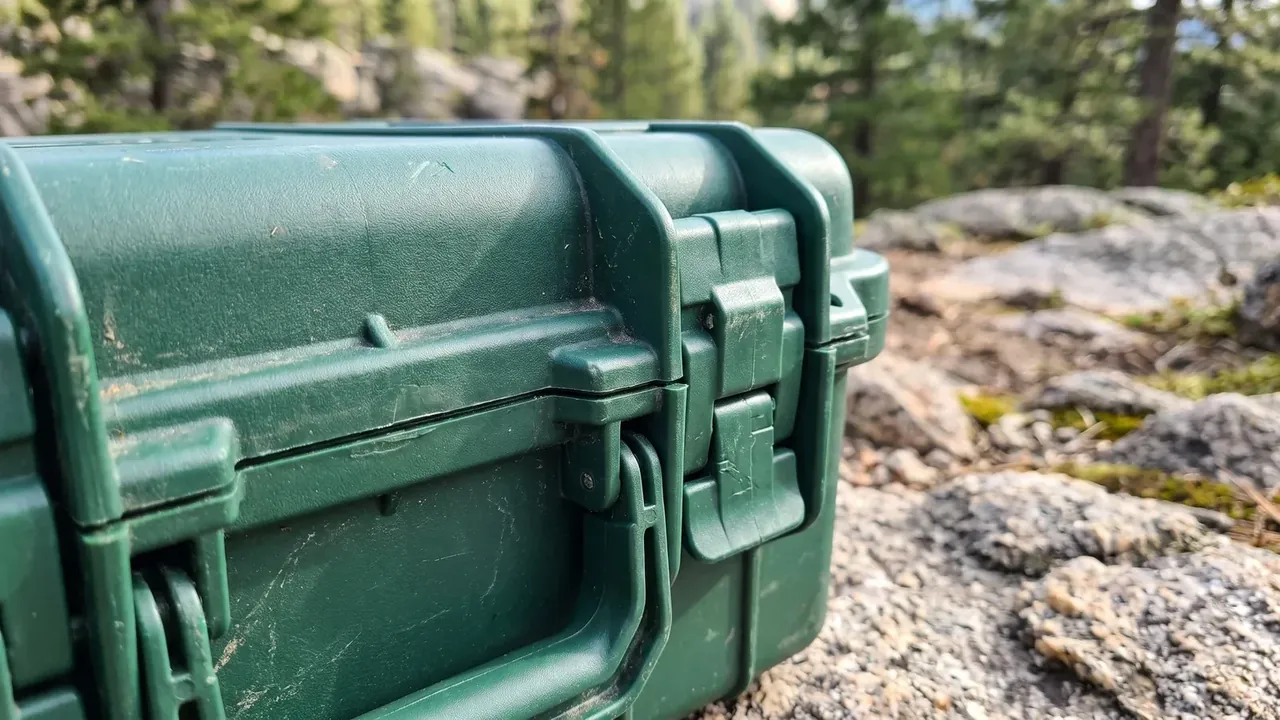
Quick answer: An Automation Equipment Accessories Case splits a 500 by 360 by 180 mm cavity into 18 bays behind seven 3.0 mm dividers and holds pick time to 25 s.
Table of contents
- Compartment density of an Automation Equipment Accessories Case
- Assembly tolerance of the seven dividers
- Pick time across eighteen compartments
- Label positions and stock counts
- Mixed-load setting for an accessories batch
- FAQ
1. Compartment density of an Automation Equipment Accessories Case
Pick order runs from the fittings touched every shift to the ones swapped once a quarter, and the grid follows that route. The cavity measures 500 by 360 by 180 mm: five lengthwise dividers cut the width into six columns, two cross dividers cut the depth into three rows, and seven dividers in total leave 18 bays of roughly 81 by 118 mm. Those numbers are arithmetic, because 3.0 mm dividers eat 15 mm across the width before the remainder is shared out.
Finer is not faster. At 60 mm a 20 mm socket insert still fits, yet a finger does not, and every reach hesitates. Three densities were run against one cavity, with dividers changing alongside bay count, and only the 18-bay layout went to production behind seven dividers.
| Density grade | Bays | Dividers | Clear size per bay |
|---|---|---|---|
| Coarse | 12 | 5 | 123×118 mm |
| Nominal | 18 | 7 | 81×118 mm |
| Fine | 24 | 9 | 60×118 mm |
A 12 kg load over 18 bays averages 0.67 kg, yet the spread is nothing like even: the back six bays hold 9.4 kg between them, the heaviest at 2.4 kg, while the front six carry 0.6 kg in total. An Automation Equipment Accessories Case grades on the heaviest bay, never the mean, because the bay that sags is always at the back.
2. Assembly tolerance of the seven dividers
Each divider is 3.0 mm and each slot is cut to 3.4 mm, so 0.2 mm sits on either side. That clearance absorbs moulding shrink and slot burrs; it is not slack for the divider to wander, since the parts move with it.
Six columns stacked end to end accumulate the tolerance and put the sixth divider centre 1.2 mm off nominal. Bay widths stop being equal, closing to 78 mm in the tightest and opening to 84 mm in the widest, so a fingertip meets a divider edge before it meets the part. An Automation Equipment Accessories Case reads that 1.2 mm as lost seconds on every reach.
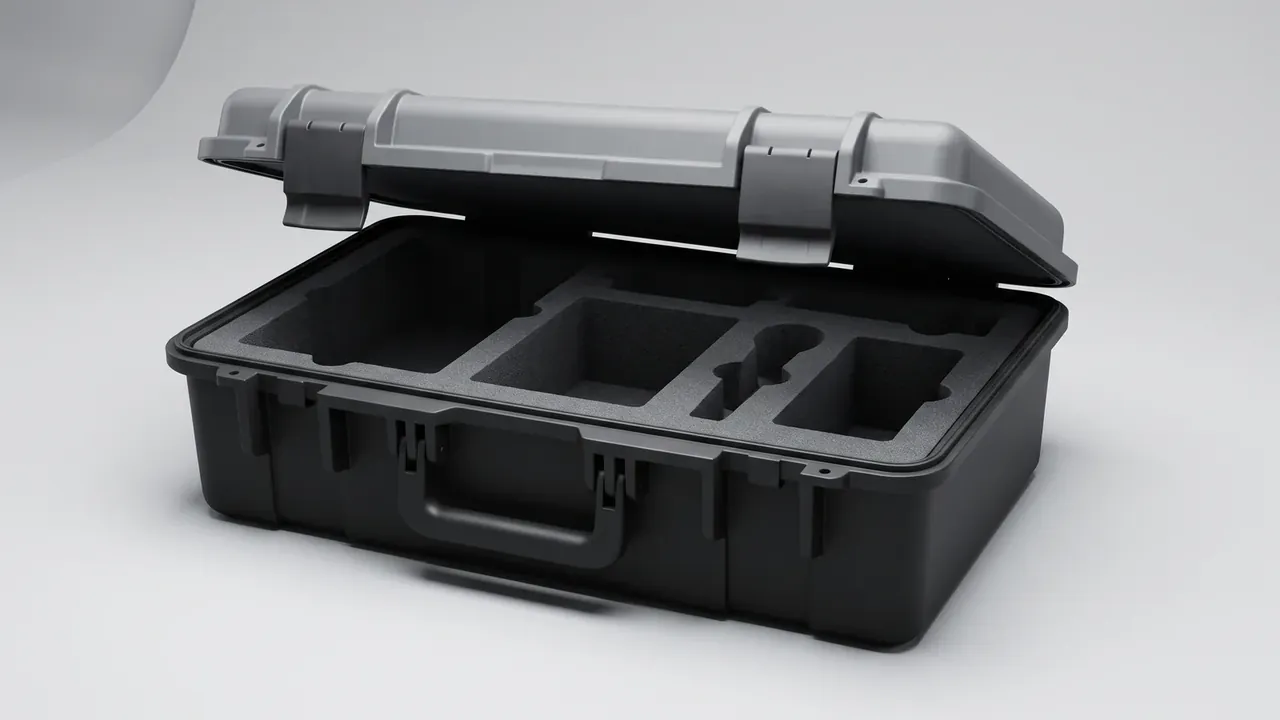
A 6 mm slot grips the lower edge only. The upper edge stands 22 mm proud and is held by an 8 mm pad of 30 kg/m³ foam in the lid. Under-compressed foam lets the divider hop, and 2 mm of hop lets neighbouring bays trade parts. At 9000 cycles the slot wears about 0.3 mm, clearance drifts to 0.35 mm, and the choice is a fresh divider set or a recut slot.
3. Pick time across eighteen compartments
Pick time runs from lifting the lid to replacing the part, one hand fetching and the other counting, averaged over all 18 bays. At the nominal grade it reads 18 s in front, 24 s in the middle and 33 s at the back, weighted to 25 s. Timing the front six alone flatters a buyer with 18 s.
| Slot clearance per side | Drift by column six | Average pick time |
|---|---|---|
| 0.10 mm | 0.6 mm | 22 s |
| 0.20 mm | 1.2 mm | 25 s |
| 0.35 mm | 2.1 mm | 33 s |
| 0.50 mm | 3.0 mm | 44 s |
The reject line is 40 s. At 0.5 mm clearance, drift reaches 3.0 mm, pick time falls to 44 s and that shell leaves the batch. A divider sitting 1 mm off centre costs more in hunting for the bay than in the reach itself, so an Automation Equipment Accessories Case times all 18 bays rather than a sample. The 15 s between 25 s and 40 s covers relearning after each change, when the crew recalls which bay now holds what; the first three days run 4 s to 6 s slower and 31 s still passes.
4. Label positions and stock counts
The 12 labels skip the even split and sit on the six high-use bays alone, a pair each: one on the outside lip, one inside the lid directly above, so an open lid drops the second label into the line of sight. The other 12 bays carry no label of their own and ride as ranges, 07 to 08 and so on, under those six pairs.
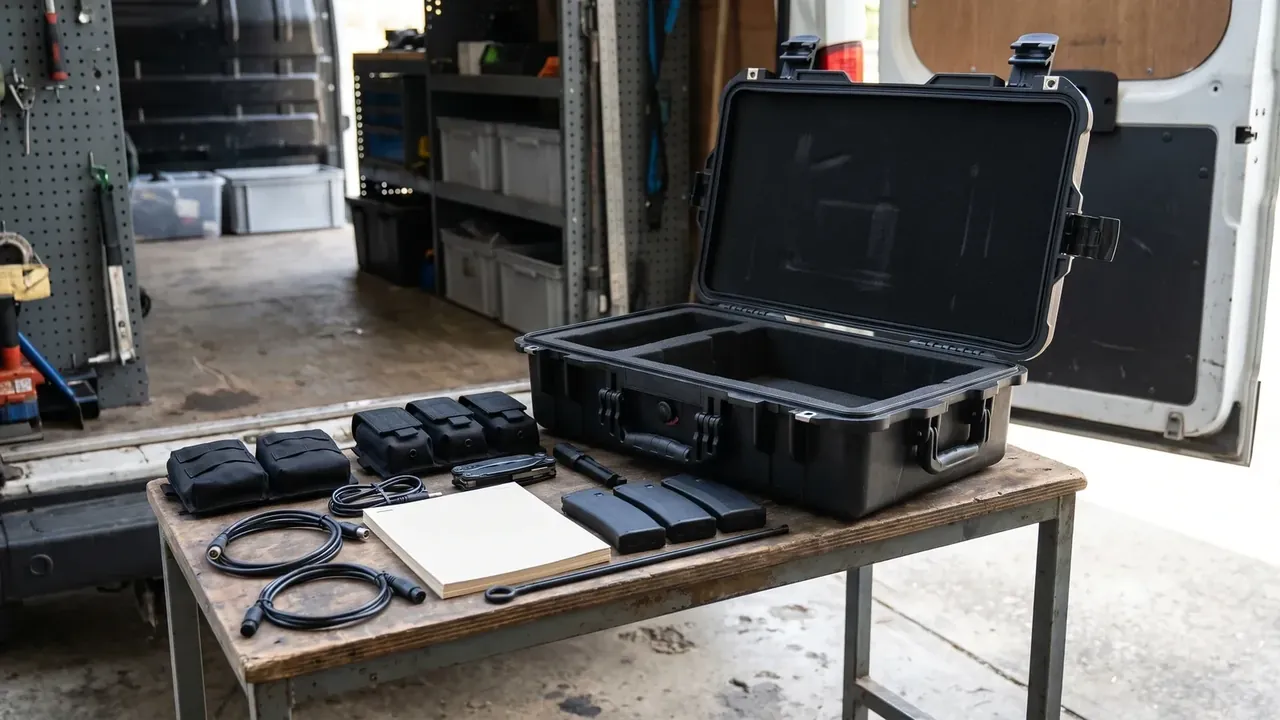
A count walks the labels, then lifts the dividers to look for trapped parts, taking about 6 min against 11 min bay by bay. A lip label reading 07 against a lid label reading 09 sends that bay's parts into the neighbour's tally, so label position keeps its own column apart from bay count. An Automation Equipment Accessories Case issues two numbering sets: bay numbers may be reassigned, label numbers stay with the shell.
5. Mixed-load setting for an accessories batch
Four items close a mixed-load setting: density, pick time, bay load and cycles. All four must come from one shell before that unit joins a batch.
| Setting item | Value | Reject line |
|---|---|---|
| Density | 18 bays, 7 dividers | under 16 bays |
| Pick time | 25 s | 40 s |
| Bay load | 2.4 kg | 3.0 kg |
| Open-close cycles | 9000 | 0.35 mm clearance |
Boundary conditions ride the same batch card: 560×420×230 mm outside, a 4.2 mm wall, 6.9 kg empty, 12 kg loaded, two-high stacking. At two high the upper base presses the lower lid, the 30 kg/m³ foam compresses 1.5 mm, divider tops lose preload, and second-tier pick time runs about 3 s slower. A third tier needs a fresh rig run.
Release is per shell. An Automation Equipment Accessories Case pulls any unit with a missing figure and lets no other unit's numbers fill the gap.
Conclusion
Density, clearance and timing settle an Automation Equipment Accessories Case at a 25 s pick: 18 bays behind seven dividers, 1.2 mm of accumulated drift, and a 2.4 kg heaviest bay inside a 12 kg load. Past 40 s, past 0.35 mm of clearance, or past 3.0 kg in one bay, that shell returns alone. JUNZHIJIA keeps 9000-cycle slot records by service batch, and drawing tolerances are issued by Kexin New Materials (Guangdong) Co., Ltd.
Related Reading
- AGV spare parts case: bay layout and turnaround
- 3D printer equipment case: handling and protection
- CNC machine tool case: parting out cutters and accessories
- Usable ratio after volume, cavity and corner allowance
Related Products
- 8 Series — Gun Cases; Military Equipment Cases; Camera Equipment Cases; Drone Cases; Watch Cases; Knife Cases; First Aid Cases; Electronics Equipment Cases
- WL8-2812 PP Gun Case — model WL8-2812
- All protective cases and toolboxes: 7 series, 158 models