

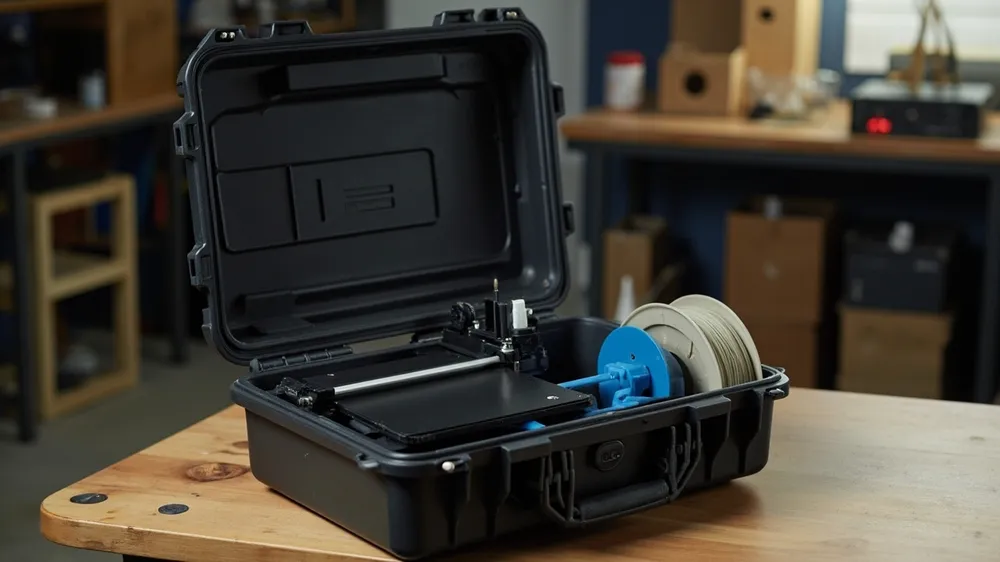
A 3D printer is "precise yet fiddly": the frame must stay put, the nozzle must be protected, filament spools stored, tools everywhere. Moved from workshop to expo, classroom or client site, it fears three things: frame misaligns, nozzle crashes, filament absorbs moisture. A qualified printer case must fix the frame, protect the nozzle, store spools and organise tools. This guide covers choice and use from a maker and ops view.
Three Kinds of Damage
- Frame shift: frame loosens, print drifts.
- Nozzle crash: the tip is precise, one hit scraps it.
- Filament damp: spools absorb moisture, prints bubble.
Priority: fix > nozzle > spool.
Protection Hard Specs
| Spec | Printer case delivers | Verify |
|---|---|---|
| Frame fix | Frame restrained, no shift | Check cavity |
| Nozzle | Suspended wrap, separate bay | See liner design |
| Spool | Spool slot, moisture | Check liner |
| Tools | Small slots, no loss | See foam relining |
| Shell | Light-tough PP | See wall and structure |
Frame Fix: No Shift
The frame must be restrained, not rattling in transit. Method in drone case foam insert design (restraint idea); process in EVA thermoformed liner.
Nozzle: Suspend the Precise Part
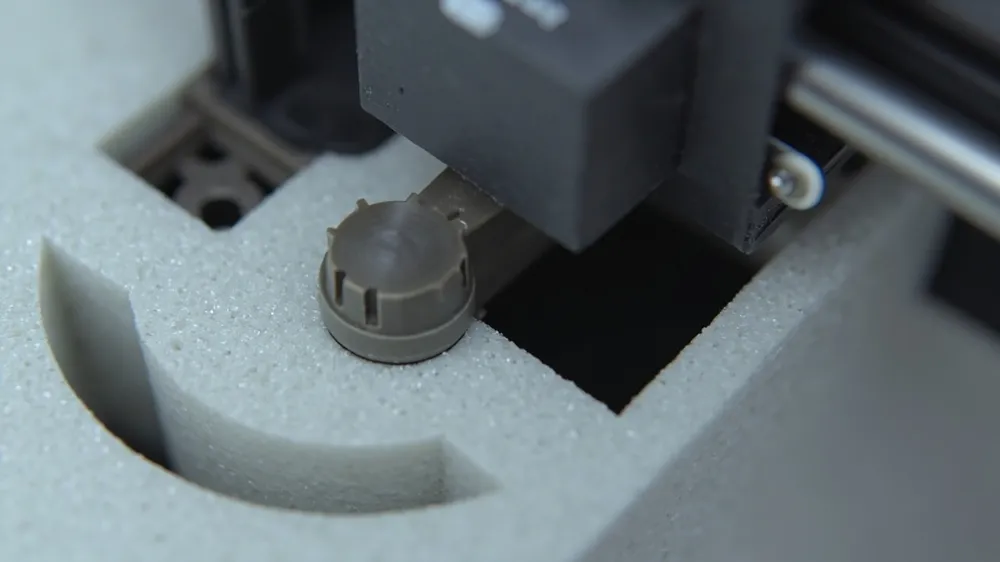
The nozzle and extruder are precise; the cavity touches only the rigid frame and leaves the tip floating. Liner recuttable, see foam relining.
Spool: Slot and Moisture
Filament absorbs moisture. The case should:
- Spool slot: spools in separate fixed positions, no roll.
- Moisture: liner reserves a desiccant slot, see condensation control.
- Avoid sun: material weatherable, see UV weathering.
Tools and Accessories
Scrapers, pliers, samples — many small parts. The case needs separate small slots and cable clips, logic from laboratory sample transport cases; colour management in colour visual management.
Transport and Site
Printer gear ships in cases. Stack limit and moisture in warehouse stacking and moisture; vehicle vibration in transport vibration testing; outgoing check in pre-shipment inspection cases.
Field Habits
- Restock: frame in place, nozzle floating, spool to slot.
- Moisture: swap desiccant on long hauls, see colour management.
- Clean: wipe liner on return.
- Record: which device, which case, for traceability.
Customisation Checklist
| Element | State | If missed |
|---|---|---|
| Device list | Size, nozzle, spools | Liner unfit |
| Duty | Temp, humidity, water? | Wrong material |
| Count | How many spools | Slot short |
| Cert | RoHS / REACH | Export block |
For requirements and negotiation see how to write a case RFQ and how to negotiate case price; total cost in total cost of ownership.
Pitfall List
First, frame not fixed — shifts in transit. Second, nozzle not floating — one hit scraps it. Third, no moisture control — filament bubbles. Fourth, recycled — see virgin vs recycled. Fifth, no spool slot — spools roll. Sixth, no restock — messier over time.
In Summary
The printer case key is "fix, nozzle, spool": a restrained cavity keeps the frame from shifting, a suspended wrap protects the precise nozzle, and a spool slot with desiccant steadies the filament. To start, write device list (nozzle and spools), temp/humidity duty, spool count and RoHS/REACH as clauses, then ask the supplier for material and test evidence. With habits of "frame in place, nozzle floating, spool to slot, desiccant swapped on long hauls", the printer stays accurate through many moves. For nozzle and spool detail cross-read drone case foam insert design and condensation control.
For specific device liners see drone case foam insert design; for material compliance see RoHS/REACH compliance.