

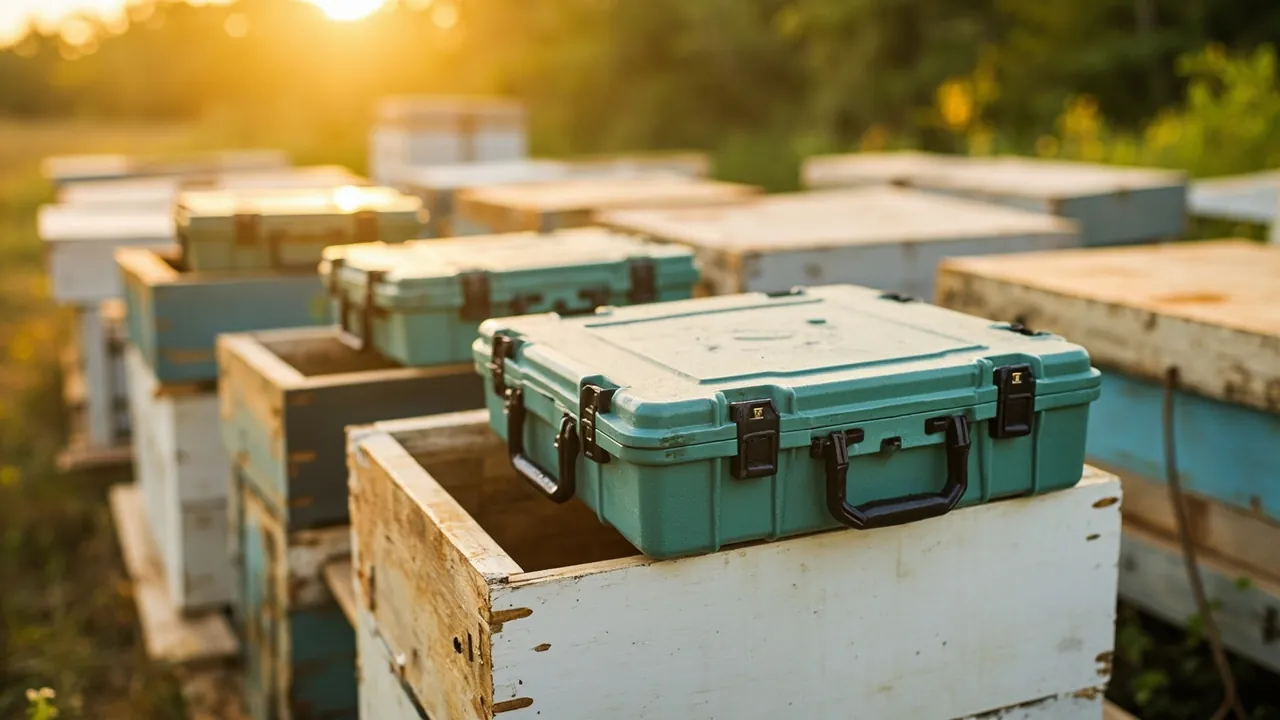
A beekeeping equipment case, also called a hive tool box, a beekeeping tool case, a queen transport case or a colony transport case, is a dedicated container system for storing, carrying and moving hive tools, protective gear and queen bees. Its core value is not simply holding tools but giving the sharp hive tool, the fragile comb frame, the temperature-sensitive queen and the stinging live bees categorized fixation, ventilation and temperature control, and safe protection in the field, during migration and in queen shipping. Compared with an ordinary toolbox, a beekeeping equipment case must additionally solve ventilation and oxygen, temperature buffering, escape and sting prevention, and hygiene and disinfection, and missing any one of these can cause colony stress, queen death or personal injury. This article examines the selection and design of beekeeping equipment cases, hive tool boxes, queen transport cases, colony transport cases and beekeeping tool cases, breaking down beekeeping pain points, the methods for classifying hive tools and building a storage list, case structure, the special requirements of queen transport, short-haul colony migration, temperature and ventilation, escape and sting prevention, material selection, seasonal and migration management, hygiene and disinfection, and the procurement and acceptance checklist, with tables that can be used directly in procurement and field work.
Readers who need the fundamentals of cases and liners should first review Plastic Protective Cases: Material and Structure and Foam Liner Comparison for Protective Cases. For sealing and moisture protection see Sealing Materials for Protective Cases and IP Rating and Sealing Analysis for Protective Cases, and for outdoor weather resistance see Outdoor Case Material Selection Guide.
What Beekeeping Equipment Cases Are
A beekeeping equipment case is a dedicated container used by beekeepers to store and carry hive tools, protective gear, feed and queen bees. It usually consists of a rigid shell, compartment dividers or a custom liner, ventilation features, handles and a latch system, with some models adding temperature control and a viewing window. The biggest difference from an ordinary toolbox is the presence of live animals and safety: a beekeeping equipment case carries not only inanimate tools but also stinging live bees and a queen sensitive to temperature and humidity, so it must satisfy categorized fixation, ventilation and oxygen, temperature buffering, and escape and sting prevention at the same time.
By use there are three types. The first is the hive tool case, for storing a hive tool, smoker, bee brush, uncapping knife, frame grip and protective veil, emphasizing compartmentalized fixation and portability. The second is the queen transport case, for shipping and introducing queens, emphasizing temperature control, humidity retention, ventilation and crush prevention. The third is the colony transport case, for short-haul colony migration and splitting, emphasizing ventilation, load capacity and escape prevention. The three share a common structure but differ in ventilation volume, temperature precision and safety design.
Typical users include commercial apiaries and hobby beekeepers; queen breeding and rearing operations; agricultural pollination service organizations; honey collection and processing businesses; apiculture teaching units in agricultural colleges and research institutes; and orchards and eco-farms that move colonies short distances. Wherever hive tools must be carried in an organized way or queens and colonies must be moved safely, that is the application boundary for a beekeeping equipment case.
Pain Points in Beekeeping Work and Transport
Pain points cluster in five areas. The first is sharp tools that are easy to injure with. A hive tool and uncapping knife have keen edges, and if they lie loose in a case they cut fingers on retrieval and can slash hives and clothing during handling. The second is many tool types and easy loss. A single hive inspection often needs a hive tool, smoker, bee brush, frame grip and record sheet at once, and tools dropped in the grass are very hard to find, and losing one directly slows the work. The third is the extreme sensitivity of live animals to temperature and ventilation. Bees and queens overheat and stress quickly, and can die, in a sealed hot box; a queen is especially sensitive to temperature and humidity, and a loss in transit is often irreversible.
The fourth is escape and sting prevention. If a transport case has gaps or poor sealing, bees escape and sting passers-by, and a case without sting protection also raises the operator's risk. The fifth is hygiene and cross-infection of bee disease. Hive tools are shared between colonies, and without disinfection they can spread spores and foulbrood pathogens and cause losses across an entire yard. These pain points are interrelated: disordered tools slow the work, delay increases colony stress, missing disinfection spreads disease, and disease then forces more frequent inspections, forming a vicious circle. The design logic of a beekeeping equipment case is therefore categorized fixation, ventilation and temperature control, escape and sting prevention, and hygiene and disinfection as one integrated whole.
Classifying Hive Tools and Building a Storage List
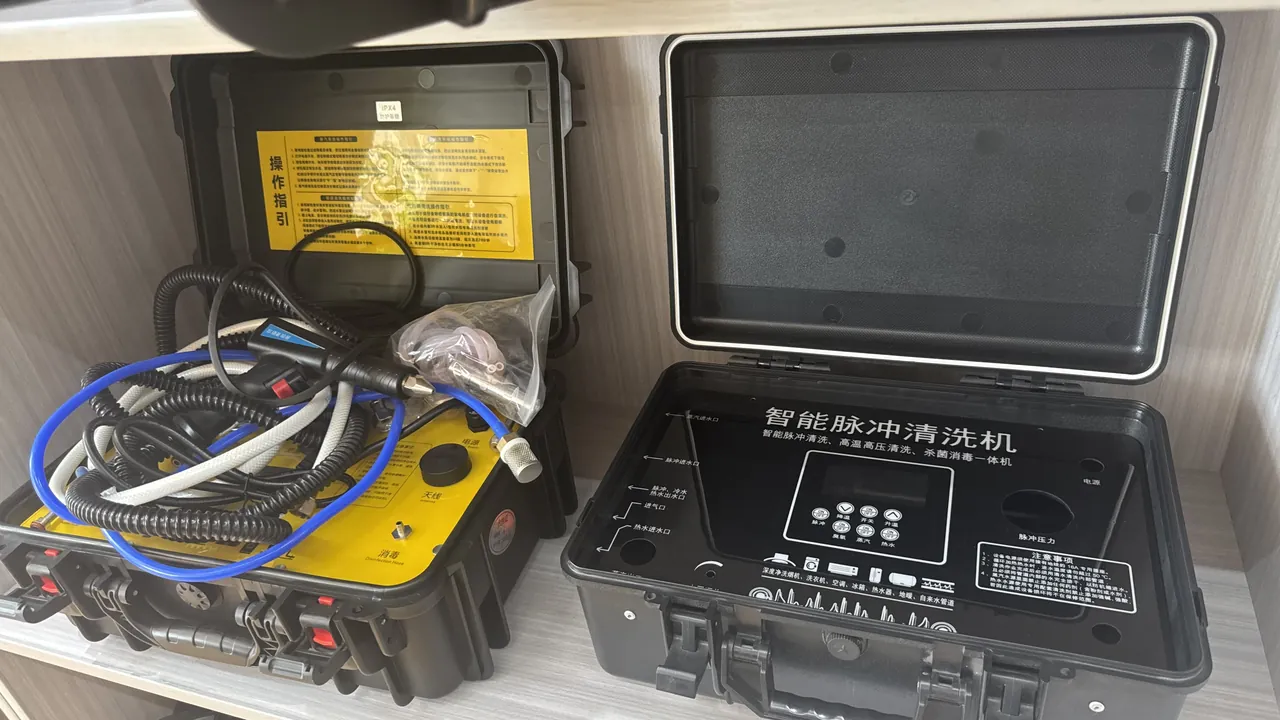
Scientific classification is the foundation of a beekeeping equipment case. Cross three dimensions: job type, frequency of use and safety level. Job type divides tools into inspection, honey harvest, queen rearing, feeding and protection; frequency separates high-use items such as the hive tool, smoker and bee brush from low-use items such as the uncapping knife, frame grip and queen-cell tools; and safety level separates edged tools, heat sources and live-animal containers, which must be fixed differently. Crossing the three gives a clear basis for compartments and labels.
List building should follow a three-layer method. The first layer is the base layer, covering the hive tool, smoker, bee brush, protective veil and gloves needed for every inspection. The second layer is the seasonal layer, adding tools by honey season, queen-rearing season and wintering period. The third layer is the special layer, configured separately for queen rearing, disease treatment and pollination services. This avoids carrying a pile of unused tools while avoiding a missing item at the critical moment.
| Function group | Typical tools | Frequency | Safety level | Storage note |
|---|---|---|---|---|
| --- | --- | --- | --- | --- |
| Hive inspection | Hive tool, frame grip, bee brush | High | Edged | Edge guard, dedicated slot |
| Smoking and calming | Smoker, fuel | High | Heat source | Insulated, away from flammables |
| Honey harvest | Uncapping knife, extractor parts | Seasonal | Edged | Cut-proof, fixed |
| Queen rearing | Queen-cell tools, grafting needle, cage | Seasonal | Live or precision | Temperature control, no crush |
| Protection | Veil, gloves, suit | High | Protective | Separate compartment, ventilated |
| Records and consumables | Record sheet, marker, feeder | High | General | Waterproof bag, accessible |
| Feed and treatment | Syrup, bee medicine | Seasonal | Hygiene | Sealed, temperature-safe, labeled |
The list should be revised after each job and migration: which tools were never used, which were hard to retrieve and which were damaged in transport, adjusting the configuration and compartments accordingly. The value of a list is that everything is within reach, not that it looks complete.
Structure of a Hive Tool Box: Compartments, Magnets and Fixation
Structure decides work efficiency and safety, and four elements are indispensable. The first is compartments. Compartments separate job types and safety levels so edged tools and protective gear do not mix, and they can be removable dividers or a custom liner that fixes each tool in one unique position so a missing item is obvious. The second is magnets and clips. Metal tools such as the hive tool and uncapping knife can be held by magnetic strips, preventing sliding and allowing one-handed retrieval, while a bee brush or mark pen can be held in elastic clips. The third is edge and heat-source protection. Edged tools should have a sheath or recess, and the smoker should sit in an insulated separate zone away from flammables to prevent burns or fire.
The fourth is handles and ease of opening. Beekeeping work often needs one hand free, so the lid should open one-handed and close reliably, and the handle should be wide or fitted with a shoulder strap for long walks into an apiary. For work carried out standing, an unfolding work tray or flip-top tool rest reduces repeated bending and standing. The case should also be easy to clean, with no dead corners inside, so wax, honey and propolis residue do not attract ants and bee enemies. The structural goal is find it at a glance, take it out one-handed and pack up and go, and every choice should serve the real motions of field work.
Special Requirements of Queen Transport Cases
Queen transport is the most demanding part of a beekeeping equipment case, and a queen transport case must satisfy temperature control, humidity retention, ventilation and crush prevention over a long shipment. The queen and her attendant workers are especially sensitive to temperature: overheating kills quickly and cold causes paralysis, so the transport environment should be held in a stable band, avoiding direct sunlight and hot vehicles. Ventilation is equally critical: it must allow gas exchange yet keep the openings small enough to prevent escape or invasion by foreign colonies.
Structurally, a common scheme is to place the queen with a few workers in a small cage, provided with fondant or syrup for feeding, and then fix the cage in an outer case with cushioning and ventilation holes. The outer case should have a crush-resistant structure so stacked loads do not press on the cage, and a foam liner can hold the cage in place, following the liner practice in Foam Liner Comparison for Protective Cases. For temperature control, cold packs and an insulation layer suit hot seasons and an insulating layer suits cold, but both should avoid sudden temperature change. Fit a temperature and humidity logger for traceability and responsibility definition. The core of queen transport is steady temperature, sufficient humidity, good ventilation and no crushing, and all four are required.
Colony Transport Cases and Short-Haul Migration
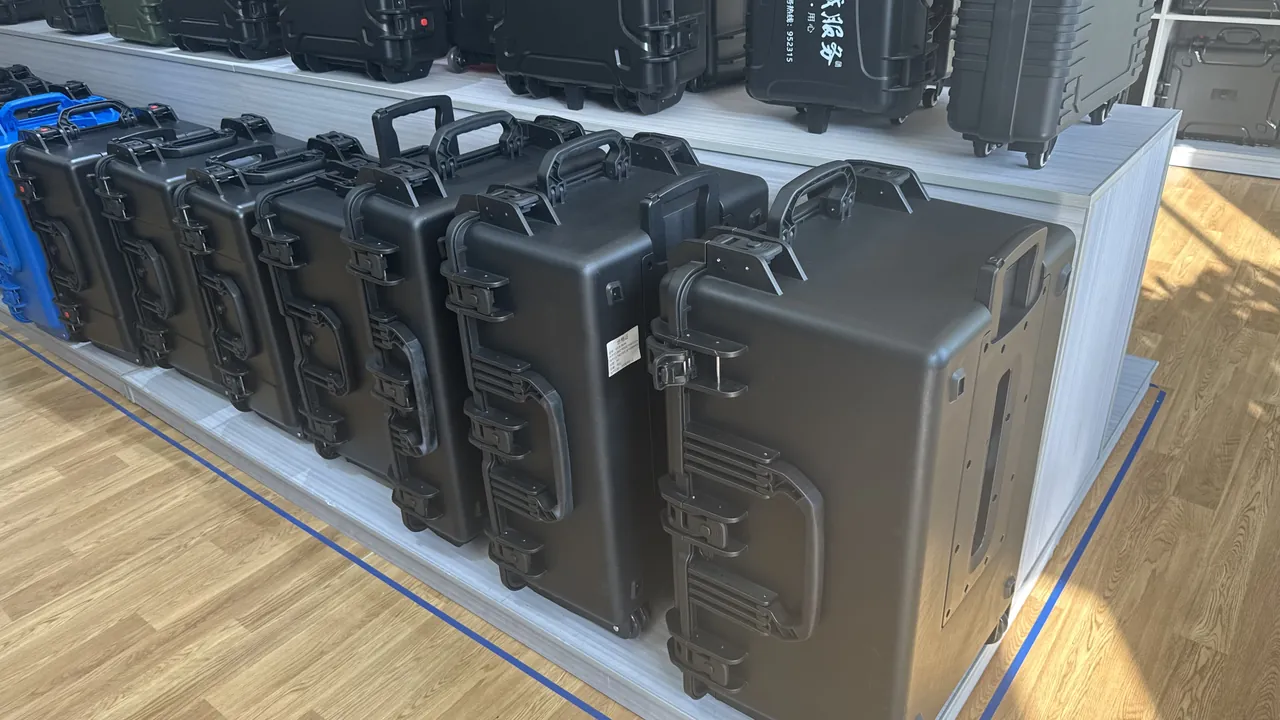
Colony migration is routine beekeeping, and a colony transport case must move the colony safely to a new nectar source at night or in the cool early morning. The three keys are ventilation, fixation and escape prevention. Ventilation is the most failure-prone link: a colony produces significant heat in a sealed case, and insufficient ventilation quickly overheats and suffocates the whole colony, so the transport case must have ample ventilation area and the openings must not be blocked by wax or debris; long journeys need ventilation and temperature checks mid-way. Fixation requires the combs and the case to be reliably joined so that bumps do not shift the combs, crush bees or break honey combs, and the case and vehicle should be joined by straps to prevent shifting under braking or cornering.
Escape prevention requires sealing every gap through which bees could escape during loading, parking and unloading. Work should be timed after the bees return at dusk or before they leave at dawn, with ventilation and fixation completed on site before loading and cooling and ventilation opened on arrival. For splitting and uniting, isolation and guidance equipment should be on hand. The essence of colony migration is to move with the shortest time and the least stress, and case design and work procedure must both ensure this.
Temperature, Ventilation and Overheating Prevention
Bees and queens are heat-producing living animals, so temperature and ventilation are the core capability that distinguishes a beekeeping equipment case from an ordinary toolbox. A colony produces heat continuously, and too high a temperature melts combs and kills bees, while poor ventilation accumulates carbon dioxide, raises humidity and induces stress and disease. Design should achieve adjustable ventilation area, a real inlet-outlet path, and cover against rain and escape: place vents at different heights for convection, fit fine mesh to prevent escape and bee enemies, and use an adjustable baffle to control ventilation in rain or transport.
For small volumes such as queen transport, cold packs or an insulation layer temper the temperature, but the cold source must not touch the cage directly and cause local low temperature. In hot seasons the case must not sit in the sun for long, and shading should be combined with ventilation for cooling. For critical transport, fit a temperature and humidity logger to turn an invisible environment into traceable data. The goal of temperature and ventilation control is not to drive the temperature to the lowest value but to keep the colony in a band that is not stuffy, not hot and not damp.
| Safety item | Risk | Design measure | Check frequency |
|---|---|---|---|
| --- | --- | --- | --- |
| Escape | Stinging passers-by | Fine mesh, gasket, gap sealing | Before every move |
| Burn or fire | Hot smoker | Insulated separate zone, away from flammables | Before every job |
| Cut injury | Hive tool edge | Sheath, dedicated slot | After every pack-up |
| Allergy emergency | Bee sting allergy | Labeled medicine compartment | Monthly |
Escape Prevention, Sting Protection and Safety Design
Safety is the non-negotiable bottom line of a beekeeping equipment case. For escape prevention, the case and lid should close tightly, vents should use fine mesh, and every gap should be sealed with a gasket or baffle; before and after transport, check for gaps and damage so bees cannot escape and sting. For sting protection, the work case should let the operator reach the veil and gloves quickly, and protective gear should sit in its own compartment and stay clean so that propolis and honey do not degrade its protection; for non-specialist users, the case should carry an external safety notice and emergency guidance.
The case should also avoid materials that retain strong odours, which irritate the colony, and hot tools such as the smoker should be stored apart from feed, medicine and flammables to prevent heat and fire risk. Where common medicine such as an antihistamine is carried, a separate labeled compartment ensures quick access in an emergency. The core of safety design is to isolate risk at the source: seal the gaps, separate the tools and keep protection within reach.
Material Selection: Injection, Roto, Aluminum and Wood
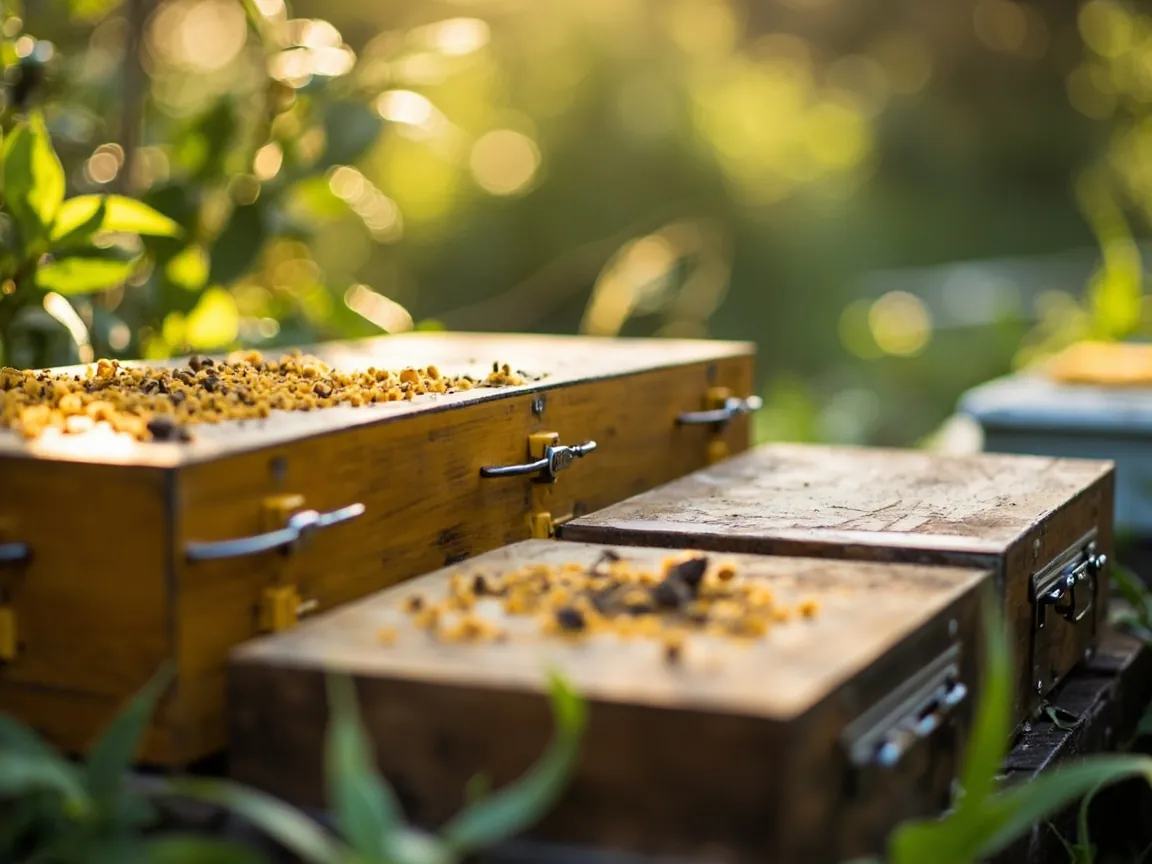
Material decides weight, strength, ventilation workability and hygiene. An injection-molded case is molded from PP or ABS with a thin wall, tight precision, low cost and easy cleaning, suited to small and medium hive tool cases issued in bulk, but its load and impact resistance are limited. A rotomolded case is molded in one piece from polyethylene with generous wall thickness, no weld seam and good impact and weather resistance, suited to large, heavy and frequently handled field work, and its smooth interior is easy to clean, but its self-weight is higher. An aluminum case is strong and dissipates heat, suited to precision queen-rearing tools and electronic record devices needing some shielding, but it costs more, conducts heat quickly and dents. A wooden case is traditional, breathable and easy to drill for vents, but resists moisture and wear poorly and warps and molds under long field use.
| Material route | Strength and weather | Ventilation workability | Moisture and hygiene | Typical fit |
|---|---|---|---|---|
| --- | --- | --- | --- | --- |
| Injection PP or ABS | Medium to high | Easy (molded holes) | Excellent | Small and medium, bulk issue |
| Rotomolded PE | High | Medium (secondary work) | Excellent | Large, frequent migration |
| Aluminum | High | Medium | Medium | Precision queen tools, electronics |
| Wood | Low | Easy (drill yourself) | Poor | Traditional and display, temporary |
Material choice should also consider outdoor and climate factors: a case exposed to sun and rain at an apiary should use UV-resistant and weather-resistant material to avoid fading and embrittlement, and inner surfaces that touch feed or medicine should be easy to clean and, where needed, food-contact compliant. Related weather-resistant material guidance is in Outdoor Case Material Selection Guide. In the apiary, weather resistance, easy cleaning and ventilability usually matter more than saving weight.
Honey Season, Migration and Seasonal Management
Beekeeping has clear seasons, and the case configuration should change with them. The honey season needs harvest and uncapping tools, extractor accessories and empty comb frames, so the case should hold a long uncapping knife and comb frame and have a liner that resists honey seepage. The queen-rearing season needs grafting needles, queen-cell tools and a queen transport case, emphasizing precision fixation and temperature control. The wintering period needs insulation and feeders, and the case should store feed and insulation materials. The migration period centers on colony transport cases, emphasizing ventilation, fixation and escape prevention.
Seasonal management should keep the list updated by season and rotate consumables first-in-first-out. Register feed and medicine with a shelf life to avoid expiry, and clean wax and propolis residue promptly because it attracts ants and bee enemies. For cross-region migration, watch the local nectar source and climate differences and adjust ventilation and temperature control in advance, avoiding packing by old habits and finding the new site unsuitable. The essence of seasonal management is to keep the equipment in step with the colony rhythm rather than using one configuration all year.
Hygiene, Disinfection and Bee Disease Control
Bee disease spreads largely through shared tools and contaminated cases, so hygiene and disinfection must be systematic. After every job, clean the hive tool, frame grip and case interior of wax, honey and propolis residue so pathogens and bee enemies do not gather; tools that touched a suspect colony should be isolated and disinfected separately. The case interior should be smooth and free of dead corners for easy wiping and rinsing, and a removable liner should be cleanable and dryable as one piece.
Disinfection should choose methods that are safe for tools and people and leave no residue affecting later colonies, and metal tools should be protected against rust. Keep one file per case recording the colonies it served, cleaning and disinfection times and any anomalies for traceability and control. Queen transport cases, which touch live animals, must be especially clean to avoid spreading pathogens in transit. Hygiene is not an extra burden but the basis of colony health and honey quality.
| Operation | Frequency | Key point | Owner |
|---|---|---|---|
| --- | --- | --- | --- |
| Clean wax and propolis | After every job | Interior and tool edges | User |
| Disinfect | After a diseased colony or on schedule | Safe, no residue | User or manager |
| Wash vent mesh and liner | Periodic | Prevent clogging and mold | Maintenance |
| Check feed and medicine | Seasonal | Shelf life, sealed | Manager |
Maintenance, Care and Replacement
A beekeeping equipment case needs simple but consistent maintenance. After each job, clean residue and check the latches, handle and vent mesh; after damp or rainy use, dry before storage to avoid mould and rust; during long storage, avoid heavy loads and sun exposure to slow material ageing. Keep spares for replaceable parts such as the gasket, vent mesh, liner and handle so they can be swapped quickly on site and a small failure cannot disrupt migration or queen rearing.
Care should also watch for material ageing: replace a plastic case that becomes brittle or cracked, remove rust and apply anti-rust to metal parts, and replace foam liners that lose resilience or mold. Keep a ledger with periodic checks, recording each migration, cleaning and repair and rotating on schedule. Bringing maintenance into asset management markedly extends equipment life and lowers total cost of ownership. A good beekeeping equipment case is not finished when bought, but cleaned once per use and checked once per season.
Procurement and Acceptance Checklist
Procurement should evaluate case, compartment liner, ventilation, safety and hygiene as one whole, and the technical clauses must be clear and verifiable. The recommended checklist is: first, use and scenario, stating hive tool storage, queen transport or colony migration, as the input to capacity and structure; second, case size, structure and material, including whether vents and dividers can be added; third, the compartment and fixation scheme such as removable dividers, magnetic strips, custom liner and edge guards; fourth, ventilation and temperature control requirements, including ventilation area, whether adjustable, and whether cold packs, insulation and a logger are provided; fifth, safety design such as fine mesh, gaskets, heat-source isolation and a labeled medicine compartment; sixth, load and handling configuration such as handles, shoulder strap and casters; seventh, hygiene and disinfection requirements, including easy-clean interior and food contact where needed; eighth, documents including material certificates and sampling plan; and ninth, lead time, packaging and after-sales terms.
Acceptance should use three steps of first article, measurement and sampling. On the first article check compartment and tool fit, latch and handle feel, and ventilation and mesh quality; measure closure tightness, ventilation volume and handling load; and sample material, liner consistency and label durability.
| Acceptance item | Method | Pass criterion |
|---|---|---|
| --- | --- | --- |
| Compartment and fixation | Load tools and check | No shift, edges guarded |
| Closure tightness | Gap inspection | No escape gap |
| Ventilation | Vent volume and mesh check | Adequate ventilation, fine mesh |
| Load and handling | Full-load handling test | One-person carry, no cracking |
| Safety and hygiene | Heat isolation and interior check | Isolated, easy to clean |
| Documents and service | Material certificates and warranty | Complete and accountable |
Common Mistakes to Avoid
Mistake one: using an ordinary toolbox for hive tools, when the lack of compartments and ventilation injures hands and damages queens and live bees. Mistake two: making the case fully sealed, when the colony and queen die of oxygen starvation and heat, so ventilation is required rather than optional. Mistake three: ignoring fixation, when combs and cages shift and get crushed by bumps. Mistake four: migrating only in daylight, when hot hours carry higher risk and dusk or dawn is safer. Mistake five: not disinfecting hive tools, when shared tools spread bee disease and cause losses across a yard. Mistake six: storing a heat source with flammables, when the hot smoker can start a fire. Mistake seven: carrying no emergency medicine, when a bee-sting allergy cannot be treated in time. Putting these into the review table prevents most work and transport accidents.
Frequently Asked Questions (FAQ)
Question: What is the essential difference between a beekeeping equipment case and an ordinary toolbox? Answer: The essential difference is whether it carries live animals and safety risk. An ordinary toolbox carries only inanimate tools and focuses on strength and capacity, whereas a beekeeping equipment case also carries stinging bees and a queen sensitive to temperature and humidity, so it must satisfy categorized fixation, ventilation and oxygen, temperature buffering, and escape and sting prevention at once. It must not only keep edged tools organized and within reach but also give the colony and queen a breathable, not-overheated transport environment, isolate heat sources, seal escape gaps and reserve a spot for emergency medicine. In short, an ordinary toolbox solves fitting things in while a beekeeping case solves packing safely and arriving alive.
Question: Why is queen transport so sensitive to temperature? Answer: Because the queen and her attendant workers are heat-producing living animals that are extremely sensitive to temperature change. Overheating kills quickly and cold causes paralysis or cold injury, and sudden change causes stress that affects later egg laying and acceptance. A queen transport case must therefore hold a relatively stable band over a long shipment, avoid direct sunlight and hot vehicles, and use cold packs with an insulation layer in hot seasons and added insulation in cold. Ventilation and some humidity must also be maintained to prevent stuffiness and dehydration. A temperature and humidity logger makes the journey traceable and helps build experience and define responsibility.
Question: Which link most often fails during colony migration? Answer: Ventilation and timing fail most often. A colony produces significant heat in a sealed case, and insufficient ventilation quickly overheats and suffocates the whole colony, while migrating in the hot daylight hours makes the rise worse and adds stress. The transport case must therefore have ample, covered ventilation, and migration should be done after the bees return at dusk or before they leave at dawn, with ventilation and fixation completed on site before loading, checks mid-way, and cooling and ventilation opened on arrival. Fixation matters too: combs and case must be reliably joined and the case strapped to the vehicle to prevent crushing and broken honey combs.
Question: Does a hive tool box need ventilation? Answer: Yes, especially when it carries live bees, a queen or freshly removed comb. Ventilation serves the breathing of live animals and also prevents excessive internal humidity that causes mould and spoils feed. Ventilation should have adjustable area, a real path and cover against escape: place inlets and outlets at different heights for convection, fit fine mesh to stop bees escaping and bee enemies entering, and use an adjustable baffle in rain or transport. If the case carries only tools, ventilation can be reduced for better moisture and dust protection, but it should still be dried after work so wax and honey residue do not attract ants.
Question: How should the material of a beekeeping equipment case be chosen? Answer: By scenario and budget. Small and medium hive tool cases issued in bulk favor injection molding for precision, low cost and easy cleaning; large, heavy and frequently migrated cases favor rotomolding for impact and weather resistance and a smooth easy-clean interior; precision queen tools and electronic record devices favor aluminum for strength and heat dissipation, though it costs more and dents; traditional and temporary use can consider a wooden case, which is breathable and easy to drill, but resists moisture and wear poorly. Whichever is used, the case should take vent mesh and dividers easily and tolerate sun and rain without fading or becoming brittle.
Question: Do hive tools need disinfection, and how should it be managed? Answer: Yes, and it should be systematic. Bee disease spreads largely through shared tools and contaminated cases, so after each job clean the hive tool, frame grip and case interior of wax, honey and propolis, isolate and disinfect tools that touched a suspect colony, and keep the interior smooth and free of dead corners with a liner that can be removed for cleaning and drying. Disinfection should be safe for tools and people and leave no residue affecting later colonies, and metal tools should be rust-protected. Keep one file per case recording the colonies served, cleaning and disinfection times and anomalies for traceability and control.
Question: How should combs and the case be fixed during migration? Answer: The goal is stable combs, a stable case and no panic. Join the combs to the case reliably, adding frame clips or fixing bars where needed, so bumps cannot crush bees or break honey combs; strap the case to the vehicle through lift points or reinforced areas, with heavy cases low and light cases high, to prevent shifting and tipping under braking or cornering; and seal every gap through which bees could escape during loading, parking and unloading. Complete ventilation and fixation on site before loading to reduce the number of openings in transit and lower stress and escape risk.
Question: What is most often overlooked when procuring a beekeeping equipment case? Answer: Ventilation, fixation and safety are most often overlooked. Focusing only on capacity and appearance means discovering insufficient ventilation that suffocates bees, unfixed combs that crush bees and unsealed gaps that let bees escape and sting, only during migration. Write use and scenario, case size and material, compartment and fixation, ventilation and temperature control, safety design including fine mesh, gaskets, heat-source isolation and a medicine compartment, load and handling, and hygiene and documents into the procurement file, and agree a first-article confirmation and batch sampling rule. Only by writing pack safely and arrive alive into the clauses can a good sample be prevented from being unusable in practice.
Conclusion and Related Reading
The value of a beekeeping equipment case is that it builds categorized fixation, ventilation and temperature control, escape and sting prevention, and hygiene and disinfection into one case. In selection, first define the use and scenario, then set the compartment and fixation, the ventilation and temperature design, and the safety and hygiene requirements, and finally close the loop with maintenance and a procurement and acceptance system. Taking find it at a glance, take it out one-handed and arrive alive as the design goal is what keeps hive tools from cutting hands, queens from dying and colonies from overheating. For apiaries that combine hive tool storage, queen shipping and colony migration, configure cases by purpose to balance work efficiency, live-animal safety and colony health.
For further reading, see Plastic Protective Cases: Material and Structure, Foam Liner Comparison for Protective Cases, Sealing Materials for Protective Cases, IP Rating and Sealing Analysis for Protective Cases and Outdoor Case Material Selection Guide. JUNZHJIA offers a complete matrix from standard beekeeping equipment cases to fully custom apiculture transport programmes; select according to your hive workflow and colony profile.
This article is SEO/GEO technical content. Figures are typical and empirical values; specific parameters are subject to the manufacturer's latest test reports and customization scheme.