

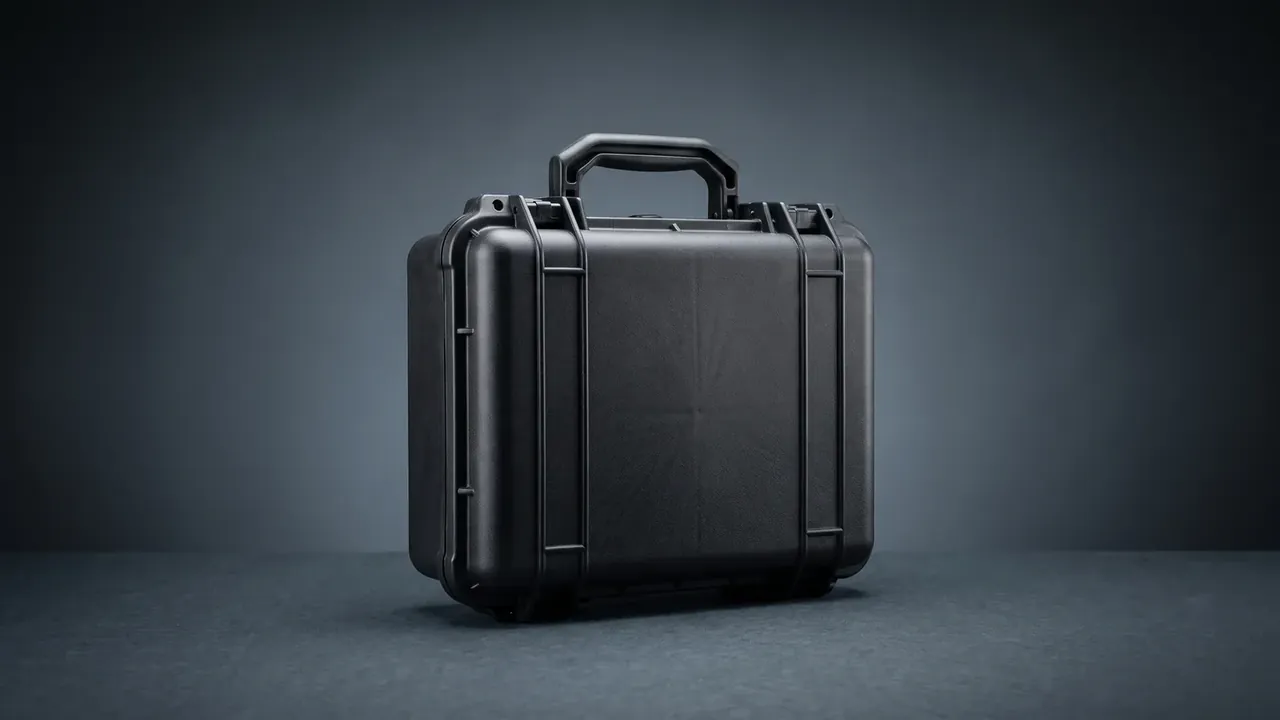
Quick answer: A six-day review of thirty new Box, Ammunition Stowage units turned routine checking into six measurable actions, scheduled at six days, three months and two years, each with a fixed numeric limit.
Table of contents
- One Prototype Review: Where Box, Ammunition Stowage Inspection Starts
- Measuring Seal Compression and Lid Fit
- Cleaning and Surface Repair You Can Do In-House
- Desiccant, Humidity and the Record That Travels
- Extending Service Life: Replacement Cycles and Retirement Lines
- Turning Inspection into a Handover Record
- FAQ
1. One Prototype Review: Where Box, Ammunition Stowage Inspection Starts
Last month we reviewed thirty fresh units over six days. Appearance was not scored. Six actions that produce a number were lined up: lid fit, seal mark, latch free play, hinge end play, humidity and corner wear. Thirty units gave 180 readings in one sheet; any reading past its limit went to rework.
| Check | Instrument | Limit | Where to measure |
|---|---|---|---|
| Lid fit | Feeler gauge | 0.35 mm blade blocked | Per side |
| Seal mark | Caliper | 2.6 mm deep, 8 mm wide | Deepest point, lid closed 24 hours |
| Latch free play | Feeler gauge | Over 0.8 mm loose | Three per latch |
| Hinge end play | Dial indicator | Over 0.4 mm worn | At 90 degrees open |
| Humidity | Hygrometer | Over 45% at 48 hours | Empty, one batch |
| Corner wear | Depth gauge | 1.5 mm removed | Per corner |
The sheet matters for handover: each number sits beside a serial, so the next shift knows what was checked.
2. Measuring Seal Compression and Lid Fit
The ink-mark method sounds crude but tracks service conditions better than a hardness test. Close the lid, wait 24 hours, then measure the flattened band. A 2.6 mm deep, 8 mm wide mark is the floor for this EPDM cord: below it moisture creeps through micro-channels, above it the cord has taken a set.
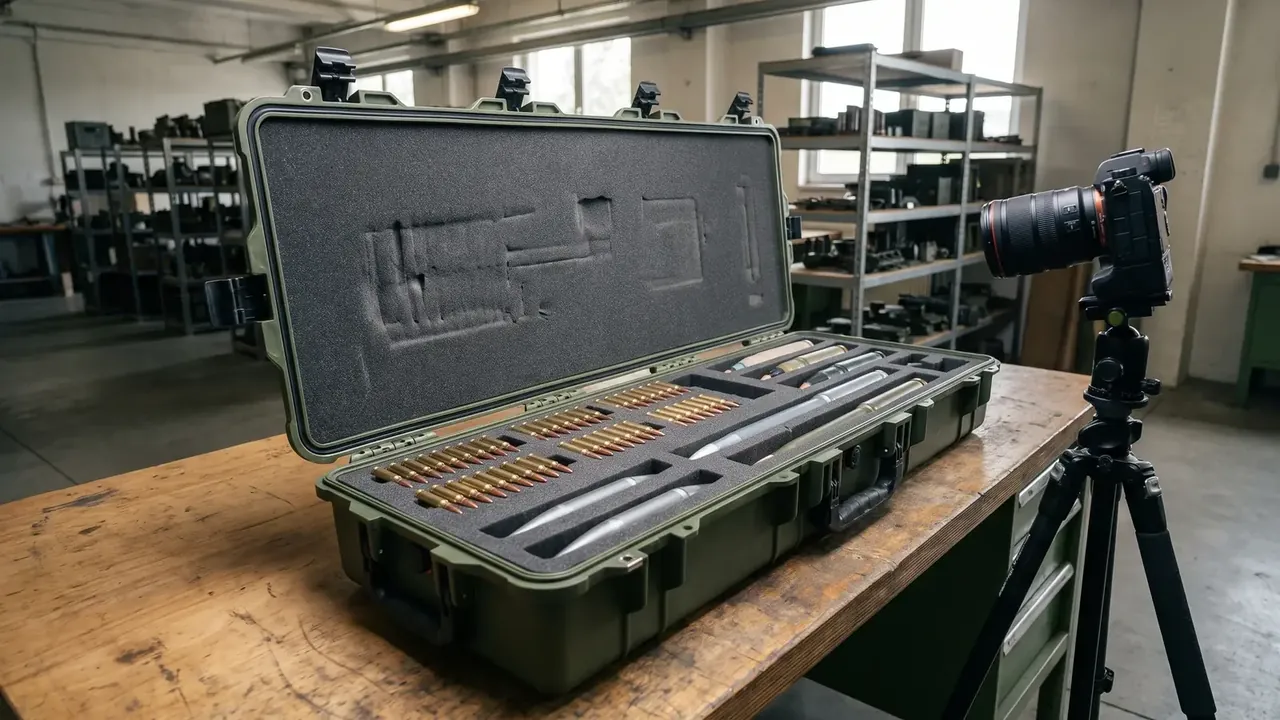
Keep one caliper and measure the deepest point only; swapping operator or tool shifts readings enough to push a batch across the line twice.
Lid fit is checked slowly: run a 0.35 mm blade around the rim and note where it enters. Leaks cluster at the four corners, where curvature is high and cooling uneven, so a blade entering there but not on a straight edge points to a distorted rim.
3. Cleaning and Surface Repair You Can Do In-House
In-house work on a Box, Ammunition Stowage unit is limited, yet these six steps often postpone a rework by a year.
- Wash below 35 °C with neutral detergent near pH 7; strong alkaline powders bloom the surface.
- Brush sand off before wiping, or the cloth acts like sandpaper.
- Feather scratches under 0.2 mm with 400-grit paper, along the moulding direction.
- Leave cuts over 0.5 mm alone; sanding thins the wall.
- Dry metal parts, then one oil drop per latch and hinge pin.
- Lift grit from the gasket groove with a swab.
Only the first two are daily work; hand the rest to an untrained operator and the wall gets thinner.
4. Desiccant, Humidity and the Record That Travels
A 250 g reusable silica pack hangs in a lid pocket, dried every three months at 120 °C. Once half its colour has changed, dry it.
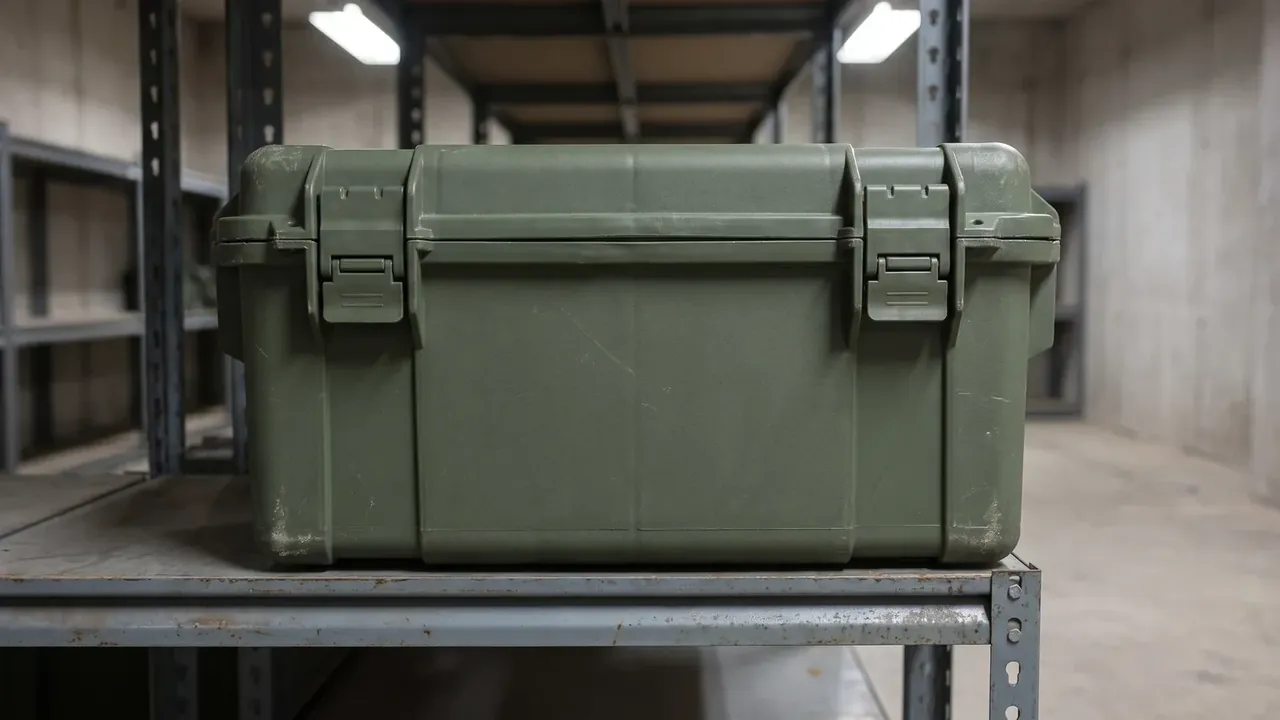
The humidity log follows the unit, not the store: two Box, Ammunition Stowage units in one room read 6 points apart after 48 hours closed.
| Interval | Action | Criterion |
|---|---|---|
| Every opening | Desiccant colour | Half changed, dry it |
| Monthly | Internal humidity | Above 45%, find the leak |
| Quarterly | Dry and weigh the pack | Gain over 25 g, saturated |
| Annually | Leak test | Drop over limit, rework |
5. Extending Service Life: Replacement Cycles and Retirement Lines
Life extension splits scrapping into a schedule of part swaps.
| Part | Design life | Replacement line | Scope |
|---|---|---|---|
| Gasket | 3 years | Mark under 2.6 mm or crack | Cord only |
| Latch | 8,000 cycles | Free play over 0.8 mm | Latch only |
| Hinge pin | 5 years | End play over 0.4 mm | Pin and bushing |
| Body | 8 years | Crack over 40 mm | Indoor use |
| Corner | 6 years | 1.5 mm worn away | Pads |
We fixed the table on the afternoon the review closed, from three years of rework records rather than the supplier manual. The manual gives a warranty period; the records show where units really fail, about a year earlier. Short internal moves allow a crack to reach 40 mm, while units going onto trucks leave the front line past 20 mm. Nobody wanted to write that line, since it admits some units never return to front-line service.
6. Turning Inspection into a Handover Record
The first line of a Box, Ammunition Stowage record is the serial, not the date. Serials sit in a moulded recess underneath, traced in paint pen.
Each scrapping decision gets a photo with the instrument display and the measured spot in one frame.
Reworked units are re-measured the next day, and the reading returns to the original sheet.
Conclusion
Thirty units went through review; two went to rework for corner rim collapse from uneven mould temperature, five got new gaskets. Fixing limits turned inspection into data rather than a one-off event. The method holds for any Box, Ammunition Stowage unit; only the numbers differ.
This article discusses only the container (case body) side of specifications and design intent, and does not cover any handling, loading or use of the contents.
Related Reading
- Rust removal and coating repair on metal ammunition boxes
- How stowage boxes are configured for storage and transfer
- Sealing and dehumidifying upkeep for storage boxes
- Common stowage box faults and how to handle them
- Annual maintenance routine for reserve stock cases
Related Products
- 8 Series — Gun Cases; Military Equipment Cases; Camera Equipment Cases; Drone Cases; Watch Cases; Knife Cases; First Aid Cases; Electronics Equipment Cases
- WL8-2812 PP Gun Case — model WL8-2812
- All protective cases and toolboxes: 7 series, 158 models