

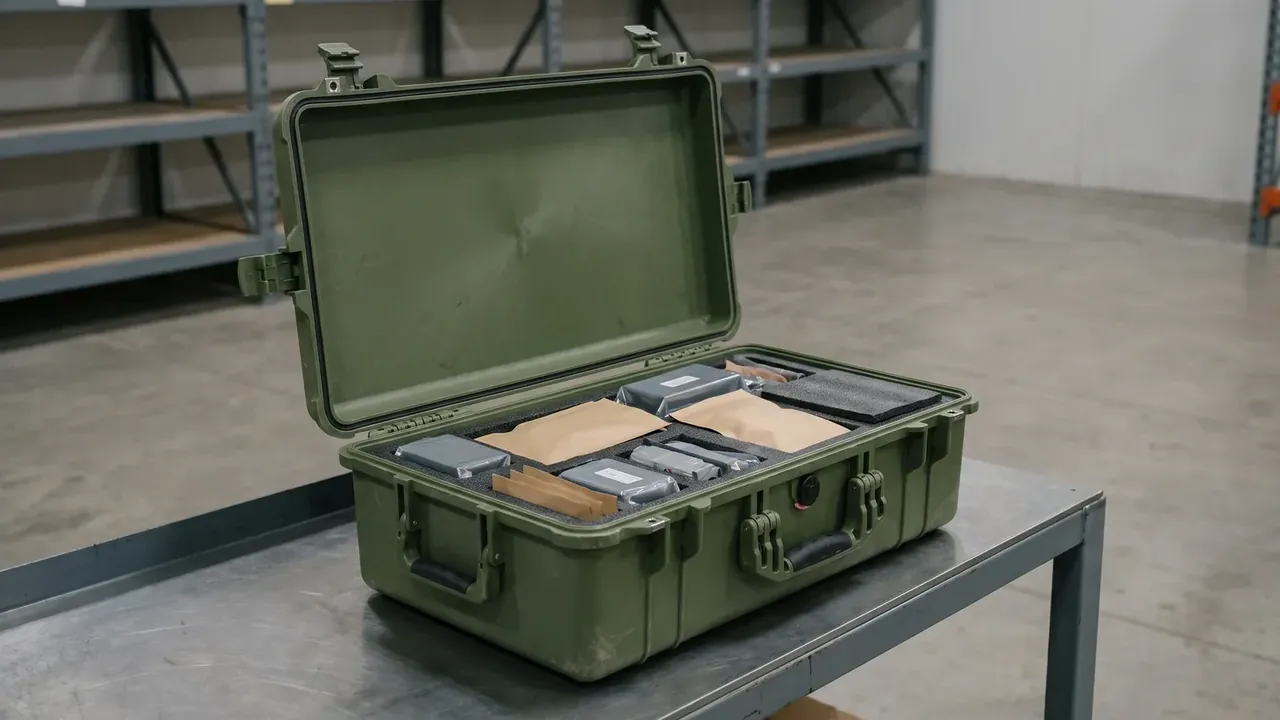
Quick answer: Case export africa means 30–45 days at sea, so moisture control needs two layers: 1 kg/10 m³ in the hold and 30 g inside each case.
Table of contents
- Where the moisture comes from
- Hold-level desiccant at 1 kg/10 m³
- Case-level desiccant and gasket permeance
- Pallet clearance and three logger points
- The first 30 minutes after opening
- Writing both layers into the loading sheet
- FAQ
1. Where the moisture comes from
Shanghai to Lagos is 32 days, Shenzhen to Mombasa 28, so case export africa lands at 30–45 days. The roof panel reaches 60 ℃ by day and 20 ℃ at night, and air at 30 ℃ and 85% RH holds 25.8 g/m³, of which 21.8 g survives a drop to 24 ℃.
| Interior condition | Dew point | Water released per m³ at 20 ℃ |
|---|---|---|
| 32 ℃ / 85% | 29.1 ℃ | 11.5 g |
| 30 ℃ / 85% | 27.2 ℃ | 8.5 g |
| 28 ℃ / 80% | 24.2 ℃ | 4.5 g |
| 26 ℃ / 75% | 21.2 ℃ | 1.0 g |
A 40GP holds 68 m³ of air and sheds 306 g a night at 28 ℃ and 80%, or 12 kg over 40 days, the capacity of 24 bags of 500 g calcium chloride. Rain leaves a sharp line on the door side; condensation starts at the roof.
2. Hold-level desiccant at 1 kg/10 m³
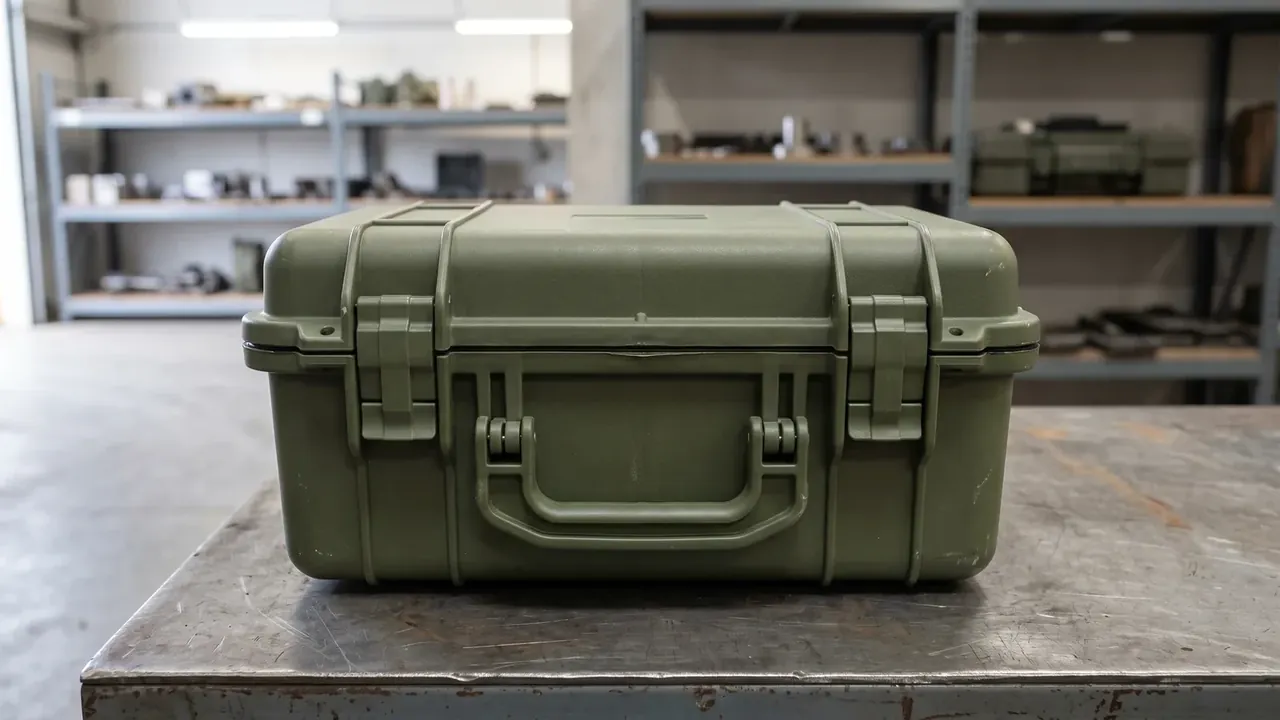
The baseline is 1 kg per 10 m³ for 30 days: a 20GP at 33 m³ takes 3.3 kg, a 40GP at 68 m³ takes 6.8 kg. On a 45 day lane multiply by 1.5, so the 40GP needs 10.2 kg or 21 bags of 500 g.
| Size | Interior volume | 30 day base | 45 day case | 500 g bags |
|---|---|---|---|---|
| 20GP | 33 m³ | 3.3 kg | 5.0 kg | 10 |
| 40GP | 68 m³ | 6.8 kg | 10.2 kg | 21 |
At 25 ℃ and 80% RH calcium chloride absorbs 120% of its weight against 20% for clay, so 10 kg captures 12 kg. Hang one bag every 2 m on the ceiling, two per door leaf, four on 50 mm risers.
A 2 mm nick in the door gasket doubles air exchange, so replace any seal below 25% compression. Below 40% RH corrugated strength also falls from 4800 N to 3600 N.
3. Case-level desiccant and gasket permeance
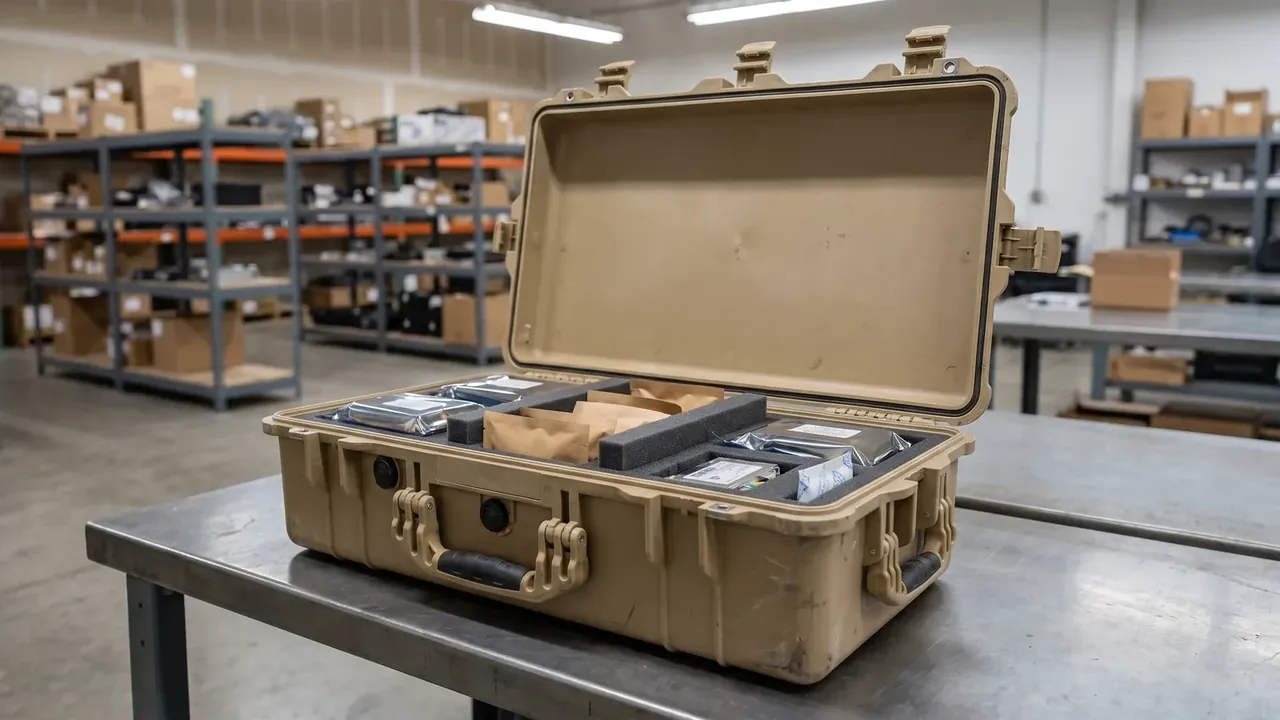
Each case carries 30 g of silica gel in a non-woven bag, pressed above the foam cells so it shows the moment the lid opens. The 45 L interior holds 1.2 g of water at 30 ℃ and 85%, and 30 g of silica absorbs 6 g, a fivefold margin.
The variable is the gasket: a 60 Shore A silicone profile compressed 25% to 30% permeates 0.02 g per metre per day, so a 1.2 m perimeter passes 1.1 g in 45 days. At 15% compression permeance quadruples to 4.4 g. Run a 30 min check before loading: 85% down to below 55% means the latches and groove work.
Blue turning pink means the silica is half spent, so sample three cases and replace the lot when two have changed. The hinge leaks next: 0.3 mm bore clearance lifts daily permeance from 0.024 g to 0.09 g, the white bloom on older case export africa lots.
4. Pallet clearance and three logger points
Hold the pallet face 100 mm off the floor with plastic blocks. The floor panel swings through the widest range and can carry 5 mm of standing water, so a pallet set flat sits in water.
Three loggers answer three questions: roof marks condensation onset, middle reads the air around cases, floor shows standing water.
| Point | Position | Height | Reads | Trigger |
|---|---|---|---|---|
| A roof | 1 m inside the door | 2.2 m | condensation onset | 15 K above point B |
| B middle | mid length, above stack | 1.0 m | air around cases | 75% for 6 h |
| C floor | rear, on the floor panel | 0.3 m | water and wicking | under 5 K below A |
Use one model: −30 to 70 ℃, ±0.5 ℃ and ±3% RH, 30 min interval. Only above a 15 K spread between A and B is the box really breathing.
5. The first 30 minutes after opening
One wrong step undoes 45 days. Outside air rushes in within 90 s of cracking the door, the case surface sits below dew point, and water lands on the lid where the foam takes it.
Six steps in fixed order: read the logger, open 300 mm and hold 15 min, confirm the lid is 2 ℃ above dew point with an infrared gun, take the top tier out with each lid open under 30 s, reach a store below 60% RH within 30 min, photograph the silica. Three in ten case export africa rework claims start on opening day.
6. Writing both layers into the loading sheet
Six fields are mandatory: desiccant lot and bag count, logger serials with three positions, closing time and ETA, the two opening thresholds, block height, two signatures.
The field most often dropped is the logger serial: without it a curve handed over 45 days later cannot be tied to a box or a tier. Write thresholds, not adjectives.
Conclusion
The moisture budget for case export africa ends on two lists: the hold layer manages 68 m³ of air, the case layer manages 45 L per unit, and 100 mm of pallet clearance separates them. Judge with three numbers: interior humidity above 75%, roof to floor spread beyond 15 K, a lid within 2 ℃ of dew point at opening. Inside those limits a 30 day configuration holds; cross any one and move to 45 days at 10.2 kg plus 30 g per case.
| Layer | Covers | Configuration | 45 day quantity | Pass mark |
|---|---|---|---|---|
| Hold | 68 m³ of air | calcium chloride 500 g, 6 roof, 2 door, 4 floor | 10.2 kg | interior RH ≤60% |
| Case | 45 L per unit | silica gel 30 g above the foam | one bag each | lid-open RH ≤55% |
| Interface | floor water | 100 mm blocks on the bearers | 4 per pallet | pallet face at 100 mm |
| Monitor | three point logging | 3 loggers at 30 min | 3 per box | roof to floor ≤15 K |
This article discusses container-side specifications and design implications only, and does not cover any handling, loading or use of the contents.
Related Reading
- Moisture control inside sea freight
- Humidity control in camera cases
- Setting humidity in a cigar humidor case
- Outdoor cases through the rainy season
- Export packaging requirements and checks
Related Products
- 8 Series — Gun Cases; Military Equipment Cases; Camera Equipment Cases; Drone Cases; Watch Cases; Knife Cases; First Aid Cases; Electronics Equipment Cases
- WL8-2812 PP Gun Case — model WL8-2812
- All protective cases and toolboxes: 7 series, 158 models