

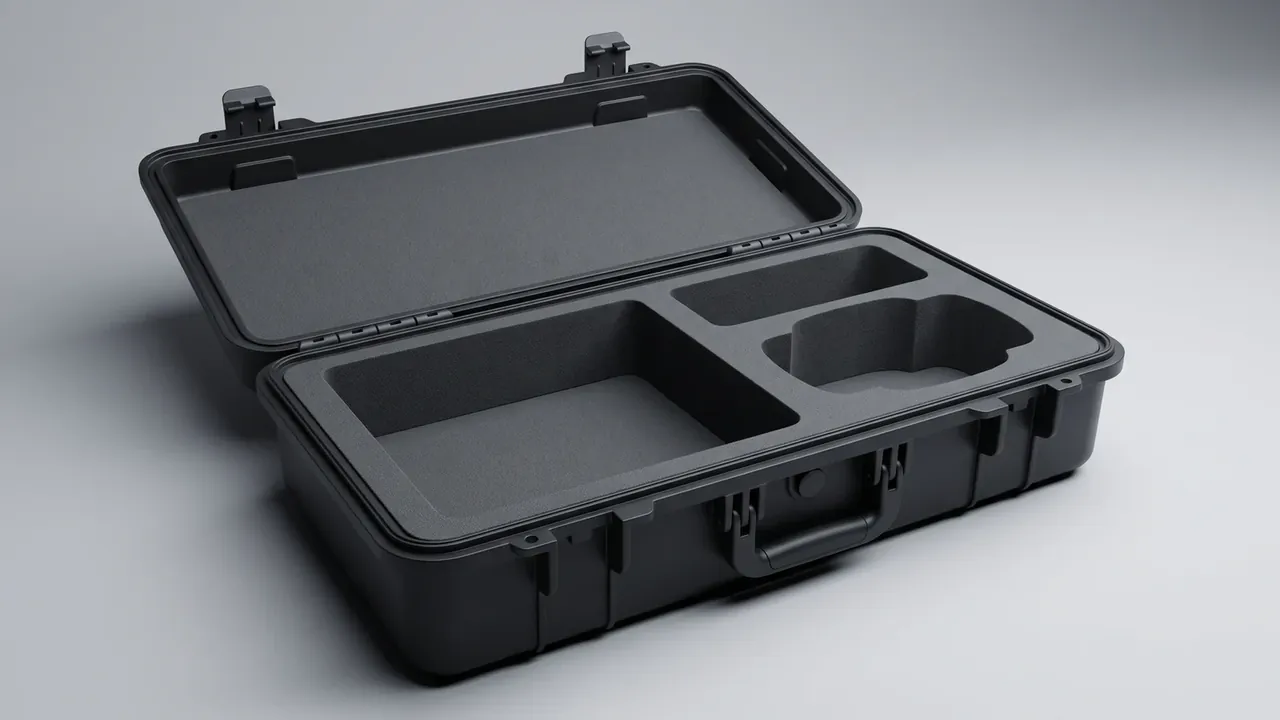
Quick answer: One visit, five duties, five sets of hand movements: 20 cycles for electronics, 3 open-close moves at -20℃ for field gear, 30 m of rolling for rental stock. Pick the movements to the duty and 8 hours covers the lot.
Table of contents
- Electronics lines: twenty open-close cycles
- Medical instruments: handing samples over outside the clean room
- Rental and field gear: wheels, handles, latches
- Mistakes across five duties, and on-site fixes
- FAQ
1. Electronics lines: twenty open-close cycles
The recorder maker asked for 20 cycles at the assembly bench in three rounds: five empty to listen, five in cotton gloves, ten with 12 kg of ballast inside. The sample that felt fine on the table failed in round three, when the right latch needed a 45 degree lift from cycle 14, meaning the hook had worn 0.4 mm.
Opening and closing is the cheapest movement on a case factory tour, and the one most often skipped. Three empty cycles say nothing about a case that ships full.
| Duty | On-site action | Watch for | Usual mistake |
|---|---|---|---|
| Electronics | 20 cycles empty and at 12 kg | One-hand opening after cycle 15 | Empty case only |
| Medical | Pass box handover in 0.1 mm nitrile gloves | Thumb finding the latch step | Display table test |
| Rental | 30 m roll on 75 mm wheels over a threshold | Caster screws backing out | Flat floor only |
| Field | 3 cycles at -20℃ after 4 hours | Gasket rebound, shell brittleness | Signing at room temperature |
| Ordnance | Six-face drop, 1.2 m, 25 kg | Latches popping, liner shift | One corner only |
One case carries five acceptance readings, not one, so a tour groups samples by duty.
2. Medical instruments: handing samples over outside the clean room
Medical buyers cannot take a case inside, so the handover happens at a 1.5 m pass box: in through one door, out through the other. Watch the case in that opening: can one hand steady it, and will the lid fold down on a wrist while the other is inside?
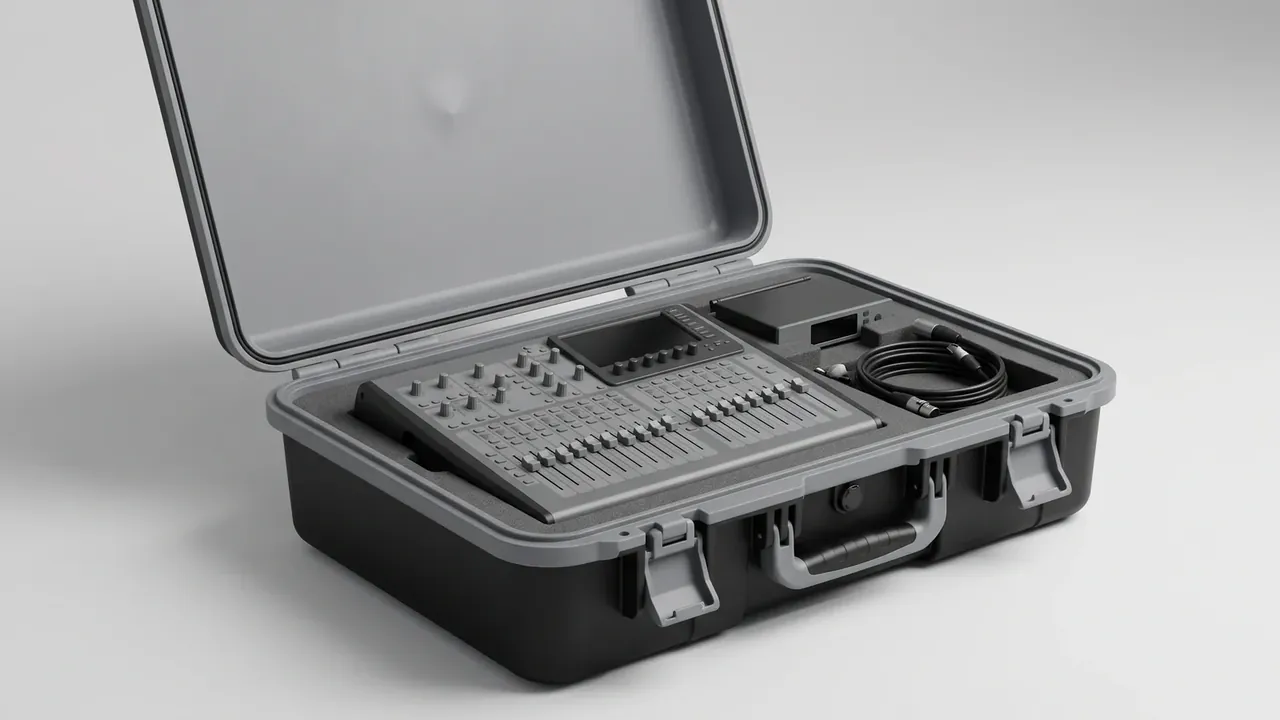
Nitrile gloves at 0.1 mm cost most of the fingertip feel. A latch step only 1 mm high disappears under a glove, the operator re-checks it every time, and a handover that should take 40 seconds stretches to 90. Ask for gloves on a case factory tour; it beats three pages of test data.
3. Rental and field gear: wheels, handles, latches
Rental stock has to be rolled, not admired. Fit 4 wheels of 75 mm, push 30 m straight and take two 90 degree turns: if 1 of the 8 caster screws has backed out, the case draws a 50 mm arc through the turn. That 30 m separates a case factory tour from a catalogue.
Field gear goes into a freezer. Four hours at -20℃, then 3 cycles within 30 seconds of coming out; a gasket that takes longer than 2 seconds to rebound is out. The same case then spends 4 hours at 40℃, and a lid that lifts 1.5 mm has retained moulding stress and will warp within 3 months on site.
Handles are easier: load 25 kg and carry it one-handed up 20 steps. A case that digs into the palm gets carried with two arms, and the wheels go unused.
4. Mistakes across five duties, and on-site fixes
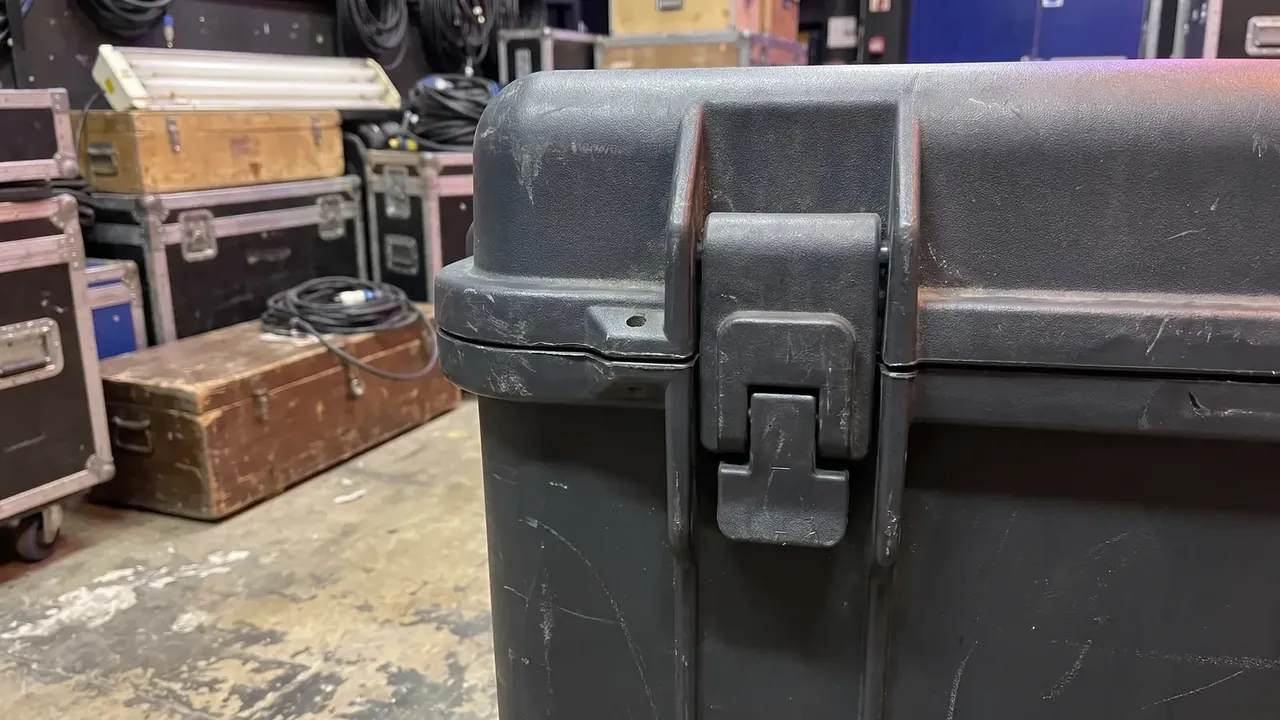
Every mistake on a visit comes from testing too little, too light or too clean. Three empty cycles at a trade stand test nothing.
| Mistake | Consequence | Fix on site |
|---|---|---|
| Empty case only | Opening force rises 30% when loaded | Find 12 kg of ballast |
| Room temperature only | Gasket rebounds 2 seconds slower at -20℃ | Borrow the plant freezer for 4 hours |
| Flat floor only | Caster screws loosen at a threshold | Roll over a 20 mm batten |
| One corner drop | The other five faces stay untested | Six faces, 1.2 m, 25 kg |
| No gloves | Every tactile reading fails | Bring 0.1 mm nitrile gloves |
The fixes cost little: 2 yuan for gloves, 5 for a batten, 30 for ballast. Against 480 yuan of train fare over 2000 cases, that is under 0.3 yuan per unit.
Conclusion
Five duties compress into one 40 minute routine; only ballast, temperature and floor change. Do the movements and 480 yuan of train fare buys three design fixes; skip them and the ticket buys lunch, which is why a case factory tour is measured in cycles.
This article discusses only the container (case body) side of specifications and design intent, and does not cover any handling, loading or use of the contents.
Related Reading
- A plant visit checklist
- Twelve questions to ask on a visit
- Short-haul ammunition transit
- Storage cases in a depot
Related Products
- 8 Series — Gun Cases; Military Equipment Cases; Camera Equipment Cases; Drone Cases; Watch Cases; Knife Cases; First Aid Cases; Electronics Equipment Cases
- WL8-2812 PP Gun Case — model WL8-2812
- All protective cases and toolboxes: 7 series, 158 models