

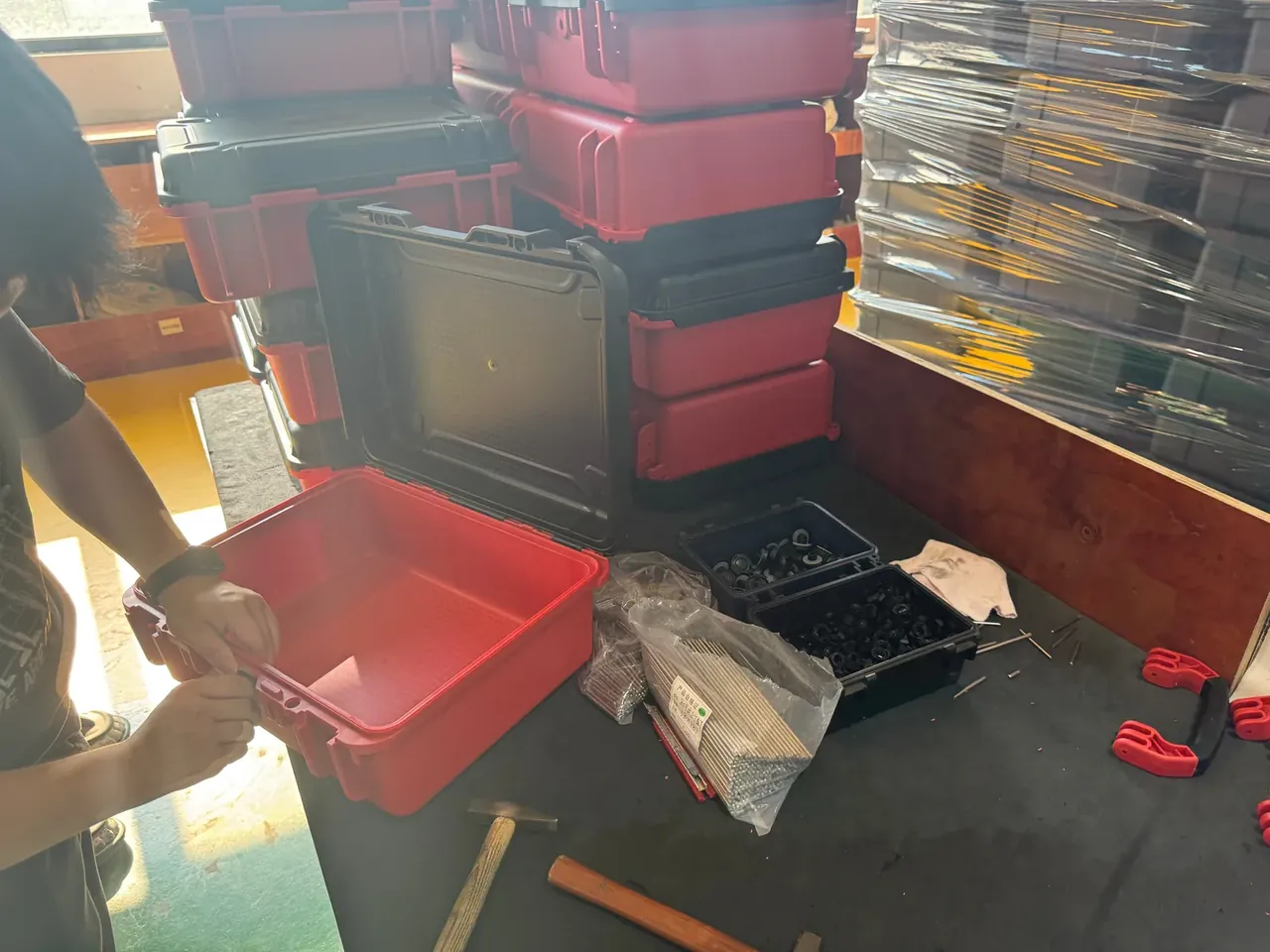
Quick answer: A 45 L food delivery case yields 6 contact surfaces, and only 4 need a report under 21 CFR 177: liner base, divider, gasket and handle overmould.
Table of contents
- Six contact surfaces, four reports
- Matching materials to 21 CFR 177
- Simulants, temperature and time
- Overall migration and sensory checks
- Four parts tested, two filed
- FAQ
1. Six contact surfaces, four reports
A 45 L food delivery case opens into 6 surfaces that may touch food: liner base 18 dm², loose divider 9 dm², gasket 6 dm², handle overmould 3 dm², latch 0.8 dm² and outer print 0 dm², a total of 36.8 dm².
Only 4 reach a report. The test is contact area and mode: the latch stays covered by the liner, and the print sits behind 2.5 mm of wall.
That split sets cost: four reports, 3 samples each, 12 samples, 15 working days. A single whole-case report looks cheaper until the laboratory returns it because two parts map to no subpart.
| Surface | Material | Area dm² | Contact | Handling |
|---|---|---|---|---|
| Liner base | PP | 18 | Flat, food rests on it | Report |
| Loose divider | PE | 9 | Side contact, moves with load | Report |
| Gasket | EPDM | 6 | Seals against liner edge | Report |
| Handle overmould | TPE | 3 | Presses on liner when folded | Report |
| Latch | PP | 0.8 | Covered by the liner | File only |
| Outer print | Printing ink | 0 | Outer wall, 2.5 mm away | File only |
2. Matching materials to 21 CFR 177
21 CFR 177 is organised by material: olefin polymers in 177.1520, rubber articles in 177.2600, closure gaskets in 177.1210, matched on material plus conditions of use.
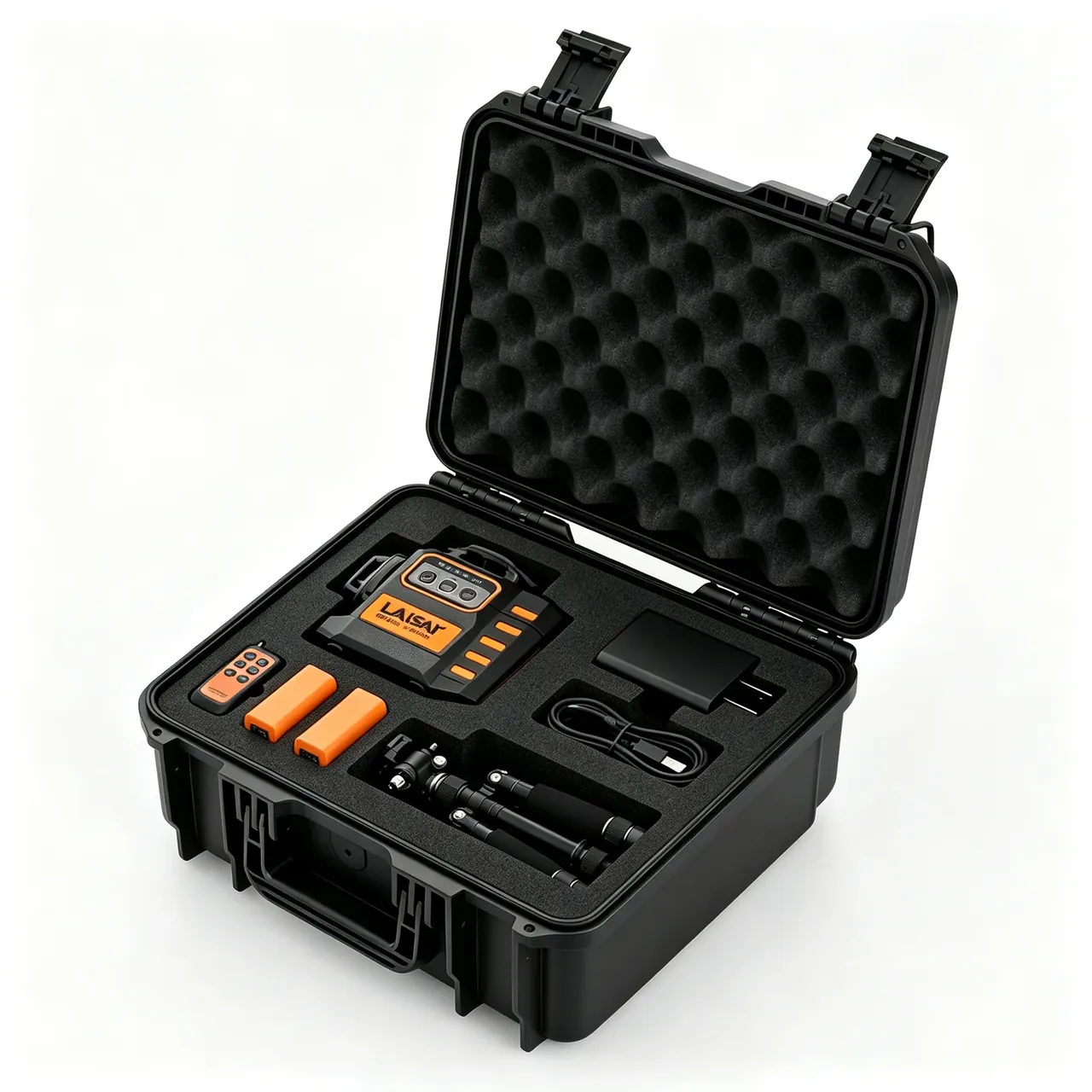
The PP liner and PE divider land in 177.1520, the EPDM gasket and the TPE overmould in 177.2600, and the PP latch in 177.1520.
Once the section is fixed the permitted list is fixed too. 177.1520 sets monomers, additives and extraction limits, so an additive outside that list blocks the report.
Printing ink has no section of its own and usually borrows 175.300 on resinous coatings, and only for inner-wall printing. An outer print is filed with a supplier statement instead.
Materials on one case never share a report. PP and EPDM sit in different sections with different conditions, and a combined submission is split by the laboratory.
3. Simulants, temperature and time
Case fda contact work picks the simulant from the food type: aqueous food takes A, water or 10% ethanol; acidic food takes B, 3% acetic acid; fatty food takes D2, vegetable oil.
Conditions follow the harshest real use: 70 ℃/2 h for hot filling and holding, 100 ℃/1 h for boiling disinfection, 40 ℃/240 h for long storage. Each part gets its own worst case.
The area-to-volume ratio is fixed at 6 dm² per 1 kg of simulant. An 18 dm² liner needs 3 kg, the full 36.8 dm² would need 6.1 kg, so parts travel separately.
Every test runs 3 times and averages, and one run 10% above the limit fails the part outright. Retest clauses belong in the contract.
| Food type | Simulant | Condition | Parts |
|---|---|---|---|
| Aqueous, dairy | A, water or 10% ethanol | 70 ℃/2 h | Liner, divider |
| Acidic, pickled | B, 3% acetic acid | 70 ℃/2 h | Liner, gasket |
| Fatty, cooked | D2, vegetable oil | 70 ℃/2 h | Liner, divider |
| Long storage | A, water | 40 ℃/240 h | All four |
| Boiling disinfection | A, water | 100 ℃/1 h | Gasket, overmould |
4. Overall migration and sensory checks
Overall migration is capped at 10 mg/dm², which allows 180 mg of residue from the 18 dm² liner, 60 mg from the 6 dm² gasket and 30 mg from the 3 dm² overmould.
The detection limit has to sit below 1 mg/dm². A report quoting a 5 mg/dm² limit means nothing was really tested.
Sensory testing is the second gate: 3 assessors smell and taste at 60 ℃ against a blank, and a clear off-note fails the part whatever the migration figure says.
Both gates must pass. At 8 mg/dm² with an off-note the compound goes back for reformulation, at 3 mg/dm² with a clean result the part passes, and the two results are reported in separate columns.
When migration sits near the ceiling, check the compound first: softening oil and curing residue in the gasket and overmould are the usual source, and one oil change often pulls 8 mg/dm² below 3 mg/dm².
5. Four parts tested, two filed
The liner base, divider, gasket and overmould each get one report. All four can share a shipment, but the samples travel in separate bags with separate labels, or the laboratory treats them as one case.
Reports stay valid for 12 months. Four events force a retest: a change of resin or compound supplier, a masterbatch reformulation, a moulding temperature raised by more than 10 ℃, and a revised section or limit.
The gasket is only 6 dm² of the 36.8 dm², yet it changes supplier most often, so keeping it as its own report protects the other three.
Latch and print stay out of the reports but not out of the file: a material certificate and a formulation statement, both wanted at a customer audit, with 2 spare samples kept for 12 months.
Conclusion
Part decisions in food contact work rest on area, material and conditions of use, not on how the case looks. Of the 36.8 dm² of contact surface, 36 dm² belongs to four parts that need reports, while 0.8 dm² and the printed wall go to the file. All four reports answer the same questions: overall migration at or below 10 mg/dm², and a clean sensory result under the harshest simulant and condition. Most of the compliance cost sits in change control rather than in test fees, since every supplier, masterbatch or moulding temperature change voids a report.
| Part | Material | 21 CFR section | Condition | Reports |
|---|---|---|---|---|
| Liner base | PP | 177.1520 | 70 ℃/2 h, A and D2 | 1 |
| Loose divider | PE | 177.1520 | 70 ℃/2 h, A and D2 | 1 |
| Gasket | EPDM | 177.2600 | 100 ℃/1 h, B | 1 |
| Handle overmould | TPE | 177.2600 | 70 ℃/2 h, A | 1 |
This article discusses container-side specifications and design implications only, and does not cover any handling, loading or use of the contents.
Related Reading
- Cold chain food case temperature control
- Food contact compliance routes
- Material choice for food grade plastic cases
- Insulated catering case structure
Related Products
- 8 Series — Gun Cases; Military Equipment Cases; Camera Equipment Cases; Drone Cases; Watch Cases; Knife Cases; First Aid Cases; Electronics Equipment Cases
- WL8-2812 PP Gun Case — model WL8-2812
- All protective cases and toolboxes: 7 series, 158 models