

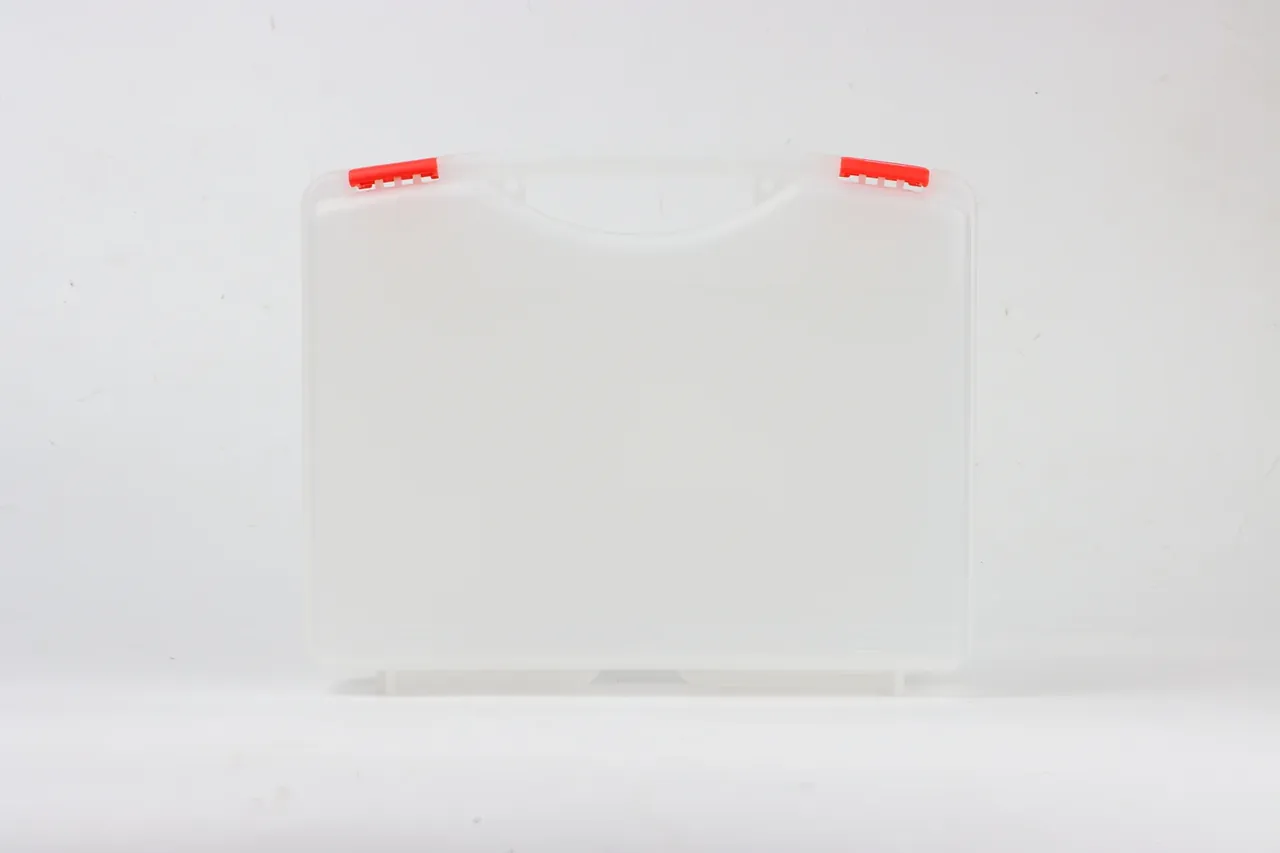
Quick answer: A Case Internal Divider pays off above 20 pieces and below two layout changes a year. Past 3000 pieces with a frozen layout, moulded pockets tighten tolerance from 1.2 mm to 0.3 mm and win on cost. Under 5 pieces a thermoformed tray ships the same day.
Table of contents
- Every Case Gets Slats, the Most Common Mismatch
- Overmoulded Pockets: Only Past 3000 Pieces
- Two Foams: 45 Density Against 25 Density
- Odd Shapes Under 5 Pieces: Trays and Egg Crate
- Four Cases Where Slats Are the Wrong Answer
- Mixed Kits: Where One Cell Can Serve Two
- FAQ
1. Every Case Gets Slats, the Most Common Mismatch
Slats are the default because they are cheap, quick to revise and sample in three days. They separate cell from cell but do not hold an item still inside one, and the foam that does costs another 8 to 15 mm of depth.
| Method | Tolerance | First article | Batch | Weak point |
|---|---|---|---|---|
| Slat Case Internal Divider | 1.2 mm | 3 days | Over 20 | Foam still needed |
| Moulded pockets | 0.3 mm | 45 days | Over 3000 | New mould per change |
| Routed EVA block | 0.5 mm | 5 days | 5 to 500 | Bonding for deep cavities |
| Thermoformed tray | 0.8 mm | 7 days | Over 200 | Height limited |
| Egg crate only | No cell | 1 day | Any | No zoning |
Ask batch first, tolerance second, price last.
2. Overmoulded Pockets: Only Past 3000 Pieces
A mould for a 300 by 200 mm pocket set costs 80,000 yuan: 26.7 yuan a piece at 3000 off, 267 at 300 off. What pockets sell is tolerance: 0.3 mm, no foam, R2 corners that hold no dust.
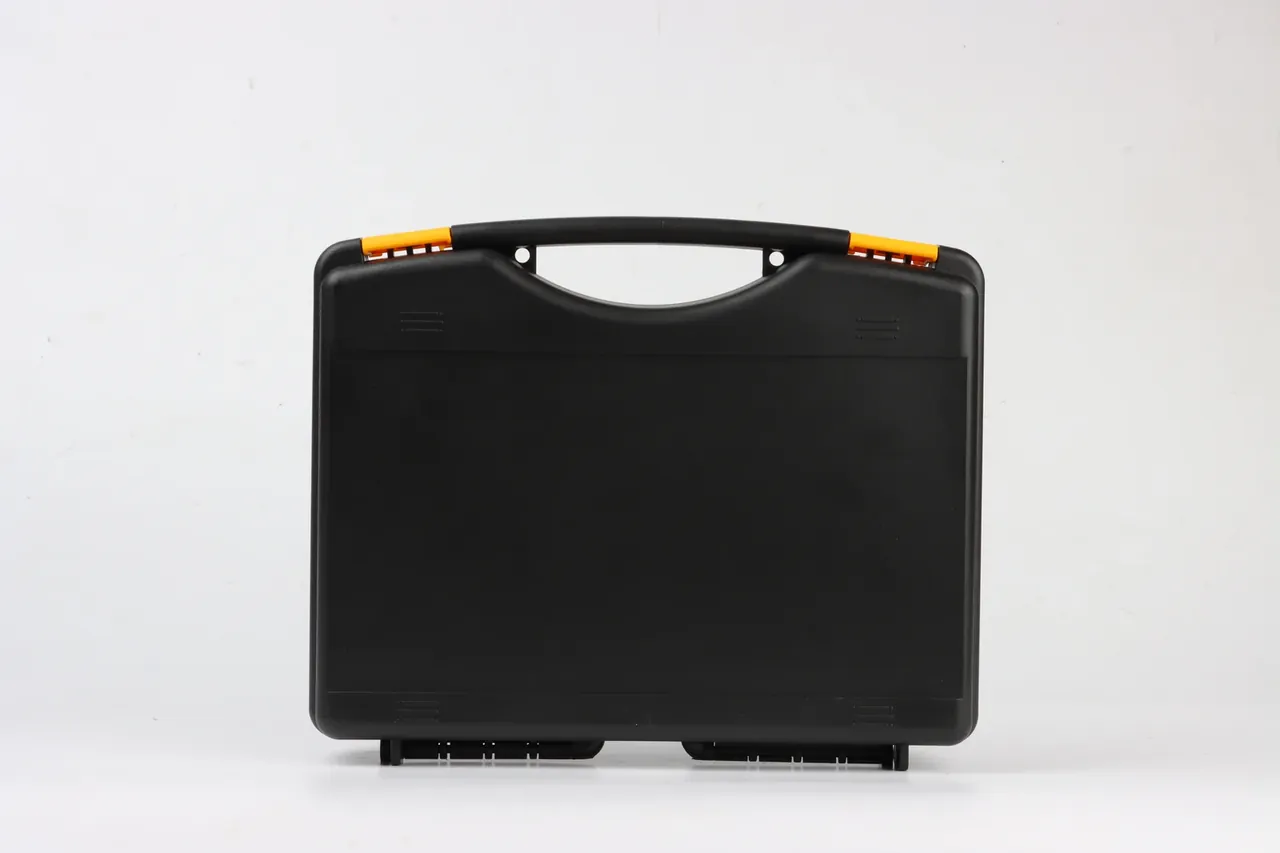
The cost hides in revisions: move one cell and the mould changes, 45 days, against 3 for slats. Once cut, a pocket mould pins that layout for three years.
The mould fee is not the barrier; the revision cycle is.
Pockets suit a product frozen for three years above 5000 units a year; a case that changes twice a year stays one layout behind.
3. Two Foams: 45 Density Against 25 Density
Both are ordered as foam; recovery differs by a factor. At 25 percent compression over 50 cycles, 45 density EVA returns 96 percent against 87 for 25 density PE, so the item sits 1.4 mm lower after every closure.
| Item | 45 density EVA | 25 density PE |
|---|---|---|
| Recovery, 50 cycles at 25% | 96% | 87% |
| Set after 72 hours at 60 C | 6% | 15% |
| 30 mm thick, 20 kg static | 1.2 mm | 2.6 mm |
The trade is not only price. EVA at 45 costs about 30 percent more, but its set is a quarter of PE, so the pad does not collapse. Mixed builds bond 45 as base against 25 as lining, a 30 mm sandwich costing 12 percent over all-PE; glue the full face, or the layers shear.
4. Odd Shapes Under 5 Pieces: Trays and Egg Crate
Under 5 pieces, cells are routed per item at 300 yuan a die, or 60 yuan a piece. A 0.8 mm PETG tray folded by hand ships the same day, and thermoforming overtakes slats past 200 pieces.
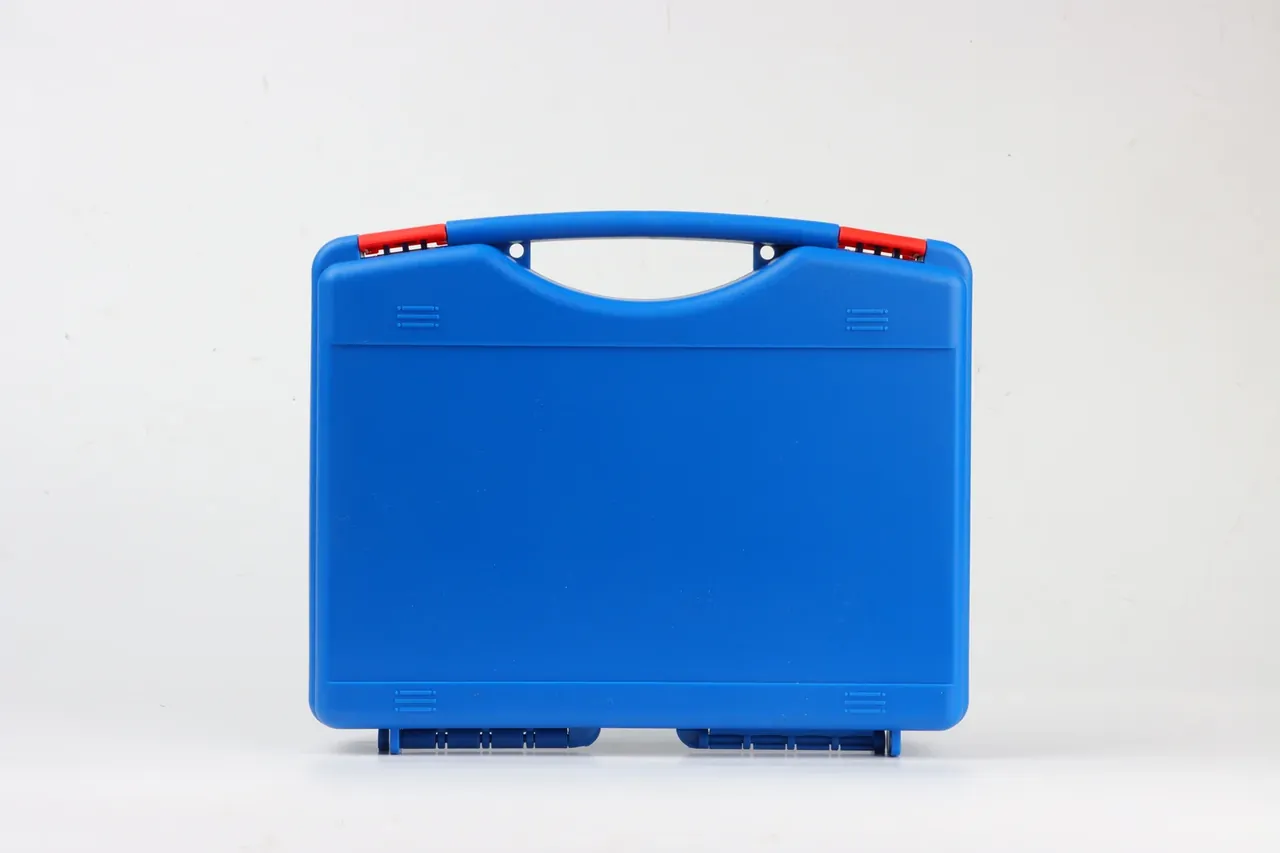
Egg crate is the other retreat: 30 mm peaks at 40 percent compression wrap an item for under 3 yuan, but lifting one of two stacked items drags the other up.
The boundary is clean: egg crate for a shape that changes every batch, a tray above 200 pieces, a Case Internal Divider between 20 and 200.
5. Four Cases Where Slats Are the Wrong Answer
- Cavity under 40 mm. A slat leaves 30 mm, minus a 4 mm groove, so it holds nothing; use a tray with a crimped edge.
- Items over 8 kg with a boss. The boss bends the slat sideways; use a clamp plate and two 25 mm straps.
- Batches under 20 with a new layout each time. Stock and mis-assembly cost more than the saving.
- Wash-down cleaning. Slots trap chips no nozzle reaches; moulded corners solve it.
Three of the four are about batch size, none about price.
6. Mixed Kits: Where One Cell Can Serve Two
One shell carrying two kits means full-height long slats, half-height cross slats and a 2 mm PP pull-out sheet; pull one slat and two cells become one, in 40 seconds, and three colours on the ends drop mis-assembly from 3 percent to 0.2. Limits apply: a half-height slat stays above half the cavity depth or items tip, the groove belongs in the long slat rather than the wall, and past three kits colour coding fails. Where both heights coexist, the lid rib must bear on the full-height tops, or the lid stays ajar.
Conclusion
Between 20 and 200 pieces a Case Internal Divider is cheapest; past 3000 with a frozen layout, pockets trade a 45 day cycle for 0.3 mm. Draw those lines and a Case Internal Divider stops being a reflex.
This article discusses only the container (case body) side of specifications and design intent, and does not cover any handling, loading or use of the contents.
Related Reading
- Three numbers behind a Case Internal Divider
- Choosing a Case Internal Divider layout by batch
- Magazine box materials compared
- Tool box lid materials in four pairs
- How industry requirements differ for cases
Related Products
- 8 Series — Gun Cases; Military Equipment Cases; Camera Equipment Cases; Drone Cases; Watch Cases; Knife Cases; First Aid Cases; Electronics Equipment Cases
- WL8-2812 PP Gun Case — model WL8-2812
- All protective cases and toolboxes: 7 series, 158 models