

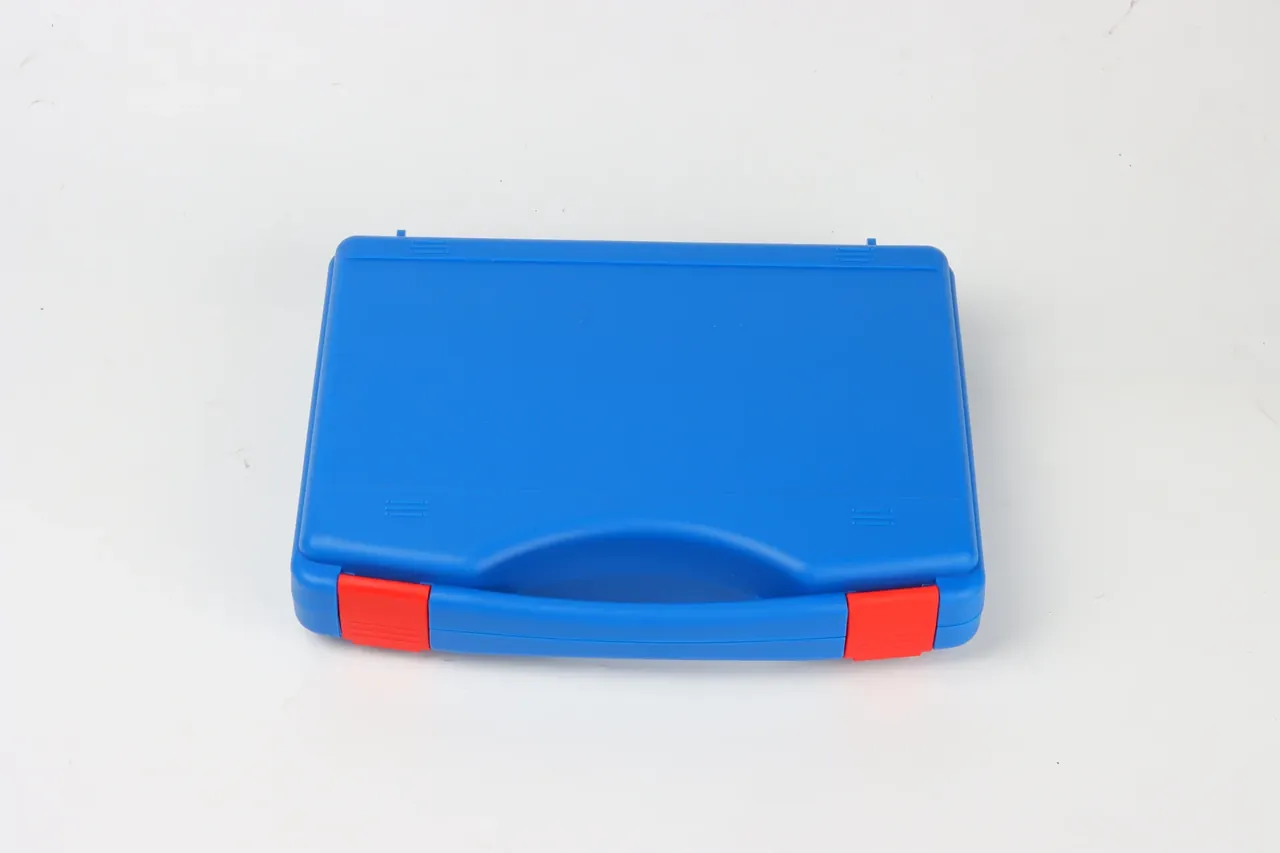
Quick answer: Accept a case internal divider at four levels: incoming material, cut parts, installed fit and the finished case. Gauges handle dimensions, MIL-STD-810H Methods 516.8 and 514.8 cover shock and vibration, IEC 60529 IP67 confirms the seal. A 500-set lot samples 50 sets with zero acceptance on critical defects.
Table of contents
- Four acceptance levels and clause sources
- Measuring fit on the line
- Static load, drop and vibration
- Temperature, salt fog and seal retention
- Sampling plans and decision lines
- Nonconformance and concession
- FAQ
1. Four acceptance levels and clause sources
A case internal divider is accepted at four levels: incoming foam and sheet, cut parts, installed fit, and the assembled case. Each level answers a different question, so one appearance-based verdict ends in an argument.
Name the clause instead of a vague national-standard reference. Dimensions follow the drawing, sampling follows GB/T 2828.1, shock follows MIL-STD-810H Methods 516.8 and 514.8, sealing follows IEC 60529, foam follows ASTM D3575, each with its revision year.
| Level | Object | Clause | Decision line |
|---|---|---|---|
| Incoming | EVA, PE foam, PP sheet | ASTM D3575, data sheet | Density within 5% |
| Cut parts | Dividers, inserts | Drawing characteristics | 0.5 mm squareness |
| Installed | Slot fit, latch force | Work instruction | Shake under 1 mm |
| Finished | Drop, vibration, seal | 516.8, 514.8, IEC 60529 | No ingress |
Samples cannot be borrowed across levels; a cut part that passes may fail in a slot.
2. Measuring fit on the line
Condition parts first: 23 degrees Celsius, 50% humidity, 24 hours of rest. Foam from a humid cutting room reads 0.4 mm thicker and lifts the lid. Use a digital caliper at 0.02 mm, feeler stock and a depth gauge.
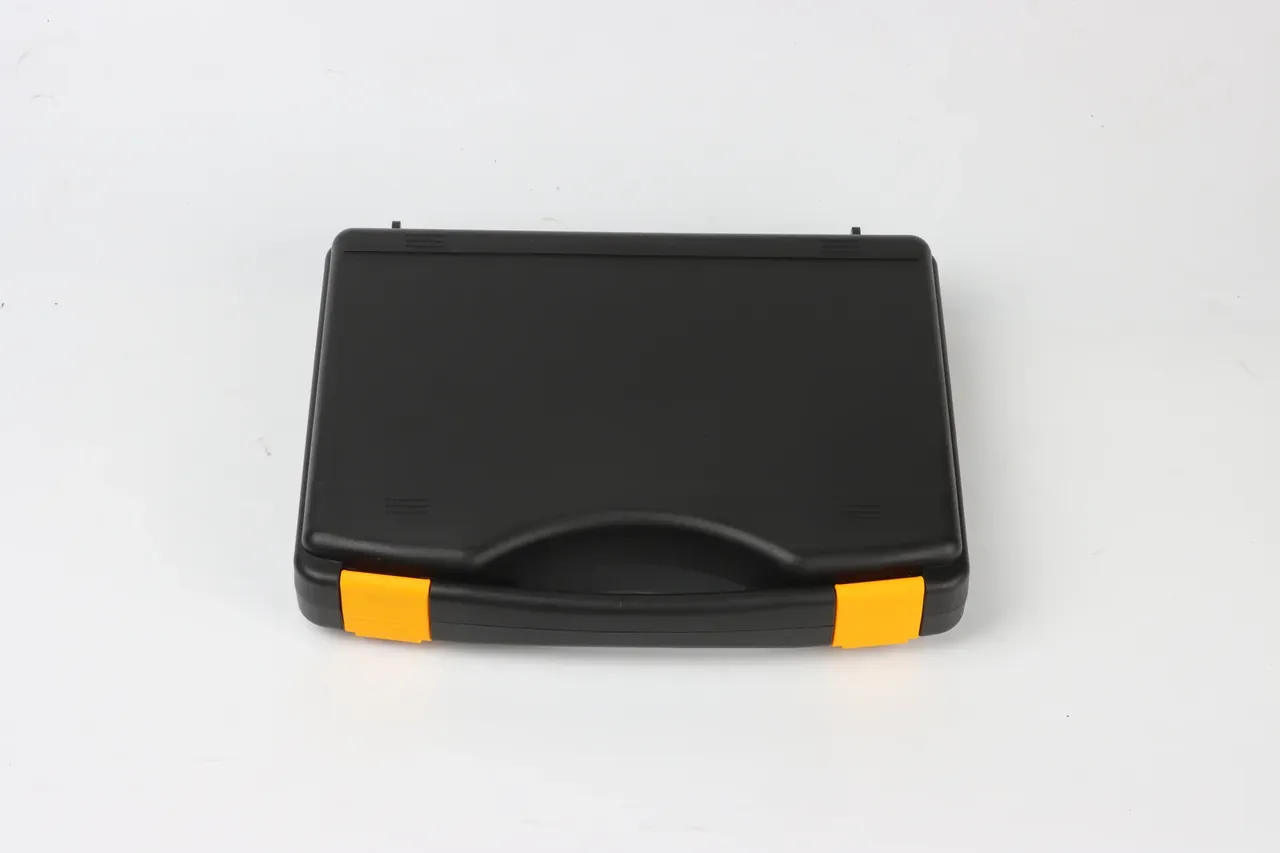
Four characteristics decide the outcome: thickness within 0.15 mm, slot pitch within 0.2 mm, height within 0.5 mm, slot width equal to thickness plus 2 mm. The first two fix alignment, the third preload.
| Characteristic | Gauge | Tolerance |
|---|---|---|
| Thickness | Digital caliper | 0.15 mm |
| Slot pitch | Caliper, three slots | 0.2 mm |
| Height | Depth gauge | 0.5 mm |
| Slot width | Feeler stock | Thickness plus 2 mm |
| Squareness | Engineer square | 0.5 mm |
Shake the closed case inverted over a 300 mm stroke for ten cycles; movement beyond 1 mm in any compartment fails. Then pull one latch with a force gauge and read 30 to 80 N. Below 30 N it opens in transit, above 80 N a gloved hand cannot release it.
3. Static load, drop and vibration
Load each compartment to 1.5 times service weight, so a 3 kg slot takes 4.5 kg for 24 hours, deflection under 1.5 mm and set below 0.3 mm. Drop the assembled case from 1.2 m onto one corner, three edges and six faces, then check for dividers that climbed out of their slots. Run vibration to Method 514.8 at 1.04 g rms for 60 minutes on three axes, corners clamped. Judge three points: a divider leaving its bottom slot, shifted cross-cuts, rubbing deeper than 0.3 mm. One failure holds the lot. Re-measure slot pitch after vibration, since creep adds 0.1 to 0.2 mm. With one sample for both tests, run vibration first, because the reverse order hides early loosening.
4. Temperature, salt fog and seal retention
Run the sequence with the divider in place: three cycles between 71 and minus 40 degrees Celsius, four hours each, two hours at ambient between cycles, dimensional change within 0.3%.
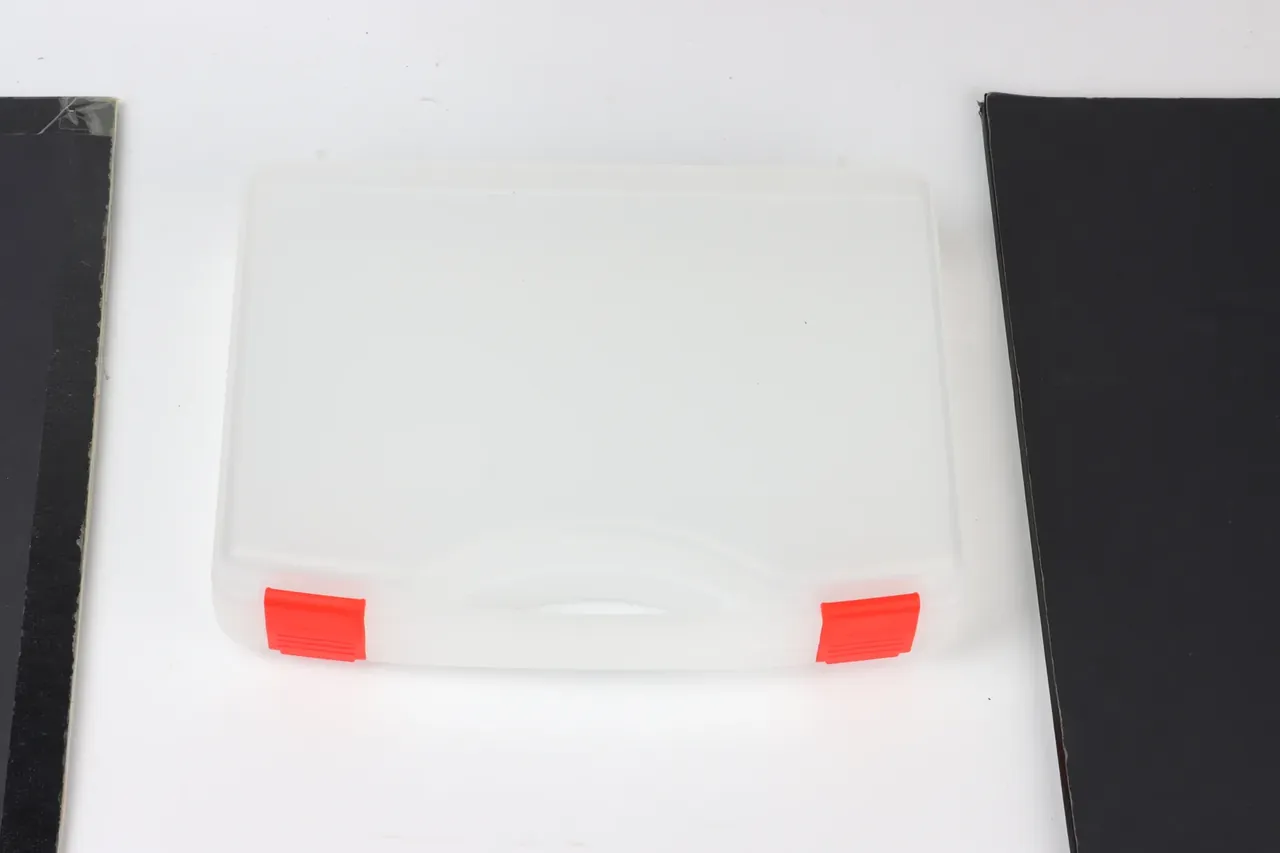
- Damp heat: 40 degrees Celsius, 93% humidity, 48 hours.
- Salt fog: 48 hours neutral spray on metal inserts.
- Sealing: IP67, one metre for 30 minutes, paper inside.
- Slot clearance: no slot within 3 mm of the sealing line.
Sealing is skipped most often. A case internal divider does not leak itself, but it presses the gasket and props the lid, dropping an IP grade.
5. Sampling plans and decision lines
Sample to GB/T 2828.1, normal inspection, single sampling, level II. Critical means a damaged sealing face, broken latch or short-moulded divider; major an out-of-tolerance dimension or cut crack; minor flash or colour variation.
| Lot size (sets) | Sample | Critical 0.25 | Major 1.0 | Minor 2.5 |
|---|---|---|---|---|
| 151 to 280 | 32 | 0/1 | 1/2 | 2/3 |
| 281 to 500 | 50 | 0/1 | 1/2 | 3/4 |
| 501 to 1200 | 80 | 0/1 | 2/3 | 5/6 |
| 1201 to 3200 | 125 | 1/2 | 3/4 | 7/8 |
Each cell reads acceptance then rejection. On a 500-set lot sampled at 50, two major defects return the lot; critical defects always accept zero. Confirm the lot is homogeneous first.
6. Nonconformance and concession
Four routes exist: rework, screening, concession and scrap. A dimension outside tolerance but inside the functional envelope may be conceded if the paper states deviation, quantity, expiry and responsibility.
Critical defects have no concession path. A scored sealing face or broken latch is scrapped, the case internal divider lot moves to tightened inspection, and normal inspection returns after three good lots.
Three failures of one characteristic justify stopping the line. Tightened inspection sorts defects; it does not change a mould setting.
Conclusion
Acceptance of a case internal divider rests on four levels and three tables: material incoming, critical characteristics on cut parts, shake and latch force at assembly, drop, vibration and IP67 on the finished case. Put decision lines in the contract and concessions on paper, and it is judged by numbers instead of feel.
This article discusses only the container (case body) side of specifications and design intent, and does not cover any handling, loading or use of the contents.
Related Reading
- How a case internal divider is laid out
- Inserts, EVA and thermoformed trays compared
- Airdrop case inspection items
- Mould storage case acceptance points
- Ammunition box test clauses
Related Products
- 8 Series — Gun Cases; Military Equipment Cases; Camera Equipment Cases; Drone Cases; Watch Cases; Knife Cases; First Aid Cases; Electronics Equipment Cases
- WL8-2812 PP Gun Case — model WL8-2812
- All protective cases and toolboxes: 7 series, 158 models