

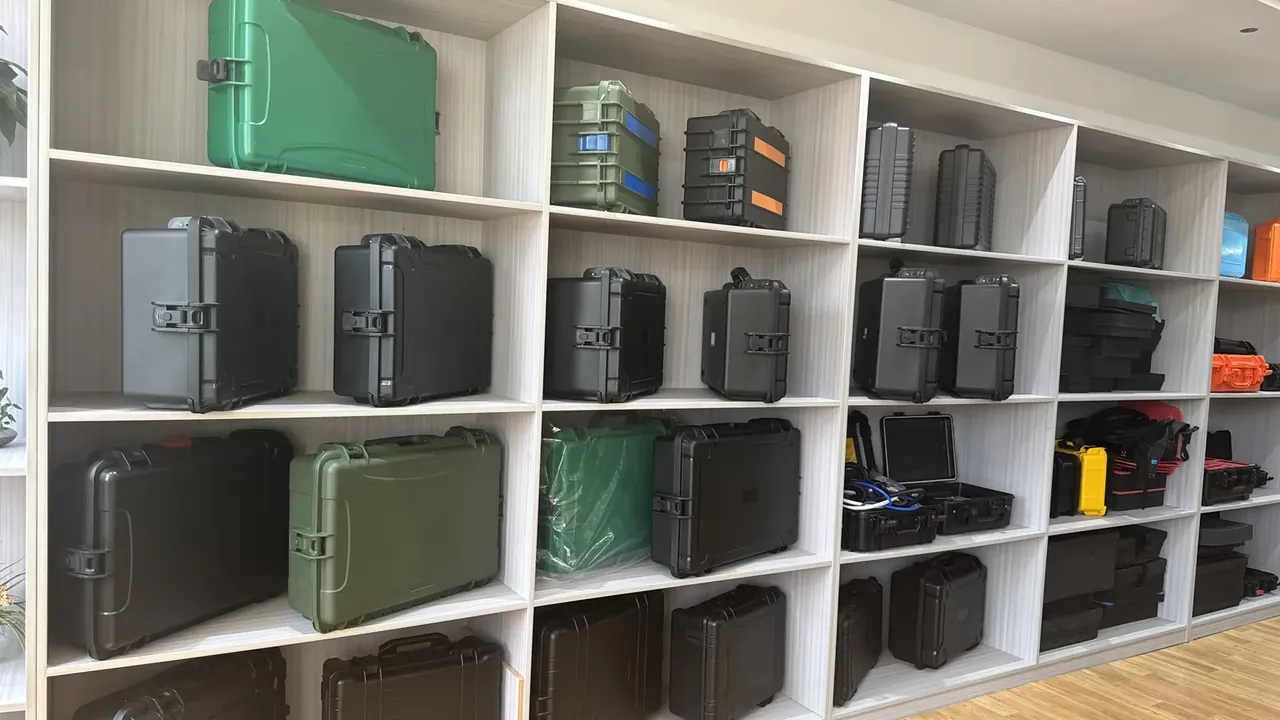
Quick answer: Case sampling sizes start at three, not one: a single medium case covers 46% of field scenarios, while small, medium and large samples reach 82% for 2660 yuan in 14 days and verify liner, seal and stacking in one round.
Table of contents
- Start With Three Cases, Not One
- Small: 380 × 300 × 150 mm for Hand-Held Work
- Medium: 480 × 380 × 200 mm for the Main Verification
- Large: 620 × 480 × 260 mm for Whole Units and Stacking
- Verification, Cost and Lead Time
- FAQ
1. Start With Three Cases, Not One
The first order usually holds one case: the largest unit is measured, 30 mm is added, and one box ships. Back it comes with small parts rattling, and only the third round shows the right combination.
Case sampling sizes are a question of coverage: one medium case serves hand-held work, spares and whole instruments at 46%, a small case lifts it to 71% and a large one to 82%. The remaining 18% is long rods and oversize items, which belong to custom tooling.
| Plan | Samples | Case and liner cost | Lead time | Coverage |
|---|---|---|---|---|
| Medium only | 1 | 880 yuan | 12 days | 46% |
| Medium plus small | 2 | 1620 yuan | 12 days | 71% |
| Small, medium, large | 3 | 2660 yuan | 14 days | 82% |
| Three separate rounds | 3 | 3140 yuan | 36 days | 82% |
Samples from one lot compare; three months apart, even wall thickness drifts. The 480 yuan saved by splitting the order is freight, and the 22 days lost are benches rebooked.
2. Small: 380 × 300 × 150 mm for Hand-Held Work
The small tier is 380 × 300 × 150 mm outside, 330 × 250 × 130 mm inside, 10.7 L usable and 1.6 kg empty. It matches hand-held inspection: a torque wrench, two probes and a 200 g meter leave 30% for foam.
Treating it as a scale model is the usual error: a 3 mm wall carries 1.6 times the empty-weight share it does on the medium case, and the drop curve differs.
EVA dies are priced by area, 380 yuan at 330 × 250 mm against 720 yuan at 560 × 420 mm, so cutting the small one twice costs 760 yuan. It also takes the first drop for the medium, at 1.6 kg empty plus 4 kg of ballast from 1.2 m.
Stacking runs 3 high, so 4.2 kg loaded puts 8.4 kg on the bottom case, tested at 25 kg for 24 hours against a 2 mm limit.
3. Medium: 480 × 380 × 200 mm for the Main Verification
The medium tier is 480 × 380 × 200 mm outside, 425 × 325 × 175 mm inside, 24.2 L and 2.8 kg empty. It is the only one that carries a whole-unit test alone: a 400 × 300 × 150 mm module fits the 425 × 325 mm floor with 25 mm for liner.
| Tier | Outside | Inside | Usable volume | Empty weight | Sample price |
|---|---|---|---|---|---|
| Small | 380 × 300 × 150 mm | 330 × 250 × 130 mm | 10.7 L | 1.6 kg | 480 yuan |
| Medium | 480 × 380 × 200 mm | 425 × 325 × 175 mm | 24.2 L | 2.8 kg | 620 yuan |
| Large | 620 × 480 × 260 mm | 560 × 420 × 230 mm | 54.1 L | 4.5 kg | 780 yuan |
Liner follows 30% compression: EVA at 45 kg/m³ returns 96% after 25%, so 25 mm on the floor and 15 mm on the walls are the floor of the range; thinner bottoms out in a 1 m drop.
This is the first tier worth a pressure test: -0.3 kPa, decay held to 0.5 kPa in 60 seconds.
Stacking at 12 kg loaded puts 24 kg on the bottom case, tested at 72 kg for 24 hours, or 3.9 kPa over the 480 × 380 mm top; past 2 mm the ribs span over 300 mm.
Internal height is the limit: 175 mm will not take a 200 mm upright instrument, so that goes to the 230 mm large tier, which means a new mould anyway.
4. Large: 620 × 480 × 260 mm for Whole Units and Stacking
The large tier is 620 × 480 × 260 mm outside, 560 × 420 × 230 mm inside, 54.1 L and 4.5 kg empty. It does two jobs: whole units and stacking.
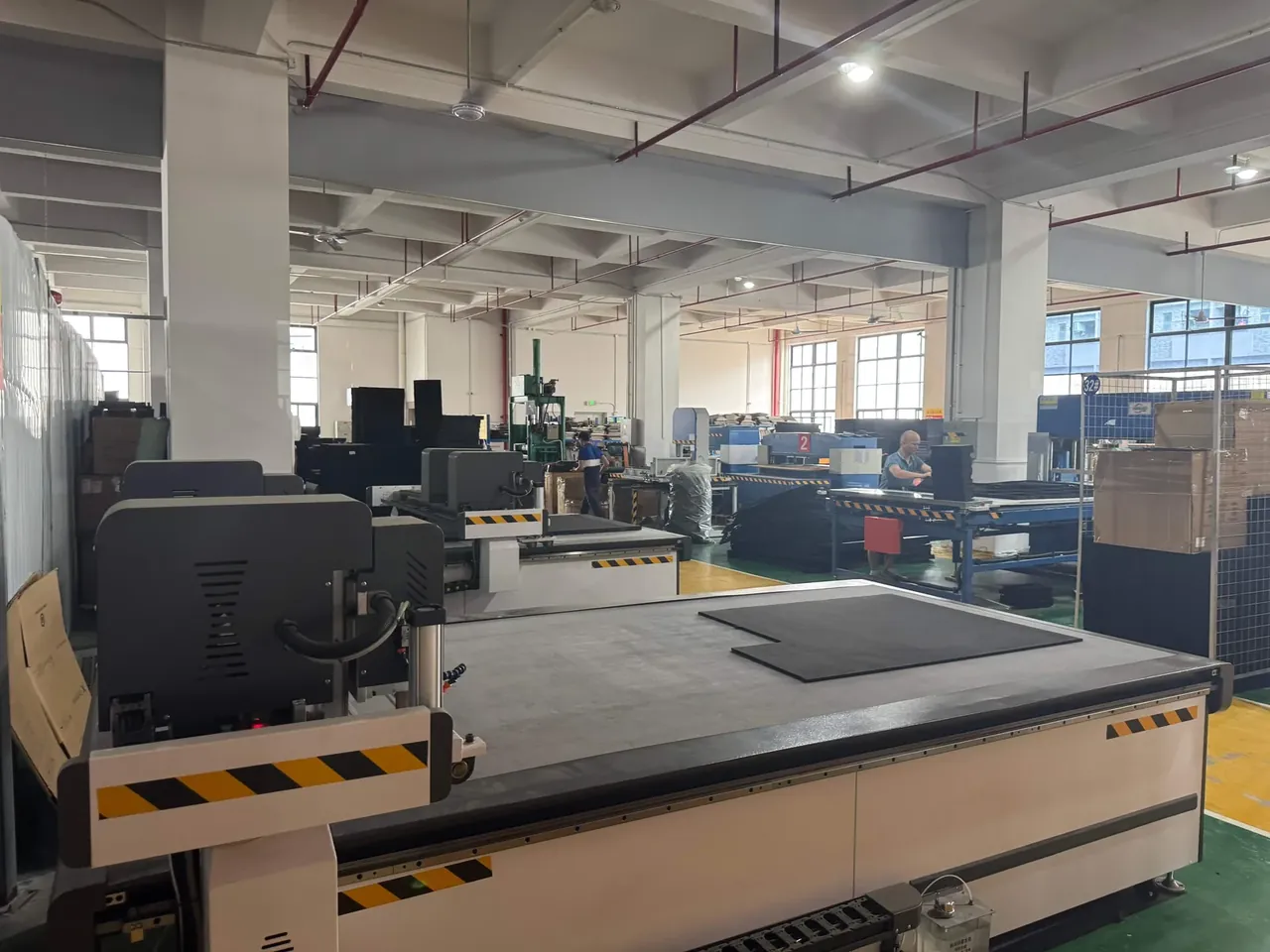
54.1 L looks generous until an 18 kg unit and 18% of foam leave 44 L, which two coils of cable finish; plan at 80% utilisation.
Stacking must be measured here: 3 high at 18 kg puts 36 kg on the bottom case, tested at 108 kg for 24 hours, or 3.6 kPa over the 0.30 m² top.
It is also the only pallet sample: four per layer and two layers make 1.1 m on a 1200 × 1000 mm pallet, half a 2.4 m trailer.
5. Verification, Cost and Lead Time
Three samples from one batch mean one pass of tests on the same lot.
| Test | Method | Limit | Tiers | Time |
|---|---|---|---|---|
| Liner compression | 25% for 24 hours | Recovery ≥95% | All three | 26 hours |
| Pressure | -0.3 kPa held 60 seconds | Decay ≤0.5 kPa | Medium, large | 1 hour |
| Immersion | 1 m for 30 minutes | No trace inside | All three | 1 hour |
| Stacking | 3 times load for 24 hours | Top face ≤2 mm | Medium, large | 25 hours |
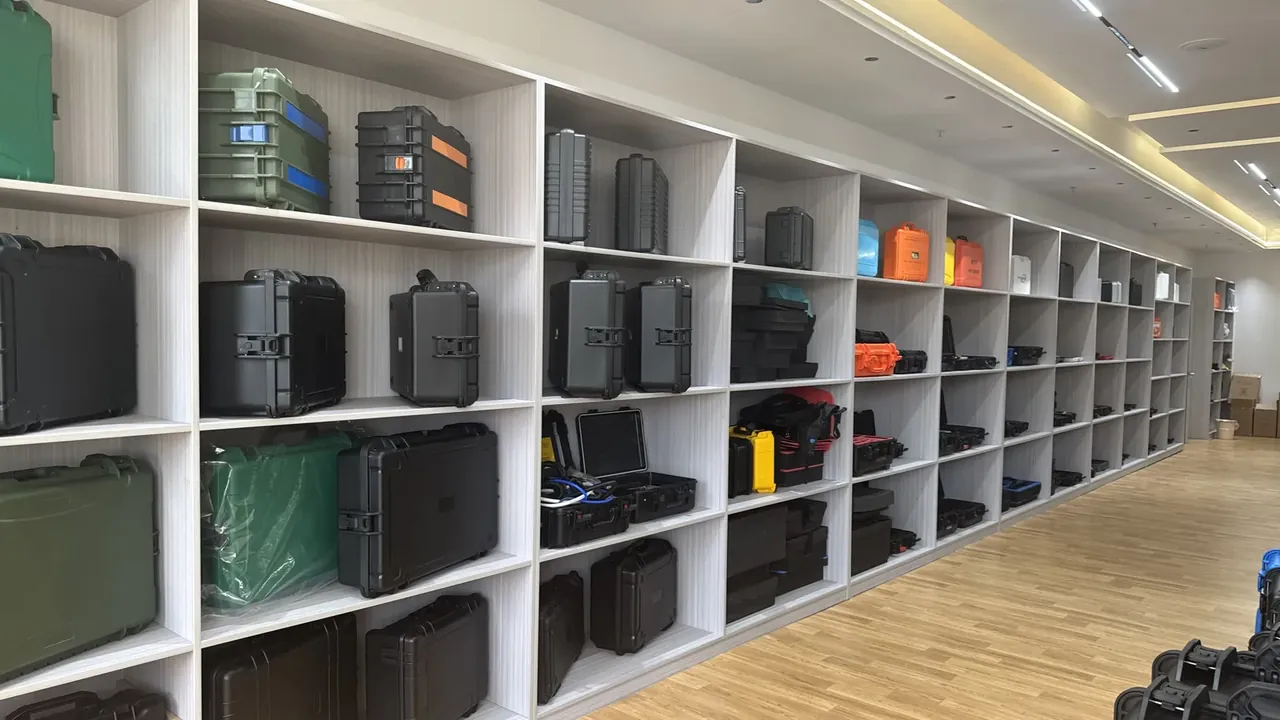
Units cost 480, 620 and 780 yuan, so 1880 yuan for three; liners at 260 yuan each add 780 yuan for 2660 yuan total. The body leaves an existing mould in 7 days and the liner die takes 5 in parallel, so three cases are ready on day 12, the large tier adding 2 days.
Order the tests so each leaves the sample usable: compression first, since load changes liner thickness; pressure and immersion while the gasket is new; stacking last, because residual distortion would spoil a pressure reading. Number the samples on arrival, small 1 to large 3.
Conclusion
Put the three tiers on one matrix and case sampling sizes stop being a guess: small at 380 × 300 × 150 mm takes 38% of hand-held work, medium at 480 × 380 × 200 mm takes 27% of spares and cabling, large at 620 × 480 × 260 mm takes 17% of whole units and stacking, and together they reach 82%. Each tier owns one scenario, one limit and one price; the remaining 18% belongs to custom tooling.
This article discusses container-side specifications and design implications only, and does not cover any handling, loading or use of the contents.
Related Reading
- Measuring a case by its interior dimensions
- The protective case size range explained
- Stacking structure and load bearing
- Foam liner compression and recovery
Related Products
- 8 Series — Gun Cases; Military Equipment Cases; Camera Equipment Cases; Drone Cases; Watch Cases; Knife Cases; First Aid Cases; Electronics Equipment Cases
- WL8-2812 PP Gun Case — model WL8-2812
- All protective cases and toolboxes: 7 series, 158 models